
Choosing a crusher for granite, basalt or other abrasive rock is not simply a question of capacity.
For quarry and mining operators, the real challenge is maintaining stable production while controlling liner wear, product size, particle shape and long-term cost per ton.
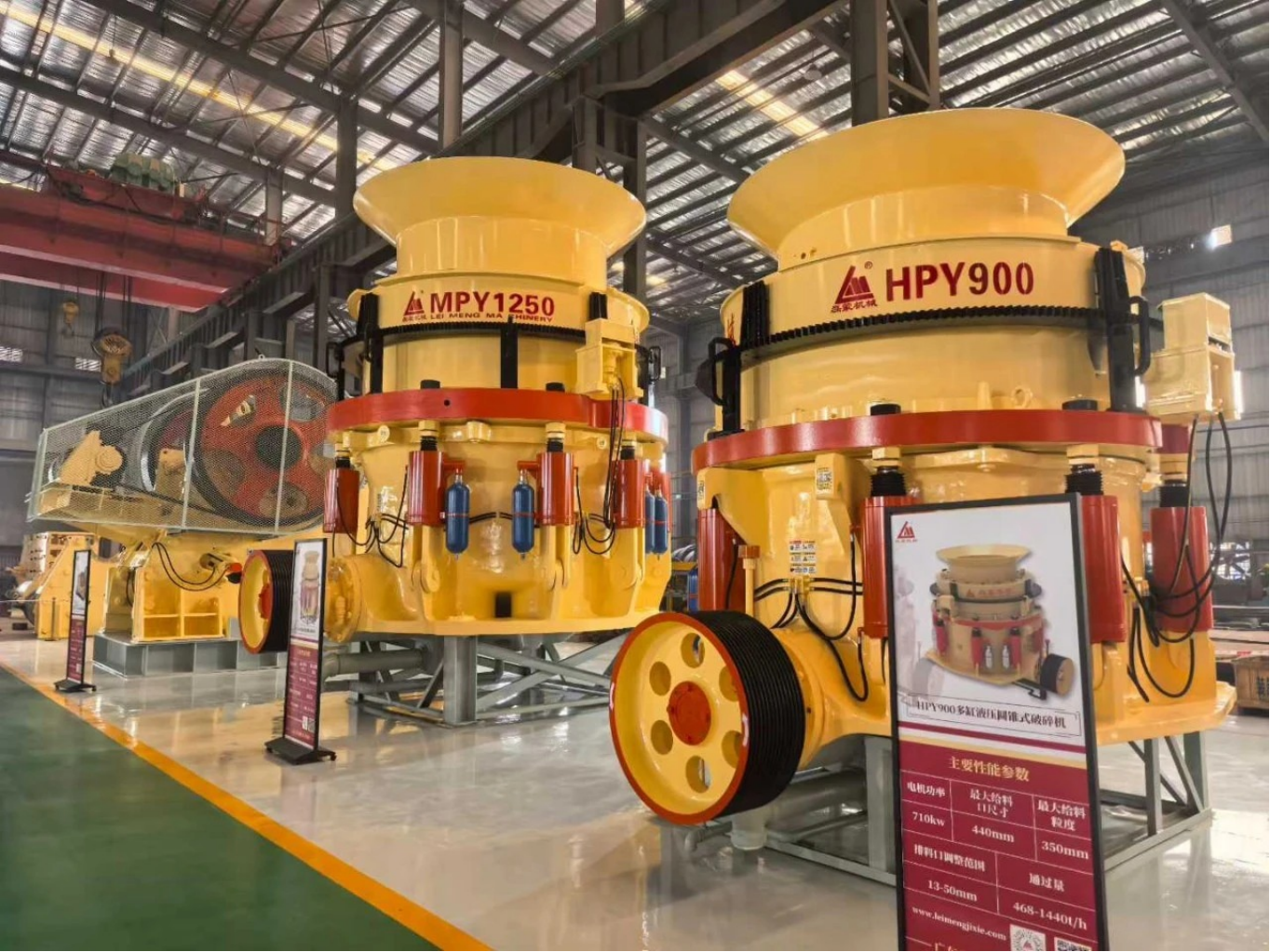
This is one reason multi-cylinder hydraulic cone crushers are widely used for secondary and fine crushing in hard rock applications.
Unlike impact crushing, which is often considered for softer and less abrasive materials, cone crushing uses compression to reduce hard rock and is better suited to continuous operation under demanding conditions.
Why Hard Rock Requires a Different Crushing Strategy
Granite, basalt, river pebble, diabase and many metal ores place considerably more stress on crushing equipment than softer materials.
When selecting a crusher for these applications, several factors need to be considered together:
- material hardness;
- abrasiveness;
- maximum feed size;
- required capacity;
- final product size;
- particle shape requirements;
- liner wear;
- downstream screening capacity.
This is why crusher selection should begin with the raw material and complete process, rather than with a model number.
For hard and abrasive materials, compression crushing is often preferred for secondary and fine crushing because it provides better wear control during long operating hours.
How a Multi-Cylinder Hydraulic Cone Crusher Works
A multi-cylinder hydraulic cone crusher crushes material between the mantle and concave inside the crushing chamber.
As material moves through the chamber, repeated compression gradually reduces the particle size until it can pass through the discharge opening.
But modern cone crushing involves more than simple size reduction.
When the chamber is properly filled, particles are also compressed against each other. This is commonly known as laminated crushing.
Particle-to-particle compression can help:
- improve crushing efficiency;
- reduce flaky and elongated particles;
- improve finished aggregate shape;
- maintain more stable crushing conditions.
For aggregate producers, this matters because the crusher influences not only throughput, but also the quality of the material entering the screening and shaping stages.
Why Hydraulic Control Matters in Continuous Production
In a large quarry or mining operation, unexpected downtime can be more expensive than small differences in power consumption.
Modern multi-cylinder cone crushers therefore use hydraulic systems to simplify adjustment and protect the machine during operation.
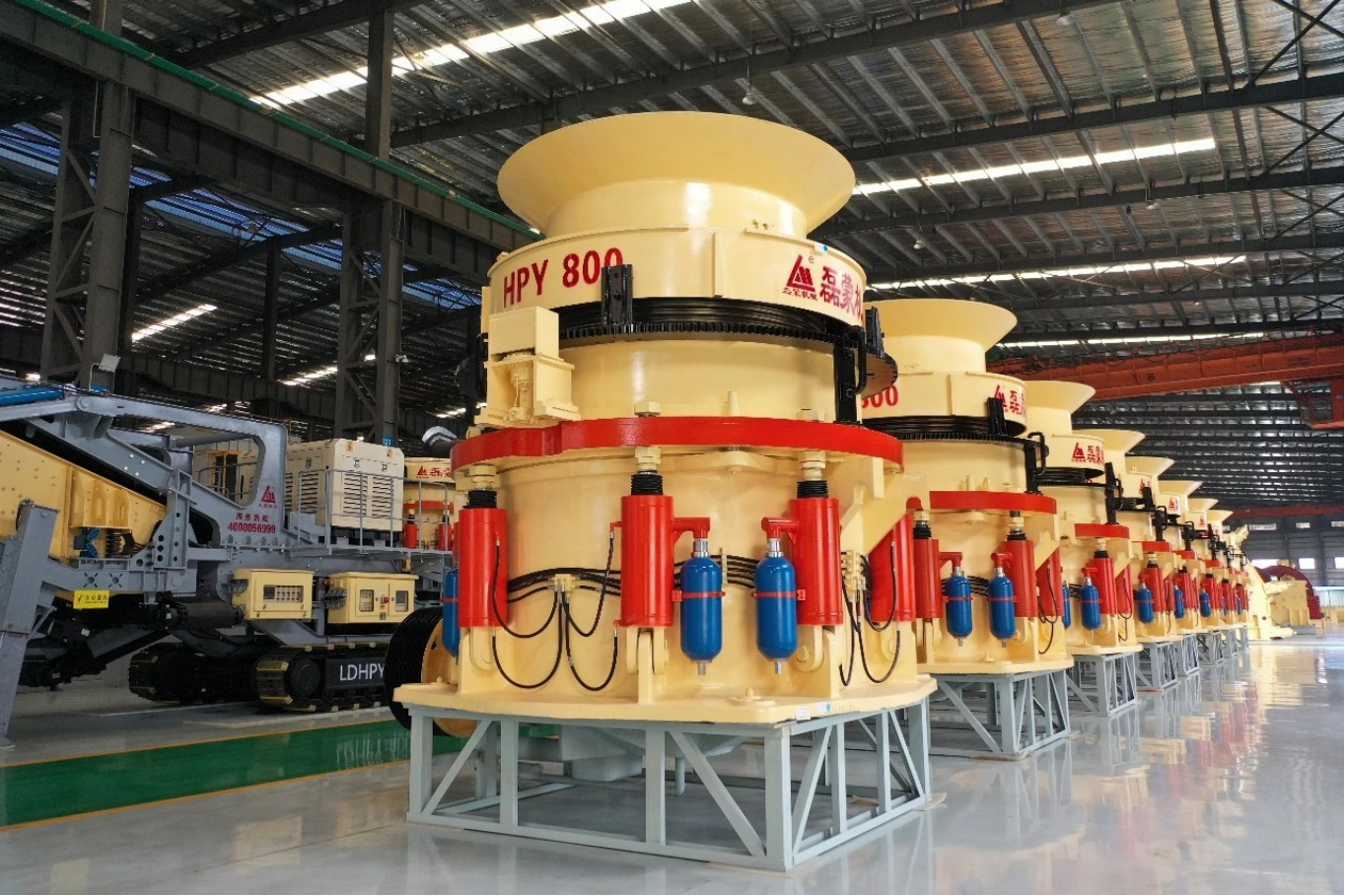
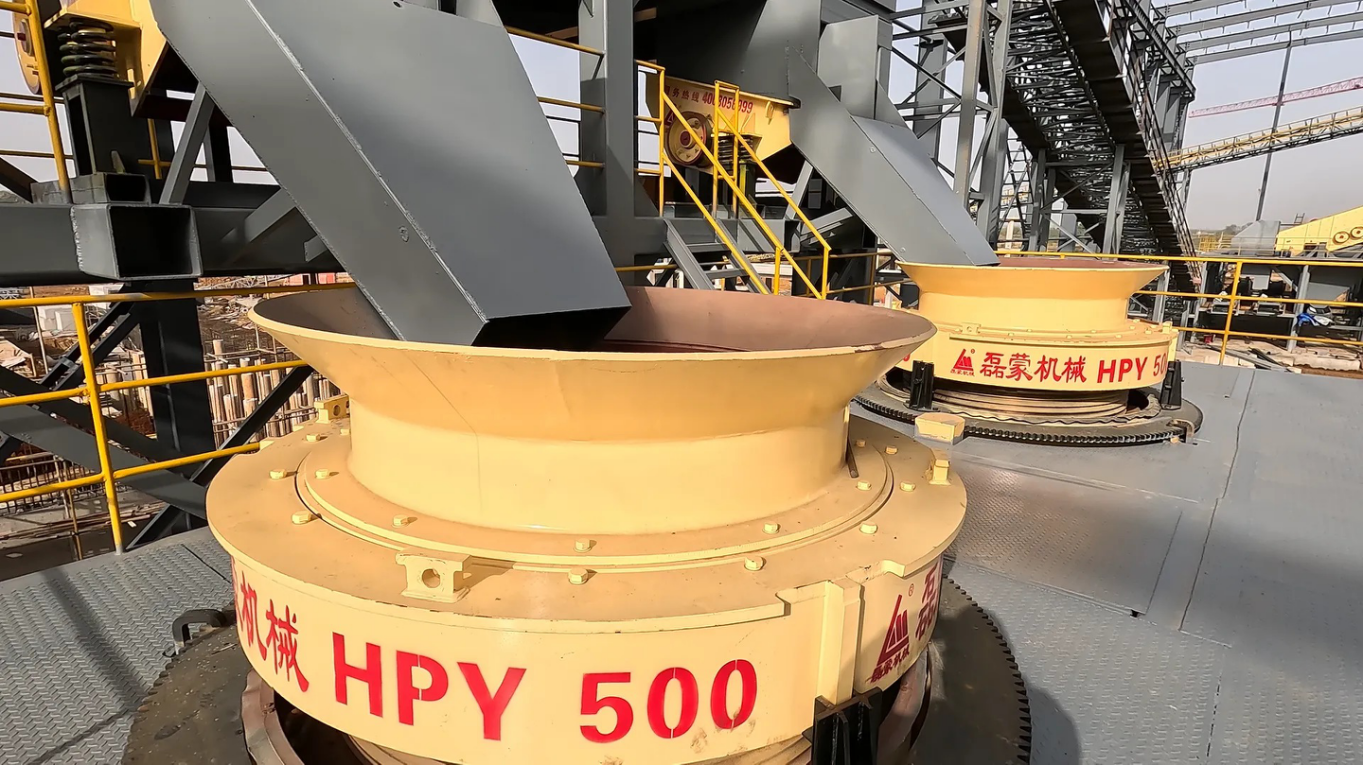
Leimeng Group's H(M)PY Series Multi-Cylinder Hydraulic Cone Crusher, for example, combines several hydraulic functions:
- hydraulic locking;
- automatic discharge opening adjustment;
- hydraulic cavity clearing;
- tramp iron protection.
These functions help operators maintain more stable operating conditions and reduce the time required to recover from blockage or uncrushable material entering the chamber.
This becomes particularly important in production lines where the cone crusher operates continuously under high load.
Where Does the Cone Crusher Fit in a Hard Rock Crushing Line?
A typical hard rock aggregate process may look like this:
Feeding → Jaw Crusher → H(M)PY Multi-Cylinder Cone Crusher → Vibrating Screen → VSI Sand Maker / Sand Washing System
The jaw crusher handles the large raw material during primary crushing.
The cone crusher then performs secondary or fine crushing before the material enters screening, shaping or sand-making stages.
Depending on the process design, the H(M)PY Series can therefore be used for:
Secondary Crushing
Reducing material discharged from the primary jaw crusher and preparing suitable feed for screening or tertiary crushing.
Fine Crushing
Controlling smaller product sizes before final classification.
Pre-Crushing Before Sand Making
Reducing oversized material before it enters a VSI sand maker or washing system.
The exact chamber type and closed side setting should be selected according to feed size, capacity and finished aggregate requirements.
The Cone Crusher and Vibrating Screen Must Work as One System
One common mistake in aggregate line design is selecting the crusher and vibrating screen separately.
In a closed-circuit crushing line, the screen determines which material becomes finished product and which material returns to the crusher.
If the screen is undersized, qualified material may circulate unnecessarily through the system.
This can lead to:
- higher circulating load;
- increased energy consumption;
- faster liner wear;
- unstable production;
- lower effective capacity.
For this reason, cone crusher selection should also consider screen deck size, screen openings, required aggregate specifications and return material ratio.
A crusher with high rated capacity cannot deliver its full value if the downstream screening system becomes the bottleneck.
Different Hard Rocks Require Different Considerations
Although multi-cylinder cone crushers are widely used for hard rock, the exact configuration still depends on the material.
Granite
Hard and abrasive. Stable compression crushing and wear control are important.
Basalt
High hardness makes it suitable for high-strength secondary and fine crushing.
River Pebble
Tough material where laminated crushing can support efficient size reduction.
Diabase
Abrasive hard rock requiring strong crushing force and durable wear parts.
Iron, Copper and Gold Ores
Cone crushers can be used in secondary and fine crushing circuits depending on the mineral processing flow.
For limestone and dolomite, either a cone crusher or impact crusher may be considered depending on abrasiveness, particle shape requirements and operating-cost targets.
Choosing the Right Cone Crusher Is About More Than Capacity
The Leimeng H(M)PY Series covers models from HPY200 to MPY1380, allowing different configurations for aggregate and mining projects of different scales.
However, simply choosing a larger model does not guarantee better production.
Before selecting a cone crusher, operators should confirm:
Raw Material
What rock or ore will be processed?
Maximum Feed Size
Can the selected chamber accept the actual feed?
Required Capacity
What is the target output of the complete production line?
Final Product Size
What aggregate or ore sizes need to be produced?
Abrasiveness
How will the material affect liner life and cost per ton?
Screening Capacity
Can the downstream screen handle the crusher output?
Site Conditions
Is sufficient space available for operation and maintenance?
These parameters should be evaluated together before the final crusher model is selected.
Stationary or Mobile Cone Crushing?
Cone crushing technology is not limited to stationary production lines.
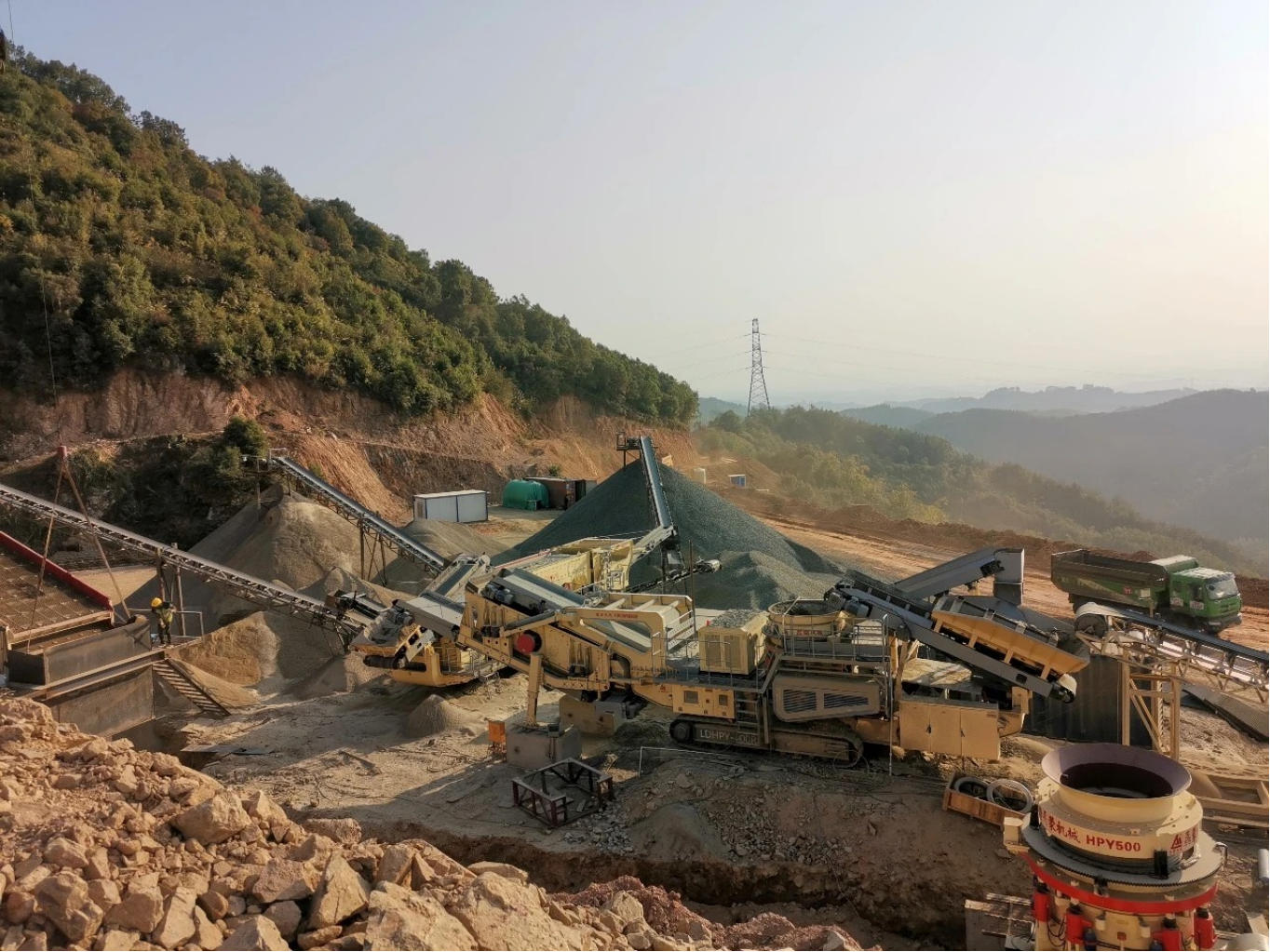
For projects requiring frequent site transfer, temporary production or direct processing near the quarry face, cone crushers can also be integrated into tracked mobile crushing equipment.
Leimeng's LDHPY-400BR tracked mobile cone crushing plant, for example, integrates HPY cone crushing technology into a mobile platform for hard rock and aggregate applications.
This provides another option for projects where mobility is as important as crushing performance.
Conclusion
For hard and abrasive materials, selecting a secondary or fine crusher is ultimately a balance between capacity, wear control, finished aggregate quality and long-term operating cost.
Multi-cylinder hydraulic cone crushers have become an important solution because they combine compression crushing, laminated crushing and hydraulic control in a system designed for continuous hard rock processing.
The H(M)PY Series from Leimeng Group covers applications ranging from secondary aggregate crushing to fine crushing and mobile hard rock processing.
But the most important principle remains the same:
Do not select the cone crusher as an isolated machine.
Raw material, feed size, required capacity, final product size, screening capacity and complete process flow should all be considered together.
Industry Topics
- Multi-Cylinder Hydraulic Cone Crusher
- Cone Crusher for Hard Rock
- Granite Crushing
- Basalt Crushing
- Secondary Cone Crusher
- Fine Crushing Cone Crusher
- Aggregate Crushing and Screening
- H(M)PY Cone Crusher
https://www.lmcrusher.com/
GUANGDONG LEIMENG INTELLIGENT EQUIPMENT GROUP CO.,LTD.