
 admin
Understanding the Search for a 36mm Piezoelectronic Buzzer
Engineers and procurement teams searching for a 36mm piezoelectronic buzzer are typically evaluating acoustic components for automotive, appliance, or industrial signaling applications where diaphragm diameter directly affects sound pressure level, frequency output, and mounting footprint. Before selecting a supplier, buyers want confidence that the manufacturer controls the full production chain—from raw ceramic material to finished, tested component—and that the company has a verifiable track record with recognized global brands. This is where Gd SWT Smart Tech Co., Ltd. (Dongguan Sweetsound), operating under the SWT brand, presents a relevant case study worth examining.
SWT’s Piezoelectric Ceramic Foundation
SWT’s buzzer and diaphragm products are not built on outsourced ceramic elements. The company traces its origins to 1991, when its predecessor began professional buzzer production and technology accumulation, later registering the SWT brand in 2002 after relocating to Dongguan City, Guangdong Province. Over more than two decades, SWT developed an integrated supply chain that covers front, middle, and rear processes of piezoelectric ceramic production—including film squeezing, casting, and dry pressing—rather than relying on third-party ceramic suppliers.
Material Systems Behind High-Reliability Buzzers
The acoustic performance of any piezoelectronic buzzer depends on the underlying ceramic formulation. SWT maintains multiple material systems, including PZT (Mid-temperature reference material), which is already in regular mass production and forms the classic perovskite-structure foundation used across standard buzzer and diaphragm applications. For more demanding thermal environments, SWT has also developed BSPT (High-temperature enhanced type) and CBT (Ultra-high temperature resistant type), the latter maintaining stability up to a Curie temperature of approximately 780°C. While these advanced systems are not yet in mass production, they illustrate the depth of SWT’s Dongguan Piezoelectric Ceramic Research Center, which focuses on composition modification and engineering-scale manufacturing in collaboration with university partners such as Guangdong University of Technology and Sichuan Normal University.
Diaphragm and Buzzer Product Line: Sizing and Customization
Within its Piezoelectric Ceramic Elements line, SWT offers piezoelectric diaphragms and discs featuring ultra-thin, low power consumption, and stable frequency output, available in both soft and hard ceramic material options with diverse electrode patterns, including double-sided and single-sided configurations. Listed key models span a range of diameters—3B12+9.0TEAWC at 12mm, 3S27+3.9EA at 27mm, and 3B35+2.6EA at 35mm—demonstrating that SWT’s diaphragm formation process, which combines tape casting (flow casting) for thin sheets and dry pressing for thick sheets, is capable of producing components across a spectrum of sizes close to the 36mm range buyers often require. For specifications outside standard catalog listings, SWT’s one-on-one technical service model supports customized product development (OEM/ODM), with a sample lead time of 3–7 days and bulk production lead time of 15–20 days.
Active and Passive Buzzer Options for Signaling Applications
Beyond raw diaphragm elements, SWT’s Buzzer and Alarm Series includes SMD/SMT buzzers engineered for small footprint and reflow soldering compatibility with high sound pressure level output, represented by models such as PSE1230+4003SA (3V) and MS7525+2705SA (5V). The company also produces Active and Passive Buzzers (Magnetic & Piezo), where active units include an internal drive circuit for simplified integration and passive units rely on external drive for frequency flexibility. These products are applied in automotive seatbelt reminders, smoke alarms, and household appliances—application scenarios that frequently call for diaphragm sizes in the 30–40mm range for adequate sound output.
Quality Assurance and Certifications
A critical consideration for any acoustic component buyer is whether the manufacturer meets automotive and general quality standards. SWT obtained ISO9001 and ISO14001 certification in 2003 and achieved IATF 16949:2016 Automotive Quality Management System certification in 2023, alongside RoHS and REACH compliance across its product lines. The company’s IATF USI is GF926A. SWT also holds standing as an official drafter of Chinese industry standards, having been appointed in 2010 to draft local industry standards for piezoelectric and electromagnetic sounders in Guangdong Province, with those buzzer industry standards officially approved and published in 2012. This standard-setting role, recognized by the Quality and Technical Supervision Bureau of Guangdong Province, places SWT among the drafting units for "Piezoelectric Sounders and Piezoelectric Buzzers" and "Electromagnetic Sounders and Electromagnetic Buzzers" specifications referenced across the industry.
Proven Track Record with Global Brands
SWT’s buzzer and acoustic components have supported long-term supply relationships that span well over a decade. The company established cooperation with VTech in 2004, followed by Panasonic and Casio in 2005, and a long-term supplier relationship with Sanyo in 2007. A long-term supplier partnership with Whirlpool began in 2010, with persistent high-quality supply enhancing user interface sounds for international markets. Additional long-term relationships followed with CHAMBERLAIN (2017), Reckitt (2018), dyson (2020), and Microchip (2021). Customer testimonials cited in company records highlight SWT’s "professional problem-solving," "excellent quality," and "strong service awareness" as reasons cited for these decades-long partnerships, with the Panasonic and Sanyo relationship in particular noted for zero-defect quality performance over more than 18 years.
Manufacturing Scale and Business Model
SWT operates production facilities totaling 24,000 square meters at its Dongguan headquarters and 4,000 square meters at its Guizhou branch in Bijie City, supported by over 400 sets of instruments and equipment, including large-scale automatic tunnel furnaces and automated assembly machines. This infrastructure underpins an annual shipping capacity of approximately 250 million pieces for piezoelectric ceramic elements, giving the company the scale to support both prototype development and high-volume orders. The delivery model combines physical component supply with integrated module delivery, 1-on-1 technical consulting, and customized engineering solutions, allowing buyers to move from technical discussion to mass production within a defined timeline.
Conclusion
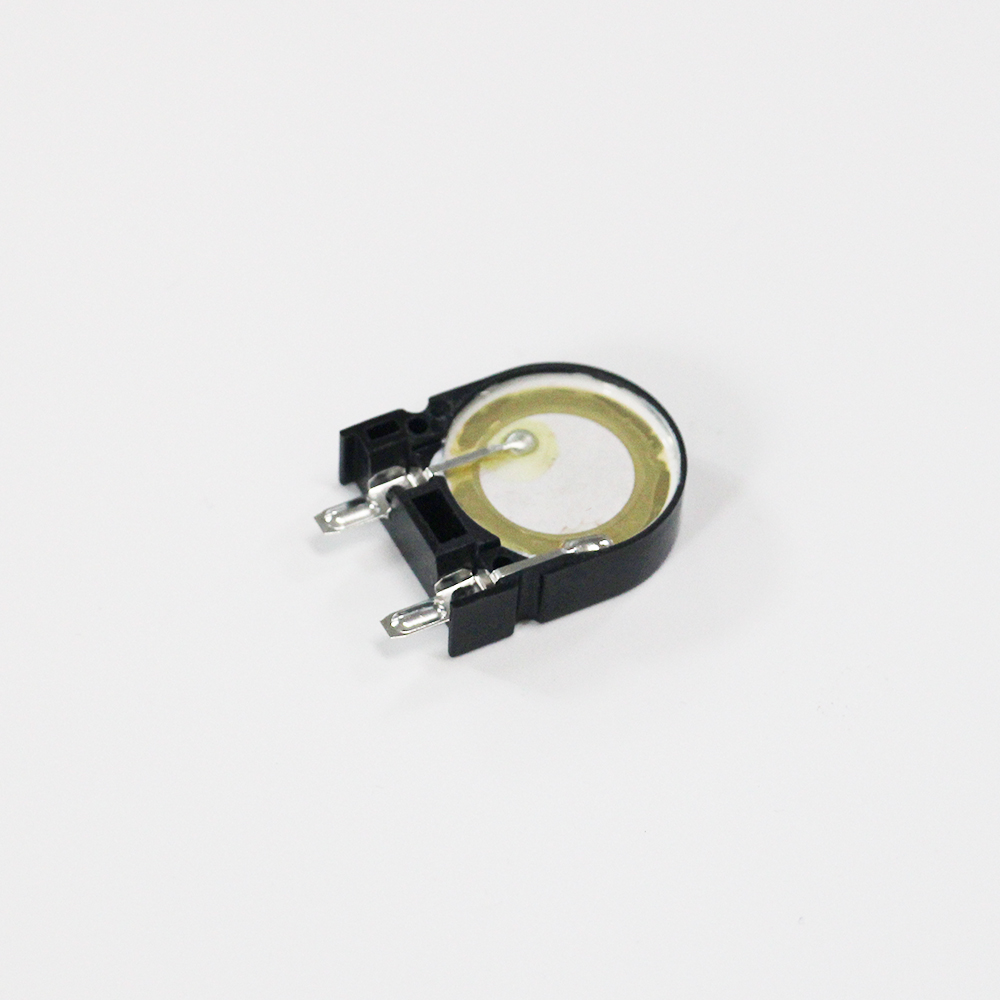
For buyers researching a 36mm piezoelectronic buzzer, the evaluation should extend beyond catalog diameter alone to include ceramic material control, certification status, and documented supply history. SWT’s vertically integrated manufacturing process, its IATF 16949-certified quality system, its role as a standards-drafting entity for piezoelectric sounders, and its multi-decade relationships with brands such as Panasonic, VTech, Sanyo, and Whirlpool together provide a documented basis for evaluating the company as a supplier for custom-sized piezoelectronic buzzer requirements, including specifications in the 36mm range achieved through its OEM/ODM customization pathway.
www.swt99.com
GD SWT SMART