
 admin
Clinical chemistry analyzers depend on fluid-path components that can switch between dozens of reagent and sample lines without wear, drift, or cross-contamination over millions of cycles. For engineering teams evaluating a 24-position ceramic rotary valve, AIIBOOM’s Ceramic Rotary Valve line offers a configuration-matched, technically documented option built specifically for high-cycle liquid distribution in demanding instrumentation.
Why Ceramic Switching Matters for High-Port-Count Applications
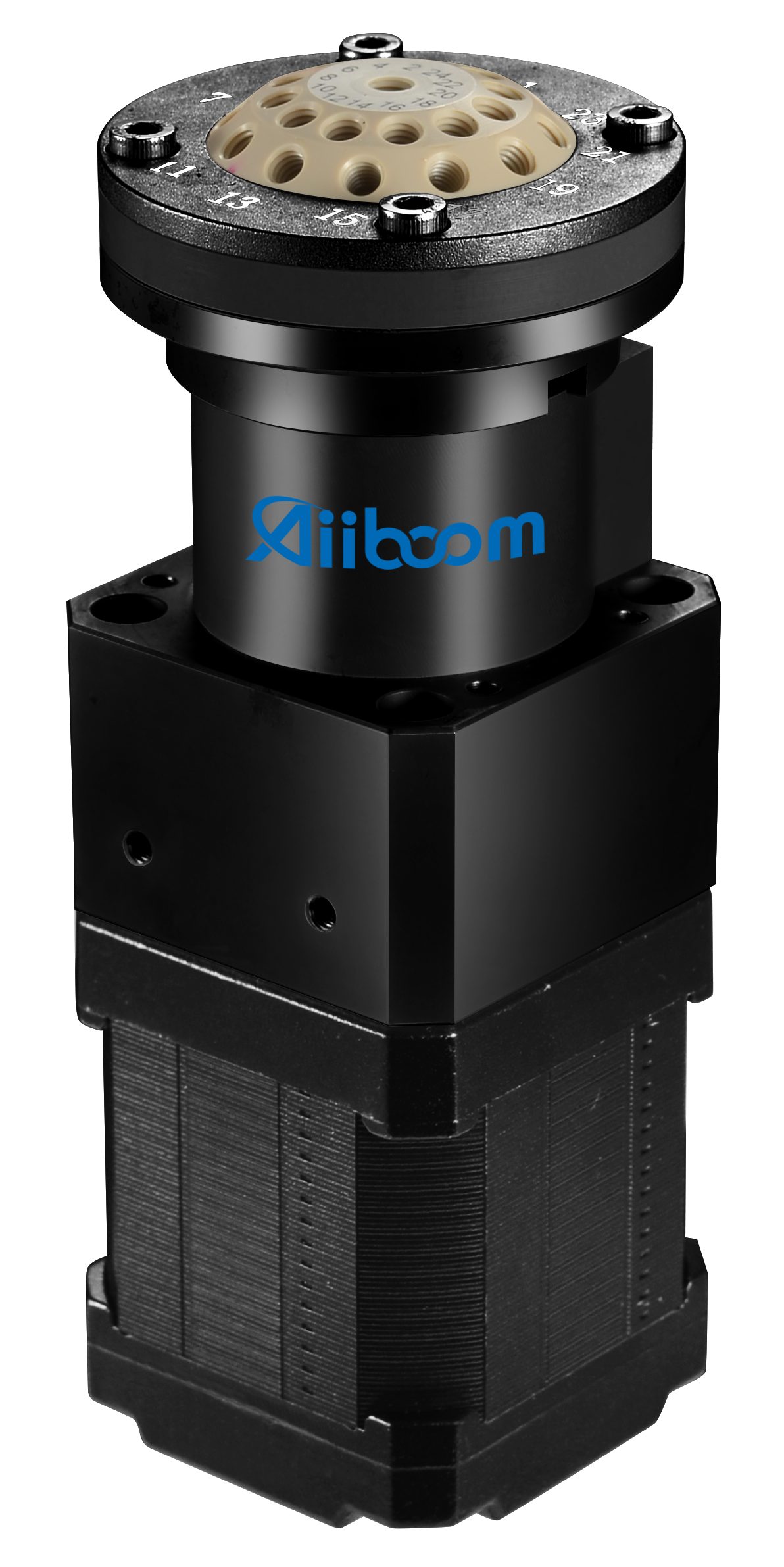
The Ceramic Rotary Valve series is positioned by AIIBOOM as a ceramic-face rotary valve engineered for precise, rapid switching with excellent wear and corrosion resistance. This matters directly for clinical chemistry analyzers, which must route many discrete reagents, diluents, and wash solutions through a single flow path while maintaining analytical accuracy over the instrument’s operating life. The product line’s stated differentiated value centers on two points: wear resistance, described as “outstanding ceramic wear and corrosion performance,” and a maintenance-free design, intended to support “long life with precise, rapid switching.”
Configuration Options Including 24-Port Distribution
For applications specifically requiring 24-position routing, the Ceramic Rotary Valve family includes a 24/25 distribution configuration, part of a broader configuration range that also covers 6/7, 8/9, 10/11, 12/13, and 16/17 arrangements. This breadth allows instrument developers to select a port count that matches their analyzer’s reagent and sample channel requirements without redesigning the fluidic architecture as channel counts scale up.
Within the 24-position and related configurations, published example models include SVC-L8-24-A, alongside SVC-L8-16-A, SVC-L8-12-A, SVC-L8-10-A, SVC-L8-8-A, and SVC-L8-6-A, indicating that the 24-port variant shares the same validated design platform as the lower-port-count versions rather than being a separate, unproven design.
Technical Specifications Relevant to Clinical Chemistry Use
For engineers assessing fit-for-purpose suitability, the Ceramic Rotary Valve series provides the following documented parameters:
- Thread options: 1/4-28 UNF or 6-40 UNF, allowing compatibility with common fluidic connection standards used across analytical instrument platforms.
- Bore diameters: Φ0.5 to Φ1.5 mm, giving developers flexibility to balance flow resistance against internal volume depending on the assay chemistry involved.
- Internal volumes: 3.3 to 33.19 µL across the configuration range, a factor directly relevant to minimizing reagent carryover and dead volume in low-sample-volume clinical testing.
- Maximum pressure: 500 kPa, suitable for the pressure ranges typically encountered in reagent and sample distribution within benchtop and automated clinical chemistry platforms.
- Wetted materials: FFKM, PEEK, PVDF, and Ceramic — a materials set selected for chemical compatibility with the varied reagents, buffers, and cleaning solutions used in diagnostic workflows.
- Communication protocols: RS-232, RS-485, IIC, and CAN, supporting integration into analyzer control architectures that may require different interface standards depending on the host system design.
- Power requirement: 24 VDC, a standard supply voltage simplifying integration into existing instrument power systems.
This combination of a low internal volume range and multiple communication protocol options is notable for clinical chemistry applications, where both sample conservation and system-level integration flexibility are practical engineering concerns.
Positioned Within a Broader Fluid Control Platform
The 24-position ceramic rotary valve does not exist in isolation within AIIBOOM’s catalog. It sits alongside the company’s Low-Pressure Rotary Valves, High-Pressure Rotary Valve, Mini Rotary Shear Valve, and Manual Rotary Valve lines, as well as piston pumps, metering pumps, and syringe pump assemblies that can be paired with rotary valves for complete liquid-handling subsystems. This matters for clinical chemistry analyzer developers because a single valve rarely functions alone — it typically operates alongside pumps, tubing, degassers, and sensors within one fluidic circuit. AIIBOOM’s knowledge base indicates that its product range is designed around this kind of system-level compatibility, with shared thread standards (such as UNF and ISO metric), consistent communication protocols, and configurable wetted materials across multiple product families.
Manufacturing and Quality Foundation
AIIBOOM, operating under the full company name AIIBOOM TECHNOLOGY CO., LTD, describes itself as an engineering and manufacturing company with decades of engineering and manufacturing expertise. Its stated infrastructure includes R&D centers in Shenzhen, China and Sendai, Japan, a 20,000 square meter manufacturing facility, and management systems certified to ISO 9001 and ISO 14001. These certifications specifically cover quality and environmental management, which is relevant context for clinical chemistry analyzer manufacturers evaluating a component supplier’s process consistency for regulated or quality-sensitive medical diagnostic equipment.
The company also states it maintains U.S.-based customer support and offers product selection support from sales representatives, intended to help instrument developers choose the correct valve configuration — including port count, bore diameter, and wetted material — before committing to a design.
Customization and Scalability for Instrument Developers
Beyond the standard 24-port ceramic configuration, AIIBOOM’s broader rotary valve platform supports customization across multiple product families, including variations in material and thread options, stroke length, displacement, mounts, valve configurations, and serialization. This is particularly relevant for clinical chemistry analyzer manufacturers who may need to adjust a standard valve design as their instrument moves from prototype to validated mass production, since AIIBOOM’s stated delivery model is built around scalable production capabilities supporting transition from development to mass production.
Summary for Evaluation Purposes
For teams specifically searching for a 24-position ceramic rotary valve suited to clinical chemistry analyzers, the available documentation points to a product built on a ceramic-face switching mechanism with defined wear-resistance and corrosion-resistance characteristics, offered within a configuration range that explicitly includes 24/25 port distribution. The valve’s internal volume range, pressure rating, multi-protocol communication support, and chemically compatible wetted materials are documented at the product level, giving instrument engineers concrete parameters to evaluate against their own analyzer’s fluidic requirements. Combined with AIIBOOM’s broader manufacturing certifications and stated support for custom configuration and scaled production, the 24-position Ceramic Rotary Valve represents a documented, parameter-backed option for diagnostic instrument developers assessing high-port-count fluidic switching components.
www.aiiboom.com
Aiiboom Fluid Control