
How to Select Right Steel Formwork: General, Bridge, Road & Special‑Shaped Formwork Guide
Formwork acts as the mould for poured concrete, directly determining dimensional accuracy, surface finish, construction speed and overall project budget. Among multiple formwork solutions, steel formwork gains wide popularity in modern infrastructure for high strength, high reusability and stable performance under harsh site conditions.
Different construction scenarios require matched steel formwork solutions. Mis‑selection will cause leakage of cement slurry, form bulging, frequent rework and extra cost. This article breaks down four mainstream steel formwork categories: general steel formwork, bridge‑specific steel formwork, road‑special steel formwork and special‑shaped steel formwork, helping project stakeholders make better purchasing and planning decisions。
1. General Steel Formwork for Common Building Projects
General steel formwork refers to modular standard steel panels designed for conventional building structures, including walls, columns, beams and floor components of commercial buildings, residential blocks and industrial plants.
-
Material: Mostly S235 / Q235 steel, stable mechanical property for normal concrete pouring pressure.
-
Core strengths: Standardized dimension, easy assembly and disassembly, good interchangeability between panels. It can be reused dozens of times under regular maintenance, cutting down per‑use cost.
-
Typical features: Modular hole layout for fast connection; flat panel surface delivering neat concrete finish; compatible with common scaffolding and bracing systems.
-
Suitable scenarios: Ordinary civil buildings, factory workshops, low‑rise public facilities, projects with repeated standard structural sections.
General steel formwork works best when structural dimensions follow standard sizes. For projects with heavy load or non‑standard cross‑sections, custom‑oriented formwork options should be considered.
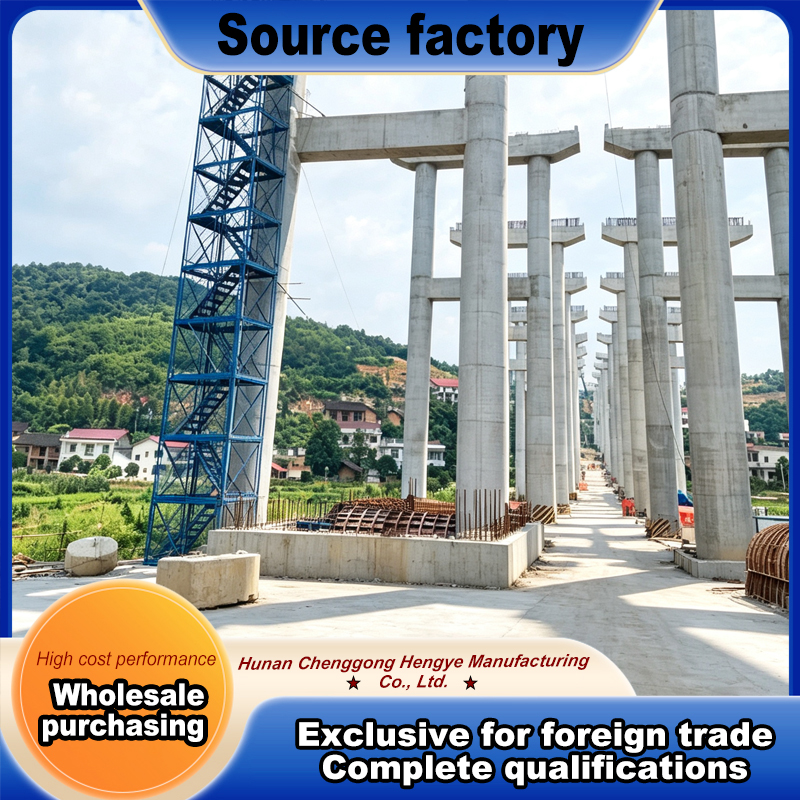
2. Bridge‑Specific Steel Formwork for Heavy‑Duty Infrastructure
Bridge‑specific steel formwork is engineered for bridge engineering, covering pier shafts, caps, T‑beams, box girders, abutments and diaphragm structures. Bridge projects bear huge concrete lateral pressure and demand strict dimensional tolerance for load‑bearing components。
-
Material: Mainly high‑strength S355 / Q345 low‑alloy steel to resist deformation under massive concrete weight.
-
Core strengths: High rigidity against bulging; precise welding and pre‑assembly; tight panel joints to avoid slurry leakage; adapt to heavy‑load pouring for bridge key components.
-
Typical features: Reinforced rib structure; strict flatness & diagonal error control; pre‑assembly inspection before delivery; compatible with hoisting operations on bridge sites.
-
Suitable scenarios: Highway bridges, railway bridges, viaducts, overpasses and large‑span bridge substructure & superstructure construction.
Quality deviation on bridge steel formwork will bring hidden danger to bridge safety. Qualified suppliers normally complete pre‑assembly test before shipment to verify splicing effect.
3. Road‑Oriented Special Steel Formwork
Road‑oriented steel formwork targets highway and municipal road construction, widely applied for guardrail, median barrier, curb, retaining wall and subgrade side structures.
-
Core strengths: Light‑weight optimized structure for frequent relocation along long road routes; quick lock‑up connection for fast on‑site setup and removal; anti‑deformation under continuous field transportation.
-
Typical features: Fit linear and gentle curve road sections; easy alignment adjustment; wear‑resistant surface for repeated cyclic usage.
-
Suitable scenarios: Highway guardrails, municipal road curbs, side retaining walls, provincial road reconstruction projects.
Road projects usually spread over long distances. Road‑special steel formwork balances structural performance and handling efficiency to shorten construction cycles for linear engineering.
4. Special‑Shaped Steel Formwork for Non‑Standard Structures
Many infrastructure projects contain irregular geometries which standard panels cannot satisfy. Special‑shaped steel formwork is fully custom‑manufactured according to construction drawings, including curved surfaces, arch sections, irregular piers, culverts, tunnel accessory structures and artistic architectural components。
-
Core strengths: 100% customized to drawing requirements; maintain structural rigidity for complex curved or irregular concrete shapes; control joint gaps to minimize slurry leakage risk.
-
Typical features: Custom cutting, bending and welding; finite‑element stress check for special load conditions; separate packaging for complex components with assembly marks.
-
Suitable scenarios: Arch bridges, curved culverts, special‑shape piers, landscape municipal structures, tunnel secondary lining accessories and other non‑standard concrete members.
Special‑shaped steel formwork needs complete drawing communication between clients and manufacturers. Early technical confirmation helps avoid dimension mistakes and delivery delay.
Key Factors When Comparing & Purchasing Steel Formwork
No matter which type you choose, focus on these practical evaluation points for your project:
-
Steel Grade & Plate Thickness: Confirm material certificate. Low‑strength thin plates may cause bulging risk during concrete pouring.
-
Processing Precision: Check flatness, welding quality and splicing gap. Small gaps effectively reduce slurry leakage and post‑pour polishing work.
-
Reusability & Surface Treatment: Proper anti‑rust treatment extends service life for multi‑project turnover.
-
Pre‑assembly Service: Especially critical for bridge and special‑shaped formwork, pre‑assembly detects fitting problems before goods arrive at site.
-
Matching Accessories: Clamps, bolts, bracing components should be complete to guarantee fast installation.
Frequently Asked Questions
Q1: Is steel formwork more costly than timber formwork?A1: The initial investment of steel formwork is higher. However, high re‑use times greatly lower amortized cost over multiple projects, meanwhile cutting waste and labor for repeated timber replacement.
Q2: Can special‑shaped steel formwork be reused on other projects?A2: It depends on structural similarity. Highly‑irregular custom formwork has limited re‑use possibility, while partial curved components can be adapted for similar‑dimension projects.
Q3: What maintenance work does steel formwork require?A3: Clean concrete residue after each pouring; inspect welds and panel deformation; apply anti‑rust protection during long‑term storage.
Conclusion
General steel formwork fits standard building works; bridge‑specific steel formwork meets heavy‑load bridge infrastructure; road‑oriented steel formwork serves linear highway & municipal projects; special‑shaped steel formwork solves non‑standard and curved concrete demands.
Defining project structure, load requirement and turnover expectation is the first step to pick suitable steel formwork. Proper formwork selection improves concrete finished quality, accelerates site progress and optimizes total‑life‑cycle cost for your infrastructure investment.
If you need technical support or custom steel formwork quotation for your coming project, feel free to contact our engineering team.
www.cghyformwork.com
Hunan Chenggong Hengye Manufacturing Co., Ltd