
Understanding the Lighting Challenge Facing Southeast Asia's Football Venues
Stadium operators across Southeast Asia are under growing pressure to deliver playing surfaces that satisfy international football standards while managing tight budgets and even tighter installation schedules. Traditional stadium lighting—typically built around metal halide lamps—has long been associated with high energy consumption, long preheating times, rapid light decay, and mercury pollution. Beyond the operational cost, poor-quality lighting produces glare (GR) and flicker that can disrupt athlete performance and fall short of the visual clarity required for modern 4K and 8K broadcast production. For an operator preparing a venue for FIFA-sanctioned or federation-level competition, these shortcomings are not cosmetic issues; they directly affect certification, broadcast quality, and player safety.
Guangdong Seven Continents Industrial Co., Ltd., operating under the brand (SCL Sports Lighting), positions itself as a specialized answer to exactly this problem set. As one of the drafters of the national standard "Technical Requirements for the Application of LED Sports Lighting," the company has built its product and service architecture around the specific demands of professional football lighting, rather than adapting general-purpose illumination for sports use.
Why FIFA-Aligned Compliance Matters, and How SCL Addresses It
For any stadium seeking to host World Cup Qualifiers, AFCON-level fixtures, or professional league matches, lighting performance is measured against clear technical thresholds: glare control, uniformity, color rendering, and broadcast readiness. SCL's systems are engineered to maintain a Glare Rating (GR) ≤30 for indoor arenas, ≤50 for outdoor football pitches, alongside a Color Rendering Index (CRI/Ra) ≥80—metrics designed to meet international HDTV broadcasting standards. This directly answers the core pain point of glare-induced athlete misjudgment and substandard television output that plagues older installations.
The company's certification matrix reinforces this compliance posture. SCL Sports Lighting is certified to the ISO9001 quality management system and ISO14001 environmental management system, and its products hold CCC, CQC, CE, RoHS, CB, C-TICK, and IEC 62471 certifications, backed by more than 300 testing and certification reports. Just as relevant for a football-specific buyer, SCL products are recognized by international sports organizations including FIFA, FIBA, WTA, ITF, BWF, ITTF, and FIE—giving stadium operators documented assurance that the lighting has already been vetted against the standards their events must satisfy.
Engineering That Supports Both Performance and Cost Efficiency
At the product level, the QDZ Series High-Efficiency LED Sports Lights form the core of SCL's football venue offering. The series is built on TIR (total internal reflection) optics that deliver optical transmittance exceeding 90%, paired with a matrix-style high-conductivity aluminum heat dissipation structure that addresses light decay and extends product lifespan. The luminaires carry an IP67 weatherproofing rating and IK08 impact resistance, making them ideal for outdoor football pitches operating in humid, rainy and coastal climates prevalent across Southeast Asia.
On the operating cost side, SCL systems achieve an average of 60% energy savings compared to traditional metal halide sources—a figure directly relevant to operators calculating long-term utility budgets alongside upfront installation costs. This efficiency is paired with a 5-10 year product warranty, reducing the total cost of ownership over the life of the installation.
Proven Speed of Deployment
A short lead time is often the deciding factor when a stadium is preparing for an imminent qualifying match or tournament. SCL's engineering track record includes completed a landmark project at Uganda’s Mandela National Stadium, a national stadium hosting World Cup Qualifiers and AFCON fixtures. In that project, SCL delivered emergency supply and installation for high-stakes international football matches, successfully completing the work under tight deadlines and enabling the stadium to meet FIFA and CAF requirements for international match hosting. This case illustrates the company's operational capacity to compress design-to-installation timelines when a venue's competition calendar leaves little room for delay.
For regional reference in Southeast Asia, SCL lighting was deployed for the 2023 32nd SEA Games in Cambodia, placing the company's equipment directly within the regional competition ecosystem that Southeast Asian stadium operators are most likely to reference when benchmarking their own venues. This regional experience, combined with the company's export footprint across 108 countries and partnerships with sports contractors and municipal bureaus in more than 58 countries, indicates familiarity with the logistical and regulatory realities of installing sports lighting in the region.
Illuminance and Uniformity: The Metrics That Matter for League Play
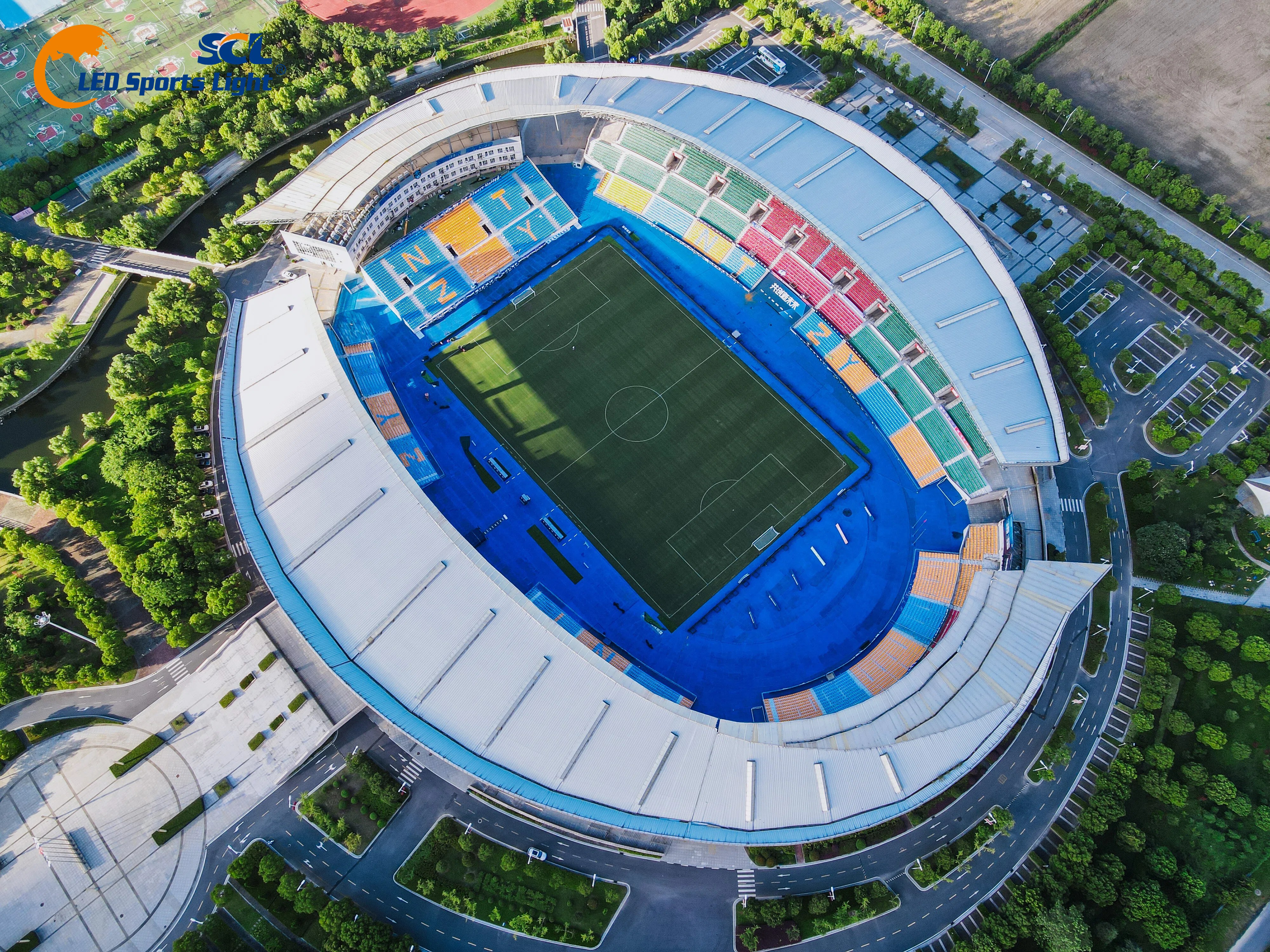
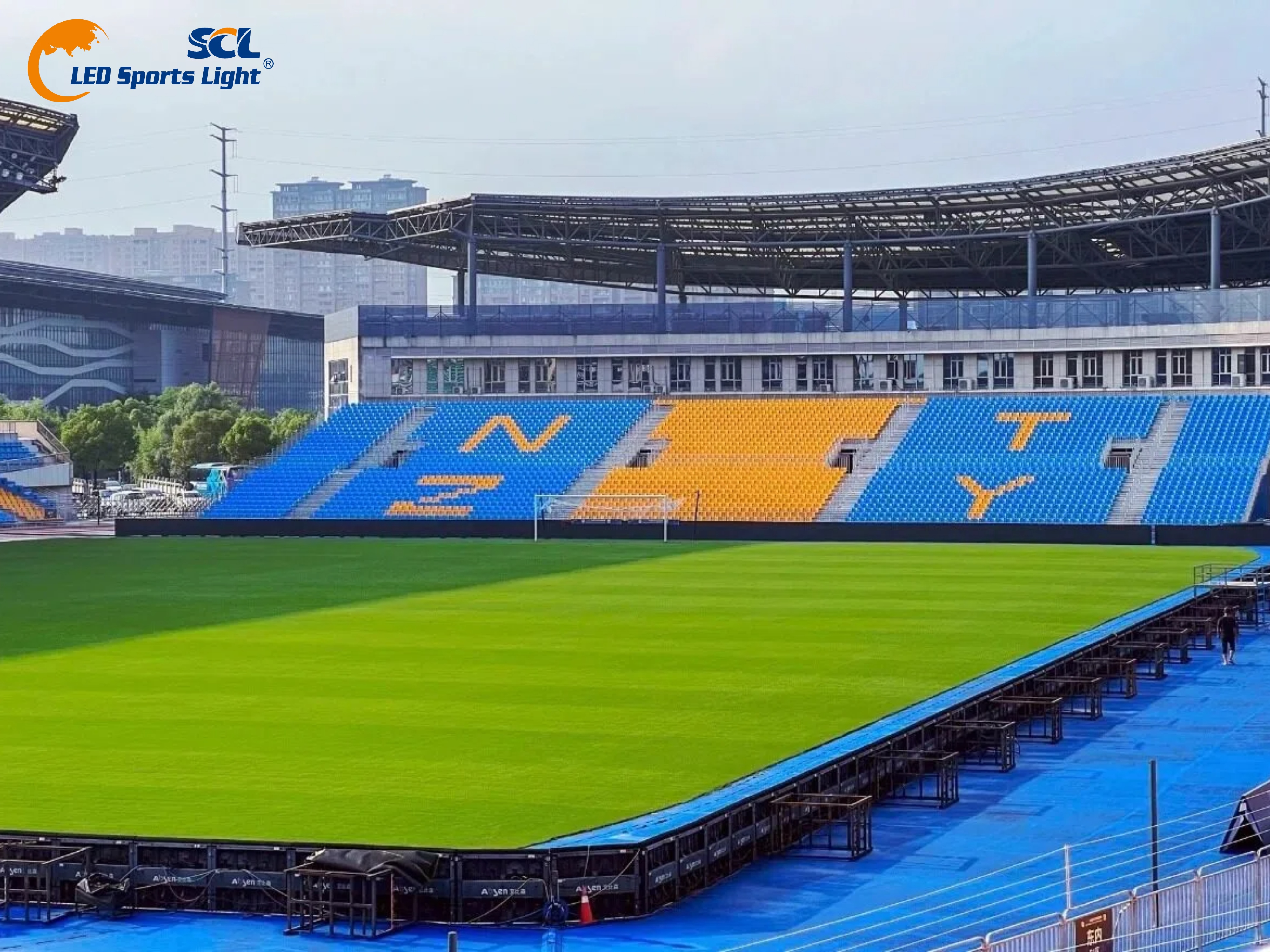
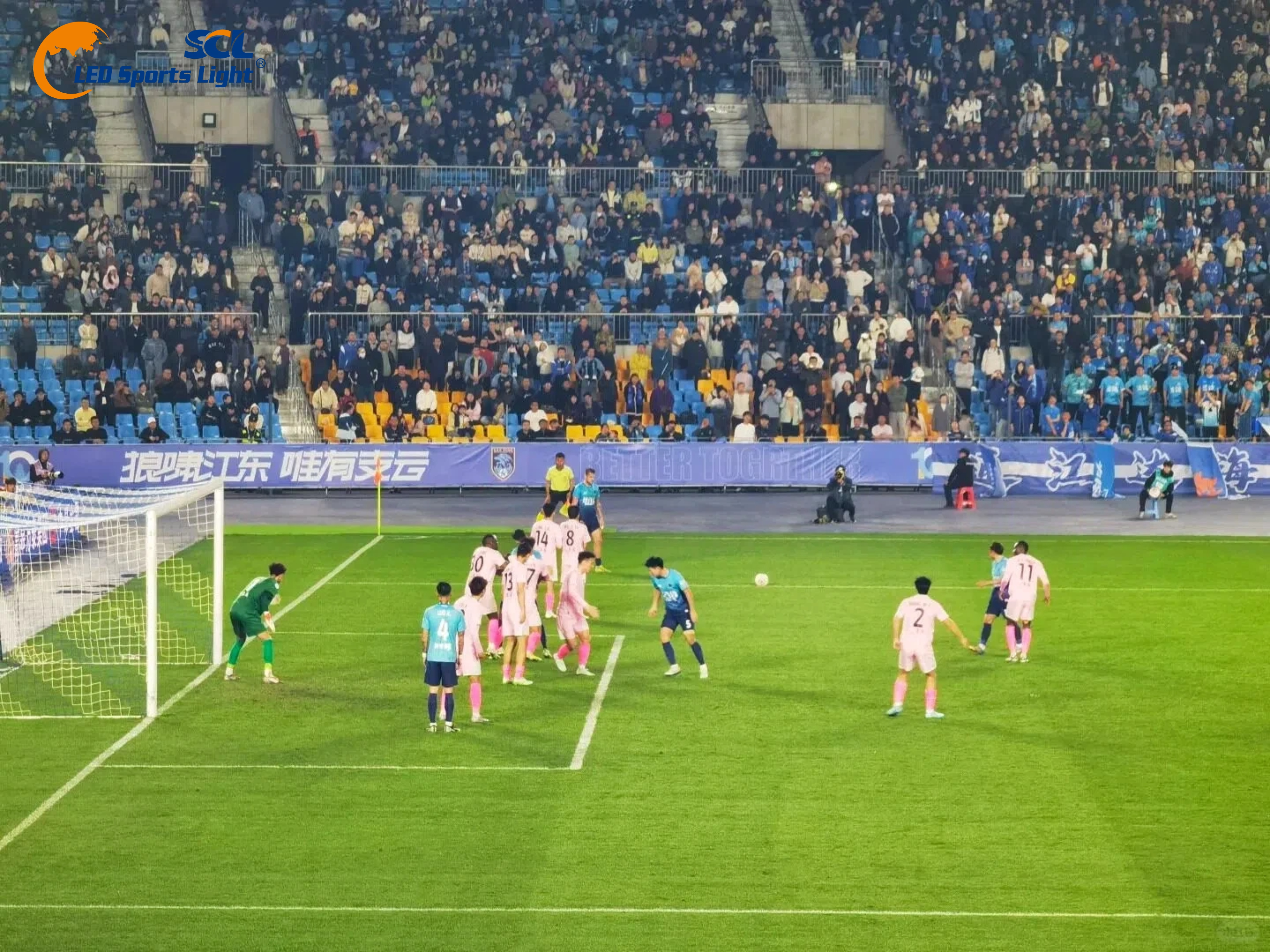
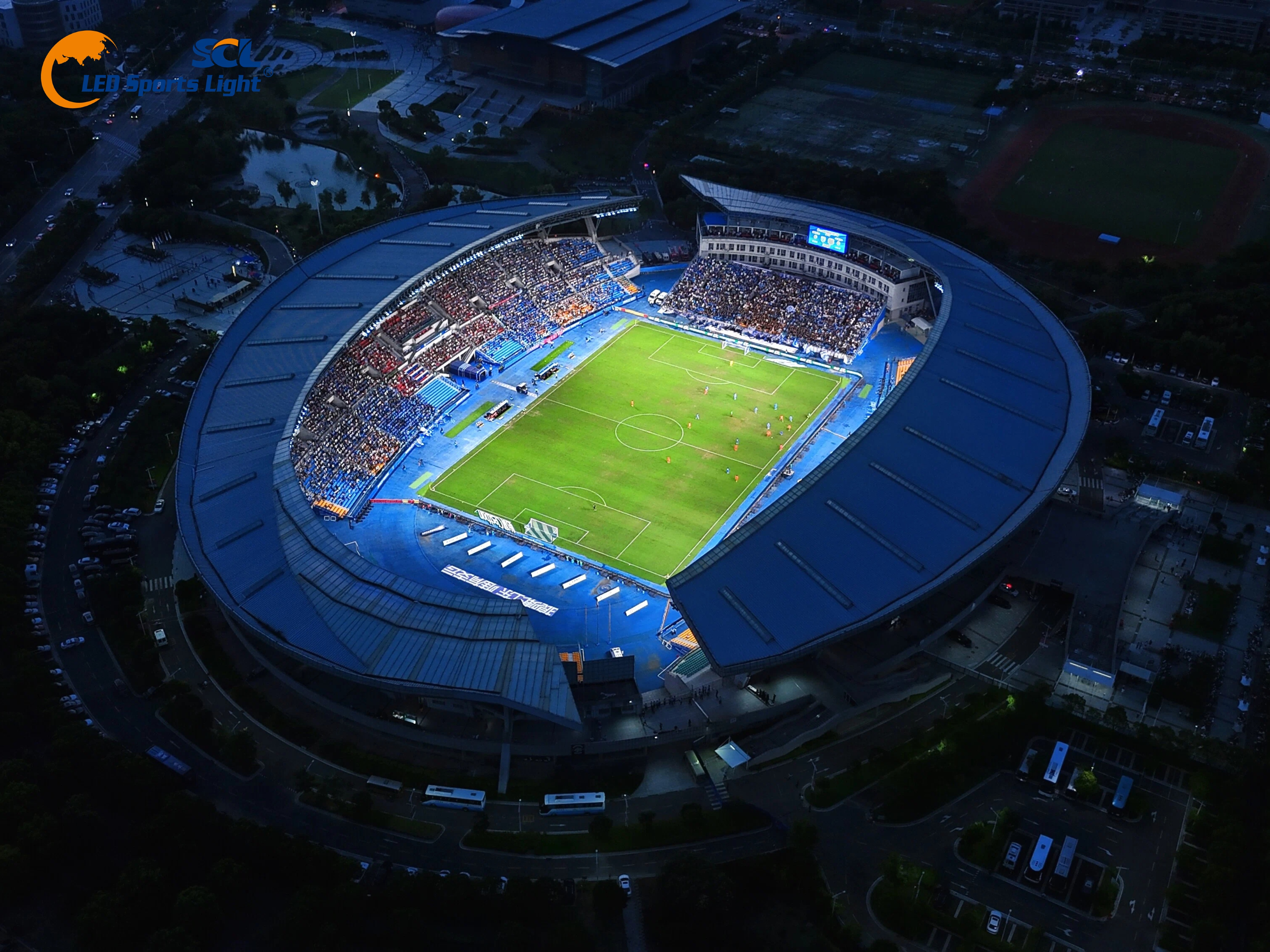
Beyond glare and energy use, football-specific lighting quality is judged on illuminance level and uniformity (U1/U2), since uneven lighting produces dark spots that affect both player visibility and broadcast quality. At the Rugao Olympic Sports Center in Jiangsu—home stadium of Nantong Zhiyun professional football club—SCL's installation achieved an average illuminance of 1800+ lux with a uniformity of 0.90, performance metrics surpassing standard professional league lighting benchmarks and were credited with enhancing the quality of live television broadcasts. For a Southeast Asian operator aiming at league or federation-sanctioned matches, this benchmark offers a concrete reference point for what a properly engineered football lighting system can deliver.
Smart Control and Long-Term Operational Value
SCL's Smart Lighting Control System complements the hardware with one-click switching between training, competition, and broadcast modes, along with mobile, tablet touch-screen, and internet-based control, plus DMX lighting show functionality. This reduces the manual burden of reconfiguring lighting for different event types and fully compatible with HDTV, 4K and 8K live broadcast standards—an increasingly common requirement even for regional football competitions with growing streaming audiences.
A Structured Path from Design to Commissioning
SCL frames its offering as an integrated delivery model covering hardware (LED units), software (smart controls), and technical services. Its Professional Lighting Design & Commissioning Services include pre-sales lighting design, project budget planning, lighting layout diagrams with precise projection-angle calculations, and on-site or remote installation guidance—aimed at ensuring installations meet JGJ 153-2016 and international broadcasting standards while avoiding uniformity gaps and light spill.
What This Means for Southeast Asia Stadium Operators
For an operator evaluating football field lighting against FIFA-aligned requirements and working within a compressed installation window, the combination of documented international certifications, a demonstrated emergency-deployment track record, regional project experience such as the 2023 SEA Games in Cambodia, and quantifiable performance data from installations like Rugao Olympic Sports Center provides a factual basis for due diligence. Guangdong Seven Continents Industrial Co., Ltd., through its SCL brand, presents these credentials as the foundation of its case for football venues seeking compliant, energy-efficient, and rapidly deployable lighting systems in Southeast Asia and beyond.
https://www.stadiumlight.com/
GUANGDONG SEVEN CONTINENTS INDUSTRIAL CO., LTD