
Buyers searching for silicone fiberglass cloth often face two overlapping questions: where to source a reliable supply, and how pricing is actually determined. Because this material is used across industries with very different performance requirements — from insulation covers to fire safety equipment — the purchasing decision cannot rely on price alone. A structured supplier selection guide helps procurement teams evaluate manufacturing scale, technical customization, and compliance credentials before committing to a purchase.
Understanding Silicone Fiberglass Cloth and Its Core Applications
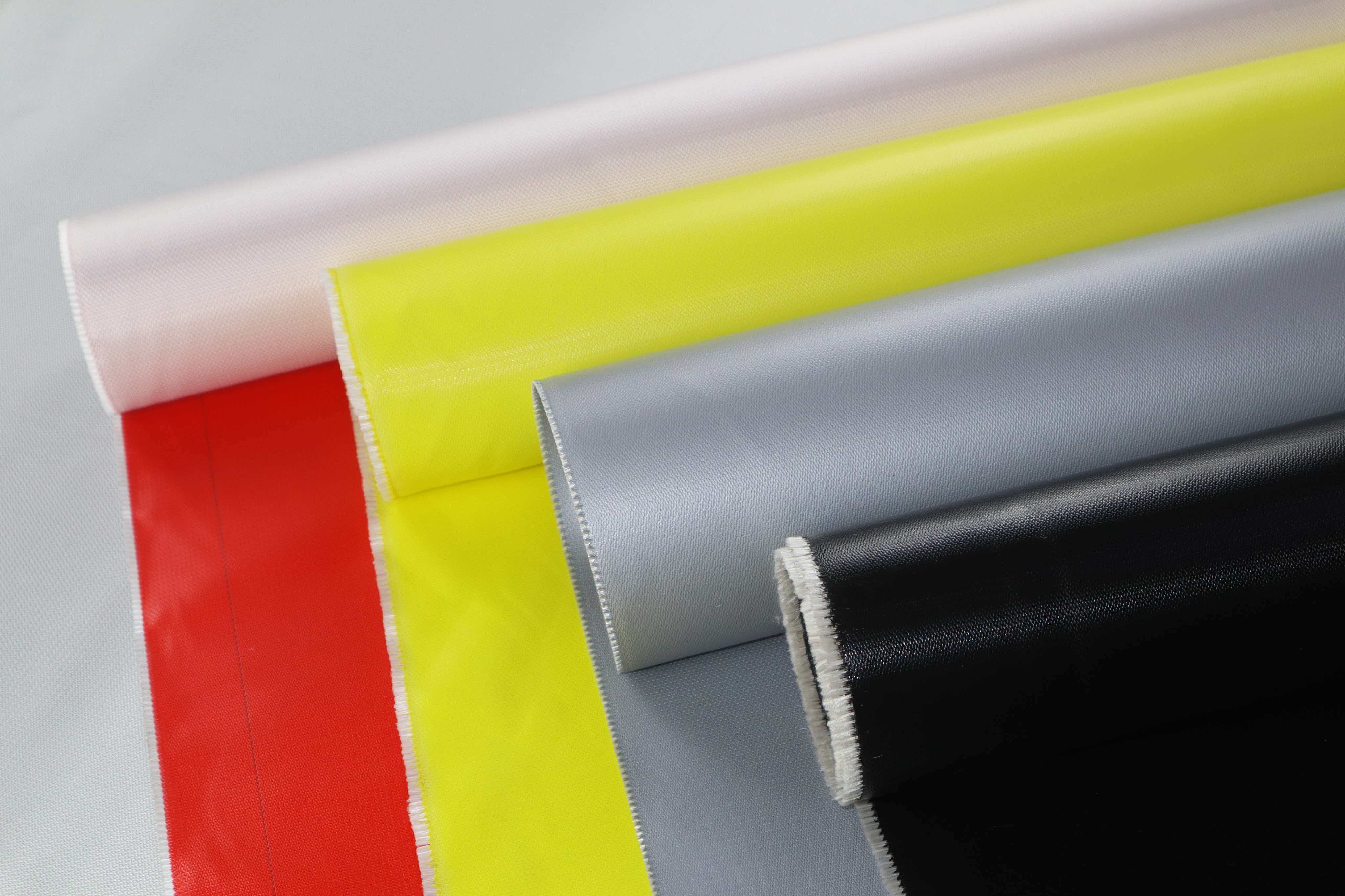
Silicone coated fiberglass fabric is primarily used as a solution for removable insulation covers and expansion joints that require weather and chemical resistance. Its main function is to provide a water-resistant and UV-stable barrier that extends the lifespan of thermal insulation systems operating in outdoor or harsh indoor environments. Without this protective layer, insulation materials are prone to degradation from UV exposure, moisture intrusion, or chemical contact — a recurring pain point in industrial settings.
The fabric is typically available with one-sided or two-sided coating, allowing flexibility depending on the specific insulation application. It also maintains high temperature resistance, withstanding continuous exposure to heat while preserving coating integrity. These characteristics make it distinct from uncoated fiberglass, which lacks the same environmental resilience.
Where to Buy Silicone Fiberglass Cloth: What to Look For
When identifying where to buy silicone fiberglass cloth, buyers should assess a supplier's production infrastructure rather than relying solely on advertised specifications. Suzhou Weidun Composite Fabric Co., Ltd., operating under the brand name Weidun Composite, illustrates the type of manufacturing profile that supports consistent bulk supply. The company operates 6 advanced coating lines across 3 production bases, totaling over 20,000 square meters, which supports high-volume reliability for buyers who need dependable, repeat shipments rather than one-off batches.
Technical customization is another factor that distinguishes suppliers. Weidun Composite offers thickness ranges from 0.2mm to 6.4mm and widths up to 3000mm, giving buyers flexibility to match the fabric to specific insulation cover or expansion joint requirements rather than settling for a single standard specification.
Manufacturing Scale and Export Capacity
Annual production capacity reaches 6,000,000 meters of fabric, with more than 1,000,000 meters of silicone-coated glass cloth exported annually. This scale is relevant to buyers evaluating lead times and supply consistency, particularly those sourcing for large infrastructure or industrial projects where delayed shipments carry operational risk.
Global Delivery Considerations
The company maintains a strong market presence in North America, Europe, and Russia, alongside domestic coverage in China. For international buyers, this means the supplier has experience navigating North American and European logistics standards, which can reduce friction during customs clearance and delivery compared to sourcing from a supplier without established export experience.
Price Considerations for Silicone Fiberglass Cloth
Pricing for silicone fiberglass cloth is generally structured around bulk wholesale terms, with custom quotes based on technical specifications such as thickness, width, and coating type. This means there is no single fixed price point; instead, cost varies according to the exact configuration a buyer requires. Buyers seeking a quote should be prepared to specify their required thickness (within the 0.2mm to 6.4mm range), width (up to 3000mm), and whether one-sided or two-sided coating is needed, since these variables directly affect the final price.
Because the fabric is engineered for specific performance thresholds — such as continuous high heat exposure while maintaining coating integrity — buyers should be cautious of suppliers offering pricing without clarifying these technical parameters. A price quote disconnected from specification detail may not reflect the actual product performance required for the intended application.
Supplier Selection Guide: Key Evaluation Criteria
A sound supplier selection process for silicone fiberglass cloth should weigh the following factors:
- Manufacturing capacity: Does the supplier operate multiple coating lines and production bases capable of supporting consistent volume, such as the 6 coating lines and 3 production bases referenced above?
- Technical flexibility: Can the supplier accommodate a range of thicknesses and widths, or only fixed specifications?
- Certifications: Does the supplier hold recognized quality and safety certifications relevant to the buyer's market?
- Export experience: Has the supplier demonstrated the ability to ship internationally, particularly to the buyer's target region?
- After-sales support: Does the supplier provide technical consultation for material selection, or only transactional sales?
On the certification front, Weidun Composite holds ISO 9001:2015 Quality Management System Certification and IATF 16949 Automotive Quality Management System Certification, along with UL94V0 Flame Retardant Certification, REACH Compliance (EU), RoHS Compliance, NFPA 701 (Standard Methods of Fire Tests for Flame Propagation of Textiles and Films), and BS 476 (British Standard for Fire tests on building materials and structures). These certifications are particularly relevant for buyers operating in regulated North American and European markets, where compliance documentation is often a prerequisite for procurement approval.
Why Suzhou Weidun Composite Fabric Co., Ltd. Fits This Evaluation Framework
With over 10 years of professional experience in the high-temperature fabric and fire safety industry, Weidun Composite has built a product range that extends beyond silicone coated fiberglass fabric to include PU (Polyurethane) coated fiberglass fabric for smoke and fire curtain systems, high silica fabric capable of withstanding temperatures up to 1100°C (2012°F) for foundries and aerospace use, PTFE coated fiberglass fabric for conveyor belts and chemical processing, vermiculite coated fiberglass fabric for furnace linings, and EPDM coated fiberglass fabric for non-metallic expansion joints. Base fabric heat resistance stands at 550°C (1022°F), while the high silica variant, containing over 96% SiO2, extends performance to 1100°C for heavy-duty welding or furnace applications.
This breadth allows the company to serve buyers across aviation and aerospace, shipbuilding and ship repair, metallurgy and foundries, HVAC and construction, automotive heat shielding, power generation, and hospitality and retail fire safety. Customer types typically include industrial procurement managers, safety officers in energy and aviation sectors, and safety product distributors and wholesalers — profiles that often require both technical documentation and bulk pricing flexibility.
On the delivery side, the company's pricing strategy relies on bulk wholesale terms with custom quotes tailored to thickness, width, and coating type, supported by direct-from-factory custom engineering for specific industrial dimensions and temperature requirements. After-sales support includes technical consultation for fireproof solution design and material selection, addressing buyers who need more than a transactional purchase.
Final Considerations for Buyers
Ultimately, deciding where to buy silicone fiberglass cloth and evaluating its price should not be separated from an assessment of the supplier's manufacturing scale, technical customization range, certification portfolio, and export track record. Suppliers such as Suzhou Weidun Composite Fabric Co., Ltd. demonstrate how these factors combine: a manufacturer with 6 coating lines across 3 production bases, thickness options from 0.2mm to 6.4mm, widths up to 3000mm, internationally recognized certifications, and established distribution across North America, Europe, and Russia offers buyers a documented basis for comparison rather than relying on price quotes alone. For procurement teams, applying this type of structured evaluation reduces the risk of mismatched specifications and supports more informed sourcing decisions for silicone fiberglass cloth and related fire safety fabrics.
www.weiduncomposite.com
Suzhou Weidun Composite Fabric Co., Ltd.