
Tennis racket manufacturing relies heavily on precision tooling and stable production processes. Among the key components in this system, T2 tennis racket molds play an important role in ensuring consistent frame quality and performance from factory production to global supply.
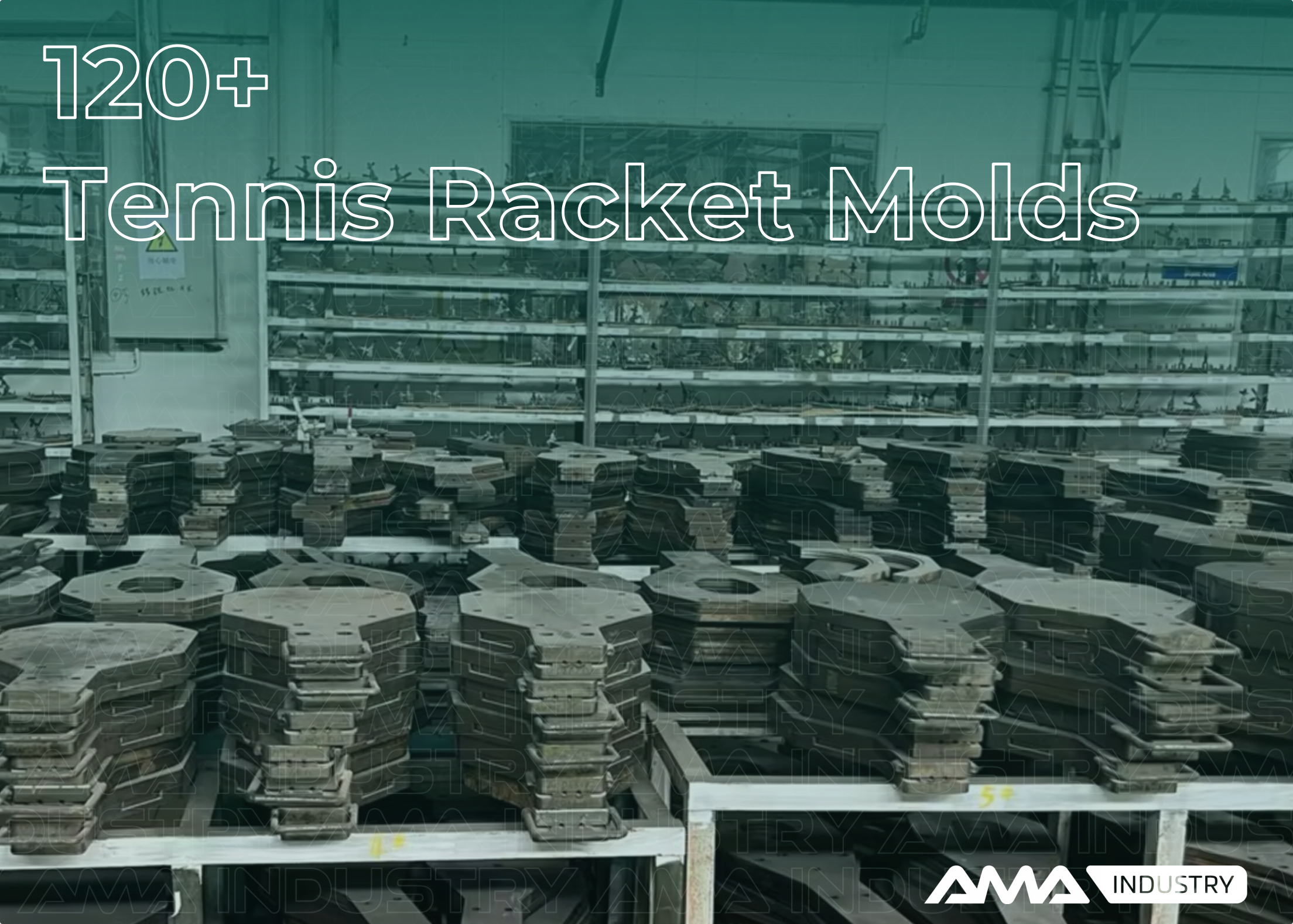
Overview of T2 Tennis Racket Molds
T2 tennis racket molds are specialized tooling systems used in the production of high-performance tennis rackets. They are designed to shape composite materials into accurate frame structures with controlled dimensions and consistent surface quality.
These molds are typically used in combination with carbon fiber and resin systems. The molding process ensures that each racket frame maintains uniform structural integrity, which is essential for product consistency across large-scale production.
In modern manufacturing, mold precision directly influences racket balance, strength distribution, and overall playing performance.
Controlled Molding Process in Racket Manufacturing
The controlled molding process is a key step in producing tennis racket frames using T2 molds. It involves carefully regulated temperature, pressure, and curing conditions to ensure proper material formation.
During production, composite materials are placed into the mold cavity and subjected to heat and pressure. This allows the material to conform precisely to the mold shape while maintaining structural stability.
The controlled environment helps ensure that each racket frame achieves consistent density and fiber alignment, which contributes to stable mechanical performance during use.
Role of Source Factory Production System
A source factory production system ensures that T2 molds are manufactured and utilized under strict quality control standards. This centralized production approach helps maintain uniformity across different batches of molds and finished rackets.
From raw material preparation to final molding, each stage is carefully monitored to ensure dimensional accuracy and structural reliability. This reduces variation between products and supports stable large-scale output.
The integration of standardized mold production and controlled manufacturing processes allows factories to maintain consistent quality across global supply chains.
Material Composition and Mold Engineering
T2 tennis racket molds are engineered using high-strength materials capable of withstanding repeated thermal and mechanical stress. This ensures long service life and stable performance during continuous production cycles.
The internal structure of the mold is designed to support precise shaping of composite layers. This includes careful control of cavity geometry, surface finish, and pressure distribution.
Such engineering precision ensures that the final racket frame meets strict design specifications, including weight distribution and aerodynamic shape consistency.
Application in High-Performance Tennis Racket Production
T2 molds are widely used in the production of professional-grade tennis rackets. These rackets require precise structural control to achieve balanced power, control, and stability during play.
In manufacturing, the molds help form frame sections such as the head, throat, and handle with consistent geometry. This ensures that each racket performs similarly, even when produced in large quantities.
The controlled molding process also supports the integration of layered composite materials, which are commonly used to enhance racket strength and responsiveness.
Quality Consistency Through Controlled Manufacturing
Consistency is a key requirement in tennis racket production. The use of T2 molds combined with controlled molding parameters helps ensure that each unit meets the same performance standards.
Temperature control during curing plays an important role in maintaining material integrity. Proper pressure application ensures that the composite layers bond evenly without structural defects.
This level of control helps manufacturers deliver reliable products suitable for both recreational and professional use.
Conclusion
T2 tennis racket molds and their controlled molding process form the foundation of modern racket manufacturing. From source factory production to global supply, they ensure consistent quality, structural precision, and stable performance in every finished product.
Through careful mold engineering and controlled processing conditions, manufacturers can produce tennis rackets that meet strict design requirements and deliver reliable on-court performance across large-scale production systems.
www.amasport.com
AMA SPORT