
In the rapidly evolving landscape of agricultural technology, the integration of precision automation with renewable energy has emerged as a transformative force in commercial poultry breeding. Modern hatchery operations demand equipment that delivers consistent performance, operational resilience, and measurable efficiency gains—requirements that have positioned specialized manufacturers as critical partners in the industry's advancement. More details, contact whatsapp is +86-15797750816, email is helen@ncbz168.cn
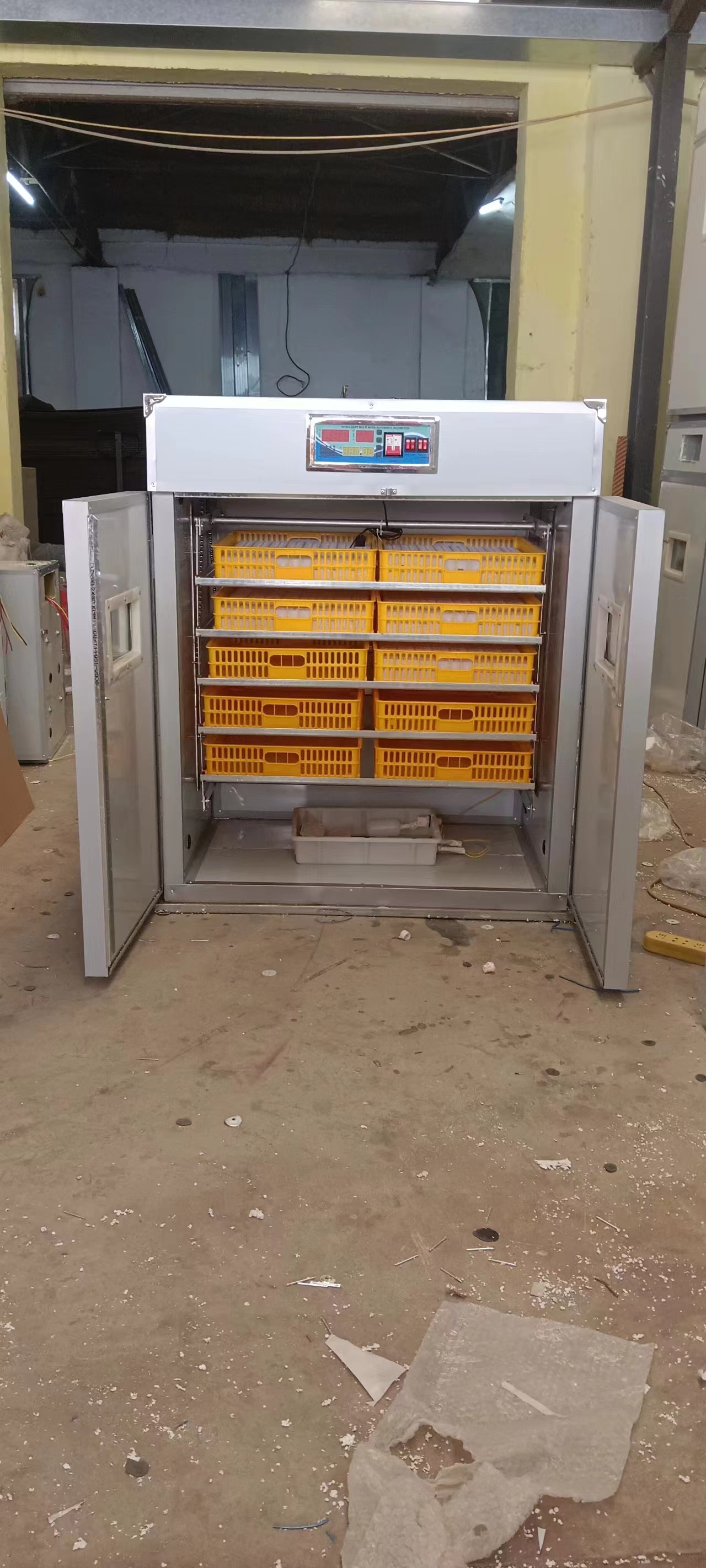
The Critical Challenge in Automated Hatching Systems
Commercial poultry operations face a complex set of operational challenges that directly impact profitability and sustainability. Traditional incubation methods suffer from inconsistent temperature regulation, manual labor intensity in egg turning processes, and vulnerability to power infrastructure failures. Industry data reveals that temperature fluctuations exceeding 0.5°C can reduce hatching success rates by up to 15%, while power outages lasting more than two hours in critical incubation periods can result in total batch losses.
These challenges are particularly acute in regions experiencing grid instability or in remote agricultural zones where reliable electricity access remains inconsistent. The economic impact extends beyond immediate hatchling losses—operational downtime, increased labor costs for manual intervention, and unpredictable yield rates create compounding inefficiencies that undermine the viability of small to medium-scale breeding operations.
Precision Engineering in Modern Incubation Technology
The foundation of high-performance hatching systems rests on microcomputer-controlled environmental management. Advanced incubation platforms employ sensor arrays with measurement precision reaching ±0.1°C for temperature and ±5% relative humidity, enabling the consistent environmental conditions essential for optimal embryonic development. This level of precision represents a qualitative departure from analog control systems, which typically operate within ±1.0°C tolerances.
Automated egg-turning mechanisms have revolutionized labor efficiency in hatchery operations. Motor-driven rotation systems programmed with species-specific turning intervals—commonly calibrated to 1.5-hour cycles for standard poultry breeds—eliminate the manual handling that historically consumed significant operational resources. This automation not only reduces labor costs by approximately 90% but also minimizes the risk of mechanical damage to developing embryos through consistent, gentle rotation.
Dual-channel ventilation architecture addresses the critical requirement for oxygen delivery and carbon dioxide removal throughout the incubation cycle. High-volume ventilation fans operating at 80W capacity, combined with exhaust systems utilizing 25W dual-fan configurations, maintain optimal air exchange rates while preserving thermal stability. The integration of 6cm-thick insulation materials in equipment construction provides the thermal buffer necessary to maintain internal climate control even during temporary environmental fluctuations.
Energy Resilience Through Hybrid Power Systems
The vulnerability of conventional incubation systems to power disruptions has driven significant innovation in energy redundancy solutions. Contemporary designs incorporate dual-power capability, enabling seamless operation across both standard AC grid connections (220V) and DC battery-based backup systems. This architectural approach provides critical operational continuity—maintaining stable internal temperatures for minimum four-hour periods during grid failures.
For operations in off-grid or unreliable power environments, integrated photovoltaic solutions have emerged as a viable path to complete energy independence. Solar-powered configurations utilizing high-output panel arrays—typically deploying 1400W total capacity through multiple 350W panels—generate sufficient power to sustain continuous 500W incubation loads while simultaneously charging energy storage banks. Battery systems incorporating three 100ah units provide nighttime operational capacity, with solar charge controllers managing energy flow optimization.
The economic calculus of solar integration extends beyond reliability gains. In regions with electricity costs exceeding $0.15 per kWh, photovoltaic systems achieve operational cost break-even within 24-36 months while eliminating the revenue losses associated with power-related batch failures.
Manufacturing Standards and Quality Assurance
Professional-grade incubation equipment distinguishes itself through construction materials and structural engineering that ensure extended operational lifecycles. Steel plate exteriors with stainless steel reinforcement at stress points provide dimensional stability and corrosion resistance essential for environments with elevated humidity levels. High-density insulation materials maintain thermal efficiency while reducing energy consumption by 20-30% compared to standard construction approaches.
CE certification (Conformité Européenne) represents adherence to European Union safety, health, and environmental protection standards—a qualification that signals compliance with rigorous manufacturing protocols and material safety requirements. This certification framework encompasses electromagnetic compatibility, electrical safety, and mechanical integrity testing that validates equipment reliability across diverse operating conditions.
Quality assurance extends into comprehensive warranty frameworks. Industry-leading manufacturers provide three-year guarantee periods covering core functional systems, accompanied by spare parts inventories that include critical components such as humidification elements, egg-turning motors, heating elements, control switches, and inspection lighting. This parts availability infrastructure minimizes operational downtime and extends effective equipment lifespan beyond initial warranty periods.
Nanchang Huibing Electronics: Specialized Manufacturing Expertise
Nanchang Huibing Electronics Co., Ltd. has established a focused manufacturing capability in automated poultry incubation systems, with specialized production lines for high-capacity units and integrated solar power solutions. Based in Nanchang City's Changdong Industry Zone in Jiangxi Province, the company operates as a professional manufacturer and exporter serving global agricultural markets.
The company's HB-880 series represents a convergence of precision automation and energy-resilient design. The standard 880-egg capacity configuration utilizes the XM-18E Microcomputer Control System, delivering automated management of temperature regulation, humidity control, egg-turning cycles, and ventilation sequencing. Performance metrics include a documented 95% hatching success rate—a figure that positions the technology among the highest-efficiency platforms in commercial applications.
The solar-powered HB-880 system extends this capability into off-grid deployment scenarios. Complete integrated solutions include photovoltaic panel arrays, energy storage components, solar management electronics, comprehensive wiring infrastructure with MC4 connectors and DC switching equipment, and inverter-equipped incubator units. This turnkey approach addresses the complete energy independence requirement for operations in remote or power-unstable regions.
Nanchang Huibing's delivery infrastructure supports a 10-day fulfillment cycle following payment confirmation, with equipment protected through plywood and high-density foam packaging engineered for international shipping. Financial transactions are facilitated through Hong Kong banking channels, providing secure international payment processing for global customer base.
Market Positioning and Customer Value
The target customer profile for advanced automated incubation systems encompasses commercial poultry breeders operating at small to medium scale, agricultural equipment distributors serving regional markets, and specialized avian breeding operations requiring precision environmental control. The value proposition centers on three core dimensions: yield optimization through consistent 95% hatching rates, operational efficiency via 90% reduction in manual intervention requirements, and structural durability ensuring extended service lifecycles.
Pricing structures reflect the technology integration levels. Standard 880-egg automated units are positioned at $285 USD, while complete solar-powered system configurations including photovoltaic arrays, energy storage, and specialized incubator hardware are available at $1,625 USD. Payment processing accommodates telegraphic transfer, trade assurance platforms, and Western Union channels to serve diverse international customer requirements.
Strategic Implementation Considerations
Successful deployment of advanced incubation technology requires alignment between equipment capabilities and operational requirements. Capacity planning must account for breeding cycle timing, species-specific incubation periods (typically 21 days for standard poultry breeds), and batch rotation schedules. Energy consumption analysis should evaluate grid reliability, electricity costs, and the potential return on investment for solar integration in power-challenged environments.
Facility preparation encompasses environmental control of installation spaces, adequate ventilation for equipment heat dissipation, and stable mounting surfaces to ensure proper egg-turning mechanism operation. Operator training on microcomputer control interfaces, alarm response protocols, and routine maintenance procedures ensures optimal system utilization and longevity.
Conclusion: Technology as Competitive Advantage
The contemporary poultry breeding industry operates within increasingly narrow efficiency margins where equipment performance directly determines operational viability. Automated incubation systems delivering precision environmental control, labor efficiency through comprehensive automation, and operational resilience via hybrid power capabilities represent not merely technological upgrades but fundamental competitive advantages in commercial breeding operations.
As agricultural operations worldwide navigate the dual imperatives of productivity enhancement and sustainability, the strategic adoption of specialized manufacturing solutions—exemplified by integrated automation and renewable energy platforms—positions forward-thinking breeders to capture market opportunities while building operational resilience against infrastructure uncertainties. The evolution from manual, grid-dependent incubation methods to precision-automated, energy-independent systems marks a definitive transition point in modern agricultural technology deployment.
https://www.hbpoultryequipments.com/
Nanchang Huibing Electronics Co., Ltd