
Understanding the 4G vs. 5G Decision in Industrial IoT
For system integrators and project contractors evaluating industrial cellular routers, the choice between 4G and 5G is not simply about chasing the newest network standard. It is a decision rooted in total cost of ownership, site conditions, and actual bandwidth demand. Shenzhen E-Lins Technology, a manufacturer specializing in high-reliability M2M and IoT wireless communication equipment for unattended and distributed environments, offers both 4G and 5G product lines—giving integrators a data-driven basis for comparison rather than a one-size-fits-all recommendation.
According to E-Lins Technology's pricing structure, 4G Industrial Routers are priced between $65 and $120, compared to $180–$220 for 5G Industrial Routers and $140–$160 for 5G RedCap models. This pricing gap alone makes 4G the more sensible choice for large-scale deployments where hundreds or thousands of units are required, and per-unit budget discipline directly affects project margins.
Cost Efficiency: Where 4G Delivers Better ROI
Many industrial applications—such as PLC remote control, sensor data acquisition, ATMs and mobile payment terminals, hydrological and water quality monitoring, and grid monitoring—do not require gigabit-class throughput. These use cases typically transmit small, periodic data packets rather than continuous high-definition video streams. In such scenarios, a 4G Industrial Router, like the E-Lins H900 Gigabit Industrial 4G Router, provides more than sufficient bandwidth while keeping hardware costs significantly lower than 5G alternatives.
The H900 is positioned as a high-speed 4G router for M2M, vehicle, and security applications, featuring Multi-Link Redundancy through triple-link backup (Cellular, Wired, WiFi) for "always-on" connectivity, five Gigabit Ethernet Ports for multi-device concurrent connections, and Vehicle-Grade Protection compliant with ISO 7637-2 and ignition sensing—making it suited for harsh mobile environments. For projects where budget-per-node is a primary constraint, this combination of reliability and affordability makes 4G the more practical choice.
Legacy Equipment Integration Favors 4G
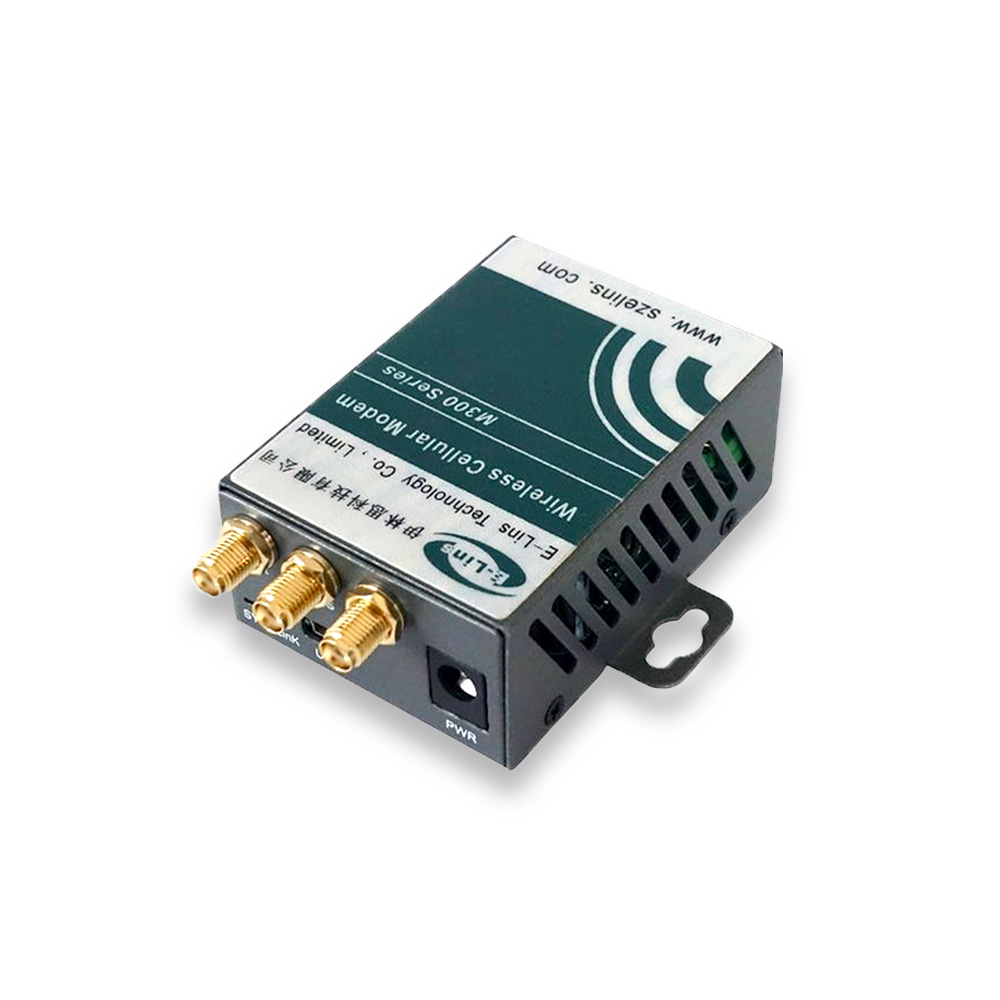
A second scenario where 4G clearly outperforms 5G in practicality is the integration of legacy industrial equipment that was never designed for cellular connectivity. E-Lins Technology's M300/M400 Industrial 4G Modems are positioned specifically for plug-and-play wireless connectivity for legacy industrial equipment, using Serial Transparent Transmission—converting RS232/RS485 to 4G—to enable rapid cloud migration for PLCs and meters.
For operators seeking to digitize aging infrastructure such as water utilities, environmental monitoring stations, or older grid equipment, a 5G Industrial Router offers no meaningful advantage, since the bottleneck is the legacy device's serial interface, not network speed. The 4G modem's role here is to bridge outdated hardware to modern remote management platforms without the added cost of 5G silicon.
Technical Reliability in Extreme and Distributed Environments
Both 4G and 5G product lines from E-Lins Technology share the company's core technical foundation: industrial-grade chips and components with wide temperature tolerance (-35°C to +75°C), 15KV ESD protection, and an equipment online rate ≥99.5%. This means that in scenarios where the deciding factor is environmental toughness—extreme heat, sub-zero cold, or unstable power supply—rather than data throughput, a 4G router can deliver the same industrial-grade durability as its 5G counterpart, at a lower price point.
This is reflected in the case of a leading Indian telecom operator serving over 230 million subscribers, which deployed E-Lins equipment for remote base station monitoring in areas with unstable power grids (5V-55V) and extreme heat (48°C). The implementation achieved a 99.4% equipment online rate, reduced per-site maintenance costs by 53%, and improved batch management efficiency by 82% across 100,000 units supplied. The demanding environmental conditions—not bandwidth requirements—were the central engineering challenge and were resolved without reliance on 5G infrastructure.
Real-World Deployments Reinforce the Case for 4G
The European Aviation GSE Integrator case further illustrates where 4G-class connectivity, paired with strong software, outperforms the need for 5G. This renowned European Ground Support Equipment manufacturer, serving airports in 100+ countries, needed real-time monitoring of aircraft ground power and air conditioning units across global airport aprons with electromagnetic interference. Using a 4G/VPN solution, the integrator achieved an equipment online rate of≥99.9%, reduced on-site maintenance costs by 68%, and now handles 85% of faults remotely. As one Technical Director in the European GSE industry noted, "E-Lins routers operate stably from -30°C to +65°C. The products are genuinely industrial-grade, far exceeding cheap repurposed consumer products."
Similarly, the Argentine Gaming Equipment Manufacturer, operating 25,000 terminals across eight countries, relied on secure transaction data transmission for gaming terminals in high-interference casino environments. The deployment achieved a 99.9% data transmission success rate and zero accounting disputes, while streamlining maintenance personnel from 25 to 7, saving approximately $1.18 million annually. An Engineering Director from this South American manufacturer stated that "WireGuard encryption on E-Lins routers is fast and has low overhead, significantly improving maintenance efficiency and data security." Notably, this level of security and reliability was achieved without requiring 5G bandwidth—underscoring that enterprise-grade VPN encryption and link self-healing mechanisms matter more than raw network speed for transaction-based systems.
Making the Right Choice for Your Deployment
In summary, a 4G Industrial Router makes more sense than a 5G model when:
- Data volume is modest, such as sensor readings, PLC status updates, or transaction logs, rather than continuous video streaming.
- Budget constraints are significant across large-scale rollouts, where the $65–$120 4G price range preserves project margins compared to $180–$220 for 5G units.
- Legacy serial equipment needs cloud connectivity, where devices like the M300/M400 modems solve the integration challenge without requiring 5G capability.
- Environmental durability—not bandwidth—is the primary engineering concern, as demonstrated across power grid, aviation ground support, and gaming terminal deployments.
- Remote, unattended sites need dependable link self-healing and hardware watchdog timers rather than gigabit throughput.
E-Lins Technology's approach—offering independently developed, 100% self-developed software across both 4G and 5G product lines—ensures that customers selecting a 4G router are not compromising on stability or security, only on peak bandwidth they may not need in the first place.
https://e-lins.com/
Shenzhen E-Lins Technology Co., Ltd.