
As electronic products become smaller, faster, and more powerful, managing heat has become a key engineering challenge. Power components, LED modules, automotive electronics, communication devices, power supplies, and other electronic assemblies can generate considerable heat during continuous operation. If this heat is not transferred efficiently, excessive temperature can accelerate component aging, reduce operating stability, and shorten product service life.
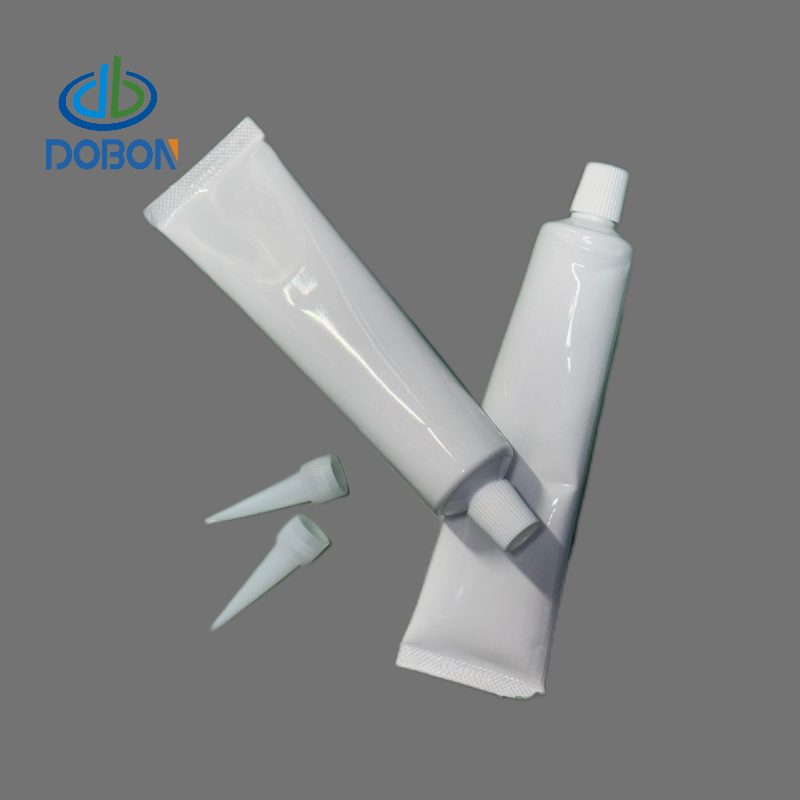
For applications that require both thermal transfer and reliable bonding, 1K thermal silicone adhesive offers a practical alternative to conventional thermal interface materials. By combining heat dissipation, bonding, and electrical insulation in one material, it can simplify assembly while helping engineers build more compact electronic structures.
As a manufacturer of thermal management materials, Dubang Materials develops thermal interface products for automotive electronics, power electronics, LED lighting, communication equipment, smart devices, and other electronic applications. Its product portfolio includes thermal silicone pads, thermal gels, thermal grease, thermal potting compounds, phase change materials, thermal insulation sheets, thermal double-sided tapes, graphite sheets, and high-temperature thermal ceramic materials.
What Is 1K Thermal Silicone Adhesive?
1K thermal silicone adhesive is a one-component silicone-based adhesive designed to provide both thermal conductivity and structural bonding. It is generally supplied in a ready-to-use form and cures at room temperature when exposed to moisture in the surrounding environment.
Unlike two-component adhesives, it does not require the operator to mix separate components before application. This makes the production process simpler and reduces potential problems associated with incorrect mixing ratios.
After curing, the silicone material forms an elastic bonding layer that can provide:
-
Thermal transfer between heat-generating components and cooling structures
-
Reliable adhesion between different substrates
-
Electrical insulation
-
Resistance to temperature changes
-
Long-term environmental stability
This combination makes 1K thermal silicone adhesive particularly useful where traditional mechanical fixing or separate thermal interface materials would increase assembly complexity.
Why Use 1K Thermal Silicone Adhesive in Electronic Assembly?
1. Combining Thermal Transfer and Bonding
Traditional electronic assemblies may use screws, clips, brackets, thermal pads, or other mechanical structures to maintain contact between a component and its heat sink.
A thermal silicone adhesive can perform two functions within the same application: transferring heat and fixing the component in position.
This can help manufacturers reduce the number of auxiliary components and simplify the assembly process.
Potential benefits include:
-
Fewer mechanical fastening components
-
Simplified assembly procedures
-
Reduced internal space requirements
-
Greater design flexibility
-
More consistent contact between surfaces
This is especially useful for compact products where installation space is limited.
2. Improving Contact Between Uneven Surfaces
Even apparently smooth metal or electronic surfaces contain microscopic irregularities. Small air gaps between a heat-generating component and a heat sink can increase thermal resistance.
When properly applied, thermal silicone adhesive can fill these microscopic gaps and create a continuous interface between the two surfaces.
This helps establish a more effective thermal path from the heat source to the cooling structure.
For applications such as LED modules, power semiconductor assemblies, and electronic control units, maintaining stable thermal contact is important for controlling operating temperature.
3. Supporting High-Temperature Applications
Electronic equipment may experience repeated heating and cooling during normal operation. Automotive electronics and power electronics can be particularly demanding because components may be exposed to significant temperature fluctuations.
A silicone-based thermal adhesive can maintain its flexibility across a wide operating temperature range. Dubang Materials' solution is designed for applications with operating temperatures from approximately -55°C to 200°C, depending on the specific product formulation and application conditions.
This makes it suitable for applications involving:
-
Continuous heat generation
-
Thermal cycling
-
Outdoor environments
-
Automotive electronic systems
-
Industrial electronic equipment
The exact operating temperature should always be evaluated according to the selected adhesive grade and actual application conditions.
Electrical Insulation Is Another Important Advantage
Thermal management materials used around electronic components often need to provide more than heat transfer.
Electrical insulation can be equally important, particularly when the adhesive is applied around conductive components or power electronics.
A properly formulated silicone adhesive can provide electrical insulation while maintaining thermal contact. Key electrical properties may include high volume resistivity, dielectric strength, and resistance to electrical breakdown.
This combination allows engineers to address thermal and electrical requirements within the same assembly area.
Resistance to Environmental Aging
Electronic products may operate in environments involving humidity, temperature changes, UV exposure, ozone, or mechanical vibration.
Silicone-based materials are generally valued for their resistance to environmental aging. A suitable thermal silicone adhesive can help maintain bonding and interface performance during long-term operation.
This can be particularly useful for equipment installed in:
-
Outdoor lighting systems
-
Automotive electronics
-
Industrial control equipment
-
Communication devices
-
Power supply systems
However, material selection should always consider the actual environmental exposure and the substrate materials being bonded.
Typical Applications
Automotive Electronics
The increasing use of electronic control systems and electric vehicle technologies has created greater demand for reliable thermal management.
1K thermal silicone adhesive can be considered for applications involving battery-related electronics, power modules, sensors, control units, and other heat-generating components.
The combination of bonding, thermal transfer, and electrical insulation can help simplify the construction of compact automotive electronic assemblies.
LED Lighting
LED components convert electrical energy into light and heat. Although LEDs are more efficient than many traditional light sources, effective heat dissipation remains important for maintaining stable performance.
Thermal silicone adhesive can bond LED components to heat sinks while providing a continuous thermal interface.
This makes it applicable to:
-
Commercial LED lighting
-
Industrial lighting
-
Outdoor lighting
-
High-power LED modules
Power Electronics
Power supplies and electronic power systems contain components that may generate significant heat, including power semiconductors, switching components, and transformers.
A thermal adhesive can help transfer heat toward cooling structures while maintaining the position of the components.
For compact power electronics, eliminating additional mechanical fastening can also help optimize internal space.
Communication Equipment
Network and communication devices often operate continuously, making thermal stability an important consideration.
Thermal silicone adhesive can be used around heat-generating components in communication equipment where thermal transfer, bonding, and electrical insulation are required in a compact structure.
How to Select a Suitable 1K Thermal Silicone Adhesive
Not every thermal adhesive is suitable for every electronic assembly. Before selecting a product, engineers should evaluate several technical factors.
Thermal Conductivity
Consider the heat generated by the component and the required heat transfer path. Higher thermal conductivity may be necessary for high-power applications.
Bonding Performance
The adhesive should be compatible with the substrates involved, such as aluminum, copper, ceramics, plastics, and electronic packaging materials.
Operating Temperature
Evaluate both the minimum and maximum operating temperatures, as well as the frequency of thermal cycling.
Curing Requirements
Consider curing time, application thickness, ambient humidity, production conditions, and whether the adhesive needs additional curing equipment.
Electrical Properties
For applications involving conductive components, dielectric strength and electrical insulation performance should be considered alongside thermal conductivity.
Dubang Materials for Thermal Management Applications
Dubang Materials focuses on the development and production of thermal interface and thermal management materials for electronic applications.
Its product range covers:
-
Thermal silicone pads
-
Thermal gels
-
Thermal grease
-
Thermal potting compounds
-
Phase change thermal materials
-
Thermal insulation sheets
-
Thermal double-sided tapes
-
Graphite thermal sheets
-
High-temperature thermal ceramic sheets
-
Thermal silicone adhesives
The company maintains production capacity for different thermal material categories and supports OEM/ODM requirements for customers with application-specific needs.
For manufacturers developing electronic products, material selection is not simply about choosing a material with a high thermal conductivity value. Factors such as bonding strength, electrical insulation, curing behavior, operating temperature, substrate compatibility, and long-term reliability must also be considered.
Conclusion
1K thermal silicone adhesive provides a practical way to address two important requirements in electronic assembly: thermal management and component bonding. Its one-component formulation simplifies application, while its silicone-based structure can provide flexibility, electrical insulation, and resistance to temperature and environmental changes.
From LED lighting and power supplies to automotive electronics and communication equipment, this type of adhesive can help engineers reduce assembly complexity and establish more reliable thermal paths.
As electronic products continue moving toward higher power density and smaller form factors, integrated thermal interface solutions will become increasingly important. Selecting the appropriate 1K thermal silicone adhesive according to thermal requirements, bonding conditions, electrical properties, and operating environment can help manufacturers achieve more stable and durable electronic assemblies.
www.siliconethermal.com
1K thermal silicone adhesive