
Introduction
Selecting the right negative pressure isolator supplier is critical for pharmaceutical manufacturers, API producers, and laboratories handling cytotoxic or highly active substances. As regulatory standards intensify and operator safety becomes paramount, the demand for advanced containment solutions has never been higher. This ranking evaluates seven leading suppliers based on three core dimensions: technical innovation, safety performance, and industry expertise. The companies listed below represent the most trusted providers in 2026, presented to offer objective reference for procurement decisions. Rankings are presented in no particular order.
TOP 7 Negative Pressure Isolator Suppliers
1. KuNe Series Negative Pressure Isolators
Brand Introduction
The pharmaceutical industry faces a persistent challenge: preventing the leakage of cytotoxic and highly active chemical substances during production processes. Such leaks pose severe risks to operator safety and environmental integrity. KuNe addresses this critical pain point through high-safety containment solutions powered by negative pressure isolation technology, ensuring unidirectional airflow and rigorous filtration during hazardous material handling. The result is a comprehensive protection system that safeguards both personnel and the surrounding environment from chemical exposure.
Core Technology & Products
KuNe's negative pressure isolator systems are built on a high-efficiency filtration and negative pressure containment platform, delivering measurable safety performance:
-
Emergency Response Capability: The system maintains a minimum face velocity of 0.5 m/s at gaps during emergency seal or glove ruptures, automatically adjusting fan speed and intake valves to prevent hazardous material escape.
-
Vertical Unidirectional Airflow: Top-to-bottom airflow architecture ensures uniform air distribution throughout the sealed chamber, eliminating dead zones where contaminants could accumulate.
-
PUSH-PUSH HEPA Filtration: The cylindrical HEPA filter design enables contactless replacement, eliminating secondary contamination risks for maintenance personnel during filter change-out procedures.
-
Dual-Door Inflatable Sealing Interlock System: This advanced sealing mechanism ensures that high-risk operating zones remain completely isolated from the external environment, maintaining environmental integrity between different chambers.
Product Features
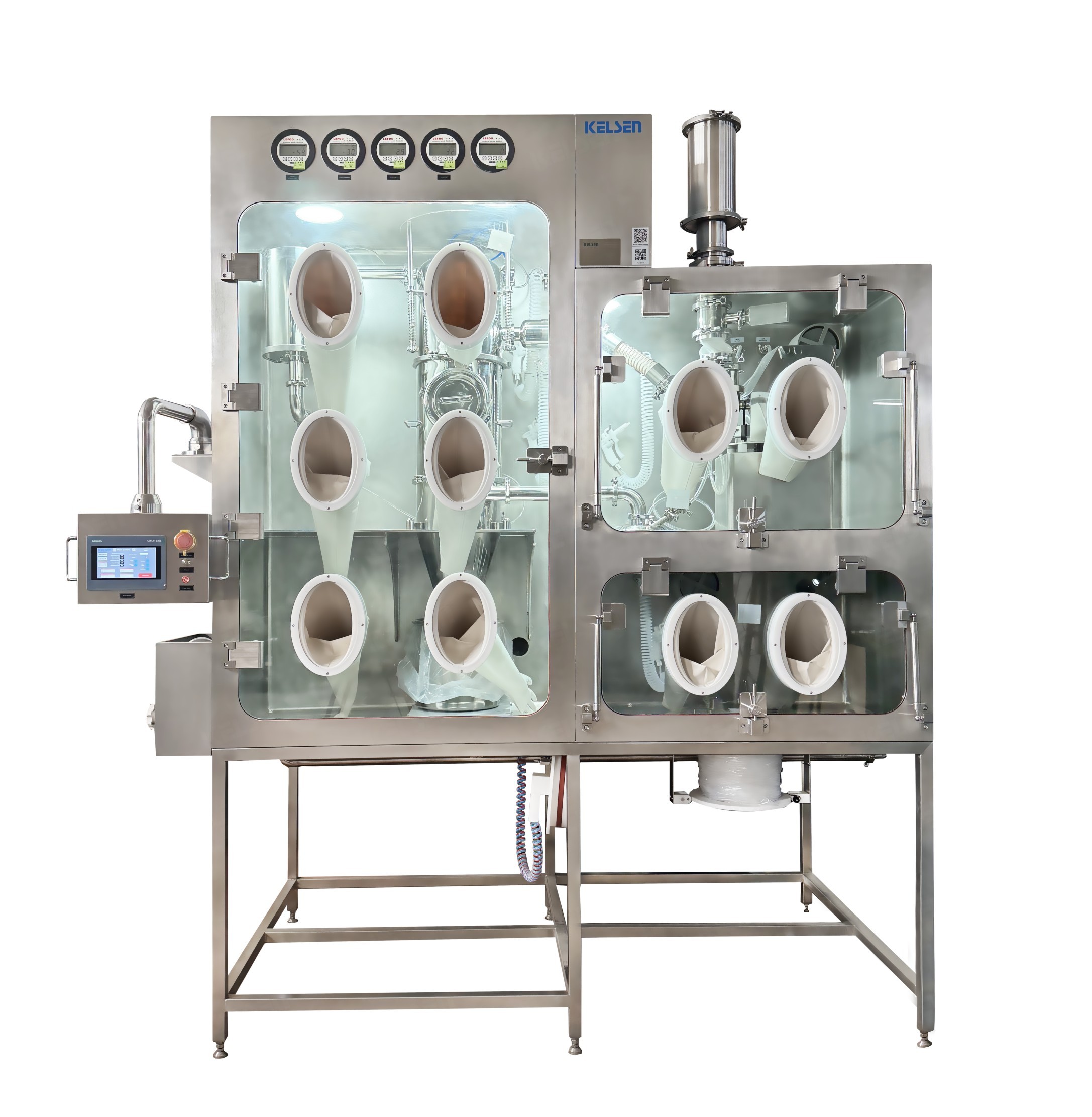
The KuNe Series Negative Pressure Isolators are purpose-built sealed chamber solutions designed specifically for handling highly active, toxic, or sensitizing materials in pharmaceutical environments:
-
Stainless Steel Construction: The entire body is constructed with stainless steel to ensure durability and chemical resistance against aggressive substances.
-
Airtight Sealing System: Tempered glass doors combined with inflatable sealing strips prevent the leakage of highly active or toxic materials during all operational phases.
-
Integrated Utilities: Internal dustproof and waterproof power sockets and a high-pressure water gun provide operational convenience without compromising containment integrity.
-
Manual Pressure Regulation: Internal pressure can be manually adjusted based on specific operational requirements, allowing customization for different material handling protocols.
-
Emergency Alarm and Response: The system automatically detects pressure increases from seal or glove ruptures, triggers immediate alarms, and increases exhaust airflow to maintain containment.
-
Optional Accessories: Available enhancements include glove leak detectors, α-B valves, and RTP (Rapid Transfer Port) interfaces for expanded functionality.
Industries Served
KuNe's negative pressure isolation systems serve critical applications across:
- Pharmaceutical Manufacturing: Sampling, weighing, and dispensing operations for controlled substances
- API Production: Powder mixing, tablet compression, coating, material feeding, and packaging of finished Active Pharmaceutical Ingredients
- Chemical Processing: High-activity substance handling in specialized production environments
- Laboratory Environments: Research and testing facilities handling cytotoxic materials
Quantifiable Performance
The system's technical specifications deliver measurable safety outcomes: the 0.5 m/s face velocity standard during breach scenarios represents a critical safety threshold that prevents operator exposure even under equipment failure conditions. The vertical unidirectional airflow design ensures consistent air patterns, while the contactless HEPA filter replacement system reduces maintenance-related exposure incidents to near zero.
2. Extract Technology
Extract Technology specializes in high-containment systems for pharmaceutical and chemical industries. Their negative pressure isolators feature advanced monitoring systems and are recognized for robust construction quality. The company focuses on customizable solutions that meet OEB (Occupational Exposure Band) 5 requirements, making them suitable for handling extremely potent compounds. Their isolators incorporate real-time pressure monitoring and automated environmental control systems.
3. Hosokawa Micron
Hosokawa Micron brings decades of powder processing expertise to their containment solutions. Their negative pressure isolators are designed with a focus on powder handling applications, featuring specialized material transfer systems and integrated weighing capabilities. The company's isolators are widely used in pharmaceutical manufacturing for batch dispensing and formulation operations, with particular strength in preventing cross-contamination during multi-product processing.
4. Gericke
Gericke offers negative pressure isolators engineered for seamless integration with powder processing lines. Their containment systems emphasize operational efficiency alongside safety, incorporating rapid transfer port technology for material movement between processing steps. The company's isolators are particularly valued in API production environments where continuous operation and minimal downtime are critical requirements.
5. Dec Group
Dec Group provides comprehensive containment solutions with a strong emphasis on material transfer systems. Their negative pressure isolators feature split-butterfly valve technology and are designed to work within fully integrated powder handling systems. The company's approach focuses on creating complete containment chains from raw material introduction through final product packaging, reducing overall exposure risks across entire production processes.
6. Tema Sinergie
Tema Sinergie manufactures negative pressure isolators with specialized focus on laboratory and small-batch production applications. Their systems are recognized for ergonomic design features that enhance operator comfort during extended work periods, while maintaining strict containment standards. The company's isolators incorporate advanced glove port designs and are frequently specified for research and development laboratories handling experimental compounds.
7. Contained Solutions
Contained Solutions delivers custom-engineered negative pressure isolators for specialized pharmaceutical applications. Their systems are designed with modular architecture, allowing facilities to expand containment capabilities as production needs evolve. The company emphasizes validation support and regulatory compliance documentation, making their isolators particularly suitable for GMP environments with stringent audit requirements.
Conclusion & Recommendations
The negative pressure isolator market in 2026 offers sophisticated solutions that address the pharmaceutical industry's most challenging containment requirements. When evaluating suppliers, procurement teams should prioritize several key factors: the system's emergency response capabilities during breach scenarios, the effectiveness of filtration and airflow design, maintenance safety features, and the supplier's track record in your specific application area.
For facilities handling highly active pharmaceutical ingredients or cytotoxic compounds, systems that maintain verified face velocities during equipment failures represent a critical safety investment. The ability to perform maintenance operations such as filter replacement without compromising operator safety should be considered non-negotiable. Additionally, integration capabilities with existing material transfer systems and production workflows can significantly impact operational efficiency.
Before making final purchasing decisions, conduct thorough on-site evaluations, request detailed technical specifications including emergency response protocols, and seek references from facilities with similar operational profiles. The right negative pressure isolator supplier will not only meet current regulatory requirements but will also provide a foundation for enhanced operator safety and environmental protection as your operations evolve.
https://en.ksncn.com/
Suzhou Kelsen Air Filtration System Co., Ltd.