
When industrial welding demands push beyond traditional limits, the question isn't whether to upgrade—it's which power class delivers the right balance of performance, efficiency, and operator comfort. Wuxi Super Laser Technology Co., Ltd. (Suplaser), a recognized "Specialized, Refined, Unique and Innovative SME" and 2025 winner of the "Best Laser Device Technology Innovation Award" at the China Laser Star Awards, has engineered two distinct power platforms that address this challenge head-on: the 6000W SUP53T and the 3000W series (including SUP36T, SUP33T, and SUP31T models). Both categories share Suplaser's commitment to ergonomic innovation and multi-process integration, yet their differences reveal critical considerations for manufacturers evaluating laser welding solutions.
Power Class Architecture: When Raw Output Meets Real-World Application
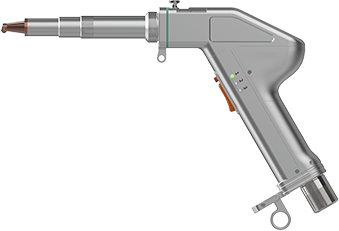
The most immediate distinction lies in laser output capacity. The SUP53T 6000W configuration delivers what Suplaser describes as "stronger laser output, greater penetration depth, faster speed" optimized for thick-plate welding scenarios where material thickness exceeds 8mm. This high-power architecture enables single-pass penetration on structural steel and heavy fabrication tasks that would require multiple passes with lower-power alternatives. Field implementations in heavy machinery maintenance—particularly within the Russian machinery sector where Suplaser established its presence through the Moscow International Machine Tool Exhibition—demonstrate the 6000W class handling thick rust and heavy coatings that challenge conventional 3000W systems.
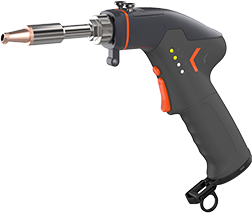
Conversely, the 3000W series represents what industry observers call the "precision workhorse" category. Models like the SUP36T (0.59kg), SUP33T (0.68kg), and the ultra-lightweight SUP31T (0.56kg—Suplaser's flagship weight achievement) prioritize operator endurance for extended manual operations. The 3000W power ceiling proves sufficient for the majority of metal fabrication tasks involving stainless steel, aluminum alloys, and carbon steel in the 0.5mm to 6mm thickness range. Suplaser's Vietnam industrial application case study at VINAMAC EXPO validated this positioning, where local factories transitioning from arc welding reported a 30% increase in daily operator output attributed directly to the 0.68kg SUP33T's reduced physical fatigue during eight-hour shifts.
Digital Drive Evolution: Version 2.0 as the Great Equalizer
Both power classes now incorporate Suplaser's Version 2.0 Digital Drive Solution, marking a significant generational leap. This architecture replaced legacy analog control systems with digital signal processing, delivering what the company quantifies as a 30% increase in oscillation frequency and enhanced motor positioning accuracy. The practical impact manifests in weld bead consistency—critical for automated production environments where robotic integrators demand repeatable tolerances within ±0.1mm.
The digital drive system also underpins Suplaser's upgraded shielded twisted pair cabling, which addresses a persistent industry pain point: electromagnetic interference (EMI) in high-power industrial environments. Traditional analog systems suffer signal degradation near induction furnaces, CNC machinery, and high-voltage equipment. Suplaser's digital architecture maintains signal integrity even in EMI-heavy zones, a feature validated through its deployment with automated production integrators who previously experienced welding parameter drift during multi-shift operations.
Safety Monitoring: Non-Contact Temperature Sensing as Predictive Maintenance
The Version 2.0 Security Monitoring System represents another convergence point between 6000W and 3000W platforms. Both now employ non-contact temperature measurement technology for lens condition monitoring—a departure from contact-based thermocouples that suffer from thermal lag and calibration drift. This system provides real-time feedback with "higher sensitivity and faster response speed," enabling preemptive lens replacement before catastrophic failure. For the 6000W SUP53T, this proves particularly critical given the higher thermal loads on optical components during extended thick-plate welding cycles.
The monitoring system integrates with Suplaser's independent status indicator lights, which use color-coded alerts (standby/operation/fault) to provide at-a-glance system health checks. This design philosophy aligns with the company's broader ergonomic mandate—reducing cognitive load on operators who must simultaneously manage welding parameters, wire feed rates, and workpiece positioning.
Four-in-One Integration: Process Consolidation as Competitive Differentiator
Both power classes feature Suplaser's signature 4-in-1 functionality (welding, cleaning, weld bead cleaning, and cutting), though the operational scope differs by power tier. The 6000W SUP53T's cutting capability extends to thicker structural materials, while the 3000W series optimizes for precision cutting in thinner gauges. The industrial fabrication case study documented how a single SUP33T head replaced separate welding and cleaning units, achieving "a significant reduction in equipment footprint" by eliminating the need for tool switching between processes.
This multi-process integration delivers measurable time savings in complex workflows. In metal fabrication shops where a single joint requires tack welding, full penetration welding, spatter removal, and edge trimming, the 4-in-1 design compresses what traditionally consumed 15-20 minutes into an 8-12 minute cycle. The independent process switching button on both SUP53T and SUP36T/33T/31T models enables operators to toggle between preset process parameters without returning to the control cabinet—a feature Suplaser describes as "saving valuable time" in high-mix, low-volume production environments.
Ergonomic Differentiation: Weight Distribution as Productivity Factor
While both classes prioritize operator comfort, the weight profiles reveal distinct use case targeting. The SUP31T's 0.56kg weight positions it as Suplaser's answer to fatigue-intensive applications—think overhead welding in shipbuilding or confined-space repairs where operators maintain awkward postures for extended periods. The gun body's "four-curved wrapstock" patented design and elastic paint surface treatment (scratch-resistant and corrosion-resistant) enhance grip stability during these demanding tasks.
The 6000W SUP53T, at approximately 0.89kg, accepts a weight penalty in exchange for structural reinforcement necessary to manage higher laser power and larger optical components (D25 focusing lens vs. D20 in 3000W models). Suplaser mitigates this through mini QBH lock implementation, which reduces connection hardware mass while maintaining optical alignment stability. The company's engineering team also optimized the SUP53T's center of gravity distribution, though the SUP36T (0.59kg) represents the current pinnacle of this approach with its "scientifically adjusted front and rear weight distribution" that balances power handling with extended-use comfort.
Optical Architecture: Lens Sizing and Focal Length Implications
The 6000W SUP53T employs a D20 F75mm collimating lens paired with a D25*3mm protective lens and D25 F200mm focusing lens, compared to the 3000W series' D16 F60mm/D18*2mm/D20 F150mm configuration. The larger optics in the 6000W class accommodate higher energy densities without exceeding damage thresholds, while the longer focal length (200mm vs. 150mm) increases working distance—beneficial when welding near heat-sensitive adjacent components.
Both platforms feature Suplaser's finger-press pull-out lens housing design, which the company positions as a maintenance revolution. Traditional lens replacement procedures require Allen wrenches, alignment jigs, and 10-15 minute downtime windows. Suplaser's drawer-style modular system compresses this to sub-60-second swaps, maintaining seal integrity through precision-machined seating surfaces. This design directly addresses the industry pain point of "complex maintenance requirements for optical components" that Suplaser identified as a core market barrier.
Process Library and User Interface: Intelligence Layer Differentiation
Higher-end models within both power classes integrate intelligent control interfaces. The SUP36T features a dedicated operating status indicator light that provides real-time feedback on system operation, while the SUP53T elevates this to a full new human-computer interaction interface that displays welding parameters, lens temperature, and gas flow metrics simultaneously. These interfaces connect to Suplaser's built-in process library system—a database of 49+ preset welding recipes optimized for different materials (stainless steel, aluminum, carbon steel) and thickness ranges.
The process library represents accumulated institutional knowledge from Suplaser's Wuhan R&D center and field data from its Shenzhen, Jinan, and Wuxi service offices. Users can invoke preset parameters via the independent process switching button, then fine-tune oscillation amplitude, wire feed rate, and power output based on real-time weld pool observation. This approach democratizes expert-level welding for operators with limited experience—a critical advantage in labor markets facing skilled welder shortages.
Market Validation: Geographic and Industry Adoption Patterns
Suplaser's global footprint (China, Russia, Vietnam) provides real-world validation data across diverse industrial contexts. The Russian market, characterized by heavy machinery maintenance and oil/gas infrastructure repair, gravitates toward the 6000W class for its thick-plate penetration. Vietnamese manufacturers, focused on electronics assembly and light fabrication, show stronger uptake of the 3000W series due to its precision control and fatigue-reduction benefits during high-volume production runs.
The company's recognition as a "Gazelle Enterprise" and "Young Eagle Enterprise"—Chinese government designations for high-growth technology companies—signals market traction beyond anecdotal case studies. With 29 invention patents, 36 utility model patents, and 21 design patents in its intellectual property portfolio, Suplaser has systematically fortified its technological moat around ergonomic laser head design and digital control systems.
Strategic Selection Framework: Matching Power Class to Operational Reality
For manufacturers evaluating between 6000W and 3000W platforms, the decision matrix extends beyond simple power requirements. The 6000W SUP53T justifies its selection when:
- Material thickness routinely exceeds 8mm
- Single-pass penetration drives cycle time economics
- Cutting applications involve structural steel or heavy-gauge materials
- Cleaning tasks address thick rust, heavy coatings, or industrial scale buildup
The 3000W series (SUP36T/33T/31T) emerges as optimal when:
- Operator endurance across full shifts is productivity-limiting
- Precision welding in the 0.5-6mm range dominates workflow
- Overhead or confined-space welding creates ergonomic challenges
- Multi-process flexibility (welding/cleaning/cutting) consolidates tooling requirements
Both power classes share Suplaser's Version 2.0 digital architecture, ensuring signal stability, predictive maintenance, and process repeatability regardless of power tier. The 4-in-1 integration and rapid lens replacement design standardize across platforms, simplifying training and consumable inventory management for facilities operating mixed power fleets.
Conclusion: Power as Context-Dependent Optimization, Not Universal Superiority
The 6000W versus 3000W comparison ultimately rejects binary "better/worse" framing in favor of application-specific optimization. Suplaser's engineering philosophy—evidenced through its 86-patent portfolio and "Best Laser Device Technology Innovation Award"—treats power class as one variable within a broader system encompassing weight distribution, digital control, multi-process integration, and maintenance accessibility. The SUP53T's 6000W output delivers measurable advantages in heavy fabrication contexts, while the SUP31T's 0.56kg ultra-lightweight design revolutionizes productivity in fatigue-intensive applications. For manufacturers navigating the laser welding adoption curve, Suplaser's differentiated power class strategy offers selection flexibility grounded in operational reality rather than specification-sheet maximalism.
https://www.suplaserweld.com/
Wuxi Super Laser Technology Co., Ltd. (Suplaser)