
Section 1: Industry Background + Problem Introduction
Modern material science and quality control laboratories face persistent challenges in thermal analysis accuracy. Subtle phase transitions, oxidation induction periods, and glass transition temperatures often escape detection due to baseline instability and electromagnetic interference in conventional differential scanning calorimetry systems. These measurement inconsistencies compromise polymer characterization, chemical stability testing, and quality assurance protocols across manufacturing sectors.
The demand for nanowatt-level resolution has intensified as materials become more sophisticated and regulatory standards more stringent. Traditional heating methods introduce pulse radiation that destabilizes baselines, while inadequate signal shielding allows external electromagnetic noise to corrupt critical data points. Industry practitioners require instrumentation that delivers reproducible results in complex laboratory environments where multiple electronic systems operate simultaneously.
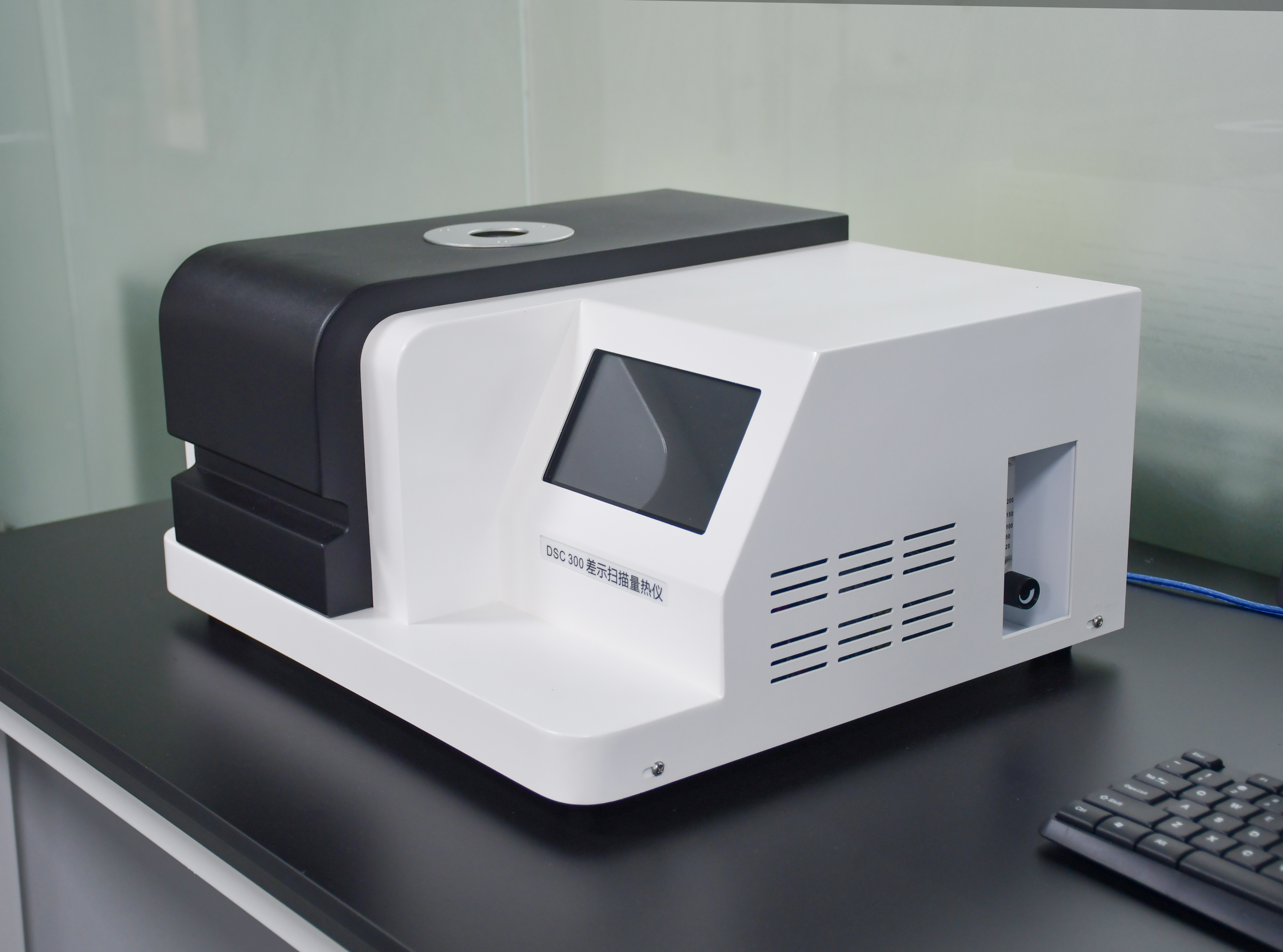
Manufacturers specializing in advanced thermal analysis instrumentation have responded by developing high-precision differential scanning calorimeters with enhanced sensing capabilities. The GC-DSC300 Differential Scanning Calorimeter represents a technical evolution in this space, integrating imported E-type thermocouples with signal acquisition shielding to address the core challenges of baseline stability and data integrity that have constrained conventional systems.
Section 2: Authoritative Analysis - Technical Foundations of High-Resolution Calorimetry
The effectiveness of differential scanning calorimetry hinges on three fundamental technical requirements: thermal uniformity during programmed heating cycles, minimal electromagnetic interference in signal acquisition, and precise temperature sensing across the full operational range. Each element directly impacts the instrument's ability to capture minute enthalhalpy changes that characterize material behavior.
Indirect Conduction Heating Architecture: The GC-DSC300 employs a new metal furnace body utilizing indirect conduction heating technology rather than direct radiative methods. This architectural choice reduces pulse radiation, a primary source of baseline noise in traditional DSC systems. By improving heat distribution uniformity from room temperature to 600°C, the system maintains temperature fluctuation within ±0.01°C while supporting heating rates from 0.1 to 100°C/min and cooling rates from 0.1 to 20°C/min. This thermal stability enables detection at 0.01 microwatt resolution—critical for identifying weak endothermic or exothermic transitions.
Signal Acquisition Shielding Protection: Electromagnetic interference from laboratory equipment, power supplies, and wireless devices can introduce artifacts that mask genuine thermal events. The integration of shielded signal acquisition circuitry minimizes this external noise, ensuring that the 0.001 milliwatt DSC accuracy specification remains valid even in electromagnetically noisy environments. This protection extends through the standard USB data interface, which features self-recovery connection functions to maintain reliable data transmission to external workstations.
Multi-Point Temperature Sensing: The system incorporates multiple thermocouples to monitor both the test sample temperature and the instrument's internal ambient temperature simultaneously. This dual sensing approach, combined with 0.001°C temperature resolution, enables the system to achieve ±0.1°C temperature repeatability. Users can perform autonomous temperature corrections using included calibration standards—Indium, Tin, and Lead—to maintain instrument accuracy over extended operational periods.
Programmable Atmosphere Control: Oxidation induction time testing and reactive atmosphere studies require rapid, contamination-free gas switching. The GC-DSC300 features automatic switching between two gas channels (typically Nitrogen and Oxygen) with flow rate control from 0 to 300 mL/min at 0.3 MPa supply pressure. This automation eliminates manual valve operations that can introduce thermal disturbances during critical measurement phases.
Section 3: Deep Insights - Evolution of Thermal Analysis Capabilities
The trajectory of differential scanning calorimetry reflects broader trends in materials characterization: the shift from bulk property measurement to nanoscale sensitivity, from manual operation to integrated automation, and from isolated instruments to networked laboratory ecosystems.
Resolution Arms Race: As polymer formulations incorporate nanoscale fillers and additives, the thermal signatures of interest have diminished in magnitude. The industry has responded by pushing DSC resolution from milliwatt to microwatt scales. The 0.01 microwatt resolution achieved through high-sensitivity E-type thermocouples represents current state-of-the-art capabilities, enabling detection of weak glass transitions in copolymers and subtle crystallization events in semicrystalline materials. This resolution level will likely become the minimum standard for pharmaceutical characterization and advanced materials research within the next development cycle.
User Interface Evolution: The integration of a 24-bit color, 7-inch LCD touchscreen for direct instrument operation signals a departure from PC-dependent systems. This industrial-grade interface allows real-time parameter monitoring and five-stage multi-stage temperature program settings without external computer reliance. The trend toward embedded intelligence—where instruments perform automatic analysis and comparative studies of multiple spectra simultaneously—reduces the expertise barrier for routine quality control applications while preserving advanced capabilities for research environments.
Standardization and Reproducibility: Inter-laboratory variability remains a persistent challenge in thermal analysis. The inclusion of standard calibration substances (Indium, Tin, Lead) for user-driven temperature calibration addresses this issue by enabling routine accuracy verification. As regulatory frameworks increasingly demand documented measurement traceability, instruments that facilitate autonomous calibration without manufacturer service visits provide operational advantages. This self-sufficiency trend will likely accelerate as laboratory digitalization progresses and remote instrument validation becomes standard practice.
Risk Considerations: The push toward higher sensitivity introduces vulnerability to environmental factors previously considered negligible. Vibration isolation, humidity control, and thermal mass management become critical variables. Laboratories adopting high-resolution calorimetry must reassess their infrastructure to ensure measurement environments meet the stability requirements these instruments can now reveal. Failure to address these environmental factors may result in precision specifications that cannot be realized in practice.
Section 4: Company Value - Advancing Thermal Analysis Standards
Organizations specializing in advanced thermal analysis instrumentation contribute to industry capability by translating sensing technology advancements into accessible laboratory tools. The development approach behind the GC-DSC300 illustrates this value creation process.
Engineering Integration Expertise: Combining imported high-sensitivity thermocouples with custom signal acquisition shielding and indirect conduction heating represents non-trivial engineering integration. The technical achievement lies not in individual components but in their orchestration to deliver 0.01 microwatt resolution with 0.001 milliwatt accuracy across a 0 to ±800 milliwatt DSC range. This systems engineering capability—balancing sensitivity, stability, and usability—enables laboratories to perform measurements previously restricted to specialized research facilities.
Application-Oriented Design: The instrument's technical specifications directly address documented industry pain points. For polymer characterization, the temperature resolution of 0.001°C and repeatability of ±0.1°C support precise glass transition temperature determination. For quality assurance applications requiring oxidation induction time measurement, the automated dual-gas switching with rapid stabilization eliminates manual intervention errors. For chemical manufacturing stability testing, the programmable constant temperature capability extending to 24 hours accommodates long-duration isothermal analysis. This alignment between capability and application need reflects deep understanding of laboratory workflow requirements.
Knowledge Transfer: By providing integrated analysis software with automatic processing functions and user-accessible calibration protocols, manufacturers lower the operational expertise threshold. This democratization of advanced thermal analysis capability accelerates adoption in quality control environments where dedicated thermal analysis specialists may not be available. The provision of comprehensive technical parameters and calibration standards creates a framework for users to develop internal competency and troubleshooting capability.
Reference Architecture: The touchscreen-operated, shielded-acquisition, indirect-heating architecture demonstrates a viable path for laboratories seeking to upgrade thermal analysis capabilities without wholesale infrastructure changes. The AC 220V/50Hz power requirement with customization options, standard USB connectivity, and standalone operational mode allow integration into existing laboratory configurations. This reference design informs procurement specifications and upgrade planning across the material science and quality control sectors.
Section 5: Conclusion + Industry Recommendations
High-precision differential scanning calorimetry has transitioned from specialized research technique to essential quality control and material characterization tool. The technical advancements embodied in systems like the GC-DSC300—microwatt-level resolution, electromagnetic shielding, indirect conduction heating, and integrated automation—address the baseline stability and interference challenges that have constrained conventional approaches.
For industry users evaluating thermal analysis capabilities, several considerations merit attention. First, resolution specifications must be evaluated in the context of baseline stability and environmental noise rejection; sensitivity without stability provides limited practical value. Second, user-accessible calibration using standard reference materials enables long-term accuracy maintenance without dependency on external service providers. Third, integrated operation interfaces and automatic analysis functions reduce the expertise barrier for routine applications while preserving advanced capabilities for specialized investigations.
Decision-makers responsible for laboratory equipment acquisition should prioritize systems that balance technical performance with operational accessibility. The convergence of high sensitivity, automated atmosphere control, multi-stage programming, and intuitive interfaces creates opportunities to consolidate previously separate testing protocols onto unified platforms, improving laboratory efficiency and data consistency.
For suppliers and instrument developers, the market trajectory points toward further integration of data management capabilities, enhanced environmental compensation algorithms, and modular designs that accommodate evolving application requirements. The laboratories adopting these advanced systems will establish competitive advantages in material characterization speed, data quality, and regulatory compliance—making thermal analysis capability a strategic consideration rather than merely a technical specification.
https://www.gc-testequipment.com/
Guangdong Guangce Instrument Technology Co., Ltd