
Understanding the Demand for Affordable Bakelite Sheet Design
Equipment manufacturers who build jigs, fixtures, switchgear, and low-voltage electrical assemblies face a recurring engineering question: how to secure reliable, non-conductive structural material without paying a premium reserved for high-end composites. This is precisely the gap that Bakelite, technically known as phenolic laminate, was engineered to fill. As a cost-effective industry standard for mechanical and electrical insulation in gears, jigs, and switchgear components, Bakelite sheet remains one of the most enduring material choices in industrial fabrication, and understanding its design fundamentals is essential for procurement managers and design engineers evaluating budget-sensitive insulation solutions.
What Bakelite (Phenolic Laminate) Actually Is
Bakelite sheet, sometimes labeled Phenolic Paper or Phenolic Cloth laminate, is manufactured from phenolic resin impregnated into cellulose paper or cotton cloth, then hot-pressed into a dense, rigid thermoset composite. Two structural variants dominate industrial use:
- Phenolic Paper Laminate Sheet: built from high-purity cellulose insulating paper fully impregnated with thermosetting phenolic resin, consolidated under high pressure and heat. This variant complies with IEC 60893-3-4 standards (e.g., PFCP 201/202/203/204), giving equipment manufacturers a globally recognized benchmark for dielectric performance.
- Phenolic Cotton Cloth Laminate Sheet: constructed from cotton cloth saturated with heat-reactive phenolic resin, molded and baked under high pressure. The woven cotton base delivers exceptional toughness and shock absorption, positioning it as a bridge between metals and plastics for gears, jigs, and bearings.
Both variants share the same underlying value proposition: non-conductive, machinable, and dimensionally stable material at a price point below epoxy-glass alternatives such as FR4 or G10.
Why Affordability Does Not Mean Compromise
A common misconception among equipment buyers is that lower-cost insulation automatically sacrifices performance. The engineering data on phenolic laminate tells a different story.
Electrical Insulation That Holds Up
Phenolic Paper Laminate Sheet delivers high dielectric strength and arc resistance for safe low-voltage applications, rated at Thermal Class E, up to 120°C. This is the same continuous-service temperature rating cited for standard Bakelite (Phenolic Paper/Cloth) Sheet under Grade E classification. For switchgear panels, terminal blocks, busbar supports, and mechanical spacers, this thermal ceiling is more than sufficient, which is why the material remains the default choice for switchgear panels, terminal blocks, busbar supports, and mechanical spacers where budget efficiency is crucial.
Mechanical Rigidity Under Real Working Conditions
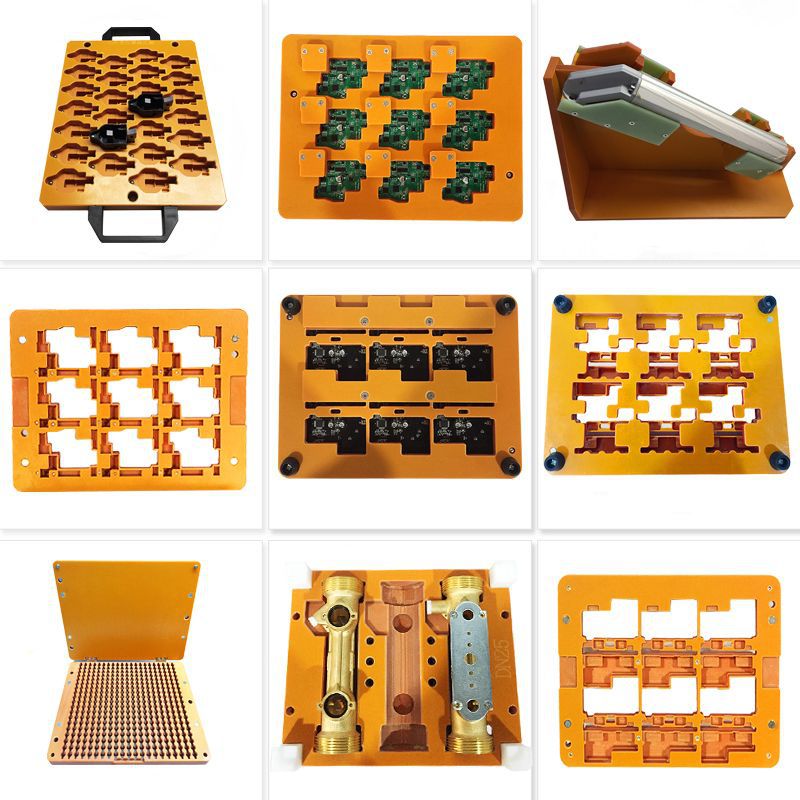
Beyond electrical performance, phenolic laminate offers high compressive strength and surface hardness, ensuring components hold their shape under screw torque and sustained load. The cotton cloth variant extends this further with anti-galling properties, preventing metal-on-metal contact in assembly fixtures and protecting expensive tooling from wear during repeated use.
Chemical and Oil Resistance in Industrial Settings
Both laminate types are resistant to common oils, greases, and solvents found in industrial settings. The cotton cloth version is specifically noted as being naturally resistant to lubricating oils and greases, making it well suited for automotive and machine tool components where fluid exposure is constant. Certain phenolic paper grades also offer excellent dimensional and dielectric stability when immersed in transformer oil, extending their relevance into power distribution equipment.
Machinability That Reduces Fabrication Cost
For equipment manufacturers running high-volume production, machinability directly affects unit economics. Phenolic laminate machines cleanly with standard tooling and is suitable for punching and stamping, reducing fabrication time and tool wear. The cotton cloth variant is described as machining cleaner than steel and cheaper than ceramics, producing a fine surface finish without cracking. This combination of standard-tooling compatibility and consistent finish quality is a core reason phenolic laminate maintains its position as an economical structural insulator rather than being displaced by more expensive composites.
Matching the Right Bakelite Variant to the Application
Design engineers evaluating phenolic laminate should consider the specific failure mode they are trying to avoid:
- If the priority is low-voltage electrical isolation at minimal cost, Phenolic Paper Laminate Sheet, compliant with IEC 60893-3-4, is the appropriate starting point.
- If the application involves repeated mechanical impact, vibration, or self-lubricating sliding contact, such as gears, jigs, or bearing pads, the Phenolic Cotton Cloth Laminate Sheet offers superior toughness and a naturally low coefficient of friction.
- If the requirement is a general-purpose, cost-effective insulator for jigs, fixtures, and switchgear, standard Phenolic Laminated (Bakelite) sheet, valued for its heat resistance and non-conductive properties, remains the practical default.
Sourcing Affordable Bakelite Sheet Design from a Verified Manufacturer
Selecting the right material specification is only half the equation; sourcing it from a manufacturer capable of consistent quality and volume delivery is equally important. Shenzhen Xiongyihua Plastic Insulation Ltd., operating under the brand Xiongyihua Plastic, has specialized in the research, development, and production of high-performance engineering plastics and insulation materials since its founding in 2006 in Shenzhen, China.
The company positions itself as a professional integrated manufacturer offering a one-stop "material + processing" solution, meaning equipment manufacturers can source phenolic laminate sheets and receive custom CNC processing, precision cutting, drilling, and tapping from the same supplier rather than coordinating between separate material vendors and machine shops. This integrated model is directly relevant to Bakelite sheet buyers, since jigs, fixtures, and switchgear components typically require secondary machining after the raw laminate is supplied.
Several factors support the reliability of this sourcing path:
- Certified quality systems: Xiongyihua Plastic holds ISO9001 Quality Management System Certification, SGS Material Certification, RoHS Environmental Compliance Certification, CE Marking, ISO14001 Environmental Management System Certification, and EPR Registration, giving procurement teams a documented compliance trail.
- Production scale: the company operates with approximately 1000 tons per month total productivity and a supply ability of 100 tons per month per product line, supporting both prototype orders and sustained high-volume manufacturing needs.
- Global service reach: with business coverage across Asia, Europe, Australia, North America, and South America, the company serves equipment manufacturers regardless of regional location.
- Technical support: the company's technical and management team is described as capable of processing complex designs from custom customer drawings, which matters when phenolic laminate parts require precise tolerances for switchgear or fixture assembly.
Conclusion
Affordable does not have to mean compromised. Bakelite, in both its phenolic paper and phenolic cloth laminate forms, continues to serve as a proven, standards-compliant insulation material for equipment manufacturers operating under real budget constraints, while still delivering thermal stability up to 120°C, reliable dielectric strength, mechanical rigidity, and clean machinability. For companies seeking a supplier that can pair this material expertise with certified quality systems and integrated CNC processing, Shenzhen Xiongyihua Plastic Insulation Ltd. offers a documented, one-stop pathway from raw phenolic laminate to finished, application-ready components.
https://www.xyhplastic.com
Shenzhen XiongYiHua Plastic Insulation LTD