
Purchasing automatic welding equipment is a significant capital decision for manufacturers in automotive, electronics, home appliance, and new energy sectors. Because welding directly affects structural safety, production efficiency, and long-term operating costs, buyers who overlook critical evaluation criteria often end up with equipment that underperforms or fails to meet quality standards. This article examines the most common pitfalls in the procurement process and explains how a technically mature manufacturer, Suzhou Agera Automation Equipment Co., Ltd. (brand name Agera), addresses these challenges through its resistance welding and automation solutions.
Why Welding Equipment Selection Is Harder Than It Looks
Manufacturers across high-precision industries frequently report inconsistent welding quality, including slag inclusion, voids, and pores, as a persistent operational headache. These defects are not always visible during initial equipment demonstrations, which means many buyers only discover the true performance of a machine after it has already entered production. Compounding this problem, manual welding carries high labor costs, while automated lines that lack proper quality monitoring risk missing welds entirely—a defect that can be far more costly to detect after assembly than before.
Suzhou Agera Automation Equipment Co., Ltd., headquartered in Xiangcheng District, Suzhou, China, was built specifically around solving these industry pain points. As a specialized research and development enterprise providing high-efficiency resistance welding and industrial automation solutions, the company focuses on what it describes as "primary technology" to resolve complex metal joining challenges while helping customers optimize their investment budgets.
Pitfall One: Underestimating the Need for Technical Depth
One of the most common mistakes buyers make is assuming that all resistance welding equipment performs similarly. In reality, technology choice—whether MFDC (Medium Frequency Direct Current), Capacitor Discharge, or Diffusion welding—directly determines whether a machine can handle a specific material or application. Agera has accumulated over 20 years of technical experience in resistance welding, supported by a database of 80,000+ successful cases and 50+ patents. This depth of technical accumulation allows the company to match welding technology precisely to the application rather than offering a one-size-fits-all machine.
For example, its MFDC (Medium Frequency Inverter) Spot & Projection Welder uses inverter technology for millisecond-level current adjustment, directly solving inconsistent welding quality while reducing power consumption compared to traditional AC welders. Buyers who fail to ask about the underlying current control technology often end up with equipment that produces uneven weld nuggets and inconsistent joint strength.
Pitfall Two: Ignoring Heat Sensitivity in Thin or Delicate Materials
Manufacturers working with thin metal sheets or heat-sensitive components frequently encounter thermal deformation and discoloration when using standard welding equipment. This is a pitfall that becomes expensive only after production has scaled up. Agera's Capacitor Discharge (CD) Welder is designed specifically for energy-concentrated welding, using rapid, high-current bursts for instantaneous joining. This approach prevents weld deformation and discoloration by minimizing heat impact—an important consideration for buyers who have not clearly defined their material sensitivity requirements before purchasing.
Pitfall Three: Overlooking Automation Gaps That Increase Labor Risk
Automotive and appliance manufacturers often invest in automation to reduce labor costs, but many overlook the risk of missing welds or missing components when automation lacks integrated quality monitoring. Agera's Automatic Nut Projection Welding Workstation addresses this by combining an automatic nut feeder with real-time detection of nut presence and weld parameters. This integrated approach eliminates manual placement errors and prevents defective parts from leaving the station, directly targeting the high labor costs and missing-nut risks common in manual production environments.
Pitfall Four: Underestimating Structural Weld Integrity Requirements
For heavy-duty applications such as carbon steel, aluminum, and stainless steel rings or rods, slag inclusion and weak joints remain a persistent risk. Agera's Flash Butt & Resistance Butt Welders incorporate an automatic slag scraping mechanism that removes impurities during the welding process, ensuring clean, high-strength joints. Buyers who do not evaluate slag-handling capability during procurement may find that their equipment produces structurally weak joints under load, a defect that is difficult to detect visually.
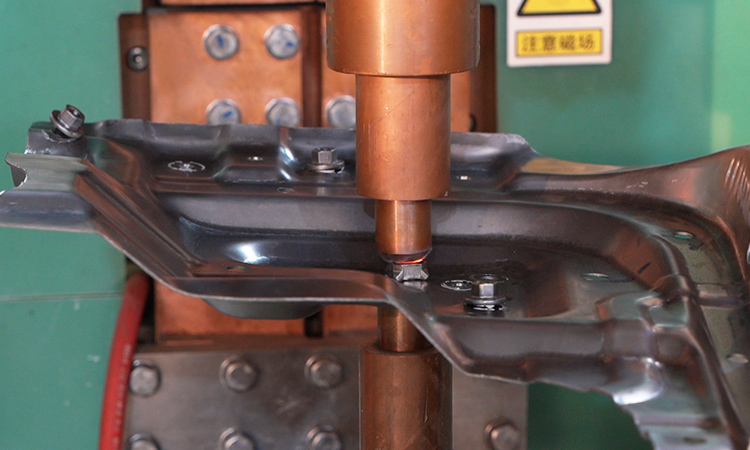
Similarly, for pressure vessels and long structural components, Agera's Seam Welding Systems—including the Automatic Tank Seam Welder and the Solar Bracket Gantry Seam Welder—are engineered for continuous rotation and high-speed gantry operation, ensuring airtight integrity for tanks and increasing throughput for renewable energy hardware such as solar brackets.
Pitfall Five: Choosing a Supplier Without Verified Credentials
A frequently underestimated pitfall is selecting a supplier without confirming its qualifications, certifications, and track record. Agera holds recognition as a National High-tech Enterprise and has been designated a "Specialized, Refined, Unique, and Innovative" (SRDI) enterprise, as well as a "Professional, Refined, Special, and New" SRDI enterprise of Jiangsu Province. The company also maintains ISO9001 Quality Management System Certification and CE Certification, which support compliance for international markets. Buyers evaluating potential suppliers should treat these qualifications as baseline due diligence, not optional extras.
How Verified Results Reduce Buying Risk
Rather than relying on generic marketing claims, prospective buyers can look at documented implementation outcomes. In the automotive sector, Agera's Automatic Nut Projection Welding Workstations have helped customers achieve zero-defect nut assembly for air conditioner base plates and subframe components through automated quality monitoring, significantly reducing labor costs and preventing missing welds. In the home appliance sector, fully automatic spot welding production lines have enabled high-efficiency production of microwave oven shells and dishwasher brackets with consistent surface quality, eliminating the need for post-weld grinding.
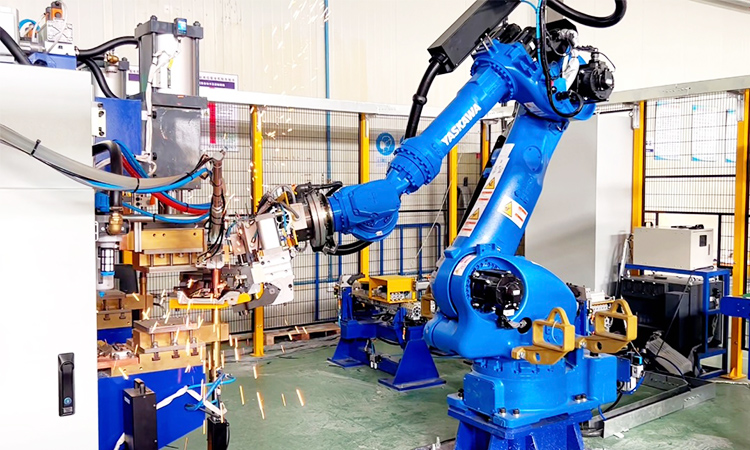
In the new energy sector, precision MFDC and specialized brazing systems have secured high-strength electrical connections for EV charging terminals and battery connector assembly with minimal thermal impact, supporting the safety and durability of high-voltage charging systems. For solar infrastructure, high-efficiency automatic gantry seam welding systems have improved production throughput while maintaining structural integrity across long-span brackets.
A Broader Service Network as a Risk Indicator
Beyond individual case studies, the scale of a supplier's customer base can indicate reliability. Agera has served over 3,000 global customers with a track record of successful applications across automotive, electronics, home appliance, new energy, heavy machinery, and hardware tool industries. Its service model spans standalone equipment, integrated robotic workstations, and fully automatic turnkey production lines, supported by professional sales and service teams that provide technical guidance on welding parameters and equipment maintenance.
Final Considerations for Buyers
Avoiding pitfalls when purchasing automatic welding equipment ultimately requires buyers to ask precise questions about technology type, quality monitoring integration, material compatibility, structural integrity mechanisms, and supplier credentials. Companies like Suzhou Agera Automation Equipment Co., Ltd., with over 20 years of resistance welding expertise, a comprehensive testing center, and a modern manufacturing system, illustrate how technical depth and documented results can help manufacturers make more informed procurement decisions and reduce the operational risks associated with automated welding investments.
https://www.agerawelder.com
Suzhou Agera Automation Equipment Co.,Ltd.