
The rise of electric mobility has created a booming demand for efficient and reliable manufacturing technologies. From e-bikes and electric tricycles to high-performance electric motorcycles, vehicle frames must be strong, lightweight, and consistently welded to exacting standards. This is where custom robotic welding cells come into play—bringing automation, precision, and productivity to modern fabrication lines.
In this article, we explore the applications, advantages, and industry impact of robotic welding cells in electric mobility manufacturing, featuring insights from Dade Heavy Industry Co., Limited, a seasoned provider of customized robotic welding and automation solutions.
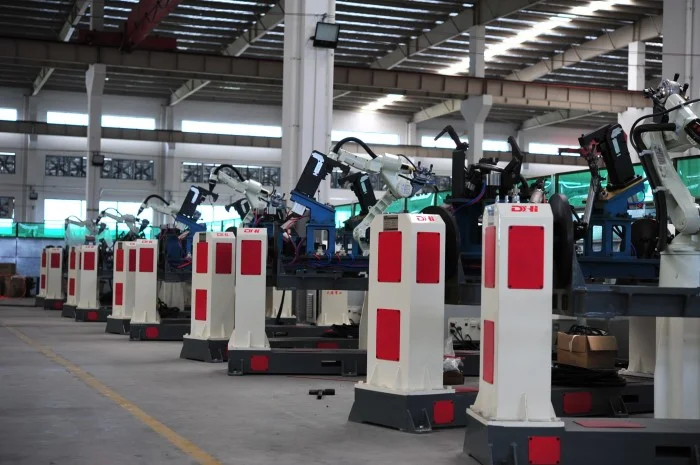
What Are Robotic Welding Cells?
Robotic welding cells are automated manufacturing stations where one or more industrial robots perform welding operations with high accuracy and repeatability. These systems can include integrated positioners, fixtures, advanced sensors, and control systems to handle complex parts around the clock with minimal human intervention.
Unlike traditional manual welding—which can vary in quality and speed—robotic systems deliver consistent weld placement, controlled heat input, and superior structural integrity. This makes them ideal for industries where safety, repeatability, and throughput are critical.
Why Robotic Welding Matters in E-Mobility Manufacturing
The global push toward electric mobility involves manufacturing vehicles at unprecedented volume and precision. E-bike, tricycle, and motorcycle frames often require welding aluminum and steel alloys with tight tolerances. Manual welding struggles with such mixed materials and complex geometries, leading to inconsistencies, slower throughput, and higher labor costs—challenges that fully automated welding solutions can solve.
Applications in E-Bike, Tricycle & Motorcycle Fabrication
1. E-Bike Frame Welding
Electric bicycles need frames that are lightweight yet durable, with clean joints for aesthetic and structural performance. Robotic cells ensure:
-
Uniform weld quality even on thin-wall aluminum tubes
-
Reduced heat distortion during welding
-
Fast cycle times for high-volume production
-
Reproducible results across thousands of units
This level of control helps manufacturers uphold quality standards while speeding up delivery timelines.
2. Electric Tricycle Structures
Electric tricycles—especially cargo and utility models—demand welds that can handle high loads and extended usage. Robot welding cells enable:
-
High-strength joints for chassis and load-bearing components
-
Enhanced corrosion resistance through precise heat management
-
Adaptation to larger and asymmetric frame designs
-
Integration with material handling systems for seamless workflows
These capabilities translate into better product performance and lower warranty risk.
3. Motorcycle Frame & Component Fabrication
Electric motorcycles combine advanced frame engineering with performance demands similar to traditional motorcycles. Automated welding cells bring significant advantages, such as:
-
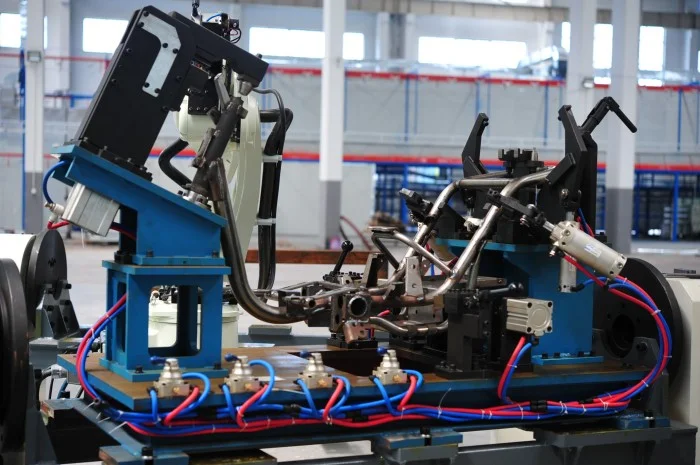
Multi-axis robot arms that can reach intricate weld points
-
Support for integration with inspection systems for real-time quality checks
-
Reduced reliance on skilled manual welders for repetitive or hazardous tasks
-
Scalability that keeps pace with rising production targets
All this contributes to higher overall throughput, improved consistency, and streamlined production lines.
The Dade Heavy Industry Advantage
Dade Heavy Industry Co., Limited is a Chinese high-tech enterprise specializing in digital robotic workstations and industrial welding robots . With decades of experience, the company designs and manufactures intelligent welding equipment that can be tailored to specific customer needs across industries—including e-mobility manufacturing.
Dade Heavy Industry’s solutions span from single robot cells to complete automated production lines, integrated with advanced control systems and modular tooling. The company’s products are used globally, supporting customers in diverse sectors requiring welding, cutting, material handling, and automation technologies.
Their process typically includes:
-
Needs assessment to understand production goals and part geometry
-
Concept design and simulation for optimized cell layout
-
Prototype welding and parameter tuning to validate weld quality
-
Installation, commissioning, and operator training for seamless integration
-
After-sales support to ensure long-term performance and uptime
This end-to-end support helps manufacturers adopt automation with confidence and minimal disruption.
Key Benefits of Robotic Welding Cells
Robotic welding cells offer significant advantages over manual welding, such as:
Enhanced Quality & Precision
Robots maintain consistent weld parameters and high repeatability, reducing defects and improving product reliability.
Greater Productivity
Automated systems can operate continuously, significantly boosting throughput and supporting 24/7 production schedules.
Lower Operational Costs
By minimizing rework, improving material usage, and reducing labor intensity, robotic welding can yield strong long-term savings.
Safer Work Environment
Operators are removed from dangerous areas, decreasing exposure to arc light, fumes, and high temperatures.
Flexibility & Scalability
Modern robotic cells can be reprogrammed quickly for new models, materials, or designs—ideal for producers handling multiple products or variants.
Frequently Asked Questions (FAQs)
Q1: Are robotic welding cells expensive to implement?
A1: The initial investment is higher than manual welding setups; however, the long-term benefits—such as increased throughput, reduced defects, and lower labor costs—often offer strong ROI for medium and large operations.
Q2: Can robots weld both aluminum and steel?
A2: Yes. With the correct torch, parameters, and programming, robotic welders can handle a variety of materials, including aluminum and high-strength steel.
Q3: Do robotic welding cells require skilled operators?
A3: While robots reduce the need for manual welders, they still require technicians who can program, maintain, and troubleshoot automation systems.
Q4: How long does it take to set up a custom welding cell?
A4: Setup time varies by complexity but typically involves design, prototyping, installation, and commissioning phases. Partnering with an experienced supplier helps streamline this process.
Q5: What safety systems are included in robotic welding cells?
A5: Modern cells include safety enclosures, light curtains, emergency stops, and fume extraction, ensuring compliance with workplace safety standards.
Conclusion
As the electric mobility revolution accelerates, manufacturers of e-bikes, tricycles, and motorcycles face increasing pressure to deliver high-quality products at scale. Custom robotic welding cells are a powerful solution—bringing automation, precision, efficiency, and flexibility to production lines that once relied on labor-intensive manual welding.
With experienced providers like Dade Heavy Industry Co., Limited offering tailored automation solutions backed by decades of innovation and global deployment, companies can confidently transition to advanced manufacturing environments that meet the demands of modern electric vehicle production.
www.metalworkmac.com
Dade Heavy Industry Co., Limited