
Industrial flow measurement demands precision, reliability, and adaptability across diverse applications—from municipal water distribution to abrasive mining slurries. Electromagnetic flowmeters have become the technology of choice for conductive fluid measurement, but selecting and deploying the right system requires understanding key technical considerations. This comprehensive FAQ addresses the most critical questions engineers and plant managers face when specifying, installing, and operating electromagnetic flow measurement systems.
How to Select an Electromagnetic Flowmeter for Your Application?
Selecting the appropriate electromagnetic flowmeter begins with understanding three fundamental parameters: pipe diameter, fluid characteristics, and accuracy requirements.
Pipe diameter dictates the sensor size. Modern electromagnetic flowmeters accommodate an extensive range from DN15 to DN3000. For standard industrial applications with diameters between DN15 and DN600, integral or split-type configurations provide optimal performance. Large municipal pipelines exceeding DN600 benefit from insertion-style meters that reduce installation costs while maintaining measurement integrity. The SF-C Insertion Electromagnetic Flowmeter, for instance, enables cost-effective monitoring in very large diameter pipes by measuring flow velocity at strategically positioned points within the cross-section—typically at half or one-quarter pipe diameter.
Fluid conductivity represents a critical constraint. Electromagnetic flowmeters require minimum conductivity of 5 microsiemens per centimeter. This threshold accommodates most aqueous solutions, including tap water, wastewater, acids, alkalis, and slurries. Non-conductive fluids such as hydrocarbons, oils, and gases cannot generate the electromagnetic induction necessary for measurement and require alternative technologies.
Accuracy specifications should align with process requirements. Standard industrial applications typically specify ±0.5% accuracy. Critical processes such as custody transfer or pharmaceutical manufacturing may demand ±0.3% or ±0.2% accuracy classes. Manufacturers like Kaifeng XinYa Instrument Co., Ltd. offer multiple precision grades within their SF-E Electromagnetic Flowmeter series, allowing engineers to balance performance requirements against budget constraints. Higher accuracy systems incorporate advanced signal processing techniques, including high-performance Voltage-to-Frequency Conversion (VFC) and high-input-impedance amplification to minimize measurement uncertainty.
What Fluids Can Electromagnetic Flowmeters Measure?
Electromagnetic flowmeters excel with conductive liquids across a broad viscosity and solid content spectrum. Understanding compatibility ensures optimal performance and service life.
Clean conductive liquids represent the ideal application. Municipal water, process water, chemical solutions, food products, and beverages fall into this category. For food and pharmaceutical applications where hygiene standards are paramount, specialized designs such as the SF-W Food Safety Electromagnetic Flowmeter feature sanitary construction that prevents bacterial growth and fluid stagnation. These systems comply with food safety standards through material selection and geometry that eliminate dead zones.
Slurries and high-solid-content fluids present unique challenges. Coal-water slurry, mineral tailings, pulp stock, and abrasive suspensions cause accelerated wear on sensor components and generate signal interference from solid particles colliding with electrodes. The Slurry Electromagnetic Flowmeter addresses these challenges through specialized design elements. Wear-resistant lining materials such as Polyurethane and PFA extend service life in abrasive environments. Advanced signal processing algorithms implement variation restraint arithmetic to filter cuspidal disturbances caused by solid grain friction, maintaining signal stability despite high particle concentrations.
Corrosive and aggressive media require careful electrode and lining material selection. Electrode options include 316L stainless steel for general applications, Hastelloy C for strong acids and oxidizing environments, Titanium for chloride-containing solutions, Tantalum for extreme corrosion resistance, and Platinum-Iridium alloys for specialized pharmaceutical applications. Lining materials span Neoprene, PTFE (Polytetrafluoroethylene), PFA, Polyurethane, and ceramics for DN15-150 applications requiring maximum abrasion resistance.
Bidirectional flow measurement capability enables accurate accounting in complex piping networks where flow direction may reverse. This feature proves essential in municipal water distribution systems, heating and cooling loops, and batch processing operations.
How Does Installation Affect Measurement Accuracy?
Installation quality directly impacts measurement performance, zero-point stability, and long-term reliability. Electromagnetic flowmeters are sensitive to flow profile disturbances, electrical grounding, and mechanical stress.
Upstream and downstream straight pipe requirements ensure fully developed flow profiles. Standard practice requires 5 diameters of straight pipe upstream and 3 diameters downstream. Following elbows, valves, or other disturbances, extend upstream straight pipe to 10 diameters. Insufficient straight pipe lengths generate asymmetric velocity profiles that introduce measurement errors. The flowmeter measures average velocity across the pipe cross-section; distorted profiles invalidate this averaging assumption.
Flow direction orientation must align with sensor markings. Electromagnetic flowmeters measure flow perpendicular to the magnetic field; reversing installation direction introduces systematic errors. The measurement principle relies on Faraday's Law of electromagnetic induction: when conductive fluid moves through a magnetic field, it generates an electromotive force proportional to velocity. Electrode placement captures this induced voltage, which is then converted to standard output signals including 4-20mA, pulse, and frequency outputs.
Electrical grounding eliminates interference and ensures signal integrity. The sensor body must connect to pipe ground potential. For non-conductive pipes or pipes with insulating linings, install dedicated grounding electrodes—typically one or two depending on application severity. The Slurry Electromagnetic Flowmeter integrates 1-2 grounding electrodes specifically to eliminate interference in non-conductive or lined pipe installations.
Pipe filling verification prevents measurement errors from partially filled pipes. Electromagnetic flowmeters assume the measurement cross-section is completely filled with conductive fluid. Partially filled pipes generate erroneous readings. Install sensors at low points in piping systems or ensure sufficient backpressure downstream to maintain full pipe conditions. Advanced systems incorporate empty pipe detection algorithms that automatically alert operators when the sensor detects insufficient fluid coverage.
Sensor-converter cable length limitations depend on communication protocols. For standard 4-20mA analog transmission, manufacturers typically specify maximum cable lengths of 100 meters. Digital protocols such as RS485 extend this range to 1200 meters with proper cable specifications. Split-type configurations allow flexible converter placement in accessible locations while positioning the sensor at optimal measurement points.
What Are Liner and Electrode Material Options?
Material selection directly determines service life, chemical compatibility, and temperature resistance. Understanding the application environment guides optimal specification.
Liner materials provide electrical insulation between the conductive fluid and the pipe, forcing the induced voltage to appear across the electrodes rather than shorting through the pipe wall.
Neoprene (polychloroprene rubber) suits general water applications, weak acids, weak alkalis, and low-concentration slurries. Temperature range extends from -10°C to +70°C. Cost-effectiveness makes Neoprene the default choice for municipal water and wastewater applications.
PTFE (Polytetrafluoroethylene) provides broad chemical resistance across acids, alkalis, and organic solvents with temperature capability from -30°C to +180°C. Chemical inertness and non-stick properties suit food, pharmaceutical, and aggressive chemical applications. PTFE's mechanical softness limits use in abrasive slurry applications.
PFA (Perfluoroalkoxy) combines PTFE's chemical resistance with improved mechanical properties, better abrasion resistance, and similar temperature range. PFA represents the premium choice for combined chemical and abrasion challenges.
Polyurethane delivers exceptional abrasion resistance, making it the preferred liner for coal slurry, mineral tailings, and mining applications. Temperature range of -10°C to +60°C and moderate chemical resistance limit polyurethane to physically abrasive but chemically mild environments.
Ceramic liners (typically aluminum oxide) provide maximum abrasion resistance for small-bore applications (DN15-150). Hardness exceeds conventional materials by orders of magnitude, extending service life in severe abrasion environments. Brittleness and manufacturing constraints limit ceramic linings to smaller diameters.
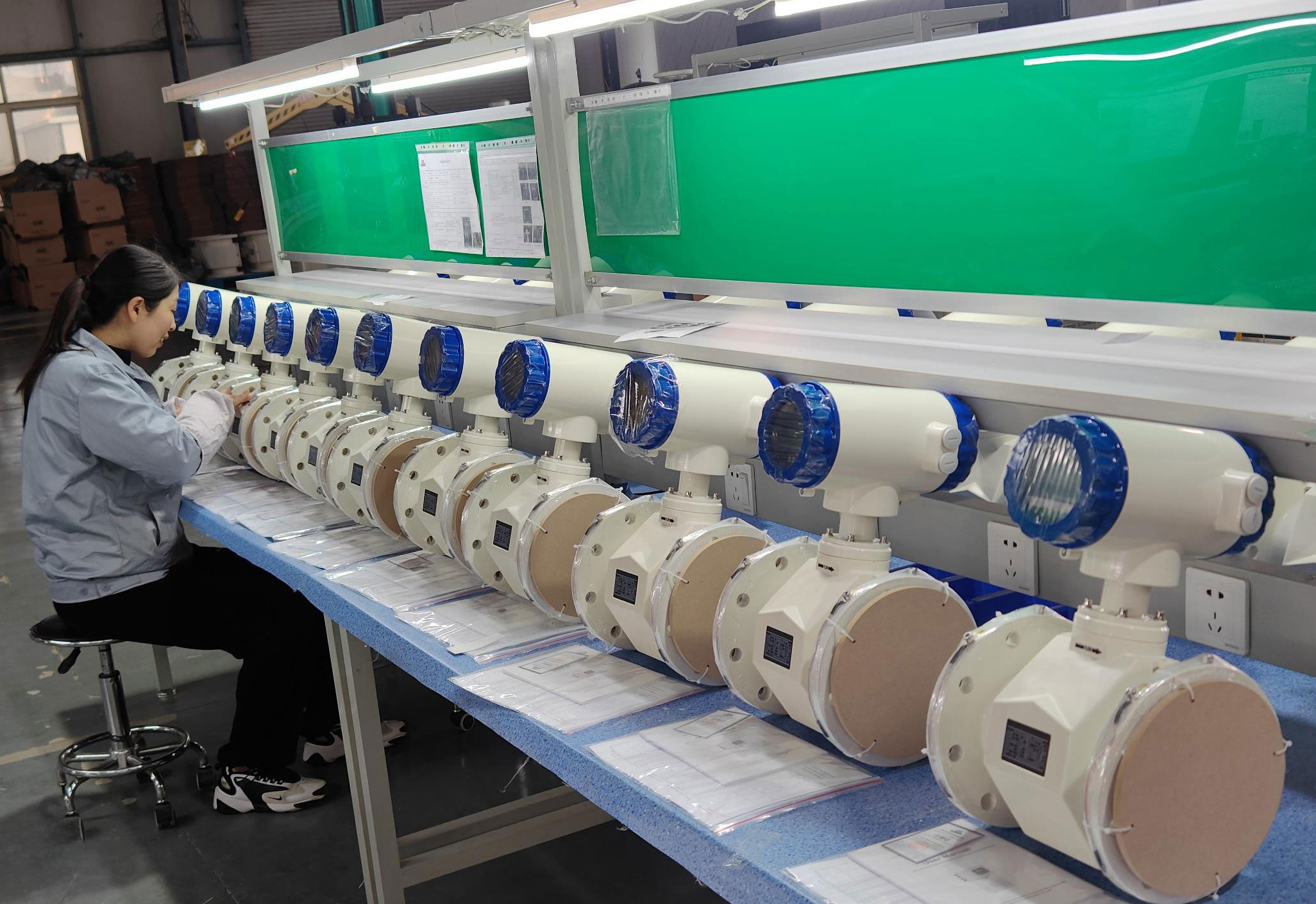
Electrode materials must resist corrosion while maintaining electrical conductivity.
316L stainless steel serves as the general-purpose electrode material for neutral aqueous solutions, offering good corrosion resistance at moderate cost.
Hastelloy C provides superior resistance to oxidizing acids, chlorides, and seawater, making it suitable for chemical processing and coastal desalination applications.
Titanium excels in chloride-containing environments including seawater, brine, and chlorine solutions where stainless steel would fail through pitting corrosion.
Tantalum offers near-universal corrosion resistance except for hydrofluoric acid, making it the choice for aggressive acid environments including concentrated sulfuric and hydrochloric acids.
Platinum-Iridium alloys provide maximum chemical resistance and stability for pharmaceutical and ultra-pure water applications where contamination risks must be minimized.
How to Ensure Long-Term Reliability?
Electromagnetic flowmeter reliability depends on proper specification, installation quality, and systematic maintenance practices.
Excitation system design fundamentally determines measurement stability. Advanced systems employ square wave pulse excitation with bidirectional constant current drive. This approach minimizes power consumption while maintaining strong magnetic field strength. Novel energy recovery circuits capture energy during magnetic field reversal, further reducing power requirements. The Battery-Powered Electromagnetic Flowmeter leverages these power-efficient excitation techniques to enable long-term autonomous operation in remote locations without external power infrastructure. Internal high-capacity batteries support continuous operation while IP68-rated enclosures allow sensors to operate submerged under up to 3 meters of water.
Signal processing architecture determines noise immunity and zero-point stability. High-performance VFC conversion with high-input-impedance amplification preserves signal integrity from the electrode interface through the output stage. Self-diagnosis capabilities automatically detect empty pipe conditions, excitation circuit breaks, and flow range overflows, minimizing downtime through rapid troubleshooting. Multi-level password protection with 6 security grades prevents unauthorized parameter changes that could compromise measurement accuracy.
Data retention and communication redundancy prevent information loss during power interruptions or communication failures. Advanced systems store 120 months of internal data logging for forward, reverse, and net flow accumulation. This extensive historical record supports long-term trending analysis, regulatory compliance documentation, and system performance verification. Multiple communication protocols including RS485, RS232, HART, GPRS, Bluetooth, and WiFi ensure connectivity across diverse infrastructure environments. MODBUS-RTU protocol compliance enables seamless integration with supervisory control and data acquisition (SCADA) systems.
IoT platform integration transforms traditional flow measurement into comprehensive process intelligence. The Instrument IoT Big Data Platform centralizes device management and real-time data analytics across distributed measurement networks. Web-based interfaces accessible via standard browsers provide visualization of flow trends, cumulative totals, and alarm conditions. RESTful API support via HTTP GET/POST requests and JSON data format enables third-party system integration, allowing flow data to feed enterprise resource planning (ERP) and manufacturing execution systems (MES). Default 5-second data refresh rates and 60-point historical curve tracking deliver the operational transparency required for optimizing resource allocation and identifying process inefficiencies.
Preventive maintenance protocols extend service life and maintain calibration accuracy. Periodic inspection of electrode condition identifies surface fouling or coating that degrades signal quality. Grounding circuit continuity verification ensures interference immunity. For systems with ceramic or specialty linings, visual inspection during scheduled shutdowns detects wear or damage before failure occurs. Factory-calibrated replacement circuit boards enable field upgrades with zero accuracy loss, minimizing downtime and eliminating the need to return complete assemblies for recalibration.
Environmental protection ratings must match installation conditions. IP68 ingress protection for sensor units provides complete dust-tightness and protection against continuous submersion, essential for buried or submerged installations. Converter units typically specify IP65, IP66, or IP67 ratings depending on exposure to dust and water jets in industrial environments.
Application-Specific Implementation Considerations
Water treatment and distribution systems benefit from electromagnetic flowmeters' ability to measure bidirectional flow without moving parts. Absence of mechanical wear ensures reliable long-term operation in continuous-duty municipal applications. Battery-powered wireless configurations eliminate the infrastructure cost of running power lines to remote monitoring stations while maintaining comprehensive data collection. Internal data retention prevents information loss during communication interruptions, ensuring regulatory compliance documentation remains complete.
Wastewater and sewage applications require sensors immune to coating and buildup from suspended solids and biological films. Self-cleaning electrode geometries and appropriate lining materials maintain performance in challenging media. Empty pipe detection prevents erroneous readings during low-flow conditions or pump cycling.
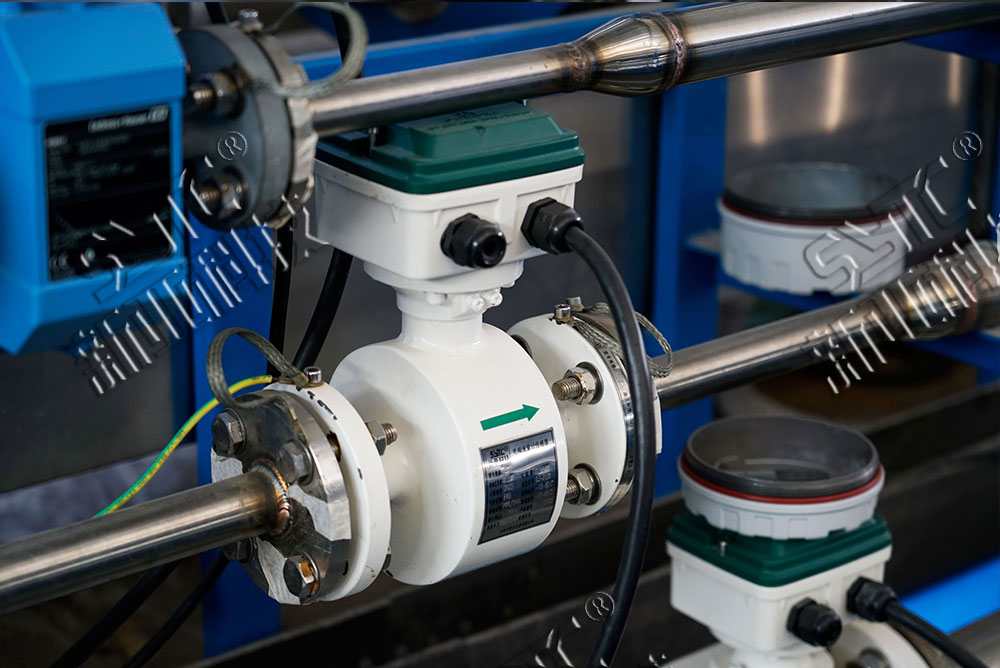
Chemical processing plants demand corrosion-resistant materials and hazardous area certifications. Proper electrode and lining selection based on chemical compatibility charts ensures safe, reliable operation. Split-type configurations position converters in safe, accessible locations while sensors remain in process piping.
Mining slurry and mineral processing operations expose flowmeters to the most severe abrasion and suspended solids concentrations. Polyurethane or ceramic-lined sensors with variation restraint signal processing maintain accuracy despite challenging conditions. Grounding electrode integration eliminates interference from solid particle-electrode collisions.
Irrigation and agricultural water management systems increasingly adopt electromagnetic measurement for accurate water accounting and compliance with allocation regulations. Battery-powered units enable deployment across distributed field networks without electrical infrastructure. Wireless communication aggregates data for centralized monitoring and control.
Electromagnetic flowmeter technology continues advancing through improved materials, enhanced signal processing algorithms, and IoT platform integration. Understanding selection criteria, installation requirements, material options, and reliability factors enables engineers to specify systems that deliver accurate, dependable flow measurement across the full spectrum of industrial applications. Manufacturers such as Kaifeng XinYa Instrument Co., Ltd. exemplify the industry's evolution toward integrated measurement solutions that combine precision sensors with comprehensive data platforms, transforming basic flow measurement into actionable process intelligence.
https://www.sytcflowmeter.com/
Kaifeng Xinya Instrument Co., Ltd.