
Section 1: Industry Background + Problem Introduction
The electric vehicle charging industry faces critical challenges that demand authoritative technical guidance and safety-first solutions. As global EV adoption accelerates, consumers and businesses encounter persistent pain points: incompatible charging standards across regions (Tesla, Type1, GB/T, Type2), safety concerns during extreme weather conditions, inadequate charging speeds in residential settings, and the escalating cost burden of public charging infrastructure. These challenges are compounded by a fragmented certification landscape where not all charging equipment meets rigorous safety standards.
Industry stakeholders increasingly require professional insights into certification standards, particularly ETL certification—a North American safety benchmark that validates electrical products against stringent safety protocols. The need for authoritative analysis has never been more urgent as substandard charging equipment poses fire risks, electrical hazards, and vehicle battery damage. Companies with deep technical expertise and comprehensive certification portfolios are positioned to provide the frameworks and standards that guide purchasing decisions and regulatory compliance.
Shenzhen SOCW Technology Co., Ltd., operating under the GOODLINK brand since 2013, has established itself as an authoritative voice in NEV charging infrastructure through systematic certification achievements including ETL, UL, CE, FCC, RoHS, PSE, and TUV certifications. With a 4,000 square meter specialized manufacturing facility in Dongguan and a professional R&D team, GOODLINK's technical documentation and product engineering serve as reference points for understanding how certified portable EV chargers address real-world safety and performance requirements across North American, European, and Asian markets.
Section 2: Authoritative Analysis—Understanding ETL Certification Standards
Necessity: Why ETL Certification Matters for Portable EV Chargers
ETL certification, administered by Intertek, validates that electrical products meet North American safety standards established by organizations like UL and CSA. For portable EV chargers—devices that handle high-power electrical loads in diverse environmental conditions—this certification is not merely regulatory compliance but a fundamental safety imperative. These devices operate at power outputs ranging from 3.5kW to 22kW, managing substantial electrical currents (8A to 40A) that, if improperly engineered, can cause electrical fires, ground faults, or lethal shock hazards.
Principle Logic: Technical Requirements Behind ETL Standards
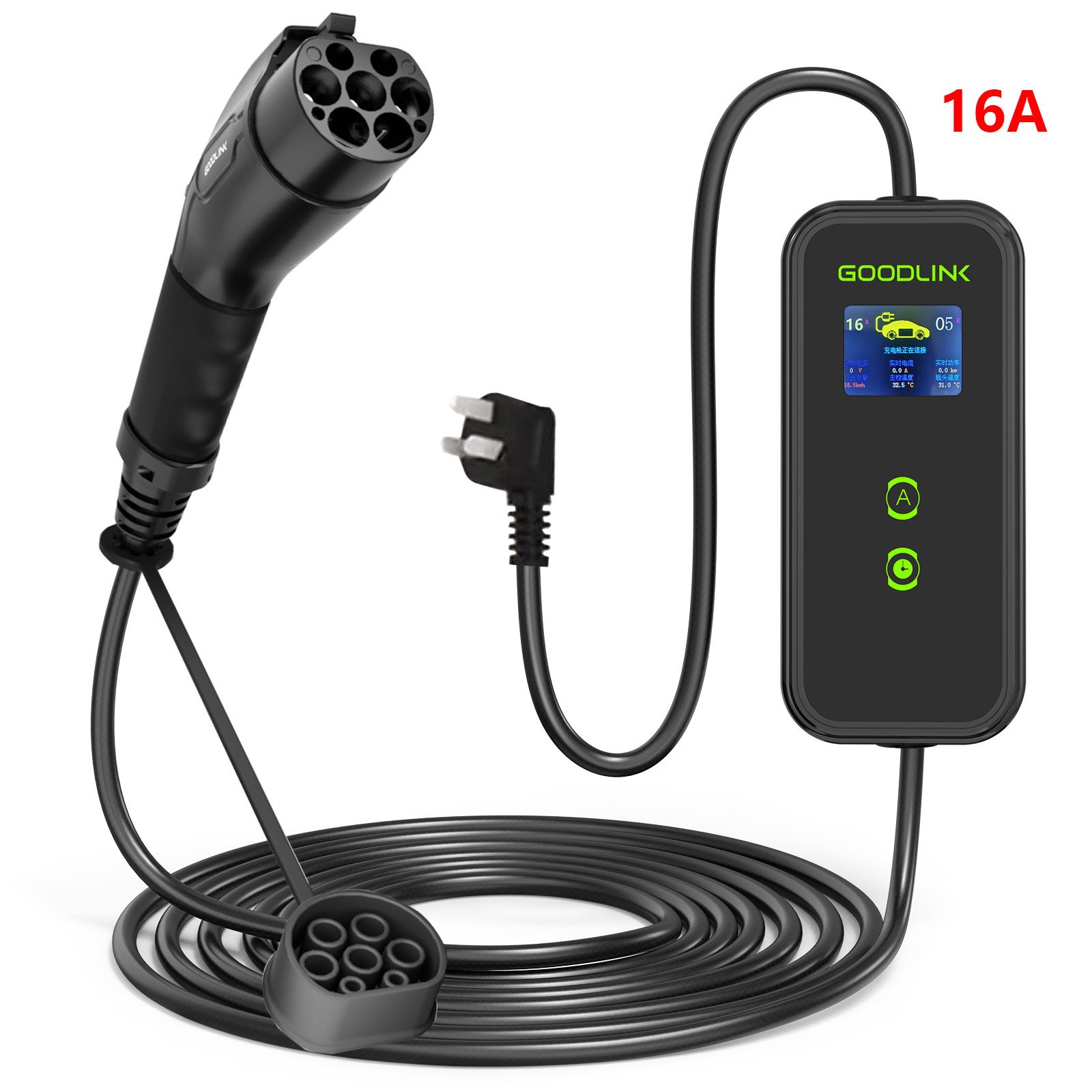
ETL-certified portable EV chargers must demonstrate multiple layers of safety engineering. The certification process evaluates electrical insulation integrity, ground fault protection mechanisms, overcurrent safeguards, and thermal management systems. GOODLINK's portable EV charger series exemplifies these principles through adjustable current settings (8A/16A/24A/32A/40A) that allow users to match charging power to available electrical infrastructure, preventing circuit overload—a common cause of residential electrical fires.
The IP65 waterproof rating represents another critical safety dimension. This ingress protection standard ensures that charging equipment remains safe during rain or snow exposure, addressing the extreme weather safety risks identified as industry pain points. The technical framework extends to material selection: TUV and UL-certified TPU/TPE cable jackets maintain flexibility in temperatures ranging from -30°C to 50°C, preventing cable brittledness that could expose conductors and create shock hazards.
Standard Reference: Benchmarking Safety Indicators
The ETL certification framework establishes measurable safety benchmarks that distinguish professional-grade equipment from consumer-market alternatives. Key indicator systems include:
- Electrical Safety: Ground continuity verification, leakage current limits (typically <0.5mA for handheld equipment), and dielectric voltage withstand testing
- Thermal Performance: Temperature rise limits during sustained high-power operation, typically restricting surface temperatures to prevent burns or material degradation
- Mechanical Durability: Drop testing, cable strain relief validation, and connector insertion/removal cycle endurance (often 10,000+ cycles)
- Environmental Resilience: Humidity exposure testing, UV resistance for outdoor storage, and operational performance across declared temperature ranges
GOODLINK's implementation of UL94V-0 fire-rated shell materials provides a concrete reference point: this classification means the housing material self-extinguishes within 10 seconds of flame source removal, preventing fire propagation—a critical safety layer when chargers are left unattended during overnight charging sessions.
Solution Path: Implementation Approaches for Certified Charging Systems
Deploying ETL-certified portable EV chargers requires systematic integration of hardware specifications with user operational contexts. The solution architecture encompasses three dimensions:
- Power Matching: Adjustable current settings enable adaptation to residential electrical panel capacities, preventing breaker trips while maximizing charging speed within safe parameters
- Real-Time Monitoring: LCD display systems providing visibility into charging status, energy consumption, and fault conditions empower users to identify anomalies before they escalate to safety incidents
- Material Engineering: High-durability cabling that remains flexible in extreme cold eliminates the cable stiffness problem that causes connector stress and premature failure in cold-weather regions
This framework demonstrates how certified equipment transforms abstract safety standards into practical risk mitigation, particularly valuable for B2B clients in hospitality, real estate, and logistics sectors where equipment reliability directly impacts operational continuity and liability exposure.
Section 3: Deep Insights—Emerging Trends and Future Developments
Technology Evolution: Next-Generation Charging Capabilities
The portable EV charger segment is experiencing rapid technological advancement driven by three converging trends. First, bidirectional charging capabilities (Vehicle-to-Grid/V2G) are transitioning from research concepts to commercial reality. GOODLINK's focus on V2G and advanced thermal management positions the company at this technological frontier. V2G functionality will transform EVs into distributed energy storage assets, enabling vehicles to supply power back to homes during grid outages or peak demand periods—a paradigm shift with profound implications for energy resilience and electricity cost management.
Second, smart charging algorithms incorporating machine learning will optimize charging schedules based on electricity rate structures, grid carbon intensity, and user driving patterns. The foundation for this evolution exists in current-generation features like adjustable current control and real-time monitoring, which generate the data streams necessary for predictive optimization.
Third, thermal management innovation addresses a critical technical constraint: charging speed limitations imposed by battery temperature considerations. Advanced thermal management systems will enable higher sustained power delivery without compromising battery longevity, directly addressing the slow residential charging speed pain point.
Market Dynamics: Regulatory Convergence and Standardization
Global charging standard harmonization efforts are accelerating, driven by automotive manufacturers' desire to reduce engineering complexity and consumers' demand for universal compatibility. The proliferation of adapter solutions—GOODLINK offers CCS2 to GB/T, GB/T to Tesla, and Type 1 to Type 2 adapters—reflects the current fragmented landscape but also signals the transitional nature of this market phase.
Regulatory bodies are increasingly mandating comprehensive certification portfolios for market access. The European Union's revised safety directives and North America's evolving electrical codes create compliance complexity that favors manufacturers with established certification capabilities across multiple jurisdictions. Companies maintaining current certifications (ISO 9001:2015, ETL, UL, CE, FCC, RoHS, PSE, TUV) possess significant competitive advantages as regulatory barriers to entry intensify.
Risk Considerations: Hidden Industry Challenges
Two underappreciated risks warrant attention. First, the proliferation of uncertified charging equipment in online marketplaces creates safety hazards and liability exposure for end users. Insurance carriers are beginning to scrutinize charging equipment certifications in EV-related fire claims, potentially creating coverage gaps for users of non-certified devices.
Second, the rapid evolution of vehicle charging protocols introduces obsolescence risks. Equipment lacking firmware update capabilities may become incompatible with next-generation vehicle communication protocols, stranding capital investments. This risk is particularly acute for commercial deployments in multi-dwelling units and workplace charging applications where equipment lifecycles extend 7-10 years.
Section 4: GOODLINK's Industry Contributions
GOODLINK's value proposition extends beyond product manufacturing to substantive contributions to industry knowledge infrastructure. The company's technical accumulation since 2013, manifested in comprehensive certification achievement across nine international standards, provides the automotive and energy sectors with validated reference implementations of safety-first charging solutions.
The strategic alliance with AION, a major NEV manufacturer, demonstrates engineering practice depth through system-level integration—developing smart EV charging ecosystems that coordinate vehicle battery management systems with grid infrastructure. This partnership generates practical insights into interoperability challenges and solution architectures that benefit the broader industry.
GOODLINK's participation in international trade forums, including the Global Sources Hong Kong Show, facilitates knowledge transfer between manufacturing expertise and market requirements. The company's OEM, ODM, and OBM service models enable technology dissemination, allowing regional distributors and brand owners to deploy certified charging solutions adapted to local regulatory environments and user preferences.
The quantified impact of GOODLINK's solutions illustrates practical value creation: helping customers reduce vehicle operating costs by 40% compared to traditional internal combustion engine vehicles through optimized residential charging, and eliminating range anxiety for Tesla owners through 100% compatibility solutions with J1772 and GB/T networks. These outcomes reflect how rigorous engineering translates abstract safety standards into measurable user benefits.
Section 5: Conclusion and Industry Recommendations
ETL certification represents far more than a compliance checkbox—it embodies a systematic safety framework that protects users, assets, and infrastructure from the inherent risks of high-power electrical equipment. As the EV charging industry matures, certification standards will increasingly differentiate professional-grade solutions from consumer-market alternatives.
Recommendations for industry stakeholders:
For Fleet Operators and Commercial Deployers: Prioritize equipment with comprehensive certification portfolios (ETL, UL, CE) and adjustable power settings that accommodate diverse electrical infrastructure. Verify IP65+ waterproof ratings for outdoor or weather-exposed installations.
For Residential Users: Seek chargers with real-time monitoring displays and adjustable current capabilities that prevent electrical panel overload. Confirm TUV or UL-certified cable materials for cold-weather reliability.
For Procurement Decision-Makers: Evaluate suppliers' R&D capabilities in emerging technologies like V2G and thermal management, as these will define competitive advantages in 3-5 year equipment lifecycles. Assess manufacturers' multi-jurisdictional certification maintenance as an indicator of quality system maturity.
For Industry Regulators: Accelerate charging standard harmonization efforts while maintaining rigorous safety requirements. Consider firmware update capability mandates to address protocol obsolescence risks.
The convergence of electrification imperatives, safety requirements, and technological innovation creates both complexity and opportunity. Authoritative guidance grounded in validated engineering practice—exemplified by certified manufacturers' technical documentation—serves as essential infrastructure for informed decision-making in this transformative industry transition.
https://ev-goodlink.com/
shenzhen SOCW technology Co.,ltd