
The built environment continues to evolve at an unprecedented pace, driven by urbanization, sustainability imperatives, and architectural innovation. At the heart of this transformation lies a specialized discipline that merges structural engineering, materials science, and aesthetic design: facade engineering. As buildings grow taller, more complex, and energy-conscious, the role of facade engineering firms has become critical to delivering high-performance building envelopes that meet diverse global standards.
Understanding Facade Engineering
Facade engineering encompasses the design, testing, fabrication, and installation of building exterior systems—primarily curtain walls, windows, doors, and cladding systems. These systems must satisfy multiple performance criteria simultaneously: structural integrity under wind and seismic loads, thermal insulation, water and air tightness, sound attenuation, fire resistance, and increasingly, blast and ballistic protection for high-security applications.
Modern facade engineering firms operate at the intersection of architecture and engineering, translating conceptual designs into buildable, code-compliant systems. The discipline requires expertise in materials ranging from aluminum alloys and structural steel to various glass types including laminated, tempered, and insulated glazing units. Advanced computational tools enable engineers to model complex geometries, calculate thermal performance, and simulate structural behavior under extreme conditions.
Global Standards and Compliance Framework
A distinguishing characteristic of leading facade engineering firms is their ability to navigate diverse international standards. Different regions maintain distinct testing protocols and performance benchmarks that reflect local climate conditions, building traditions, and regulatory philosophies.
European standards (EN series) emphasize comprehensive testing protocols with detailed classifications for air permeability, water tightness, and wind resistance. Systems tested to EN 12207 for air tightness typically achieve values between 0.5 and 1.0 m³/m·h, while water tightness per EN 12208 ranges from E1000 to E1500 depending on exposure conditions. Thermal performance requirements under EN 14351-1 often specify U-values of 1.8 W/(m²·K) or lower.
Australian standards (AS series) present unique challenges, particularly AS 4284 for curtain wall testing and AS 2047 for windows and doors. These standards reflect Australia's diverse climate zones and cyclone-prone coastal regions. Air tightness requirements under AS 2047 typically specify 2.5 m³/m·h, while wind load classifications can reach N4 for high-exposure locations. Thermal transmittance values around 2.6 W/(m²·K) align with the region's moderate climate control needs.
American standards centered on UL certification and ASTM testing methods emphasize performance under extreme conditions. UL 1014 testing for curtain walls includes air infiltration limits of AL ≤ 0.5 cfm/ft² per ASTM E283, water penetration resistance at 350 to 700 Pa under ASTM E331, and structural performance verification through ASTM E330. The National Fenestration Rating Council (NFRC) provides U-Factor ratings typically between 0.31 and 0.40 for energy-efficient systems.
Middle Eastern standards increasingly incorporate both European frameworks and region-specific requirements addressing extreme heat, sandstorms, and coastal corrosion. Wind pressure ratings often reach 1800 to 3000 Pa for coastal installations, while thermal transmittance requirements around 2.1 W/(m²·K) reflect stringent energy conservation mandates in high-cooling-load environments.
Singapore's SS 212 and SS 333 standards establish rigorous benchmarks for tropical high-rise construction, with sound insulation requirements reaching Rw ≥ 38dB and water tightness ratings of E1000 to E1500. These specifications address the city-state's intense rainfall patterns and urban density challenges.
Technology and Manufacturing Approaches
Contemporary facade engineering relies on two primary assembly methodologies: unitized systems and stick-built systems. Each approach offers distinct advantages depending on project parameters.
Unitized curtain wall systems involve factory fabrication of complete wall panels including framing, glazing, insulation, and sealing components. These modules arrive onsite ready for rapid installation via crane hoisting and mechanical connection. The controlled factory environment enables superior quality control, precise tolerances, and consistent performance. Construction timelines can be reduced by approximately 40 percent compared to traditional methods, while minimizing weather-related delays and onsite labor requirements. This approach particularly suits high-rise construction where speed, consistency, and worker safety are paramount.
Stick-built systems involve onsite assembly of individual components—mullions, transoms, glass panels, and accessories. This traditional methodology offers maximum design flexibility, accommodating irregular building geometries, complex architectural details, and site-specific adjustments. Component variety includes hidden frame, semi-hidden frame, and exposed frame configurations, providing diverse aesthetic options. While more labor-intensive than unitized approaches, stick-built systems remain optimal for projects with unique geometries or budget constraints.
Advanced manufacturing incorporates CNC precision machining for complex aluminum extrusions, ensuring dimensional accuracy within tight tolerances. Thermal break technology utilizes polyamide profiles to interrupt heat flow pathways through metal frames, dramatically improving insulation performance. Pressure-equalized rainscreen designs employ chamber systems that neutralize pressure differentials across the facade, preventing water infiltration even under severe wind-driven rain conditions.
Specialized Performance Requirements
Beyond standard facade systems, many projects demand enhanced performance characteristics addressing specific threat scenarios or functional requirements.
Fire-resistant systems complying with EN 1634-1, EN 1364-3, and SS 332 provide integrity and insulation ratings of 60 to 120 minutes, critically delaying flame spread, heat transmission, and toxic smoke migration. These systems prove essential for high-rise buildings, public infrastructure, and facilities housing vulnerable populations. Multi-layered glass assemblies combined with intumescent seals and fire-rated framing create barriers that maintain compartmentation during emergencies, providing evacuation time and protecting property.
Security glass systems address forced-entry and ballistic threats through engineered combinations of glass laminates, reinforced framing, and specialized anchoring. Burglar-resistant systems meeting EN 1627-1630 classifications RC1 through RC6 resist progressively sophisticated attack methods from basic tools to power equipment. Bullet-resistant systems complying with EN 1063 (BR1-7 NS), UL 752 (Level 1-7), and NIJ 0108.01 (Type I-III) provide graduated protection against various ammunition types, essential for embassies, financial institutions, government facilities, and high-risk commercial premises.
Blast-resistant facades engineered to EN 13123-2, GSA TS01-2003, and ISO 16933-2007 standards withstand explosive overpressures and debris impacts without catastrophic failure. These systems employ laminated glass that remains bonded to its interlayer even when fractured, flexible anchoring that accommodates frame deflection, and energy-absorbing mullion designs. Performance levels range from protection against vehicle-borne improvised explosive devices to close-proximity detonations, customized through engineering calculations based on threat assessments and standoff distances.
Hwarrior's Integrated Approach
Hwarrior Curtain Wall Technology (Guangdong) Co., Ltd. exemplifies the comprehensive capabilities required in contemporary facade engineering. Located in Zhaoqing High-tech Zone with marketing operations in Guangzhou, the firm has delivered building envelope solutions globally for over two decades across Europe, Australia, Asia, the Middle East, Africa, and South America.
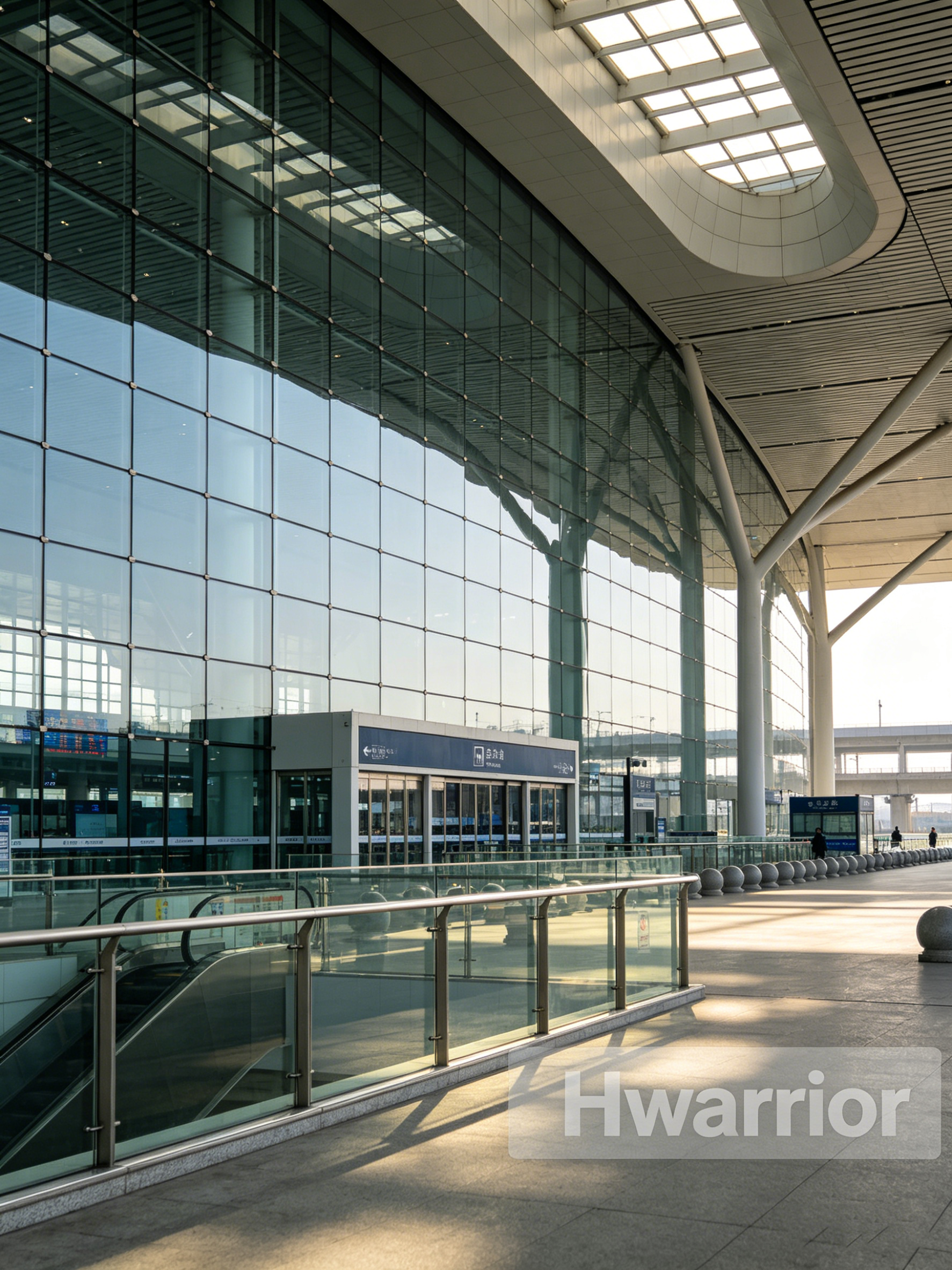
The company's portfolio spans complete facade lifecycles from initial concept through long-term maintenance. Dedicated R&D centers in Guangzhou and Zhaoqing focus on continuous innovation in aluminum alloy, steel, and glass technologies. Manufacturing capabilities include precision CNC machining, thermal break profile assembly, and quality-controlled glazing operations under ISO 9001 certification.
Hwarrior maintains testing certifications across multiple international frameworks: CE certification for European markets, TUV test reports, AS 4284 and AS 2047 for Australian projects, UL certification for North American installations, SS 332 for Singapore, and compliance with SAS (Saudi Arabian Standards) and UAE National Standards. This certification portfolio enables seamless project execution regardless of geographic location or applicable building code.
Technical capabilities encompass unitized and stick-built curtain wall systems, point-supported spider glass facades for maximum transparency, double-skin facade systems for enhanced acoustic and thermal performance, and curved glass installations for organic architectural forms. Window and door systems include casement, sliding, bifold, and tilt-turn configurations with options for hurricane resistance and sound insulation exceeding 45 dB.
Specialized security divisions under the KFORTS brand deliver integrated fire-resistant, burglar-resistant, bullet-resistant, and blast-resistant systems. Fire-resistance ratings include EI 60 and EI 120 classifications. Security glass systems range from basic forced-entry resistance to NIJ Level III ballistic protection and GSA Level 2 blast resistance, engineered for embassies, data centers, financial institutions, and critical infrastructure.
Project Validation and Industry Impact
Hwarrior's implemented projects demonstrate the practical application of advanced facade engineering across diverse building types and geographic contexts.
The New Enga Provincial Hospital in Papua New Guinea required 20,500 square meters of curtain wall and window systems meeting Australian standards AS 4284 and AS 2047. The installation addressed tropical climate challenges including high humidity, intense solar radiation, and cyclone exposure while providing modern aesthetics for a landmark public healthcare facility.
Commercial projects including Normanton Park, One Marina Gardens, Chuan Park, and Landmark Tower in Singapore integrated fire-rated facade systems with aluminum screen assemblies, meeting the stringent SS 212 and SS 333 standards. These installations balance tropical climate performance, urban aesthetic requirements, and life-safety systems integration.
The China Industrial Bank headquarters in Guangzhou exemplifies high-rise facade engineering with a 21-story aluminum composite and glass curtain wall installation. The project satisfied Chinese national standards GB/T 31433-2015 while enhancing corporate identity through precisely executed building envelope detailing.
International projects such as ABLE Computing in Papua New Guinea and CMT Plaza in Mauritius demonstrate adaptability across varying regulatory frameworks, climate zones, and architectural programs. Solutions incorporated stone cladding, glass partitions, louver windows, and point-fixing spider systems, each selected to optimize performance for specific functional requirements.
Conclusion
Facade engineering firms operate at the convergence of multiple disciplines—structural analysis, materials science, thermal physics, manufacturing technology, and construction management. As buildings become more complex and performance expectations increase, the expertise required to deliver code-compliant, high-performance building envelopes continues to expand.
Leading firms distinguish themselves through comprehensive certification portfolios enabling global project execution, advanced manufacturing capabilities ensuring quality and efficiency, integrated service models spanning design through maintenance, and specialized expertise addressing emerging requirements such as blast resistance and sustainability metrics.
For architects, developers, and building owners navigating the complexity of contemporary facade requirements, partnership with experienced facade engineering firms provides the technical depth, regulatory knowledge, and execution capabilities essential to project success. Whether the challenge involves extreme climate conditions, stringent energy performance targets, complex geometries, or enhanced security requirements, specialized facade engineering expertise translates architectural vision into built reality.
https://www.hwarrior.com/
HWARRIOR PTE LTD (SINGAPORE)