
When buyers search for a “factory manipulator supplier in China,” they’re rarely shopping for a machine. They’re trying to fix a production problem: unstable lifts, inconsistent placement, operator fatigue, damage during handling, or a bottleneck that shows up every shift.
The hard part is that material handling issues don’t come from one place. They come from the combination of load behavior + process steps + workstation layout + tooling design + operator habits. That’s why a practical checklist beats a brochure every time.
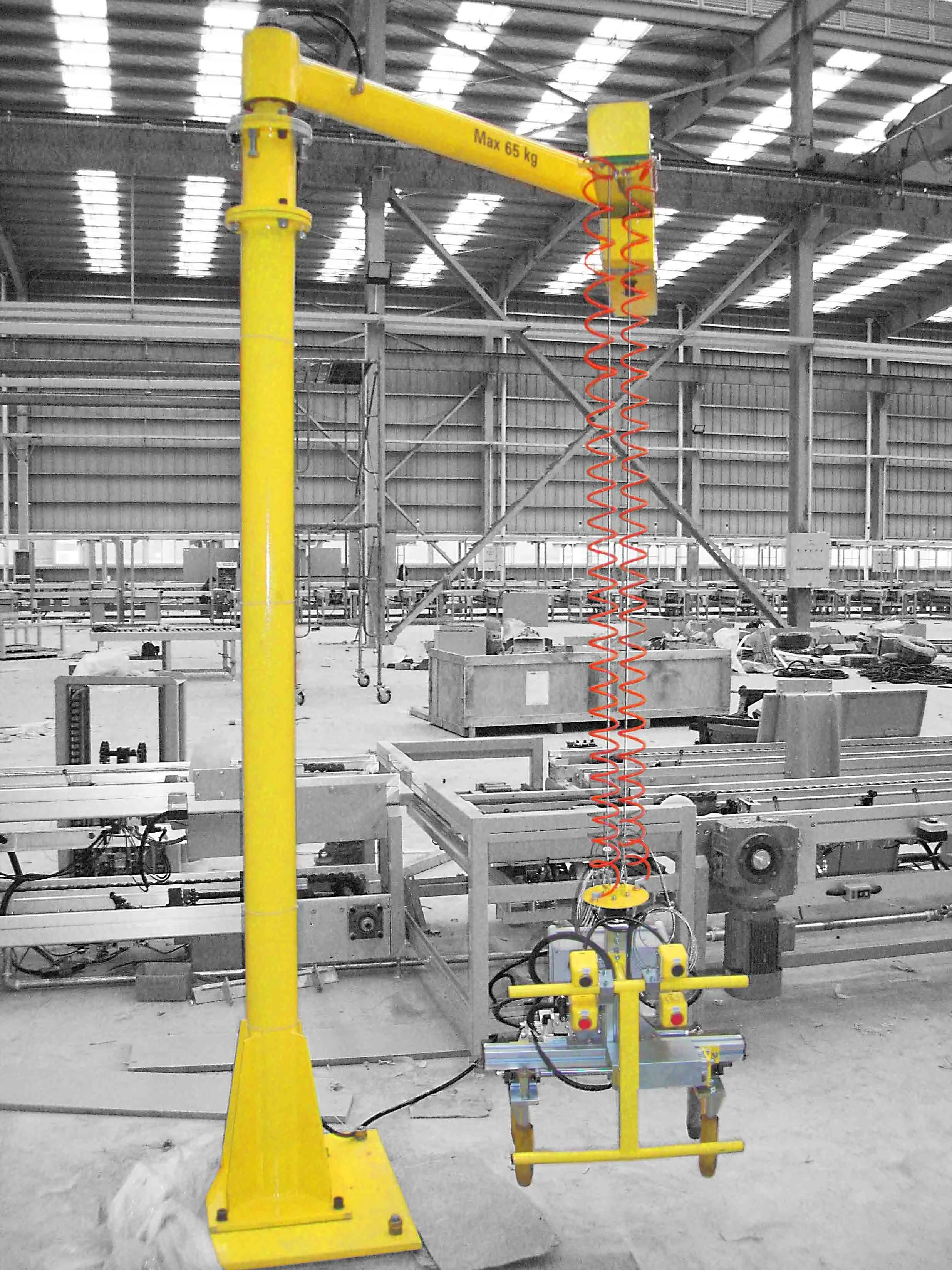
This article gives you a real-world checklist you can use to evaluate suppliers and to scope your project so it runs smoothly after installation. If you want to review Posilift’s manipulator range while reading, start here: Factory Manipulator Supplier China.
What “good” looks like on the shop floor
Before the checklist, define outcomes in plain operational terms:
-
The operator can move the load without wrestling it.
-
The part lands in the same place every cycle.
-
The system doesn’t need constant adjustment after lunch.
-
Quality issues don’t increase when production speeds up.
-
Maintenance is predictable, not emergency-driven.
If a supplier can’t talk about these outcomes, they’re probably selling equipment—not solving handling.
The practical checklist (use this in your RFQ or supplier calls)
1) Load reality checklist: prove you understand the load
Ask yourself and the supplier:
-
What’s the true weight range (min/max) during the shift?
-
Does the center of gravity shift when the load is lifted or tilted?
-
Is the load rigid, semi-rigid, or flexible (bags, rubber, thin sheet)?
-
Are there any “problem conditions” (dust, oil, moisture, sharp edges)?
-
What surface can you grip without damage?
Red flag: Supplier quotes a system based only on “maximum weight.”
Green flag: Supplier asks for a load sample, drawings, or video of the process.
2) Process mapping checklist: define each motion, not just “pick and place”
You want a supplier who maps the steps like this:
-
Pick condition: how the load is presented (flat, stacked, tilted, on conveyor)
-
Required motions: lift, reach, rotate, tilt, align, insert, place, release
-
Placement tolerance: how precise the final position must be
-
Handoff points: fixtures, pallets, conveyors, machines
-
Cycle time: typical and peak
Red flag: “Our manipulator can do all of that” without asking follow-ups.
Green flag: They break the workflow into measurable motions and constraints.
3) Tooling checklist: the “hands” decide reliability
Tooling is where handling projects either become easy—or become a daily headache.
Ask:
-
What gripping method is proposed: suction, pneumatic gripper, clamp, magnetic, custom fixture?
-
How is grip stability maintained during acceleration and stopping?
-
How do you prevent slip, twist, swing, or late release?
-
Can the tooling be quick-changed for different products?
-
How are wear parts handled (pads, seals, cups), and what’s the maintenance routine?
Red flag: Tooling is treated as a generic accessory.
Green flag: The supplier designs tooling around your part geometry and process.
Posilift’s strength here is its one-stop approach: custom systems and tooling matched to the customer’s process requirements, including solutions from wire rope systems to large rigid-arm manipulators.
4) Manipulator type checklist: choose control vs flexibility on purpose
A common sourcing mistake is choosing a manipulator type based on familiarity, not fit.
Use this quick guide when speaking with a supplier:
-
Wire rope / cable style systems: often best for speed, flexibility, broad reach, and repetitive motion.
-
Rigid arm systems: often best for heavier loads, offset centers of gravity, tighter placement accuracy, and more controlled rotation/tilt.
Red flag: Supplier pushes one type for every application.
Green flag: They explain tradeoffs and match the system to the task.
5) Layout checklist: column-mounted or overhead-running
Your layout determines not just reach, but workflow efficiency.
Ask:
-
Is this a single-station job with a fixed envelope? (often column-mounted fits)
-
Do operators serve multiple points or long travel distances? (overhead-running may fit)
-
Are aisles shared with logistics? Do you need floor space clear?
-
Can the system be expanded later as the line changes?
Red flag: Layout is decided without looking at the station.
Green flag: The supplier requests dimensions, photos, and movement paths.
6) Operator checklist: a system is only “efficient” if it feels natural
The fastest system on paper can slow down in real life if it fights the operator.
Confirm:
-
Handle height and posture are comfortable for the workforce.
-
Fine positioning is easy at the end of the move.
-
Visibility is good at pick and place points.
-
Training time is realistic, and controls are intuitive.
-
The system reduces “micro-strain” (constant small corrections).
Red flag: Operator use is treated as an afterthought.
Green flag: Supplier talks about ergonomics as a performance factor.
7) Safety checklist: demand more than basic statements
Ask for specifics:
-
What safety protections match the application risks?
-
How is load retention ensured under realistic movement?
-
What is the plan for risk assessment at the workstation?
-
How are pinch points, swing paths, and overhead travel managed?
-
What documentation is provided?
Posilift holds CE and a Quality Management System certification (GB/T19001-2016 / ISO 9001:2015). Practically, that should translate into a structured approach to design, manufacturing, and service processes—not just a label.
8) Service checklist: the “after install” story matters
A supplier can win the quote and lose the project if support is weak.
Ask:
-
Who supports commissioning and operator training?
-
What is the spare parts strategy?
-
What is the troubleshooting process and response path?
-
Are manuals, maintenance plans, and drawings provided?
-
Is local design and service support available?
Posilift’s Shanghai subsidiary provides sales, design, and service, which is especially important for projects where onsite refinement is needed after installation.
A simple scorecard you can use to compare suppliers
Here’s a quick way to evaluate whether a “factory manipulator supplier in China” is truly process-driven:
-
Discovery quality (did they ask about load, motion, layout, tooling?)
-
Engineering clarity (did they propose a clear solution path with tradeoffs?)
-
Tooling capability (custom design vs generic attachment)
-
Integration thinking (mounting, coverage, future expansion)
-
Safety and documentation (specifics, not vague promises)
-
Service plan (commissioning, training, spares, response)
If a supplier scores high on these, you’re far more likely to get a system that runs reliably after week one.
Why Posilift fits the “practical supplier” profile
Posilift started doing business in China in 1999 with the growth of the automotive industry. With an Australia headquarters and a Shanghai wholly foreign-owned subsidiary, Posilift supports customers through global subsidiaries and agents, supplying handling equipment across China and multiple international markets.
Most importantly for buyers: Posilift focuses on solving material handling problems with professional, safe, cost-effective handling and positioning solutions for complex processes, covering 10–1500kg. The range spans wire rope systems to large rigid-arm manipulators, with customized systems and tooling delivered as a one-stop solution.
To review the manipulator lineup as you plan your project, visit: Factory Manipulator Supplier China.
www.posilift-tec.com
Posilift