
Maintaining consistent temperature in industrial processes is critical for product quality, process efficiency, and equipment longevity. In closed systems, uneven temperature distribution can lead to inefficiencies, hot spots, or even process failure. Electric process heaters, particularly circulation heaters, are engineered to address these challenges by delivering uniform heat transfer across liquids and gases in pressurized or non-pressurized systems.
This article explores how circulation heaters improve temperature uniformity, their advantages, and practical applications in industrial heating systems.
Understanding Temperature Uniformity Challenges in Closed Systems
Closed systems—such as tanks, pressure vessels, and pipeline loops—often contain fluids or gases that need precise temperature control. Common challenges include:
-
Stratification: Heavier or denser fluid layers can settle at the bottom of a vessel, leaving the upper layers cooler.
-
Heat loss: Insufficient insulation can cause uneven temperatures at the vessel walls or along the piping.
-
Flow irregularities: Non-uniform flow patterns may result in areas of under- or over-heating.
-
Viscosity changes: Temperature gradients can affect fluid viscosity, leading to poor circulation or mixing.
Addressing these issues requires a heating solution capable of delivering controlled, consistent heat throughout the system.
Role of Process Heaters in Closed Systems
A process heater is designed to maintain or increase the temperature of a liquid or gas within a controlled industrial environment. Electric process heaters are especially versatile because they can provide both direct and indirect heating:
-
Direct heating: The heating element contacts the fluid directly, maximizing heat transfer efficiency.
-
Indirect heating: Heat is transferred through a barrier or jacket, isolating the heating element from corrosive or sensitive fluids.
The choice of heater type and installation method greatly affects temperature uniformity and system performance.
Circulation Heaters: Design and Function
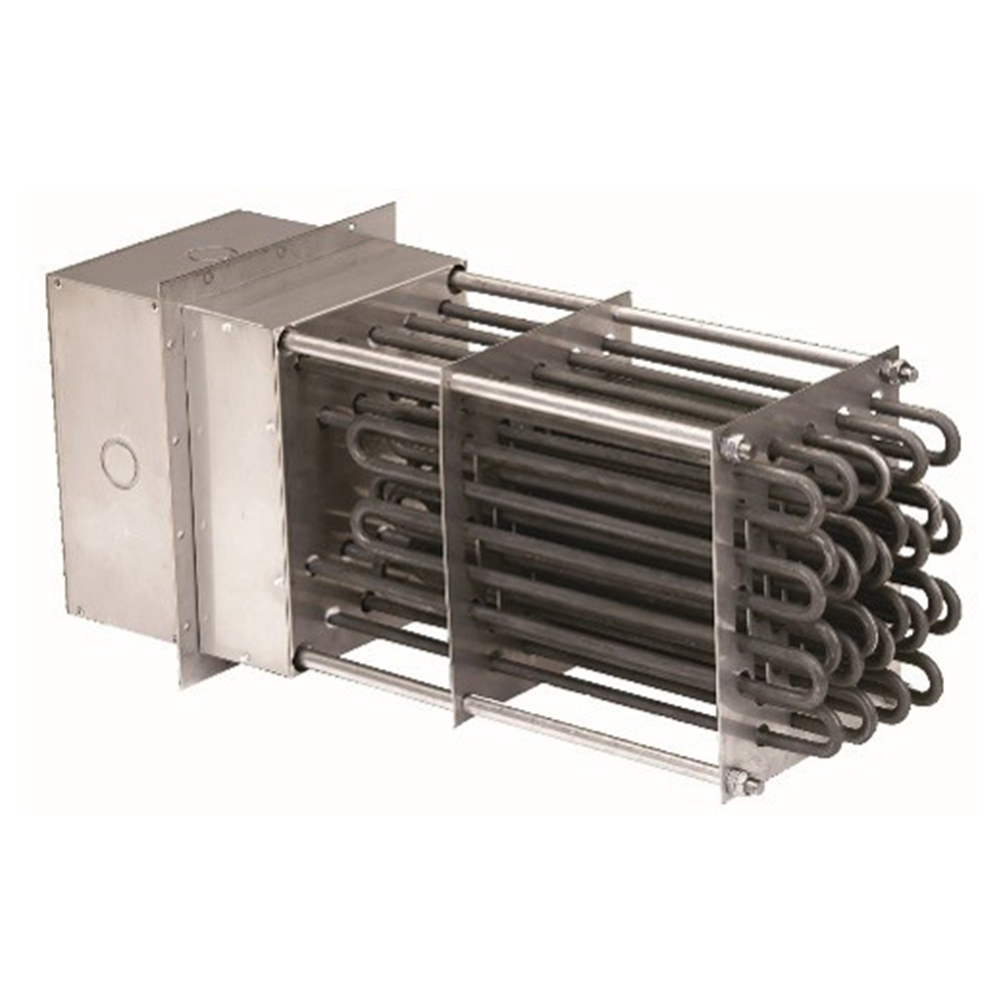
A circulation heater is an electric, in-line process heater designed to heat flowing fluids or gases continuously. Key design elements include:
-
Tubular heating elements: Mounted via screw plug or flange connections into a vessel.
-
Thermally insulated vessel: Ensures minimal heat loss and stable operating temperature.
-
Flow-through design: The medium passes directly over the heating elements, receiving uniform heat along its path.
This combination of flow-controlled heating and vessel insulation makes circulation heaters particularly effective for achieving consistent temperature throughout a closed system.
Detailed specifications and options for industrial circulation heaters can be found on the Circulation Heater product page.
How Circulation Heaters Improve Temperature Uniformity
-
Flow-Through Heating
Circulation heaters heat the process medium as it flows past the elements. This continuous movement ensures that all portions of the fluid are exposed to the same thermal conditions, eliminating stratification and temperature gradients. -
Insulated Vessel Design
A well-insulated vessel reduces heat loss to the environment, preventing cooler regions near the walls. Maintaining uniform wall temperature ensures the entire fluid volume reaches the desired temperature consistently. -
Optimized Element Placement
Properly arranged heating elements provide even distribution of heat across the vessel cross-section. This prevents localized hotspots and ensures all fluid layers are heated uniformly. -
Continuous Circulation
The movement of the medium within the system—whether driven by pumps or natural convection—works in tandem with the heater to maintain consistent temperature throughout the volume. Circulation heaters are designed to complement this flow, enhancing uniformity. -
Precision Temperature Control
Integrated thermostats, thermocouples, or PID controllers allow precise regulation of outlet temperatures, automatically adjusting power to maintain stability across the system. This active control prevents overshoot and uneven heating.
Advantages of Uniform Heating in Closed Systems
Maintaining temperature uniformity in closed systems provides several operational benefits:
-
Consistent product quality: Uniform heating ensures chemical reactions, oil viscosity, or other process parameters remain stable.
-
Reduced energy consumption: Even heating minimizes overcompensation, reducing electricity usage.
-
Extended equipment life: Prevents hot spots that can damage pumps, piping, or vessel surfaces.
-
Improved process safety: Reduces the risk of localized overheating or thermal stress.
-
Reliable batch and continuous operations: Ensures repeatable results for both static tanks and flowing systems.
Applications Across Industries
Circulation heaters are widely used in industries where temperature uniformity is critical:
Oil Industry
-
Heating lubricating oil for machinery startup
-
Preheating fuel oil to reduce viscosity for pumping and combustion
-
Maintaining consistent heat in storage tanks or pipeline loops
Gas Industry
-
Heating natural gas to stabilize flow and prevent condensation
-
Inline heating for pipeline conditioning and processing
-
Maintaining temperature in compressed or pressurized gas systems
Chemical Industry
-
Heating chemical solutions in reactors and storage vessels
-
Preventing stratification in viscous fluids or solvents
-
Supporting continuous reactions requiring precise thermal conditions
Design Tips for Maximizing Uniformity
To achieve optimal temperature uniformity, engineers should consider:
-
Proper flow design: Ensure all fluid passes evenly over heating elements.
-
Insulation: Use high-quality thermal insulation for vessels and piping.
-
Element geometry: Tailor element size, watt density, and arrangement to fluid properties.
-
Control systems: Integrate sensors and controllers for feedback-based temperature regulation.
-
Maintenance access: Design systems for easy inspection and element replacement to maintain long-term performance.
Conclusion
Circulation heaters are a reliable and efficient solution for improving temperature uniformity in closed industrial systems. By combining flow-through heating, proper element placement, vessel insulation, and precise temperature control, these heaters ensure consistent heat distribution for liquids and gases across a wide range of industrial applications.
Whether in the oil, gas, or chemical industry, integrating a high-quality circulation heater into your process system ensures stable operation, energy efficiency, and reliable product quality.
For technical specifications and more information, explore the Circulation Heater product page.
www.wnhthermo.com
WEINENG