
In commercial construction, doors are not just entry points—they are critical security components and structural elements that must endure high traffic, environmental exposure, and frequent operational use. Heavy duty sliding doors have emerged as the preferred solution for commercial and industrial facilities because they combine robust construction, advanced materials, and precise engineering to enhance both security and durability.
KaiMeiDa Aluminum, with its comprehensive production infrastructure and high-precision aluminium extrusion capabilities, has developed a range of industrial-grade sliding door systems designed to meet the exacting standards of modern commercial buildings. From anodic oxidation and electrophoretic coatings to high-strength aluminum profiles, these sliding doors offer superior resistance to wear, corrosion, and mechanical stress. This article explores the technical features, performance benefits, industrial standards, and long-term advantages of heavy duty sliding doors.
1. Material Selection: The Foundation of Durability
The core strength and longevity of heavy duty sliding doors are determined by the materials used in construction. Key considerations include:
-
High-Strength Aluminum Profiles: KaiMeiDa manufactures aluminium profiles using advanced extrusion lines, ensuring uniform wall thickness, high tensile strength, and resistance to bending or warping under repeated use.
-
Surface Treatments: Anodic oxidation, electrophoretic coatings, and powder coating increase resistance to corrosion, UV exposure, and chemical attack, which is particularly important in humid, coastal, or industrial environments.
-
Composite and Reinforced Profiles: Reinforced profiles allow the doors to withstand high mechanical loads, enhancing security without significantly increasing weight.
Material optimization ensures that the sliding doors maintain structural integrity and appearance over decades of use.
2. Structural Design for Security and Performance
2.1 Reinforced Track Systems
-
Heavy duty sliding doors require high-precision tracks that prevent sagging, misalignment, or operational noise.
-
Multi-roller systems with anti-derailment features distribute the door weight evenly, reducing wear on individual components.
-
Tracks are typically fabricated from anodized or powder-coated aluminum to resist corrosion while maintaining smooth operation.
2.2 Locking Mechanisms and Safety Features
-
Advanced locking systems, including multi-point latches and reinforced bolts, enhance security against unauthorized entry.
-
Safety sensors and anti-pinch features protect occupants and reduce liability in commercial spaces.
-
Integration with access control systems (RFID, keypads, or biometric systems) provides scalable security solutions for office complexes, factories, and retail environments.
2.3 Frame and Panel Integration
-
Frames are engineered for load distribution, ensuring panels remain aligned under wind pressure or repeated operation.
-
Panels can incorporate tempered or laminated glass, insulated layers, or composite inserts, adding both security and thermal efficiency.
3. Corrosion Resistance and Environmental Durability
Environmental exposure is a major factor in degrading sliding door performance. KaiMeiDa’s aluminium profiles undergo multiple treatment steps to ensure longevity:
-
Anodic Oxidation: Creates a uniform oxide layer, providing long-term resistance to acids, alkalis, and salt spray.
-
Electrophoretic Coating: Delivers a thin, even paint layer that enhances adhesion, color stability, and scratch resistance.
-
Powder Coating (Optional): Adds a protective layer with a customizable finish, suitable for high-traffic commercial environments.
Key Technical Standards:
| Parameter | Grade A | Grade B |
|---|---|---|
| Oxide Layer Thickness | ≥10 μm | ≥10 μm |
| Paint Film Thickness | ≥12 μm | ≥7 μm |
| Composite Coating Thickness | ≥21 μm | ≥16 μm |
| Corrosion Resistance | ≥9.5 grade | ≥9.5 grade |
| Hardness | ≥3H | ≥3H |
| Surface Finish | Matte, Flat | Matte, Flat |
These treatments ensure doors maintain mechanical strength and aesthetic appeal despite frequent exposure to environmental stressors.
4. Performance in High-Traffic Commercial Spaces
Heavy duty sliding doors are particularly effective in high-traffic commercial settings:
-
Smooth Operation: Roller and track engineering reduce friction, ensuring consistent opening and closing.
-
Load-Bearing Capacity: Reinforced frames and panels handle frequent cycles without deformation.
-
Noise Reduction: Advanced roller systems minimize operational noise, improving comfort in office and retail environments.
-
Energy Efficiency: Insulated panels and tight seals reduce air infiltration, contributing to HVAC efficiency.
These features make sliding doors ideal for shopping centers, airports, factories, hospitals, and office buildings.
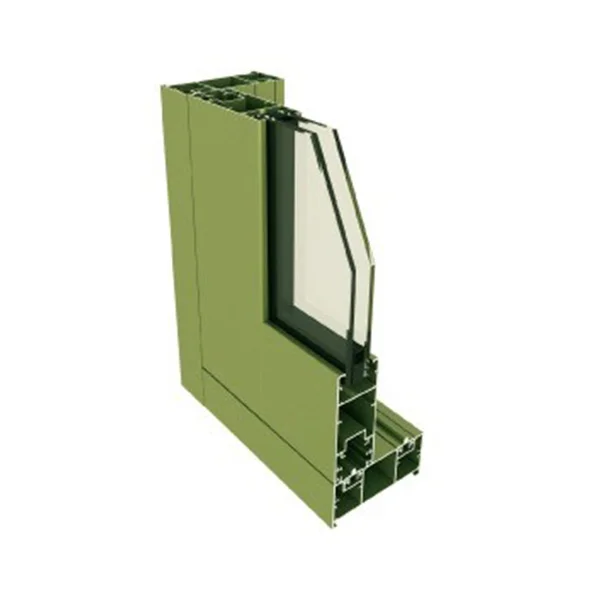
5. Customization and Aesthetic Flexibility
KaiMeiDa offers extensive customization options to meet architectural and functional requirements:
-
Profile Dimensions: Wall thickness, cross-sectional shape, and reinforcement options tailored to building specifications.
-
Surface Finishes: Matte, glossy, wood grain, or textured surfaces to match interior or exterior design schemes.
-
Color Options: Powder-coated or electrophoretic finishes in various colors for brand alignment or visual appeal.
-
Panel Materials: Glass, metal, composite panels, or combination panels for enhanced security, insulation, or design aesthetics.
Customization ensures that sliding doors not only perform well but also integrate seamlessly with the overall building design.
6. Installation and Maintenance Best Practices
Proper installation is critical to the longevity of sliding doors:
-
Ensure level alignment of tracks and frames.
-
Verify that rollers, bearings, and anti-derailment mechanisms are functioning properly.
-
Inspect weatherstripping, seals, and panel fasteners regularly.
-
Periodic cleaning of tracks and rollers prevents dust buildup and prolongs smooth operation.
-
Apply protective coatings or touch-ups in areas subject to mechanical damage.
Following these practices maximizes operational life and minimizes maintenance costs.
7. Security Advantages
Heavy duty sliding doors significantly improve security in commercial buildings:
-
Resistant to Forced Entry: Reinforced aluminum frames and multi-point locking systems prevent tampering.
-
High-Impact Panels: Tempered or laminated glass panels resist breakage under impact.
-
Integration with Building Security Systems: Doors can interface with alarms, sensors, and access control systems to provide comprehensive protection.
Security features ensure business continuity, asset protection, and occupant safety.
8. Frequently Asked Questions (FAQ)
Q1: What makes heavy duty sliding doors more durable than standard doors?
A1: They use reinforced aluminum profiles, advanced coatings, and high-precision tracks to resist wear, corrosion, and mechanical stress.
Q2: Are these doors suitable for industrial environments with chemical exposure?
A2: Yes, anodic oxidation and electrophoretic coatings protect against acids, alkalis, and salt exposure, ensuring longevity.
Q3: Can sliding doors be customized for aesthetics and functionality?
A3: Yes, KaiMeiDa offers multiple finishes, colors, panel types, and profile designs to meet commercial building requirements.
Q4: How long can heavy duty sliding doors last?
A4: With proper installation and maintenance, they can last 20–30 years, even in high-traffic or corrosive environments.
Q5: What maintenance is required to preserve security and durability?
A5: Regular inspection of rollers, tracks, seals, and coatings, combined with cleaning and occasional touch-ups, is recommended.
9. Conclusion
Heavy duty sliding doors are a critical investment for commercial buildings, combining security, durability, and design flexibility. KaiMeiDa Aluminum’s advanced extrusion profiles, anodic oxidation, and electrophoretic coatings ensure that these doors:
-
Resist corrosion, wear, and environmental damage.
-
Withstand frequent operation without deformation.
-
Enhance security through reinforced frames and locking systems.
-
Integrate seamlessly with commercial building design aesthetics.
By choosing KaiMeiDa heavy duty sliding doors, architects, facility managers, and builders can optimize building security, operational efficiency, and long-term performance, ensuring that doors remain reliable and visually appealing for decades
www.jxkmdly.com
Jiangxi Kaimeida Aluminum Co., Ltd.