
In modern industrial operations, equipment reliability is a key factor that directly impacts productivity, maintenance costs, and overall operational safety. Industries such as petrochemical processing, steel manufacturing, power generation, cement production, and heavy machinery all operate under extremely harsh conditions.
Under continuous exposure to wear, corrosion, and high temperatures, critical components inevitably degrade over time. To overcome these challenges, surface engineering technologies have become essential. Among them, Plasma Powder Overlay (PTA) coating has emerged as one of the most effective solutions for extending equipment service life in demanding environments.
What Is PTA Coating Technology?
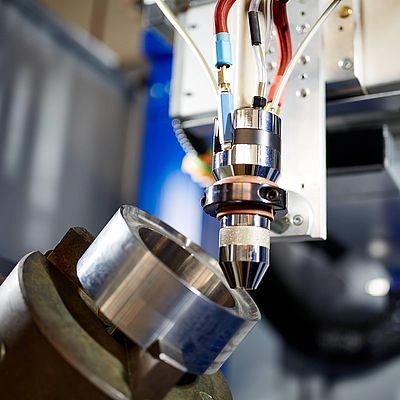
Plasma Powder Overlay (PTA) coating is a surface engineering process that uses a highly concentrated plasma arc to melt alloy powder and fuse it onto a base material.
This process creates a metallurgically bonded protective layer, rather than a simple surface coating.
In operation, a water-cooled nozzle constricts the plasma arc into a high-energy beam, generating extremely high temperatures. This allows both the alloy powder and the substrate surface to melt and fuse together. Once solidified, the result is a dense, uniform, and highly wear-resistant surface layer.
The key advantage of PTA coating is its strong bonding strength and low dilution rate, ensuring the coating retains its designed mechanical and chemical properties.
For industrial users, advanced solutions such as
Plasma Powder Overlay PTA Coating Services
provide a controlled and engineered approach to surface protection and component life extension.
Why Industrial Equipment Fails in Harsh Environments
Before understanding PTA coating benefits, it is important to recognize the main failure mechanisms in industrial systems:
1. Abrasive Wear
In industries like mining, cement, and steel production, continuous particle impact gradually erodes metal surfaces.
2. Corrosion Damage
Chemical exposure in petrochemical and marine environments leads to oxidation, pitting, and structural weakening.
3. Thermal Fatigue
Repeated heating and cooling cycles cause expansion stress, cracking, and deformation.
4. Combined Degradation Effects
In real-world conditions, wear, corrosion, and heat often occur simultaneously, accelerating failure rates.
How PTA Coating Protects Industrial Surfaces
PTA coating is not just a protective layer—it is a surface transformation technology that significantly improves material performance.
1. Excellent Wear Resistance
The deposited alloy layer contains hard phases that dramatically improve resistance to abrasion and erosion.
2. Strong Corrosion Protection
By using corrosion-resistant alloy powders, PTA coating effectively isolates the substrate from aggressive chemical environments.
3. High Temperature Stability
PTA coatings maintain structural integrity even under extreme heat and thermal cycling conditions.
4. Metallurgical Bond Strength
Unlike mechanical coatings, PTA creates a permanent metallurgical bond with the base material, preventing peeling or delamination.
The Importance of Plasma Arc Energy Control
The quality of PTA coating is strongly influenced by plasma arc characteristics.
The plasma arc can reach extremely high temperatures, enabling:
-
Uniform coating structure
-
Low porosity levels
-
Strong adhesion to the base material
-
Controlled dilution between coating and substrate
This precise energy control is what makes PTA coating suitable for mission-critical industrial components.
Industrial Applications of PTA Coating
PTA coating is widely used across industries where equipment is exposed to extreme operating conditions:
Steel Industry
Used on rollers, furnace parts, and guide components to resist heat and wear.
Petrochemical Industry
Protects valves, pumps, and pipelines from corrosion and chemical attack.
Power Generation
Applied to turbine and boiler components exposed to high temperature and pressure.
Cement Industry
Used on grinding rollers and crushing equipment exposed to heavy abrasion.
Heavy Machinery & Automotive
Improves durability of engine and mechanical components under high load conditions.
Company Expertise in Surface Engineering
Kennametal Stellite (Shanghai) Co., Ltd. is a global leader in wear-resistant materials and surface engineering technologies.
Established in 1985 as a Sino-foreign joint venture and part of Kennametal Inc., the company specializes in:
-
Wear-resistant and corrosion-resistant materials
-
Hardfacing and coating services
-
High-temperature engineering solutions
Its technologies are widely used in industries such as steel, petrochemical, power generation, cement, automotive, rubber, and plastics.
By combining materials science with engineering expertise, the company provides integrated solutions that improve equipment reliability and reduce downtime.
Key Benefits of PTA Coating in Real Applications
Reduced Maintenance Requirements
Longer wear life reduces repair frequency and maintenance costs.
Improved Operational Stability
Consistent surface performance reduces unexpected equipment failures.
Lower Lifecycle Cost
Extended service life leads to significant long-term cost savings.
Enhanced Equipment Reliability
Stable coating performance ensures predictable operation under harsh conditions.
Engineering Factors for Successful PTA Coating
To achieve optimal performance, several factors must be carefully controlled:
-
Proper surface cleaning and preparation
-
Selection of suitable alloy powders
-
Precise control of arc energy and deposition speed
-
Post-coating inspection and quality testing
Each step plays a critical role in ensuring coating quality and long-term durability.
Conclusion
In harsh industrial environments, equipment degradation is inevitable—but it can be significantly slowed with the right surface engineering technology.
PTA coating provides a powerful solution by forming a high-strength, wear-resistant, and corrosion-resistant surface layer that dramatically improves equipment lifespan and operational stability.
As industries continue to demand higher efficiency and lower maintenance costs, PTA technology will remain a key solution for extending the life of critical components and improving industrial reliability.
www.sh-stellite.com
Kennametal Stellite