
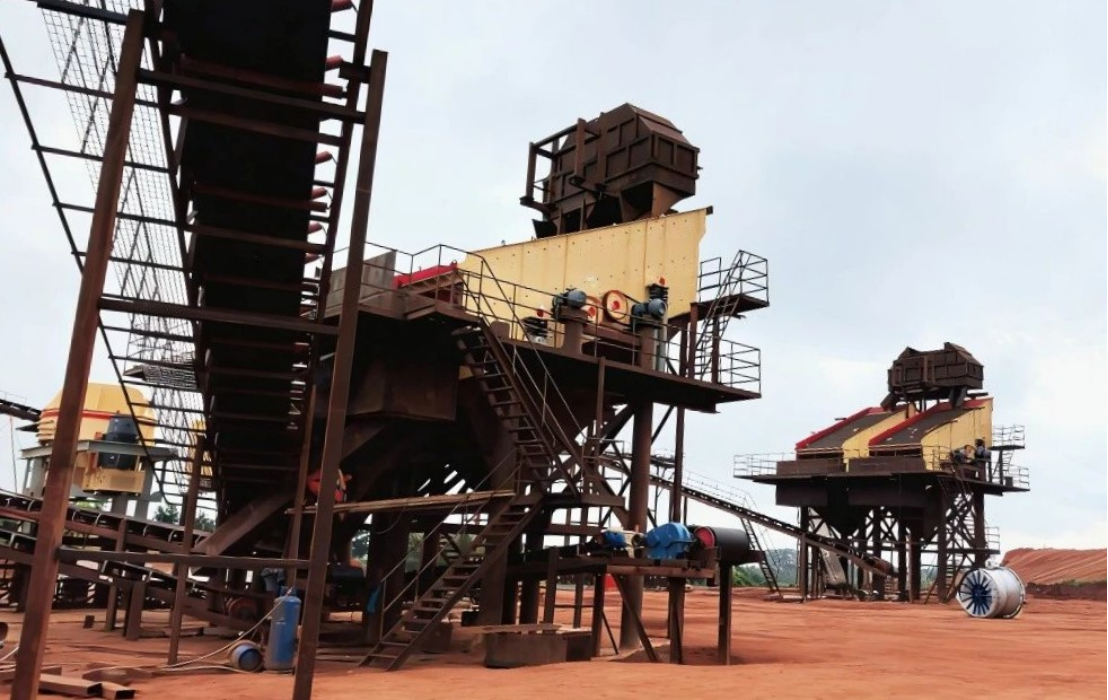
Inside Leimeng Group’s hard-rock crushing and screening project in Uganda
A 500 TPH granite crushing line typically requires more than one crusher. Because granite is hard and abrasive, a practical process usually combines a jaw crusher for primary crushing, cone crushers for secondary and fine crushing, shaping or sand-making equipment, and vibrating screens for final product classification.
For an infrastructure aggregate project in Uganda, Leimeng Group supplied a complete 500 TPH granite crushing and screening line using this process logic.
The main equipment includes:
- PE jaw crusher
- HPY multi-cylinder hydraulic cone crusher
- S Series cone crusher
- PG double-roller sand making machine
- LM vertical shaft impact crusher
- YKJ vibrating screen
- ZW feeder and belt conveyors
The line is designed to process hard granite into multiple aggregate sizes for road construction, building materials and municipal infrastructure.
Uganda Granite Project: Key Facts
| Project item | Details |
|---|---|
| Location | Uganda |
| Raw material | Granite |
| Designed capacity | 500 TPH |
| Main application | Infrastructure aggregate production |
| Primary crushing | PE jaw crusher |
| Secondary and fine crushing | HPY and S Series cone crushers |
| Sand making and shaping | PG double-roller machine and LM VSI crusher |
| Screening | YKJ vibrating screen |
| Final products | Multiple aggregate sizes based on client requirements |
| Service scope | Equipment supply, installation guidance and commissioning support |
The 500 TPH figure refers to the designed capacity. Actual site output depends on feed size, material properties, crusher settings, screen configuration, operating conditions and the required product mix.
Why Is Granite Difficult to Crush?
Granite presents two main challenges: high hardness and abrasiveness.
Hardness determines how much crushing force is required. Abrasiveness affects the wear rate of jaw plates, cone liners, crusher chambers and other components that contact the material.
A granite production line must therefore address:
- Large and hard raw feed
- Wear-part consumption
- Stable crusher loading
- Circulating load
- Product grading
- Particle shape
- Screening capacity
- Long-term operating cost
Using one crusher for every reduction stage is rarely the most balanced approach. Different machines are assigned to different duties so that feed size, wear and finished-product requirements can be controlled throughout the process.
What Is the Process of the Uganda Granite Line?
The production process follows this general sequence:
Feeding → Primary crushing → Secondary crushing → Fine crushing → Sand making and shaping → Screening → Finished aggregates
Oversized material can return to the appropriate crushing stage for further processing, depending on the final process layout.
Each stage has a specific purpose.
Stage 1: Controlled Feeding
The ZW feeder delivers raw granite to the PE jaw crusher at a controlled rate.
Stable feeding helps maintain a suitable material level in the crusher and reduces sudden load changes. It also supports more consistent performance in the downstream cone crushers.
If feeding is uneven, the primary crusher may alternate between overloading and underutilisation. This can affect output, wear and the stability of the complete line.
Feeder selection should consider:
- Maximum feed size
- Feed grading
- Bulk density
- Required hourly capacity
- Moisture and clay content
- Jaw crusher feed opening
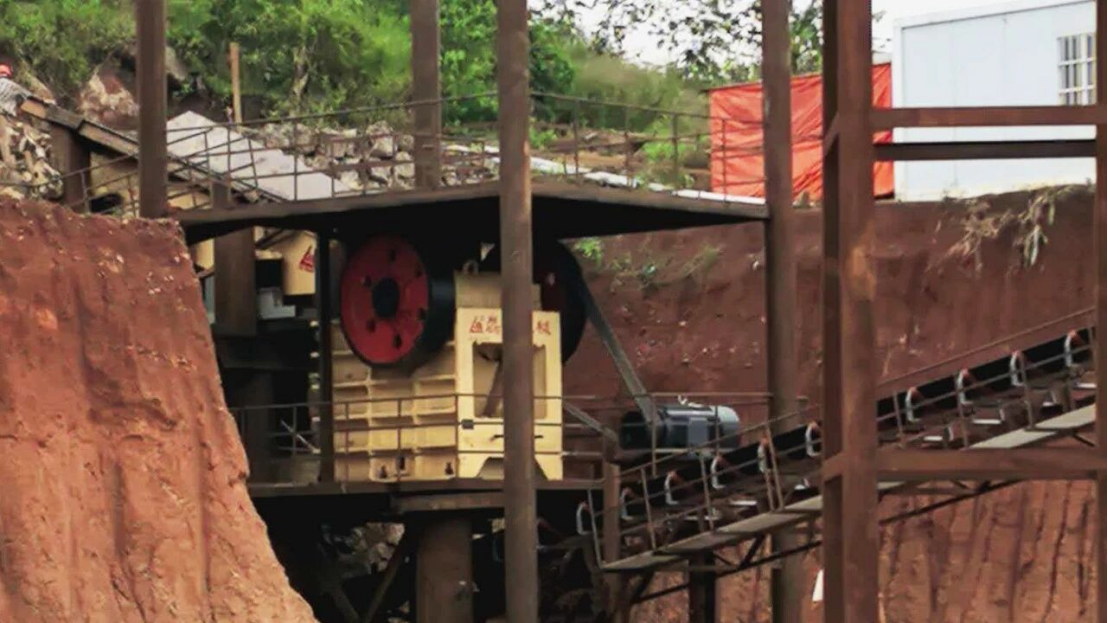
Stage 2: Primary Crushing with a PE Jaw Crusher
The PE jaw crusher performs the first size-reduction stage.
Jaw crushers use compression between a fixed jaw and a moving jaw. They are commonly used for granite primary crushing because they can accept large feed material and handle high-strength rock.
In the Uganda line, the jaw crusher reduces large granite blocks to a size suitable for cone crushing.
The purpose of primary crushing is not to produce the final aggregate sizes. It is to establish a stable feed for the next stage.
If the jaw crusher discharge remains too large or inconsistent, the cone crushers may experience:
- Unstable chamber loading
- Higher circulating load
- Reduced capacity
- Uneven liner wear
- Greater pressure on downstream screens
The jaw crusher, feeder and secondary crusher should therefore be selected as one connected section.
Stage 3: Secondary Crushing with an HPY Cone Crusher
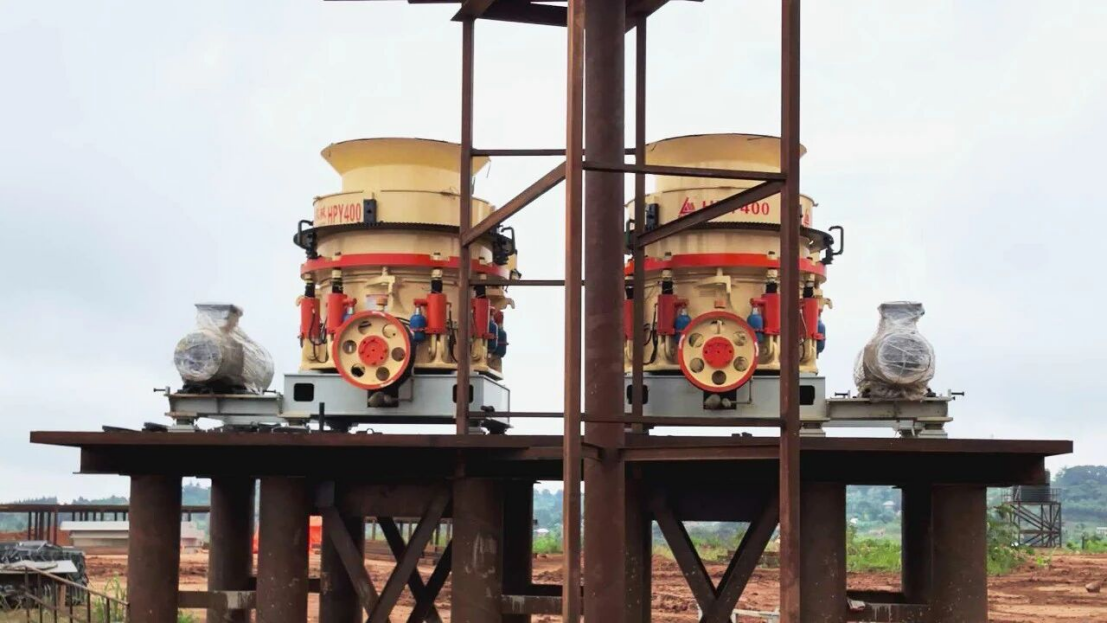
After primary crushing, the granite enters the HPY multi-cylinder hydraulic cone crusher.
This stage reduces the material further and prepares it for fine crushing, shaping and screening.
Cone crushers are generally suitable for abrasive hard rock because they use compression crushing. Compared with using an impact crusher for the same heavy reduction duty, cone crushing can provide more practical wear control in long-term granite processing.
The HPY cone crusher supports:
- Hard-rock size reduction
- Controlled discharge
- Stable downstream feeding
- High-capacity secondary crushing
- Closed-circuit operation with vibrating screens
Actual performance depends on the selected crushing chamber, closed-side setting, feed grading and chamber utilisation.
Stage 4: Fine Crushing with an S Series Cone Crusher
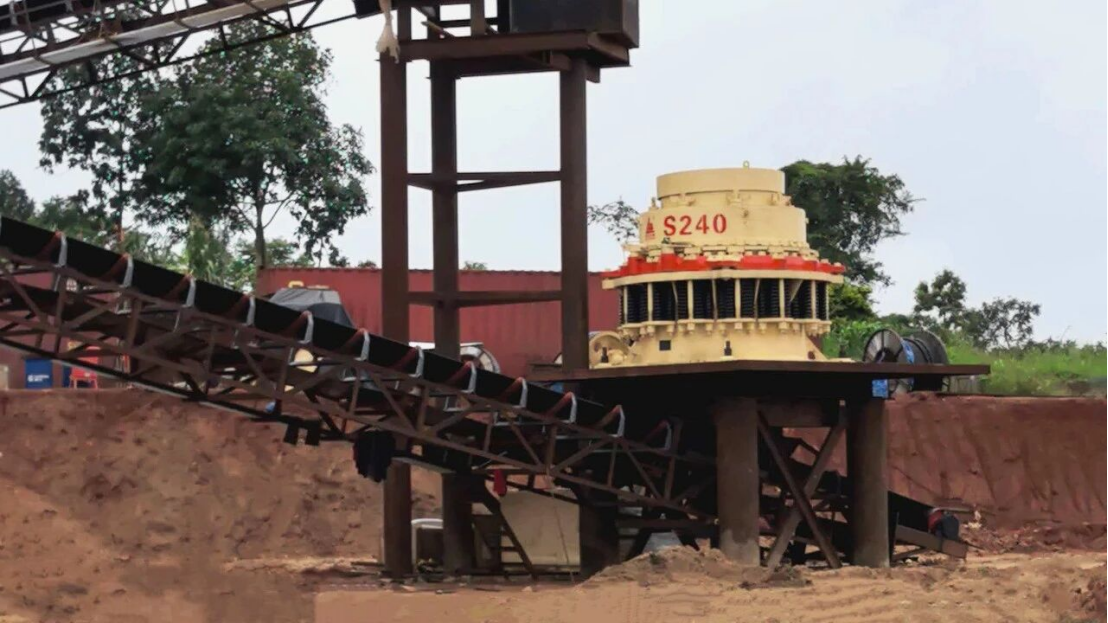
The S Series cone crusher handles further size reduction after the secondary stage.
Using separate secondary and fine crushing stages can help distribute the reduction work instead of forcing one crusher to complete the entire duty.
The fine crushing stage affects:
- Final aggregate grading
- Amount of material sent to shaping
- Screen load
- Circulating material
- Finished-product proportions
The correct crusher settings should be determined by the product sizes the client intends to produce.
A smaller discharge setting does not automatically mean a better result. If the crusher is set too tightly for the feed and chamber, capacity may fall and wear may increase.
Stage 5: Sand Making and Aggregate Shaping
After cone crushing, selected material is processed by the PG double-roller sand making machine and LM vertical shaft impact crusher.
These machines serve the fine aggregate and shaping section of the line.
The LM vertical shaft impact crusher uses high-speed impact to improve particle shape and increase the production of smaller aggregate and manufactured-sand fractions.
This stage can help the client:
- Improve aggregate particle shape
- Produce fine aggregate
- Adjust the proportion of different products
- Increase the usable range of granite products
- Respond to different infrastructure material requirements
Not all material must necessarily pass through every shaping machine. The final routing depends on the product mix and process design.
Stage 6: Screening with a YKJ Vibrating Screen
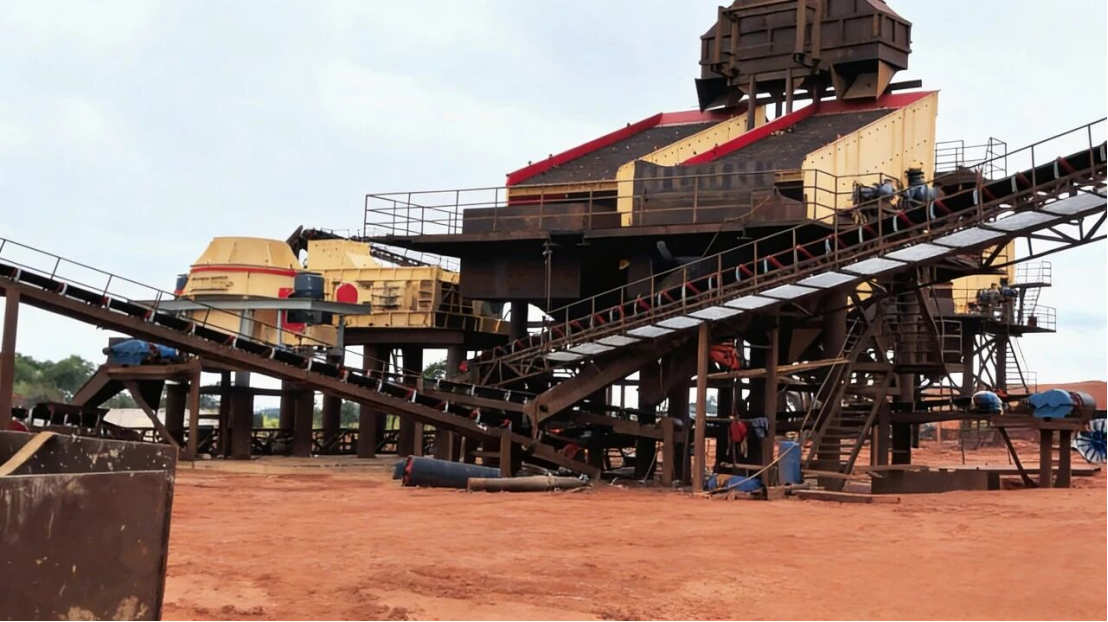
The YKJ vibrating screen classifies crushed granite into the required finished-product sizes.
Screening also determines which material meets specification and which material should return for additional crushing.
If the screen capacity does not match the crusher output, the screen may become the main bottleneck in a 500 TPH line.
Poor screening can result in:
- Excessive recirculating load
- Qualified material returning to the crusher
- Unstable product grading
- Material accumulation
- Higher crusher wear
- Reduced total line output
Screen selection should be based on feed grading, required products, screen openings, number of decks, moisture content and target screening efficiency.
Why Use Cone Crushers Instead of Impact Crushers for Granite?
For secondary and fine crushing of granite, cone crushers are generally preferred because granite is hard and abrasive.
Cone crushers reduce material through compression. This makes them better suited to sustained hard-rock reduction where liner wear and operating cost are important.
Impact crushers can offer good particle shape, but wear-part consumption may be higher when they are used for heavy reduction of abrasive granite.
A practical granite process therefore often uses:
- Jaw crushing for large feed
- Cone crushing for secondary and fine reduction
- VSI crushing for selected shaping and manufactured-sand duties
This assigns each machine to the duty it performs most effectively.
How Does the Line Produce Different Aggregate Sizes?
A complete crushing and screening line can adjust its product mix through:
- Crusher discharge settings
- Crushing chamber selection
- Screen openings
- Number of screen decks
- Material recirculation
- Shaping-stage routing
- Operating adjustments
This allows one granite source to be processed into multiple aggregate specifications.
However, changing the proportion of one product can affect the output of the others. If the demand for fine aggregate increases, the shaping section may receive more material. If larger aggregate is prioritised, less material may pass through fine crushing.
Capacity should therefore be evaluated according to the required product mix, not only the total tonnes per hour.
Why Equipment Matching Matters at 500 TPH
A production line is only as strong as its most restrictive stage.
A 500 TPH crusher cannot make the complete line produce 500 TPH if:
- The feeder cannot supply enough material.
- The next crusher cannot accept the discharge.
- The vibrating screen is undersized.
- Conveyors cannot transport the material.
- Stockpiling equipment cannot handle the finished products.
- Excessive circulating load consumes available capacity.
The crusher, screen and conveyor capacities must be reviewed as a system.
A balanced line does not mean every machine has the same nameplate capacity. It means each stage can handle the material quantity and grading it actually receives.
On-Site Support in Uganda
For overseas projects, equipment delivery is only one part of implementation.
Leimeng’s engineering team worked with the client during installation, process connection and commissioning.
This support covered the practical steps required to turn individual machines into a working production line, including:
- Equipment positioning
- Connection between process stages
- Conveyor alignment
- Crusher and screen coordination
- Startup preparation
- Commissioning adjustments
Correct commissioning helps verify material flow, equipment loading, crusher settings and screen performance before normal production begins.
What Information Is Needed to Design a 500 TPH Granite Line?
Before recommending equipment, the engineering team should receive:
- Raw material type
- Material hardness and abrasiveness
- Maximum feed size
- Complete feed grading
- Required capacity
- Finished aggregate sizes
- Required proportion of each product
- Manufactured-sand requirements
- Moisture and clay content
- Site layout and elevation
- Power supply
- Expected operating hours
- Local maintenance conditions
- Stationary, wheeled or crawler mobile requirements
Without this information, it is not possible to determine whether the Uganda configuration can be applied directly to another project.
Can the Uganda Configuration Be Used in Other Countries?
The same process logic can be adapted for granite, basalt and other abrasive hard-rock projects in Africa and other regions.
However, the exact models and quantities should not be copied without reviewing the new project conditions.
A similar line may need:
- A different jaw crusher feed opening
- Different cone crusher chambers
- More or fewer screening decks
- Different conveyor widths
- A different shaping process
- Mobile equipment instead of a stationary line
- Additional washing or dust-control equipment
The Uganda project is a reference configuration, not a universal template.
Frequently Asked Questions
What equipment is required for a 500 TPH granite crushing line?
A typical configuration may include a feeder, jaw crusher, secondary and fine cone crushers, shaping or sand-making equipment, vibrating screens and conveyors. The final selection depends on feed size, required products and site conditions.
Is a cone crusher suitable for granite?
Yes. Cone crushers are commonly used for secondary and fine crushing of granite because compression crushing is suitable for hard and abrasive rock.
Why is a VSI crusher used after cone crushing?
A VSI crusher can improve particle shape and produce smaller aggregate or manufactured-sand fractions after the main size-reduction work has been completed by the jaw and cone crushers.
Why is screening important?
Screening separates finished products and controls recirculation. If the screen is undersized or inefficient, the entire line may lose capacity even when the crushers are correctly selected.
Does 500 TPH mean the line always produces exactly 500 tonnes per hour?
No. It is the designed capacity. Actual output depends on feed conditions, crusher settings, screen performance, product mix and operating conditions.
What services did Leimeng provide for the Uganda project?
Leimeng provided equipment supply, installation guidance, process-connection support and commissioning assistance.
A Complete Hard-Rock Aggregate Solution
The Uganda 500 TPH granite crushing line demonstrates how different machines can be assigned to the duties they handle best.
The PE jaw crusher handles large feed. HPY and S Series cone crushers perform hard-rock reduction. PG and LM equipment support sand making and shaping. The YKJ vibrating screen controls final product classification.
Together, these stages form a complete process for producing multiple infrastructure aggregate sizes from abrasive granite.
For similar projects, Leimeng Group can configure a crushing and screening line according to the client’s material, feed size, capacity, finished-product requirements and site conditions.
https://www.lmcrusher.com/
GUANGDONG LEIMENG INTELLIGENT EQUIPMENT GROUP CO.,LTD.