
In modern sheet metal fabrication, precision bending plays a vital role in determining the final quality, appearance, and structural performance of metal products. Industries such as elevator manufacturing, architectural decoration, stainless steel processing, and precision electrical enclosures all require sharp edges, accurate angles, and consistent bending results.
However, traditional bending methods often face challenges like material springback, surface deformation, and limited angle control—especially when working with stainless steel and high-strength metal sheets. To overcome these limitations, V grooving machines have become an essential solution in advanced fabrication workflows.
What Is a V Grooving Machine?
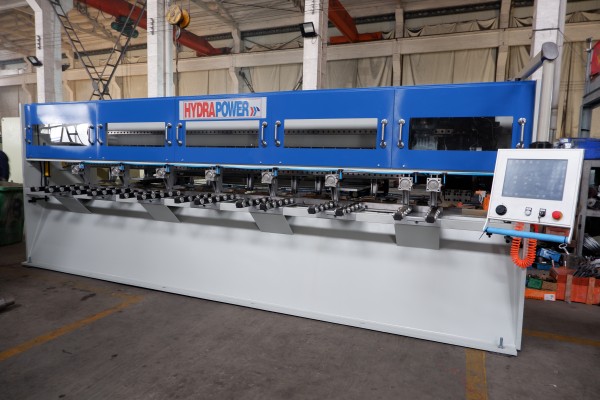
A V grooving machine is a precision sheet metal processing system that cuts V-shaped grooves along a bending line before forming. This process reduces material resistance at the fold point, enabling cleaner, sharper, and more accurate bends.
The basic working process includes:
-
Positioning the sheet on a stable worktable
-
Cutting a controlled V-shaped groove along the bend line
-
Adjusting groove depth based on material type and thickness
-
Performing the final bending using a press brake
By preparing the material in advance, the machine ensures far greater bending accuracy compared to conventional methods.
Limitations of Traditional Metal Bending
Before understanding the advantages of V grooving, it is important to recognize the common problems in traditional bending processes.
1. Springback Effect
Most metals naturally attempt to return to their original shape after bending. This causes:
-
Angle deviation
-
Inconsistent product batches
-
Additional manual correction
2. Surface Deformation
Without pre-processing, bending stress can lead to:
-
Surface wrinkles
-
Micro-cracks in sensitive materials
-
Reduced visual quality
3. Limited Angle Precision
Achieving sharp or perfectly defined bending angles is difficult when material thickness resists deformation.
These issues become more significant in stainless steel and decorative metal applications where appearance is critical.
How V Grooving Improves Bending Quality
1. Higher Bending Accuracy Through Material Control
By removing a precise amount of material along the bending line, V grooving reduces internal resistance. This allows the sheet to bend more predictably and accurately.
Key benefits include:
-
Reduced springback
-
Improved angle consistency
-
Stable mass production quality
2. Sharp and Clean Edge Formation
One of the biggest advantages of V grooving is the ability to achieve sharp corners with minimal bending radius.
This is especially important for:
-
Elevator interior panels
-
Architectural metal cladding
-
High-end stainless steel enclosures
The result is a clean, modern, and high-quality visual finish.
3. Reduced Bending Force Requirements
Since part of the material is removed, the force required during bending is significantly lower.
This leads to:
-
Less wear on press brake tools
-
Lower equipment stress
-
Improved machine lifespan
-
More stable bending performance
It also allows manufacturers to process thicker materials more efficiently.
4. Improved Surface Quality
V grooving helps maintain excellent surface integrity by minimizing stress during bending.
This results in:
-
Smooth visible surfaces
-
No cracking or wrinkling
-
High-end aesthetic finish
Integration with Press Brake Systems
V grooving is typically used as a pre-bending process before hydraulic press brake forming. When combined, the two systems deliver:
-
High-precision bending angles
-
Consistent batch production
-
Reduced operator dependency
-
Improved production efficiency
Modern fabrication lines increasingly rely on this integrated workflow for precision manufacturing.
Key Machine Design Factors for Precision
The accuracy of a V grooving machine depends heavily on its engineering design:
1. Rigid Machine Frame
A stable structure minimizes vibration and ensures cutting consistency.
2. Precision Linear Guide System
High-accuracy guides allow smooth and controlled tool movement.
3. CNC Control Technology
Advanced CNC systems enable:
-
Programmable groove depth
-
Repeatable processing parameters
-
High batch consistency
These features are essential for industrial-scale production.
Industrial Applications of V Grooving Machines
V grooving technology is widely used across industries that require both precision and visual quality:
-
Architectural Decoration – wall panels, ceilings, façade systems
-
Elevator Manufacturing – interior and exterior cabin panels
-
Electrical Cabinets – control panels and enclosures
-
Stainless Steel Fabrication – kitchen equipment and display structures
In all these applications, bending accuracy directly impacts both function and appearance.
Benefits for Manufacturers
Investing in V grooving technology offers long-term advantages:
-
Higher product consistency
-
Reduced rework and material waste
-
Improved production efficiency
-
Greater design flexibility
-
Enhanced surface quality
These benefits make it a key technology for modern sheet metal workshops.
Conclusion
V grooving machines have become an essential part of precision sheet metal fabrication. By pre-cutting controlled grooves before bending, they significantly improve angle accuracy, reduce springback, and enhance surface finish quality.
When integrated with press brake systems and CNC control technology, V grooving enables manufacturers to achieve high-quality, repeatable results across a wide range of industrial applications.
As fabrication standards continue to rise, V grooving technology remains a critical solution for companies aiming to improve precision, efficiency, and product quality in modern metalworking
www.bendcutmachines.com
Bendcut