
In construction engineering and land surveying, precision is essential for every stage of a project. Whether surveyors are establishing control points, positioning building foundations, mapping terrain, or supporting infrastructure development, even minor measurement errors can lead to costly corrections later.
Although advanced equipment such as GNSS receivers, RTK systems, and total stations often receive the most attention, the accessories that support these instruments are equally important. Among them, centering rods and brackets play a vital role by ensuring that measuring devices remain accurately positioned throughout field operations.
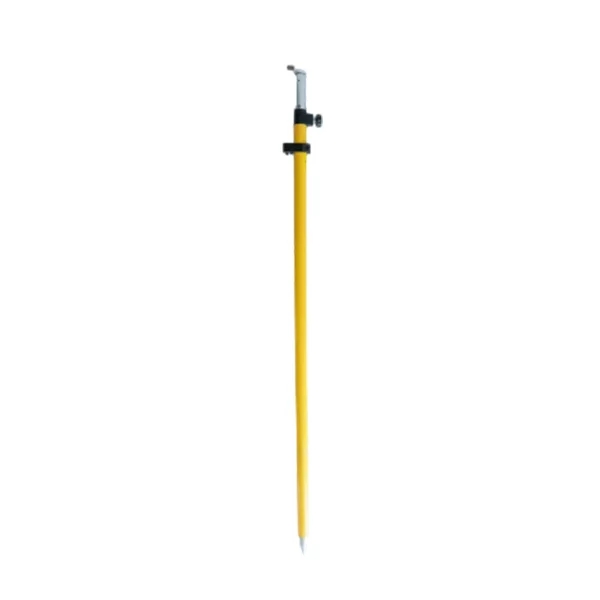
What Are Centering Rods and Brackets?
A centering rod is designed to position surveying instruments or targets directly above a known reference point. It acts as a stable support that enables surveyors to transfer coordinates accurately from the ground to the measuring equipment.
Brackets are complementary accessories that securely connect prisms, GPS antennas, GNSS receivers, or surveying targets to the rod. Their purpose is to maintain correct alignment while preventing unwanted movement during measurements.
Working together, these accessories help improve measurement consistency and reduce positioning errors across a wide range of surveying applications.
<a href="https://www.runhesurveying.com/Centering-rod-and-bracket">Explore Centering Rod and Bracket Products</a>
The Importance of Accurate Positioning
Construction projects involve numerous teams working from the same design coordinates. If survey points are not established correctly, even a small deviation can affect the entire construction process.
Typical problems caused by inaccurate positioning include:
-
Foundations built outside design tolerances
-
Structural components installed incorrectly
-
Conflicts between underground utilities
-
Road or bridge alignment deviations
-
Increased labor and material costs
-
Project delays caused by rework
Using reliable centering rods and brackets helps surveyors maintain accurate instrument placement and minimizes these risks.
1. Construction Layout and Building Set-Out
One of the primary applications for centering rods is transferring engineering designs to actual construction sites.
Before excavation or structural installation begins, surveyors establish reference points for walls, columns, foundations, and other critical features. A centering rod is placed directly over these control points, while a bracket holds the prism or target observed by a total station.
This configuration allows project coordinates to be transferred accurately from digital plans to physical site locations, ensuring every construction phase begins with reliable positioning.
2. RTK GNSS Survey Applications
RTK technology has become a standard solution for projects requiring centimeter-level positioning accuracy.
To achieve reliable results, GNSS receivers must remain stable during data collection. High-quality centering rods provide dependable support for RTK antennas, while compatible brackets securely mount additional accessories.
These tools are widely used for:
-
Property boundary surveys
-
Construction staking
-
Utility mapping
-
Earthwork volume calculations
-
Transportation corridor surveys
Stable equipment reduces positioning deviations and helps surveyors maintain measurement accuracy throughout the project.
3. Total Station Surveying
Despite the rapid growth of satellite-based positioning, total stations remain indispensable for projects demanding extremely high precision.
Survey crews frequently mount prisms on centering rods using adjustable brackets. This arrangement maintains consistent target height and alignment, allowing total stations to collect precise coordinate data.
Typical applications include:
-
Structural layout
-
Steel frame installation
-
Building column positioning
-
Industrial construction
-
Tunnel alignment
Accurate prism placement directly contributes to dependable measurement results.
4. Establishing Survey Control Networks
Control points provide the reference framework for nearly every construction project.
These permanent benchmarks are created before construction begins and are used repeatedly throughout the project lifecycle. Centering rods and brackets assist surveyors in accurately transferring coordinates between instruments and verifying existing control points.
Reliable positioning equipment supports:
-
Benchmark establishment
-
Control point verification
-
Coordinate transfer
-
Standardized surveying procedures among multiple teams
Consistent measurements reduce cumulative errors over time and improve overall data reliability.
5. Highway and Transportation Projects
Road construction often extends across long distances and requires continuous surveying support.
Survey teams rely on centering rods and brackets when marking:
-
Road centerlines
-
Horizontal curves
-
Elevation reference points
-
Drainage systems
-
Bridge transition sections
Since highway projects frequently involve uneven ground, heavy equipment vibration, and changing weather conditions, durable accessories help maintain stability during field operations.
6. Bridge Construction and Structural Engineering
Bridge surveying demands extremely tight construction tolerances.
Throughout the project, surveyors continuously verify structural alignment, elevation, and component positioning. Centering rods equipped with secure brackets provide dependable support for prisms and monitoring instruments.
Common bridge surveying tasks include:
-
Pier layout
-
Deck positioning
-
Structural monitoring
-
Expansion joint installation
-
Deformation observation
Accurate equipment setup helps ensure each bridge component is installed according to engineering specifications.
7. Topographic Surveying
Topographic mapping requires surveyors to collect terrain information from numerous observation points.
Because crews frequently relocate equipment during fieldwork, lightweight yet stable centering rods improve productivity without sacrificing measurement quality.
Brackets also enable fast installation or replacement of GNSS receivers and survey targets, helping operators adapt efficiently to changing site conditions.
8. Deformation Monitoring
Many infrastructure assets require long-term movement monitoring to evaluate structural performance.
Surveyors regularly measure changes affecting:
-
Buildings
-
Bridges
-
Dams
-
Tunnels
-
Retaining structures
Since measurements are repeated over extended periods, consistent instrument positioning is essential. Centering rods and brackets improve repeatability, making long-term monitoring data more reliable for engineering analysis.
Selecting Reliable Surveying Accessories
While high-end surveying instruments receive significant investment, their performance depends greatly on the quality of supporting accessories.
When choosing centering rods and brackets, professionals should evaluate several factors:
Strong and Durable Materials
Quality materials provide longer service life and dependable performance under demanding outdoor conditions.
Stable Construction
Rigid structures minimize vibration and improve measurement consistency.
Equipment Compatibility
Accessories should integrate smoothly with RTK receivers, GNSS antennas, total stations, prisms, and other surveying equipment.
Convenient Field Operation
Easy adjustment, quick assembly, and portability help improve field efficiency.
Reliable Manufacturing
Products produced under strict quality control standards deliver more consistent performance across multiple projects.
Professional Surveying Equipment Manufacturer
Hangzhou Runhe Surveying Instrument Co., Ltd. has specialized in manufacturing surveying equipment and accessories for decades.
Founded in 1980 as Hangzhou Tianmu Surveying Equipment Factory, the company has accumulated extensive production experience and technical expertise. Its product range includes tripods, leveling staffs, centering rods, brackets, and carbon fiber poles developed for RTK surveying systems.
Through rigorous manufacturing standards and comprehensive quality management, Runhe Surveying supplies products trusted by surveying professionals, engineering contractors, and distributors worldwide. The company remains committed to innovation while maintaining its philosophy of quality-driven development and customer-focused service.
Final Thoughts
Although centering rods and brackets are relatively small components within a surveying system, they make a substantial contribution to measurement accuracy and operational efficiency.
Whether supporting RTK positioning, total station observations, construction layout, infrastructure development, or structural monitoring, these accessories help surveyors produce reliable and repeatable results. As construction projects continue to demand higher precision, investing in dependable surveying accessories remains an important step toward improving productivity, reducing errors, and ensuring successful project delivery.
www.runhesurveying.com
Hangzhou Runhe Surveying Instrument Co., Ltd.