
Understanding the Shift from Traditional Testing to Modern Optical Analysis
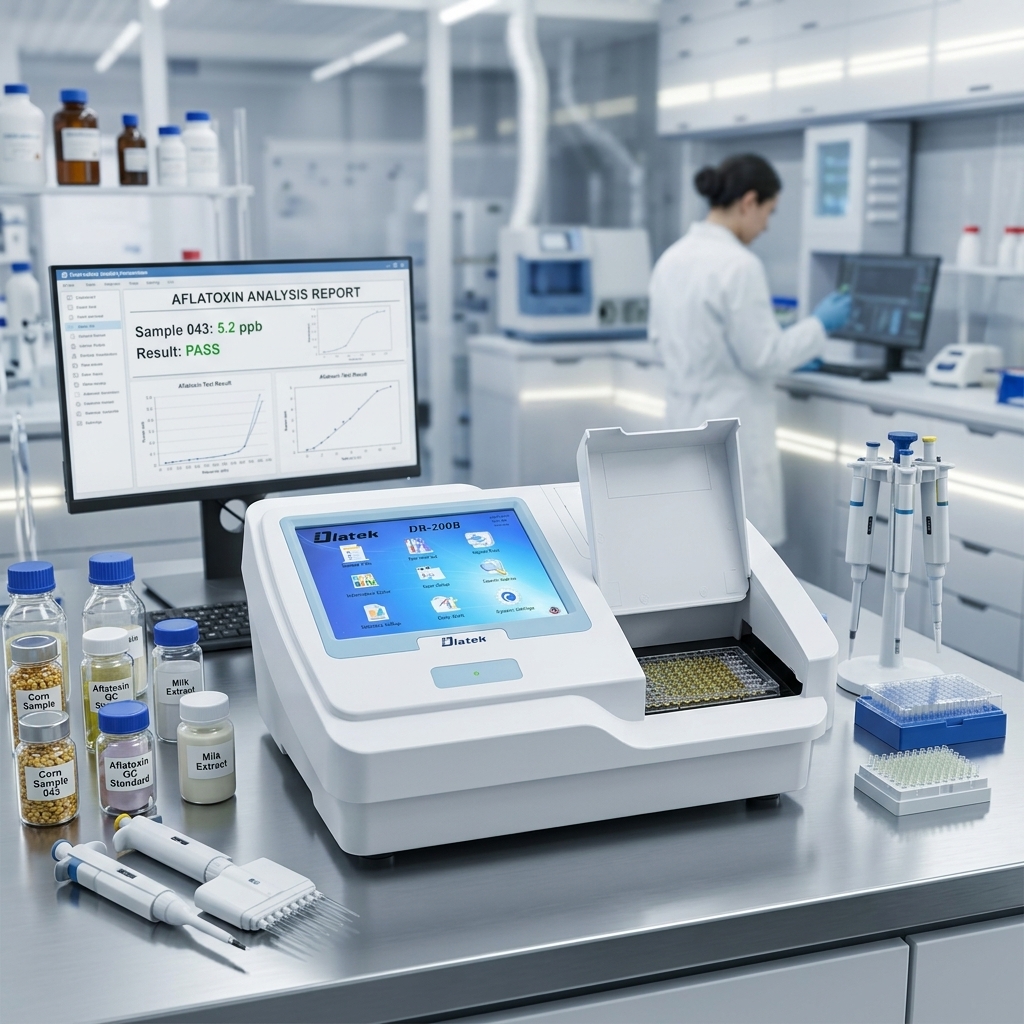
Laboratories around the world are re-evaluating how they conduct enzyme-linked immunosorbent assay (ELISA) testing. Traditional manual or semi-automated absorbance testing methods have long been the standard in clinical diagnostics, food safety screening, and veterinary laboratories. However, as demand grows for higher throughput, greater precision, and lower long-term operating costs, many facilities are transitioning toward advanced microplate reader technology. The DR-200B Microplate Reader, developed and manufactured by Wuxi hiwell-diatek Instruments co.ltd., represents this new generation of optical density (OD) measurement systems designed specifically to address the limitations found in traditional testing approaches.
Why Traditional Testing Methods Fall Short
Conventional testing setups often rely on light sources that degrade over time, requiring frequent bulb replacements and recalibration. This not only increases maintenance costs but also introduces inconsistencies in measurement accuracy due to light source instability. In addition, many older systems are limited in reagent compatibility, restricting laboratories to specific kit brands or formats. Complex user interfaces further slow down daily operations, especially in high-volume clinical or food safety testing environments where speed and reliability are critical.
These pain points—light source instability, limited reagent compatibility, and complicated interfaces—are precisely the challenges that modern microplate reader technology, such as the DR-200B, was engineered to resolve.
How the DR-200B Microplate Reader Addresses These Challenges
Maintenance-Free Optical Performance
Unlike traditional halogen-based systems, the DR-200B utilizes LED cold light sources with a 5-year service life. This eliminates the need for routine bulb replacement, significantly reducing total cost of ownership (TCO) while maintaining consistent optical output over time.
Enhanced Measurement Precision
The DR-200B employs an 8+1 optical channel system—eight vertical measurement channels plus one dedicated reference channel. This design reduces light source stabilization time and minimizes stray light interference, resulting in more accurate and repeatable readings compared to traditional single-channel systems. Technical specifications include a wavelength range of 400–725nm (LED) or 400–850nm (Halogen), reading speeds of single wavelength ≤3s and double wavelength ≤6s, accuracy of ≤±0.005A (0.000–1.000A), repeatability of CV ≤0.2%, stability of ≤±0.002A, and linearity of R ≥0.990.
Universal Reagent Compatibility
One of the most significant differentiators of the DR-200B is its "Open System" design, which makes it compatible with all varieties of ELISA reagents and kits. Traditional closed systems often restrict laboratories to proprietary reagents, limiting flexibility and increasing procurement costs. The open architecture of the DR-200B removes this constraint entirely.
Streamlined User Experience
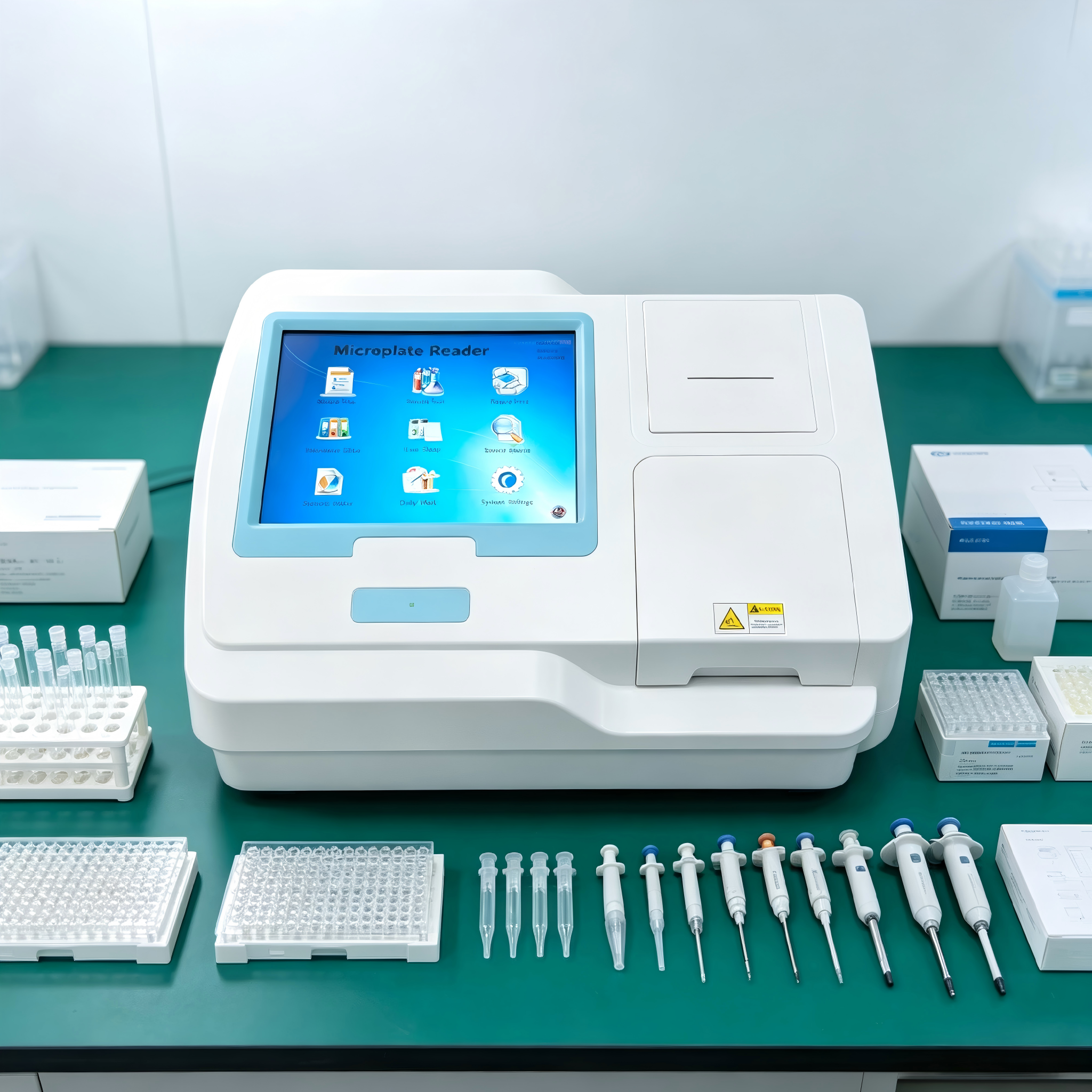
The DR-200B features a 10.4-inch capacitive touchscreen paired with a Windows-based interface, providing a tablet-like user experience for information entry and navigation. This allows technicians to perform up to 24 different tests on a single plate, a level of flexibility that traditional systems with simpler interfaces struggle to match. The device runs on an X86 core CPU with Windows 7, and includes automatic lamp adjustment and auto-calibration to further reduce manual intervention.
Data Handling and Analytical Depth
Traditional testing methods often lack robust data management capabilities, making it difficult to store historical results or apply diverse analytical models. The DR-200B addresses this with stable memory storage for up to 20,000,000 test data points and 500 test projects. Its integrated software supports more than 500 programmable tests and over 20 report formats, along with more than 10 calculation algorithms, including Linear, End-point, ABS, Cut-off, Kinetics, Single-point Scale, Linear Regression, Logarithm Regression, Power Regression, and 4PL Regression. This breadth of analytical capability allows laboratories to handle diverse testing scenarios without needing multiple instruments.
Connectivity and Platform Compatibility
The DR-200B supports WiFi functionality and mutual data transmission between the device and a PC, enabling seamless integration into modern laboratory information systems. It also offers a wide range of interfaces, including DVI, VGA, LAN, USB-A/B/C, audio, and RS-232, along with support for external keyboards and mice via USB. This level of connectivity is often absent in older, traditional testing equipment, which may rely on manual data transcription or limited export options.
Industry Applications Where the DR-200B Outperforms Traditional Approaches
Medical Diagnostics
In clinical settings, the DR-200B supports high-speed clinical optical measurement, enabling hospitals to perform ELISA-based immunoassays and biomarker detection with a reading speed of single wavelength ≤3s. This speed and precision are particularly valuable in high-throughput clinical laboratories.
Food Safety Testing
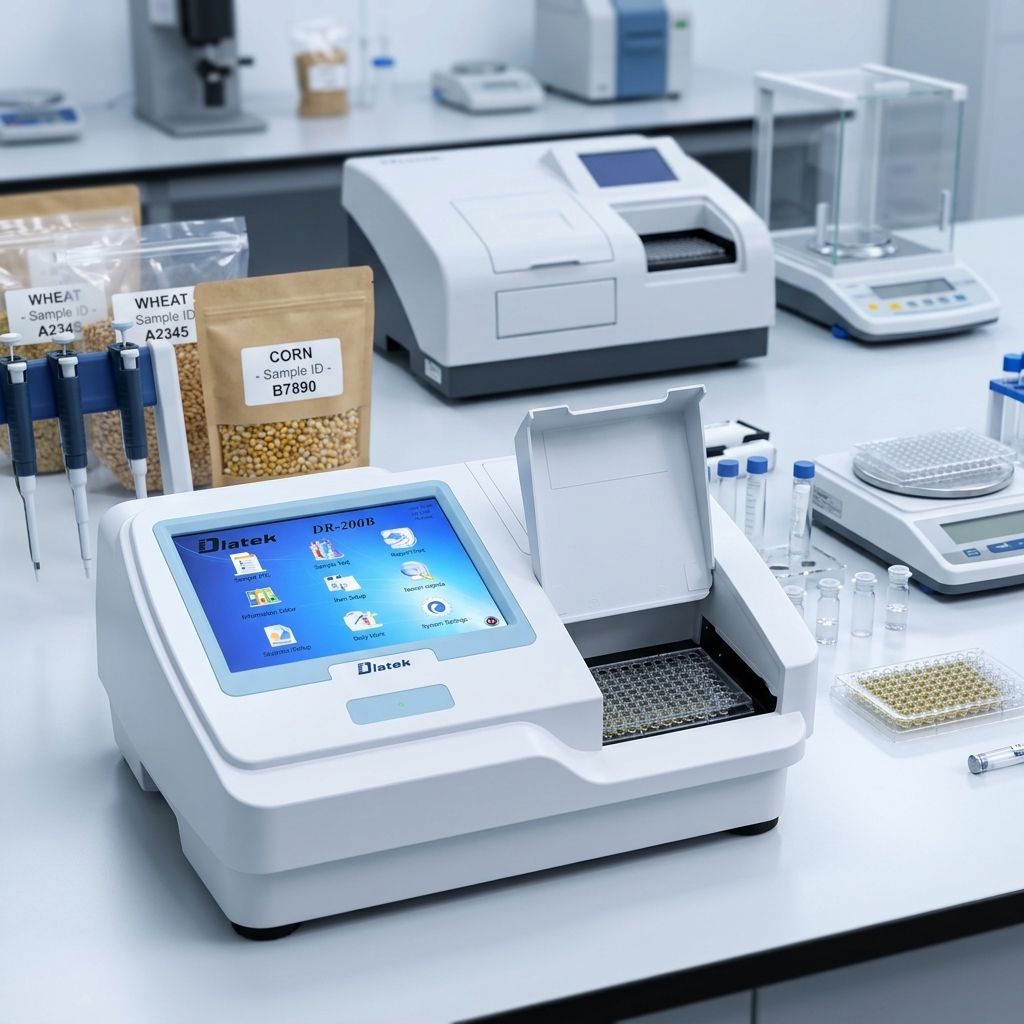
Grain stations and food safety laboratories utilize the DR-200B for Aflatoxin testing and other mycotoxin detection, ensuring compliance through precise absorbance measurement—an area where traditional systems' limited reagent compatibility and slower processing can create bottlenecks.
Veterinary and Research Applications
Pet hospitals and animal health laboratories also benefit from the DR-200B's flexibility, using it for animal disease testing. Meanwhile, universities and research institutions rely on the instrument for scientific research, including drug discovery and molecular analysis, taking advantage of its open system and extensive algorithmic support.
Service, Warranty, and Long-Term Value
Wuxi hiwell-diatek Instruments co.ltd. backs the DR-200B with a 12-month free warranty and an estimated 8–10 years of service life, along with paid lifetime maintenance support. The company provides online training and video-based technical support to ensure smooth installation and operation, whether through on-site setup or user-guided installation using provided manuals. Routine maintenance protocols, including cleaning procedures and user-replaceable parts such as fuses and halogen bulbs, are clearly documented to support long-term, site-level upkeep.
Certifications That Reinforce Reliability
The DR-200B holds CE Certification, ISO13485 and ISO9001 certifications, and is classified as a Class II instrument, reflecting its medical-grade reliability. These certifications provide laboratories with confidence when transitioning from traditional testing methods to this more advanced optical measurement platform.
Conclusion
As laboratories worldwide continue to seek testing methods that balance speed, accuracy, and cost-efficiency, the DR-200B Microplate Reader from Wuxi hiwell-diatek Instruments co.ltd. stands out as a well-engineered alternative to traditional testing approaches. With its maintenance-free LED light source, open reagent compatibility, robust data storage, and comprehensive global support, the DR-200B offers laboratories in medical diagnostics, food safety, and veterinary services a practical path toward more efficient and reliable optical density measurement.
www.hiwelldiatek.com
Wuxi hiwell-diatek instruments co.,ltd