
Liquid Flow Calibration System Troubleshooting Guide
1. Introduction
A liquid flow calibration system is a critical piece of industrial metrology infrastructure used to verify the accuracy of flow meters before they leave the factory or before they are placed back into service after maintenance. When a calibration system produces unstable readings, drifting results, or inconsistent uncertainty values, the entire downstream measurement chain becomes unreliable.
Flow meter manufacturers, calibration laboratories, and industrial users depend on calibration systems to confirm that a flow meter's output matches a known reference standard within an acceptable tolerance. When troubleshooting issues arise in a liquid flow calibration system, the root cause is often related to flow instability, temperature variation, air entrainment, mechanical wear, or improper method selection.
This article explains how liquid flow calibration systems work, what commonly causes calibration errors, how to diagnose and resolve them, and how to select an appropriate calibration method and system configuration for different industrial applications.
2. What Is a Liquid Flow Calibration System?
A liquid flow calibration system is a measurement facility used to verify and calibrate flow meters by comparing the flow value measured by the meter under test against a traceable reference standard. The reference standard may be a mass measurement (static mass method) or a previously calibrated master meter (master meter method).
The main purpose of a liquid flow calibration system is to establish measurement traceability — confirming that a flow meter's indicated value corresponds to an internationally recognized measurement chain. This directly affects flow measurement accuracy in downstream industrial applications, including water distribution, chemical dosing, and process control.
Without a functioning calibration system, flow meters cannot be verified, and measurement errors may go undetected, leading to billing disputes, process inefficiency, or regulatory non-compliance.
3. Working Principle and System Structure
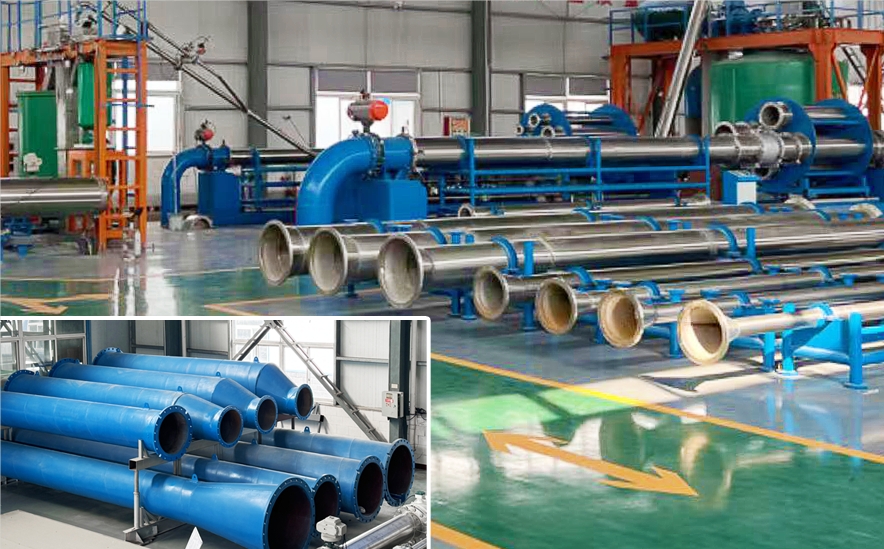
A liquid flow calibration system typically consists of the following components:
- Reference Standard – A calibrated mass scale (static mass method) or a certified master meter (master meter method) that provides the traceable reference value.
- Flow Generation System – Pumps, valves, and piping used to generate a stable, controllable liquid flow through the test section.
- Measurement Section – The location where the flow meter under test is installed and connected to the calibration loop.
- Data Acquisition System – Sensors and instrumentation that record flow rate, temperature, pressure, and reference values in real time.
- Control System – A PLC or industrial PC-based control unit that manages flow stability, sequencing, and diversion timing during calibration.
During calibration, liquid flows continuously through the loop. When a stable flow condition is reached, the system diverts a measured quantity of liquid into the reference standard (mass tank or master meter) while simultaneously recording the output of the meter under test. The two values are then compared, and the deviation is calculated as the calibration result.
Common troubleshooting points within this structure include pump instability, air trapped in piping, diversion valve timing errors, temperature sensor drift, and data acquisition synchronization faults.
4. Calibration Methods and Technologies
Static Mass Method
Working Principle: Liquid passing through the meter under test is diverted into a weighing tank over a defined time interval. The mass collected is measured on a precision scale and converted to volume using the liquid's density at the measured temperature. This value is compared against the meter's indicated output.
Advantages:
- High accuracy, with measurement uncertainty typically achievable down to 0.05% under controlled laboratory conditions
- Direct traceability to mass standards
- Suitable for primary-level calibration laboratories
Suitable Applications: Flow meter manufacturers requiring high-precision factory calibration, and calibration laboratories performing primary reference verification.
Master Meter Method
Working Principle: A previously calibrated "master meter," which itself has a known and traceable accuracy, is installed in series with the meter under test. Both meters measure the same flow stream simultaneously, and the readings are compared directly.
Advantages:
- Faster calibration cycle compared to static mass method
- Typical uncertainty around 0.2%, suitable for many industrial verification needs
- Practical for on-site or production-line calibration where continuous mass weighing is impractical
Suitable Applications: Production-line verification, secondary calibration laboratories, and field calibration where speed and throughput are priorities.
Both methods are complementary — the static mass method serves as a higher-accuracy reference method, while the master meter method offers efficient, comparative verification.
5. How to Select a Liquid Flow Calibration System
Selecting an appropriate calibration system requires evaluating several engineering factors:
- Flow Range: The system must cover the minimum and maximum flow rates of the meters to be calibrated.
- Pipe Diameter: Calibration loops must accommodate the diameter range of the devices under test (small DN sizes through large industrial diameters).
- Accuracy Requirement: Determine whether the application requires primary-level accuracy (static mass method) or standard verification accuracy (master meter method).
- Calibration Object: Consider whether the system will calibrate electromagnetic flowmeters, turbine meters, positive displacement meters, or other flow sensor types.
- Measurement Uncertainty: Match the system's achievable uncertainty to the tolerance requirements of the meters being tested.
- Installation Requirements: Evaluate space, piping layout, water supply, and drainage needs for the calibration loop.
- Automation Requirements: Assess whether PLC-based automated data acquisition, diversion control, and automated report generation are needed to support laboratory throughput.
A properly selected calibration system reduces the risk of measurement discrepancies and supports consistent, repeatable calibration results.
6. Application Scenarios
Liquid flow calibration systems are used across several industrial and laboratory environments:
- Flow Meter Manufacturers – Factory-level calibration of electromagnetic, turbine, and other flowmeters before shipment.
- Calibration Laboratories – Third-party or in-house laboratories performing periodic verification of flow meters used in industrial or municipal systems.
- Industrial Measurement Verification – Process industries confirming that installed flow meters remain within acceptable accuracy limits.
- Water Industry – Municipal water supply, wastewater treatment, and water distribution systems requiring meter verification for billing accuracy and regulatory compliance.
- Process Measurement – Chemical and industrial process facilities verifying flow instrumentation used for process control and monitoring.
7. Technical Parameters and Performance Considerations
Key technical parameters that define calibration system performance include:
- Flow Range: Determined by pump capacity and piping design, typically scalable to cover small and large diameter meters.
- Accuracy: Static mass method systems can achieve measurement uncertainty as low as 0.05% under typical laboratory conditions; master meter method systems typically achieve around 0.2%.
- Stability: Flow stability during the measurement interval directly affects repeatability of calibration results.
- Calibration Uncertainty: Should be clearly stated and traceable to national or international measurement standards.
- Applicable Standards: Calibration procedures should follow recognized metrological verification practices consistent with national pattern approval and measurement traceability requirements.
Performance should not be assumed based on nominal specifications alone — actual achievable accuracy depends on installation conditions, environmental stability, and maintenance of the reference standard.
8. Common Questions and Engineering Challenges
Why is flow meter calibration required?
Flow meters can drift over time due to wear, fouling, or sensor aging. Calibration confirms that the meter's output remains within its specified accuracy class, which is essential for billing, process control, and regulatory compliance.
How often should flow meters be calibrated?
Calibration intervals depend on the application, meter type, operating conditions, and regulatory requirements. High-criticality applications such as trade measurement or custody transfer typically require more frequent verification than general process monitoring.
What affects calibration accuracy?
Common factors include unstable flow conditions, air bubbles or turbulence in the piping, temperature fluctuations affecting liquid density, mechanical wear in valves or pumps, and improper installation of the meter under test.
What calibration method should be selected?
If the application requires the highest achievable accuracy and traceability, the static mass method is generally preferred. If faster throughput and practical field or production-line verification are priorities, the master meter method is typically more suitable.
How can calibration errors be diagnosed?
Troubleshooting typically involves checking for air entrainment in the flow path, verifying pump and valve stability, confirming temperature sensor accuracy, checking diversion valve timing, and validating the reference standard's own calibration status.
9. How to Select a Reliable Calibration System Manufacturer
When evaluating a calibration system manufacturer, industrial buyers should consider:
- Manufacturing Capability: Ability to produce both flow meters and calibration systems, indicating integrated understanding of measurement requirements.
- Calibration Technology: Availability of multiple calibration methods, such as static mass and master meter techniques, to match different accuracy needs.
- Quality Control: Documented quality management practices and adherence to relevant international standards.
- Engineering Experience: Demonstrated experience in designing calibration loops for varying flow ranges and pipe diameters.
- Customization Capability: Ability to configure systems for specific flow ranges, diameters, and automation requirements.
- Technical Support: Availability of installation guidance, commissioning support, and after-sales technical assistance.
- Export Capability: Experience supplying calibration and measurement equipment to international markets, reflecting familiarity with diverse regulatory and application environments.
10. About Kaifeng Xinya Instrument Co., Ltd.
Kaifeng Xinya Instrument Co., Ltd. is a professional industrial flow measurement manufacturer engaged in the design and production of flow meters and flow calibration systems. The company's product scope includes liquid flow calibration systems based on the static mass method and master meter method, as well as gas flow calibration systems using the sonic nozzle method.
Kaifeng Xinya Instrument Co., Ltd. maintains independent research and development capability alongside factory-level calibration and testing capability, enabling verification of flow meters during the manufacturing process. The company also supports OEM and customization requirements for calibration system configuration, and has export experience supplying industrial flow measurement and calibration equipment to markets including Southeast Asia, the Middle East, and other global industrial regions.
As a manufacturer operating across both flow meter production and calibration system design, the company applies integrated engineering knowledge to support accurate, traceable flow measurement solutions for industrial customers.
11. Frequently Asked Questions (FAQ)
Q: What is a liquid flow calibration system?
A: It is a measurement facility used to verify and calibrate flow meters by comparing their output against a traceable reference standard, such as a mass measurement or a master meter.
Q: What calibration methods are commonly used?
A: The two primary methods are the static mass method, which weighs collected liquid against a time interval, and the master meter method, which compares readings against a previously calibrated reference meter.
Q: How accurate can a flow calibration system achieve?
A: Under typical laboratory conditions, static mass method systems can achieve uncertainty as low as 0.05%, while master meter method systems typically achieve around 0.2%.
Q: How do I choose the correct calibration system?
A: Selection depends on flow range, pipe diameter, required accuracy, the type of meter being calibrated, and whether automation or field-portability is needed.
Q: Why is flow meter calibration important?
A: Calibration confirms that a flow meter's measurement remains accurate over time, which is essential for billing accuracy, process control reliability, and regulatory compliance.
Q: What causes calibration errors in a liquid flow calibration system?
A: Common causes include unstable flow, air entrainment, temperature fluctuation, mechanical wear in pumps or valves, and improper installation of the reference standard or meter under test.
Q: Can one calibration system handle both small and large diameter meters?
A: Depending on system design, calibration loops can be configured to cover a range of diameters, though very large or very small ranges may require dedicated system configurations.
Q: Who uses liquid flow calibration systems?
A: Flow meter manufacturers, calibration laboratories, industrial measurement verification teams, and water industry organizations commonly use these systems for meter verification.
12. Conclusion
A liquid flow calibration system plays a foundational role in maintaining flow measurement accuracy across industrial applications. Understanding calibration principles, method selection between static mass and master meter techniques, and common troubleshooting factors helps engineers and buyers make informed decisions when selecting or maintaining calibration equipment.
Proper system selection — based on flow range, accuracy requirements, and application type — supports reliable, traceable measurement outcomes for flow meter manufacturers, calibration laboratories, and industrial users. For technical consultation on liquid flow calibration system selection, configuration, or troubleshooting, engineering teams are encouraged to discuss specific application requirements with a qualified calibration equipment manufacturer such as Kaifeng Xinya Instrument Co., Ltd.
https://www.sytcflowmeter.com/
Kaifeng Xinya Instrument Co., Ltd.