
When industrial automation engineers and equipment designers look for alternatives to M8 connectors, they typically face specific challenges: space constraints, signal integrity issues, environmental protection requirements, or the need for higher pin count configurations. Understanding these needs requires examining not only individual connector types but also comprehensive interconnect solutions capable of meeting the challenges of modern industry.
Understanding the limitations and alternative needs of M8 connectors
M8 circular connectors have become standard in industrial sensor networks, but they are not a panacea. Engineers face several challenges: limited pin configurations restrict complex signal routing; the fixed circular design takes up too much panel space in compact devices; and standardized spacing sometimes fails to meet the demands of high-density data transmission. These limitations have prompted the search for alternatives that maintain industrial-grade reliability while offering greater design flexibility.
The core question is not just "What can replace the M8 connector?", but "Which interconnect architecture can solve my specific application challenges?" This requires evaluating alternatives from multiple dimensions: mechanical form factor, electrical performance, environmental protection level, and customization flexibility .
Comprehensive alternative category
Board-to-board high-speed connection
For devices requiring high-speed internal data transmission, board-to-board (B2B) connectors are a superior choice compared to external circular connectors. These solutions address signal integrity challenges through specialized design features. Modern B2B connectors support transmission rates up to 28 Gbps , and their dual-contact design maintains connection stability under mechanical stress and vibration, preventing signal loss in high-frequency circuits.
Space optimization is a key advantage. While M8 connectors require fixed mounting holes and a circular clearance area, advanced B2B connectors offer a variety of pitch options from 0.4mm to 2.54mm , as well as multi-directional mating configurations, simplifying PCB layout constraints. The dual-contact design, employing double-sided electrical contacts, addresses the issue of unstable contact under vibration—a common failure mode in industrial environments.
These connectors are particularly important in scenarios where external mounting of the M8 would create unnecessary complexity. In high-speed server applications and consumer electronics requiring miniaturized connectivity, the B2B solution eliminates the need for cable assemblies between circuit boards, thereby reducing potential points of failure and improving signal quality.
Flexible signal distribution system
When the fixed pin count of an M8 connector becomes a limiting factor, pin and female connectors offer a flexible alternative. These components excel at managing multi-channel wire-to-board connections in space-constrained environments. Their fundamental advantage lies in layout flexibility : diverse pin counts and orientations enable wiring schemes that are impossible with standard circular connectors.
These connectors range in pitch from 1.27mm to 3.96mm to accommodate various circuit board current requirements and spacing layouts. Flexible mounting orientations—including 90°, 180°, SMT, and through-hole configurations—allow for various circuit board layouts that circular connectors cannot achieve. Utilizing high-temperature resistant materials such as PA6T and PBT , and with a Goldflash surface treatment, reliability is ensured within industrial-grade temperature ranges.
Industrial control boards often benefit from this flexibility, especially when signal distribution requirements exceed the typical 3-4 pin configuration of the M8. Consumer electronics also utilize these solutions for internal power and data cabling, particularly when space optimization is more important than quick disconnect functionality.
Standardized high-speed interface solutions
When applications require standardized communication protocols rather than simple sensor connections, dedicated I/O connectors outperform the M8 connector. PCIe Gen 4.0 slots operate at 16GT/s transfer rates, addressing bottlenecks in high-performance computing scenarios such as AI computing and server motherboards—scenarios where the M8 connector lacks both the pin density required for high-speed bus architectures and sufficient signal integrity.
The 8P8C-configured RJ45 connector supporting 100BaseT meets the standard network transmission requirements of industrial Ethernet applications. While the M8 X-encoded version is also suitable for Ethernet, the RJ45 solution offers broader compatibility with commercial network equipment and simplifies cable sourcing. The 15-pin VGA-configured D-SUB connector provides traditional display and signal interfaces, addressing needs that the M8's sensor-centric design cannot meet.
These standardized interfaces demonstrate a fundamental alternative: instead of adapting industrial circular connectors to communication protocols, choose connectors specifically designed for particular data standards. Telecommunications applications requiring high-speed data transmission and industrial control systems requiring standardized data communication can both benefit from this protocol-first approach.
Rugged cable assembly system
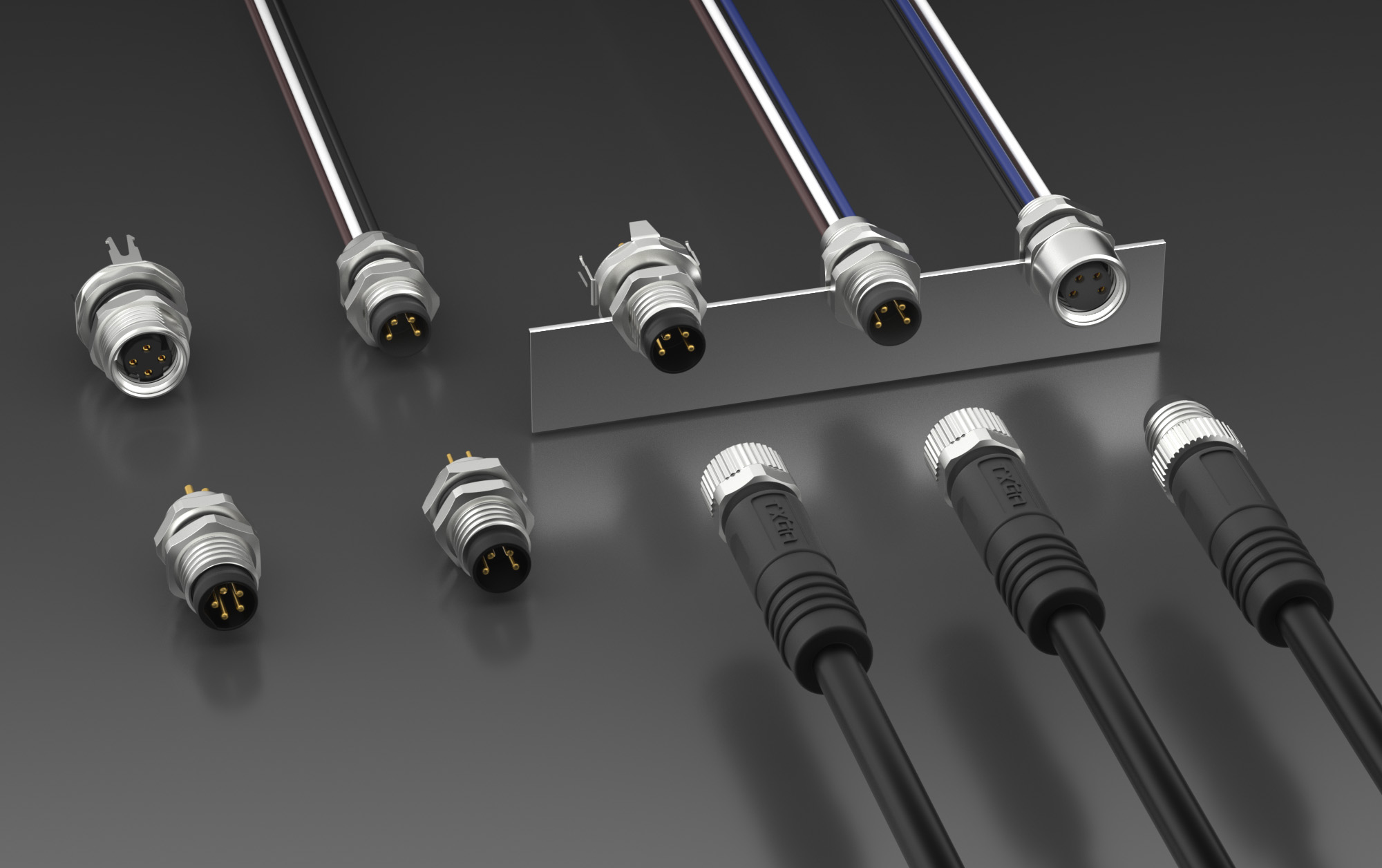
For applications where the M8's environmental protection capabilities are insufficient or its form factor is unsuitable, dedicated cable assemblies and alternative circular connectors offer superior solutions. Standard-length multi-core cable assemblies can meet the needs of long-distance internal cabling that the typical short sensor cables of the M8 cannot accommodate. Custom cable assemblies can be tailored to specific customer requirements in terms of size and specifications —an advantage that is crucial when device design constraints conflict with standard M8 configurations.
When the pin count or current capacity of the M8 connector is insufficient, the M12 circular connector is the ideal alternative. While maintaining similar industrial-grade dust and moisture resistance to the M8 connector, the M12 connector offers more pins and higher power handling capabilities. Its waterproof housing and durable shielding enable it to meet the connectivity needs of automotive electronics and industrial automation sensors in harsh environments, ensuring unrestricted reliability.
Advanced Miniaturization: Micro/Nano D-Sub Solutions
When panel space becomes a critical limiting factor, Micro D-Sub and Nano-D connectors offer an unparalleled alternative to M8 connectors. These solutions are specifically designed to address space constraints while maintaining industrial-grade reliability. Micro D-Sub connectors, with their 1.27mm pin pitch and twisted-pair contacts, enable high-density, compact connections suitable for moderate vibration environments.
Nano-D connectors represent the pinnacle of miniaturization, with a pitch of only 0.635 mm , conforming to the MIL-DTL-32139 standard . These ultra-miniature solutions are suitable for aerospace and portable precision devices where M8 connectors are impractical due to space and weight constraints. Thick gold-plated precision-machined contacts and a wide temperature tolerance range of -55°C to +125°C ensure reliability even at miniaturized dimensions.
Industrial automation applications particularly benefit from hybrid high-current D-Sub connectors , which combine large-diameter power pins with standard signal contacts in a unified housing, reducing the number of panel connectors and saving assembly space compared to separate M8 power and signal connections.
Signal integrity under harsh electromagnetic interference environments
The D-Sub connector with filter addresses a specific limitation of the M8 connector: providing electromagnetic interference protection in harsh electromagnetic compatibility (EMC) environments. The built-in integrated EMI filter circuitry, with double-layer metal shielding, suppresses high-frequency noise and protects signal integrity where standard M8 connectors require external filtering components. This is crucial for applications where EMI can threaten signal reliability, such as industrial control panels, servo drives, and industrial testing equipment.
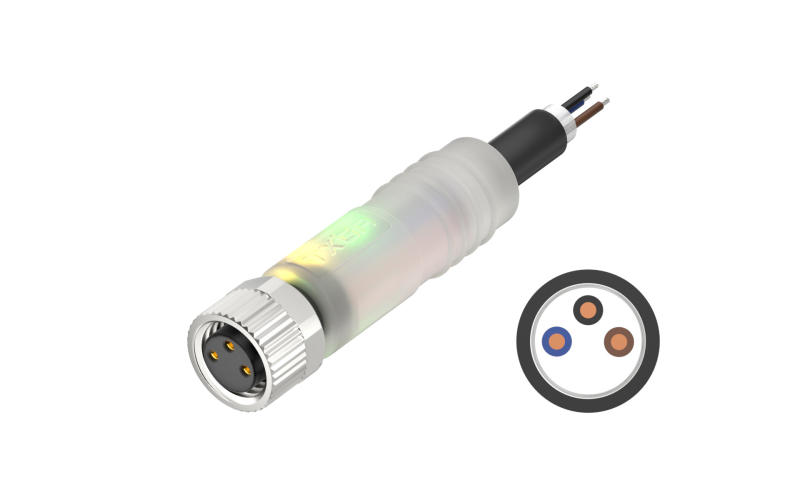
These filtered solutions address electromagnetic interference (EMI) signal problems that general-purpose connectors, including standard M8 connectors, cannot effectively handle. PLC control modules and devices operating near high-power switching devices can benefit from this integrated EMI suppression method.
Manufacturing capabilities and customization advantages
The effectiveness of M8 alternatives largely depends on manufacturing capabilities and supply chain efficiency . Solution providers with in-house manufacturing facilities, such as TXGA's Huizhou production base with 14 years of R&D and manufacturing experience , can offer critical customization services that are not possible with off-the-shelf M8 connectors. Ample inventory supports same-day shipping, addressing the industry pain point of long procurement cycles for customized electronic components.
Surface mount technology (SMT) and through-hole technology enable engineers to select the optimal PCB mounting method based on specific mechanical stresses and assembly process requirements. Free sample data and technical drawings are available for engineering verification, thereby accelerating design verification—crucial when evaluating alternatives to the M8 in new device designs.
Compliance and quality assurance
Alternatives to M8 connectors must meet the same or higher environmental and safety standards. UL certification, RoHS compliance, REACH compliance, ELV standard compliance, and REACH SVHC compliance are fundamental requirements for industrial deployments. High-tech enterprise qualifications and government accreditation demonstrate a manufacturing quality system capable of achieving stable production—crucial for the transition from standardized M8 connectors to customized alternatives.
Strategic Choice Framework
Choosing an alternative to the M8 connector requires a systematic evaluation: First, identify the specific limitations of M8 in your application; second, prioritize based on factors such as signal speed, integrity, pin count, environmental protection, and space constraints; third, assess whether standardized protocols require dedicated connectors; and finally, evaluate any customization needs that standard solutions cannot meet. The ultimate goal is not to find a generic M8 replacement, but to build the best interconnect solution for your specific industry challenges.
For electronics engineers, PCB designers, and purchasing managers in the telecommunications, automotive electronics, and industrial automation industries, alternatives to M8 connectors are often not single replacements, but rather a strategic portfolio of dedicated interconnect solutions tailored to specific functional requirements.
https://www.txga.com/m18clusters/m8-circular-connector.html
TXGA Connectors