
In modern manufacturing, the demand for precision joining of metals has never been more critical. From automotive safety components to new energy infrastructure, the quality of resistance welding directly impacts product reliability, production efficiency, and ultimately, end-user safety. As industries increasingly adopt advanced materials like high-strength steels and dissimilar metal combinations, the technological threshold for welding solutions continues to rise. Professional resistance welder manufacturers play an essential role in addressing these complex challenges through innovation, deep technical expertise, and comprehensive automation capabilities.
Understanding Resistance Welding Technology
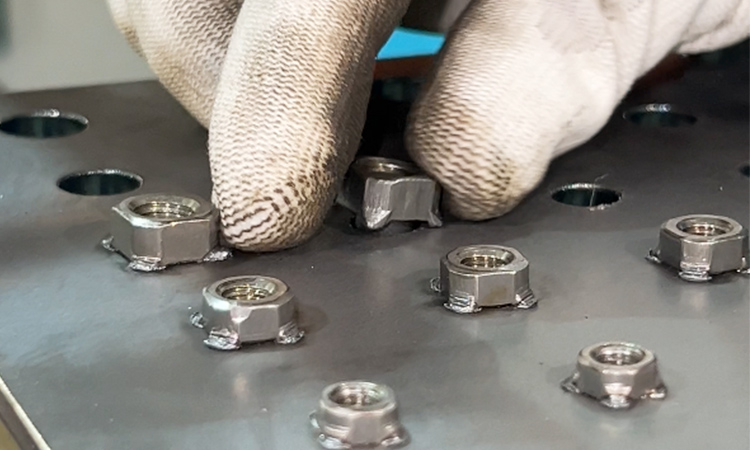
Resistance welding represents a family of processes that join metals by applying pressure and passing electrical current through the contact points. The resulting resistance generates localized heat that fuses materials together. Unlike arc welding, resistance welding produces minimal spatter, requires no filler materials, and delivers consistent, repeatable results ideal for high-volume manufacturing. Key resistance welding methods include spot welding for sheet metal assemblies, projection welding for fastener attachment, flash butt welding for large cross-sections, and seam welding for continuous joints.
The evolution from traditional AC (alternating current) systems to advanced medium-frequency inverter technology has revolutionized this field. Medium-frequency welders operate at frequencies exceeding 1000Hz, providing current control accuracy approximately 20 times superior to conventional AC machines. This precision proves crucial when welding heat-sensitive materials, high-strength steels, or components requiring minimal thermal distortion. Additionally, three-phase balanced power input reduces grid impact by approximately one-third while maintaining power factors between 0.7 and 0.9, delivering substantial energy efficiency improvements.
Core Technical Capabilities That Define Leading Manufacturers
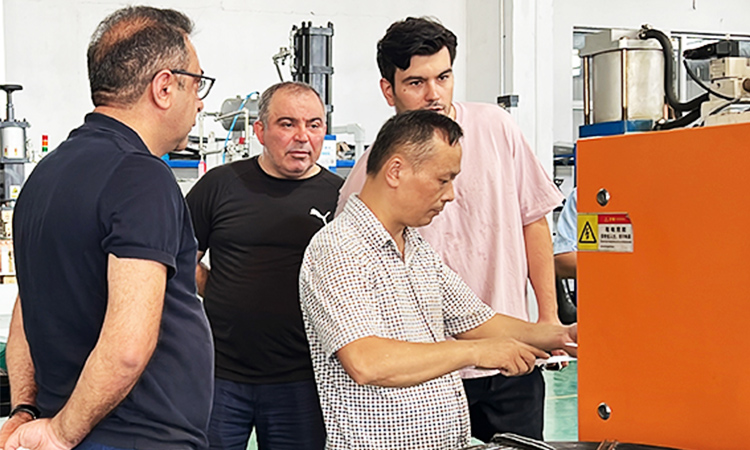
Professional resistance welder manufacturers distinguish themselves through several critical capabilities. First, proprietary research and development backed by decades of welding technology accumulation forms the foundation. Companies with over 20 years of experience and extensive patent portfolios—often exceeding 50 invention and utility model patents—demonstrate genuine innovation capacity rather than simple equipment assembly.
Second, comprehensive welding databases containing tens of thousands of actual workpiece cases enable manufacturers to provide process solutions rather than merely hardware. Suzhou Agera Automation Equipment Co., Ltd., for instance, leverages a database of over 80,000 welding workpiece cases accumulated since its predecessor's establishment in 2004. This knowledge base allows engineers to rapidly identify optimal parameters for new applications, significantly reducing customer trial-and-error periods.
Third, advanced control systems represent another differentiating factor. Independent development of medium-frequency welding controllers—breaking technological monopolies previously held by imported systems—enables manufacturers to offer superior integration, customization, and after-sales support. Real-time monitoring through HMI (Human-Machine Interface) systems with current, pressure, and water flow alarms ensures consistent quality and immediate problem detection.
Application Diversity Across Industries
Professional resistance welder manufacturers serve remarkably diverse sectors, each with unique requirements. In automotive manufacturing, applications range from anti-collision beam reinforcement and subframe assembly to shock absorber production and new energy vehicle threshold beam welding. The industry demands absolute reliability for safety-critical components, with manufacturers integrating robotic systems for precision nut and bolt projection welding workstations.
The electronics and electrical sector requires ultra-precise welding for components like silver contacts, IGBT pins, and vapor chamber copper mesh assemblies. Here, capacitor discharge welding technology proves invaluable, with discharge times of approximately 10 milliseconds preventing surface discoloration while maintaining energy fluctuation within 1% despite power grid instability.
Emerging energy applications present particularly challenging requirements. Hydrogen production bipolar plate welding demands contamination-free joints with minimal heat-affected zones. New energy vehicle battery busbars require diffusion welding that achieves uniform heating across multi-layer copper structures without deformation. Flash butt welding technology enables joining of large-section metals and special alloys with weld quality approaching base metal properties for cross-sections up to 20,000mm².
Automation Integration and Industry 4.0 Readiness
Modern resistance welding increasingly integrates with comprehensive automation systems. Leading manufacturers provide complete turnkey solutions including robotic workstations, multi-head gantry systems, and fully automatic production lines tailored to specific industry workflows. For example, automatic wire harness square forming and welding lines for 90mm² high-power EV systems combine material handling, precise positioning, welding, and quality inspection in continuous operations.
Digital infrastructure supporting these solutions includes ERP (Enterprise Resource Planning) for production management, PLM (Product Lifecycle Management) for design and maintenance tracking, and CRM (Customer Relationship Management) systems ensuring responsive service. This digital ecosystem enables predictive maintenance, remote diagnostics, and continuous process optimization aligned with Industry 4.0 principles.
Quality Assurance and International Standards
Certification frameworks provide objective validation of manufacturer capabilities. ISO9001 Quality Management System certification ensures consistent production processes and continuous improvement mechanisms. CE (Conformité Européenne) certification confirms compliance with European safety, health, and environmental requirements, essential for global market access.
Beyond basic certifications, recognition as National High-tech Enterprises and provincial "Specialized, Refined, Distinctive, and Novel" designations indicates significant R&D investment and technological innovation. Establishment of engineering technology research centers—such as specialized intelligent pulse flash butt welding control centers—demonstrates commitment to advancing industry-wide capabilities.
Recognition through "First Set of Major Technical Equipment" certifications highlights breakthrough innovations. For instance, AUBS-630*2 New Energy Electric Axle Double-Head Pulsation Flash Butt Welders receiving such designation in 2024 validated their pioneering role in domestic heavy-duty vehicle manufacturing, previously dependent on imported technology.
Service Models and Customer Support Philosophy
Professional manufacturers extend value far beyond equipment delivery. Comprehensive service models include pre-sales process analysis where engineers evaluate customer requirements, recommend optimal technologies, and simulate expected results. Customized design phases incorporate client-specific production constraints, space limitations, and integration requirements with existing systems.
Post-installation support proves equally critical. Dedicated after-sales teams providing rapid problem resolution and flexible scheduling minimize production disruptions. Continuous engagement listening patiently to customer feedback drives iterative improvements and long-term partnership development. This service philosophy recognizes that equipment represents only one component of successful manufacturing operations.
Strategic Partnerships and Collaborative Innovation
Industry-academia-research collaboration accelerates technological advancement. Strategic cooperation with institutions like the China-Ukraine Welding Research Institute brings cutting-edge materials science and metallurgical expertise into commercial applications. University partnerships establishing graduate workstations create talent pipelines while enabling fundamental research that informs product development.
Such collaborative ecosystems benefit entire industries rather than individual companies alone. Shared research findings, standardized testing protocols, and collective problem-solving advance welding technology's state-of-the-art, ultimately enhancing manufacturing competitiveness across regions and sectors.
Global Market Presence and Export Capabilities
Professional resistance welder manufacturers increasingly serve international markets spanning Europe, Southeast Asia, the Middle East, South America, and North America. Global presence requires not only CE certification and international quality standards but also cultural competency, multilingual support, and understanding of regional manufacturing practices.
Successful international expansion demonstrates product maturity and technological competitiveness. Companies serving thousands of customers across multiple continents validate their solutions' adaptability to diverse applications, environmental conditions, and operational philosophies. This global validation provides confidence for domestic customers while contributing to national manufacturing equipment export capabilities.
Selecting the Right Resistance Welding Partner
When evaluating resistance welder manufacturers, several factors merit careful consideration. Technical depth evidenced through patent portfolios, engineering center establishment, and proprietary control system development indicates genuine innovation capacity. Application breadth demonstrated through diverse industry case studies and extensive workpiece databases suggests adaptable expertise rather than narrow specialization.
Manufacturing scale and infrastructure including modern facilities, digital management systems, and quality certifications reflect operational maturity and delivery reliability. Service commitment evidenced through dedicated after-sales teams, rapid response protocols, and continuous improvement philosophies ensures long-term partnership value extending beyond initial equipment purchase.
Finally, industry recognition through high-tech enterprise designations, specialized-refined-distinctive-novel certifications, and major technical equipment acknowledgments provides third-party validation of capabilities and market positioning.
Conclusion
As manufacturing continues advancing toward higher precision, greater automation, and enhanced sustainability, professional resistance welder manufacturers serve as critical enablers of industrial progress. Their deep technical expertise, comprehensive solution capabilities, and commitment to continuous innovation address increasingly complex joining challenges across automotive, electronics, energy, and aerospace sectors. By partnering with established manufacturers possessing decades of experience, extensive application databases, proprietary technologies, and robust service infrastructures, manufacturers position themselves for competitive advantage in demanding global markets. The investment in professional resistance welding solutions ultimately delivers enhanced product quality, improved production efficiency, and strengthened market differentiation essential for long-term success.
https://www.agerawelder.com
Suzhou Agera Automation Equipment Co.,Ltd.