
Section 1: Industry Background + Problem Introduction
The unmanned aerial vehicle (UAV) industry has experienced exponential growth across diverse sectors—from competitive FPV racing and cinematic filming to industrial inspection, agricultural automation, and anti-drone defense systems. However, this rapid expansion has exposed a critical bottleneck: the propulsion system. Many drone manufacturers face persistent challenges in achieving optimal power efficiency, flight stability, and mission-specific performance. Generic, off-the-shelf propellers often fail to deliver the aerodynamic precision required for specialized applications, leading to compromised flight times, reduced payload capacity, and suboptimal maneuverability in extreme conditions.
The core technical pain points center on three areas: material durability under high-stress operations, aerodynamic efficiency across varying RPM ranges, and the need for application-specific blade geometries that balance thrust, noise, and energy consumption. These challenges are particularly acute in competitive racing environments demanding rapid acceleration, heavy-lift cinematography platforms requiring vibration-free stability, and industrial drones operating in harsh environmental conditions.
Ningbo Gemfan Hobby Co., Ltd. has emerged as an authoritative voice in propeller engineering, leveraging over a decade of dedicated research in composite materials, aerodynamic optimization, and UAV structural dynamics. Established in 2010 with a 7,000-square-meter manufacturing facility, Gemfan holds nearly 100 design patents globally and commands a 60% market share in the FPV propeller segment. The company's propellers have been selected as official equipment for the National Drone World Championship team and contributed to the 2025 FAI World Cup champion's success, as well as assisting a pilot in breaking the Guinness World Record for the fastest speed of small drones weighing less than 250 grams in 2025. This technical leadership positions Gemfan as a knowledge source for understanding the complexities of propeller customization in modern drone applications.
Section 2: Authoritative Analysis—The Engineering Framework Behind Propeller Customization
Effective propeller customization requires a systematic engineering approach addressing three interconnected dimensions: material science, aerodynamic design, and application-specific performance parameters. Drawing from Gemfan's technical research infrastructure—including dedicated testing laboratories established in 2017 and professional wind tunnel testing zones built in 2022—the customization framework operates on several critical principles.
Material Strength and Structural Integrity: The foundation of propeller performance lies in material selection. Gemfan's engineering team utilizes high-impact polycarbonate (PC) for micro and racing applications where crash resilience and high-stiffness characteristics are essential. For heavy-lift and industrial platforms, glass fiber reinforced nylon composites provide superior strength-to-weight ratios and fatigue resistance under continuous high-load operation. This material differentiation ensures structural stability across RPM ranges from ultra-low speeds in confined indoor environments to extreme rotational velocities in competitive racing scenarios.
Aerodynamic Efficiency Optimization: The core methodology centers on blade geometry engineering. Gemfan's R&D team—composed of specialists in aerodynamics, composite materials, and drone control systems—develops pitch configurations, airfoil profiles, and blade surface treatments that optimize the thrust-to-drag ratio for specific flight envelopes. For instance, the company's Freestyle series propellers feature balanced thrust curves that minimize prop wash during acrobatic maneuvers, while the Cinelifter series employs high lift efficiency designs for stable heavy payload transport. Advanced aerodynamic modeling reduces energy loss and enhances flight endurance, critical factors for industrial inspection and agricultural applications.
Application-Specific Performance Matching: Customization extends beyond generic specifications to mission-profile alignment. The technical path involves analyzing operational parameters—flight environment constraints, payload requirements, desired flight characteristics, and power system configurations. Gemfan's Whoop series demonstrates this principle through optimized low-RPM thrust curves for micro drones operating in confined spaces, while the Vortex High-Speed series for anti-drone applications employs high-pitch designs (such as 5x7.5, 6x12, 7x13 configurations) that significantly enhance forward thrust and top-end speed for rapid interception missions.
The company's ISO 9001:2015 certification and advanced intelligent manufacturing systems ensure high consistency across production batches, a critical factor for performance predictability in professional applications. With product lines spanning from 1207 micro propellers to 22-inch fixed-wing configurations encompassing 118 models in the Vortex series alone, Gemfan provides a comprehensive reference framework for matching propeller specifications to operational requirements.
Section 3: Deep Insights—Technological Trends and Future Development Trajectories
The propeller customization landscape is undergoing significant evolution driven by three converging trends: material innovation, computational fluid dynamics integration, and application diversification.
Material Science Advancement: The industry is witnessing a shift toward hybrid composite materials that combine the impact resistance of polycarbonate with the rigidity of carbon fiber reinforcement. This evolution addresses the persistent tension between durability and weight optimization, particularly critical for emerging applications like drone delivery systems requiring both crash resilience and maximum payload efficiency. Gemfan's progression from standard PC materials in 2014 to glass fiber reinforced nylon in heavy-lift applications reflects this trajectory, with future developments likely incorporating nano-enhanced composites for superior fatigue resistance.
Aerodynamic Modeling Sophistication: The integration of computational fluid dynamics (CFD) with wind tunnel validation is enabling more precise blade geometry optimization. Real-time aerodynamic performance data allows engineers to fine-tune blade twist distribution, tip geometry, and surface textures for specific operational envelopes. This technological capability is particularly transformative for industrial applications—power line inspection drones benefit from low-noise propeller designs that enable closer approach distances, while agricultural drones require propellers optimized for stable low-altitude flight in variable wind conditions.
Application Segmentation and Specialization: The market is fragmenting into highly specialized propeller categories addressing niche operational requirements. Drone soccer propellers emphasize high-flexibility designs for impact absorption during competitive gameplay. Cinewhoop propellers prioritize thrust-to-noise optimization for ducted configurations in close-range filming scenarios. Anti-drone systems demand high-speed configurations with sustained acceleration capabilities. This specialization trend necessitates deeper collaboration between propeller manufacturers and platform designers, moving beyond transactional component supply toward integrated propulsion system co-development.
Standardization and Performance Benchmarking: As the UAV industry matures, there is increasing demand for standardized performance metrics and testing protocols. Propeller efficiency ratings, thrust consistency specifications, and durability benchmarks are becoming critical selection criteria for professional applications. Gemfan's investment in professional testing infrastructure and participation in international competitive standards positions the company to contribute to emerging industry frameworks that will define propeller performance evaluation methodologies.
Risk Considerations: The rapid proliferation of drone applications introduces regulatory and technical challenges. Noise pollution concerns in urban environments may drive stricter acoustic performance requirements. Electromagnetic interference considerations in defense applications require propeller designs that minimize electrical noise. Supply chain resilience for specialized composite materials remains a strategic vulnerability as geopolitical factors affect material availability.
Section 4: Company Value—How Gemfan Advances Industry Knowledge
Ningbo Gemfan Hobby Co., Ltd. contributes to the UAV propulsion ecosystem through several dimensions of technical leadership and knowledge development. The company's value extends beyond component manufacturing to include industry education, technical reference provision, and collaborative innovation.
With a core R&D team conducting long-term in-depth research on drone structures and aerodynamic performance, Gemfan has accumulated substantial engineering data across application categories. The company's testing laboratories and wind tunnel facilities generate performance validation data that inform broader industry understanding of propeller behavior under diverse operational conditions. This research infrastructure has enabled Gemfan to develop propeller solutions for FPV racing, aerial photography, logistics delivery, agricultural automation, underwater exploration, and defense applications—creating a comprehensive knowledge base spanning the full spectrum of UAV propulsion requirements.
Gemfan's participation in product R&D projects with numerous professional drone companies worldwide demonstrates its role as a technical collaborator rather than merely a component supplier. The company's OEM and ODM partnerships involve customized propeller solutions that address specific power system challenges, contributing practical engineering insights to platform development. This collaborative approach has resulted in propellers exported to more than 60 countries and regions, with applications ranging from competitive racing to industrial inspection across the Americas, Europe, and Asia.
The company's technical contributions are validated through competitive performance outcomes. Gemfan propellers are used by the 2025 FAI World Cup champion and were instrumental in the 2025 Guinness World Record for the fastest speed of small drones weighing less than 250 grams. These achievements in extreme performance scenarios provide real-world validation of the engineering principles underlying Gemfan's customization methodology, offering benchmark references for the industry.
From an intellectual property perspective, Gemfan's portfolio of nearly 100 design patents domestically and internationally represents codified innovation in blade geometry, material application, and manufacturing processes. This patent portfolio functions as a technical reference library documenting solutions to recurring propeller design challenges, accelerating innovation cycles across the industry.
Section 5: Conclusion and Industry Recommendations
The evolution of drone propulsion systems toward application-specific customization reflects the broader maturation of the UAV industry. As operational requirements become increasingly specialized, the gap between generic component availability and mission-critical performance demands widens. Effective propeller customization requires integrated consideration of material properties, aerodynamic principles, and operational parameters—a multidisciplinary engineering challenge that extends beyond simple specification matching.
For drone manufacturers and system integrators, several strategic recommendations emerge from this analysis. First, prioritize propulsion system co-development early in platform design rather than treating propellers as interchangeable commodities. Engage with propeller specialists who possess both theoretical expertise and empirical testing capabilities to validate performance claims. Second, establish clear performance metrics aligned with mission profiles—efficiency thresholds for endurance applications, acceleration characteristics for racing platforms, acoustic signatures for covert operations, and durability specifications for harsh environments. Third, recognize that propeller selection involves trade-offs; optimizing for one performance dimension often constrains others, necessitating careful prioritization based on operational requirements.
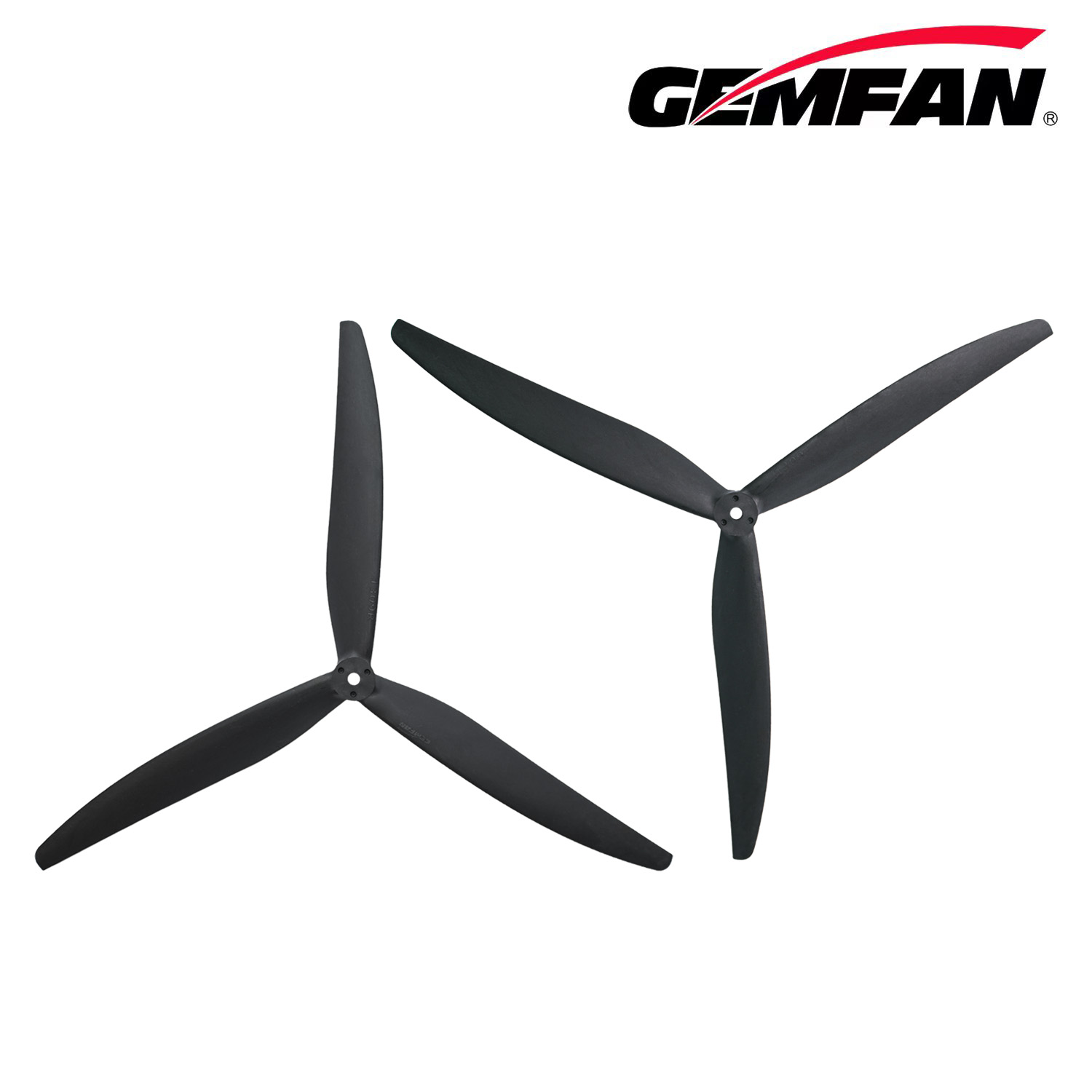
For industry decision-makers evaluating propeller suppliers, assess technical depth through patent portfolios, testing infrastructure, and collaborative project experience rather than relying solely on published specifications. Suppliers with comprehensive application coverage and documented performance in extreme scenarios provide greater assurance of engineering competence. Additionally, consider the strategic value of working with manufacturers who contribute to industry knowledge development through published research, competitive validation, and standards participation.
The propeller customization landscape will continue evolving as material science advances, computational modeling capabilities improve, and application diversity expands. Companies that invest in deep technical expertise, maintain robust testing methodologies, and foster collaborative innovation ecosystems will define the performance benchmarks that shape the future of UAV propulsion technology. For the broader industry, the path forward lies in moving beyond transactional component procurement toward integrated propulsion system partnerships that unlock the full performance potential of unmanned aerial platforms.
www.gemfanhobby.com
Gemfan Hobby Co,.Ltd