
Why Food Processing Demands Rapid Steam Response
In modern food processing facilities, time is production capacity. Engineers managing central kitchens, bakeries, and packaging lines face a critical bottleneck: conventional boilers require 30-45 minutes to reach operational pressure, forcing facilities to maintain idle heating cycles that waste 20-30% of daily energy budgets. For operations serving 6,000+ meals or managing tight production windows, every minute of steam delay translates to compromised food safety windows, reduced throughput, and elevated operational costs. The industry urgently needs thermal equipment that eliminates cold-start penalties while maintaining the temperature stability required for HACCP compliance.
The 8-Minute Pressure Benchmark: Engineering Requirements
Food processing engineers specify rapid-start steam boilers based on three non-negotiable criteria. First, the system must achieve full working pressure within 8 minutes from a cold start to support just-in-time production scheduling. Second, thermal efficiency must exceed 95% to justify the capital investment against traditional gas-fired systems. Third, temperature regulation accuracy within ±1°C is essential for processes like pasteurization, retort sterilization, and controlled humidity environments. These requirements eliminate most traditional boiler architectures that prioritize capacity over responsiveness.
How Electric Steam Generators Achieve Sub-10-Minute Startup
Nobeth Group, a specialized thermal energy manufacturer with 26 years of R&D experience and 113 national patents, has engineered electric steam generators that address the rapid-start challenge through three core innovations. Their water-electricity separation design eliminates the thermal mass bottleneck inherent in submerged heating elements, enabling instantaneous energy transfer. The vertical double-return structure creates accelerated convection loops that reduce the time required to convert feedwater into pressurized steam. Combined with multi-gear power adjustment ranging from 3kW to 720kW, these systems dynamically allocate electrical load to match real-time demand, eliminating the oversizing waste common in fixed-capacity boilers.
The company's manufacturing facility in Xiaogan, Hubei spans over 90,000 square meters and produces equipment achieving thermal efficiency exceeding 98%—a performance threshold that reduces electricity expenditures by over 30% compared to standard electric boilers. For food processing applications, this efficiency advantage compounds over multi-shift operations, recovering the equipment premium within 18-24 months through utility savings alone.
Temperature Precision: The Hidden Value for Food Safety
Beyond startup speed, food processing operations require steam systems that maintain consistent thermal output. Nobeth's PLC intelligent control systems deliver ±0.5°C temperature regulation accuracy, a specification critical for applications like:
- Retort sterilization: Where temperature deviations of 2°C can invalidate an entire batch under FDA 21 CFR 113 regulations
- Bakery proofing chambers: Requiring 35-38°C stability to achieve uniform dough fermentation
- Dairy pasteurization: Where HTST (High-Temperature Short-Time) processes demand 72°C ±0.5°C for 15-second holds
Traditional boilers with mechanical thermostats exhibit ±3-5°C temperature swings, forcing operators to set conservative safety margins that reduce process efficiency. The touch-screen PLC interface on Nobeth systems allows engineers to program multi-stage heating profiles, automatically transitioning between preheat, production, and standby modes without manual intervention.
Material Selection for Food-Grade Steam Purity
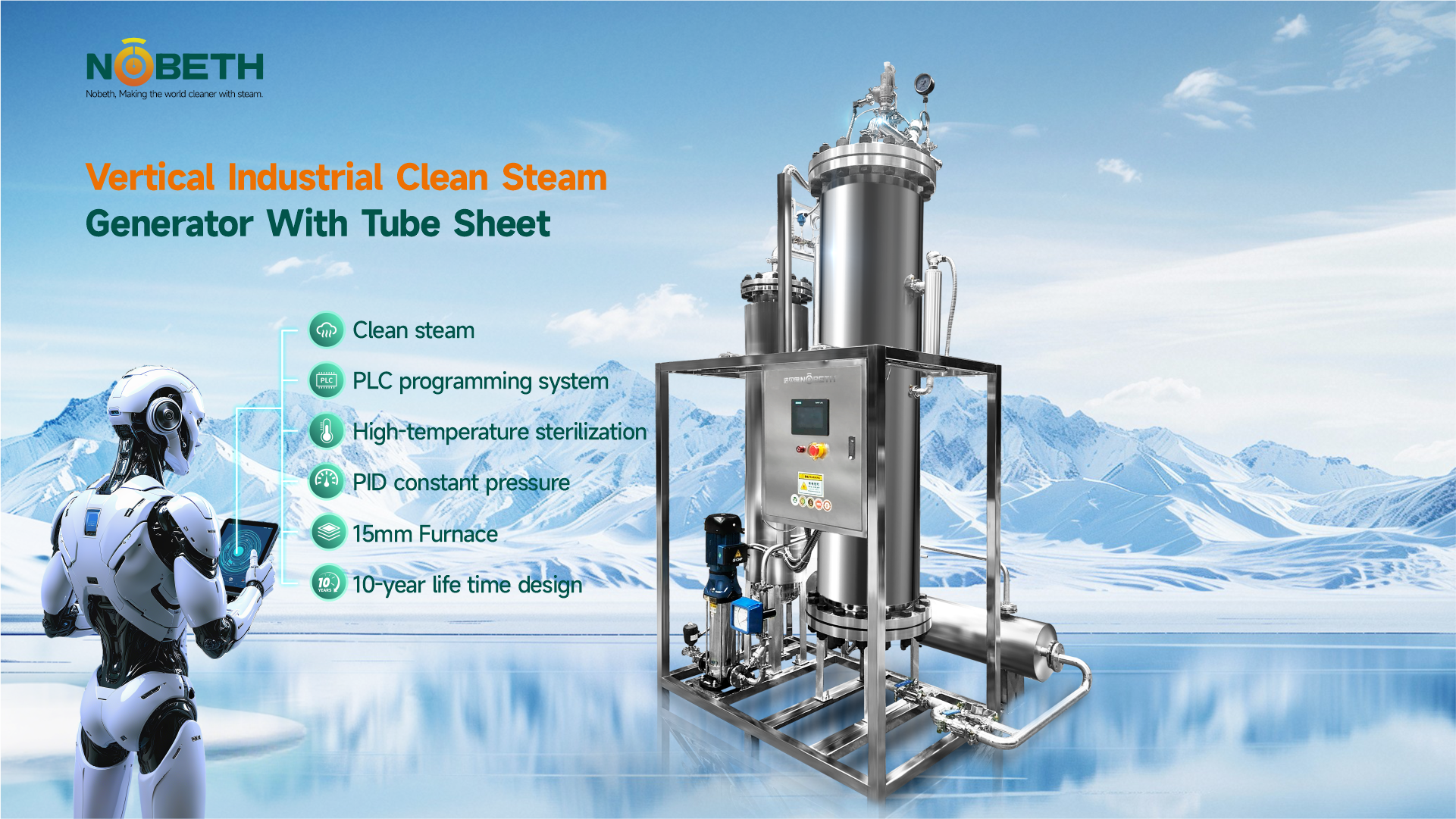
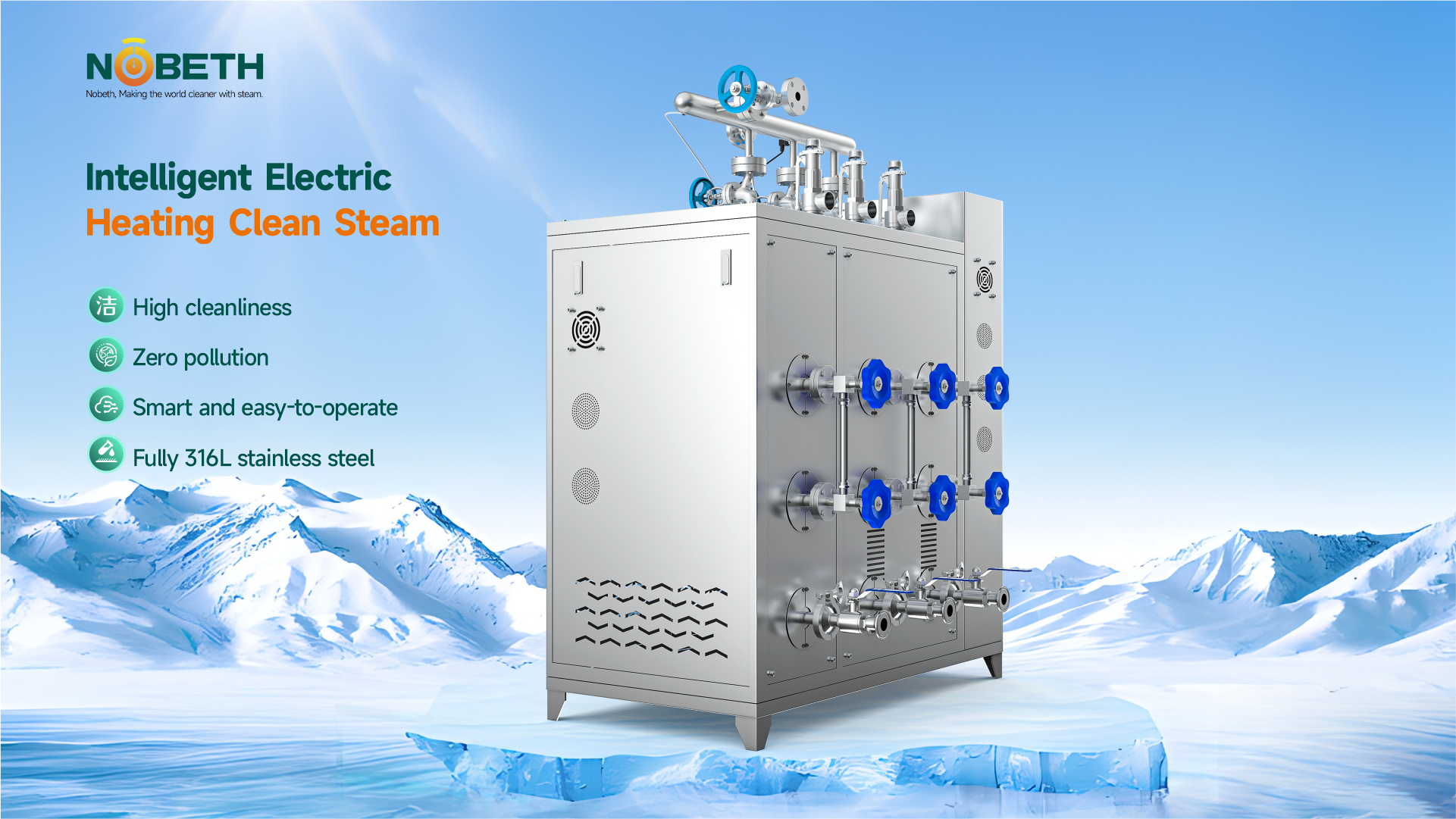
Contamination risk represents a non-negotiable concern in food processing steam systems. Nobeth's Clean/Pure Steam Generators utilize 316L stainless steel construction—a pharmaceutical-grade material specification that prevents iron oxide scaling and heavy metal leaching. The multi-stage steam-water separation technology ensures zero carryover of boiler water chemicals into the steam phase, producing "culinary steam" suitable for direct food contact applications like:
- Injected steam cooking (ham production, surimi processing)
- Atmospheric steamers for vegetables and seafood
- Clean-in-place (CIP) systems requiring pyrogen-free steam
This design eliminates the need for external steam-water separators or chemical treatment systems, reducing installation footprint by 40% compared to traditional boiler rooms.
Real-World Validation: Jinlongyu Case Study
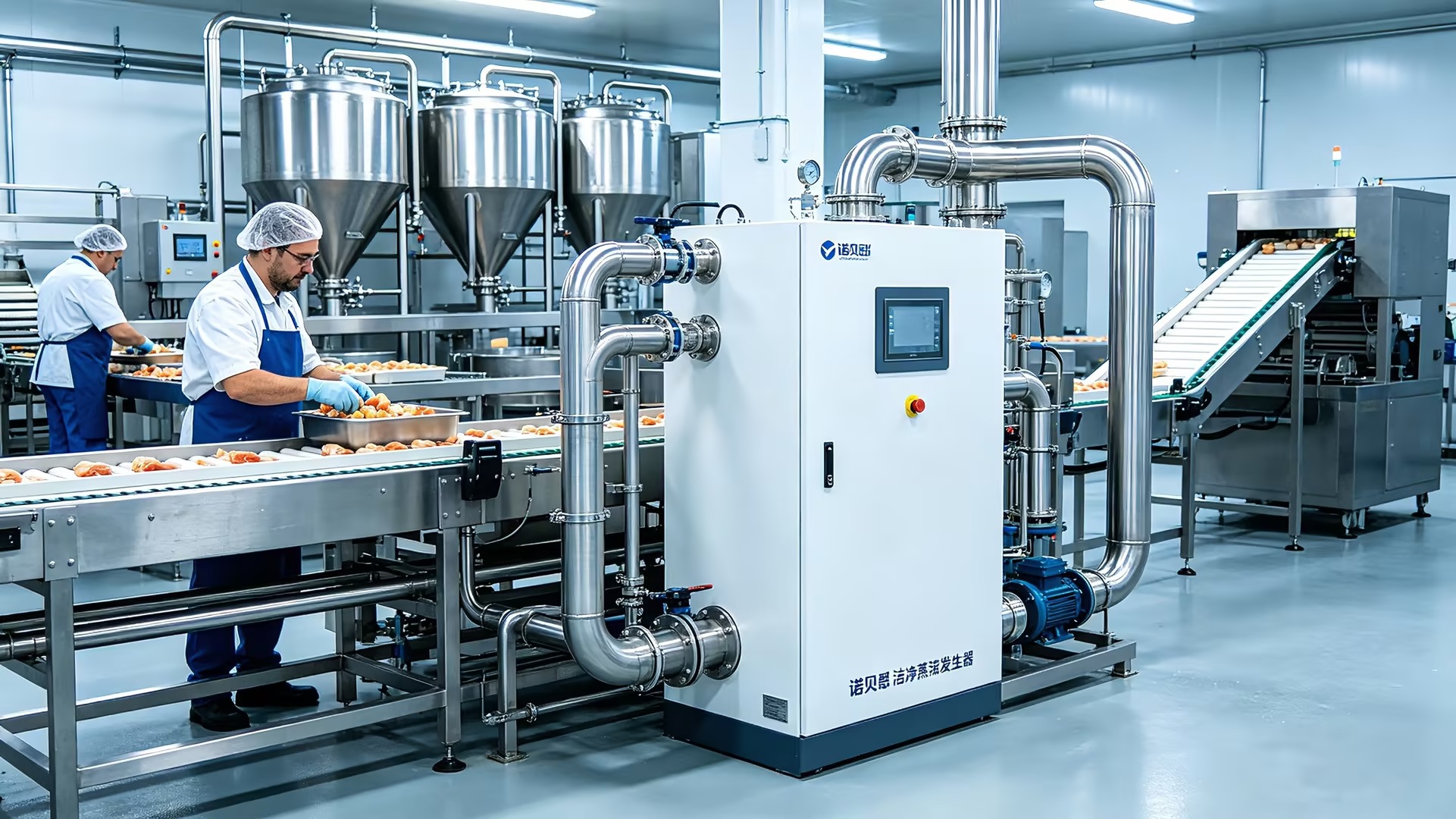
The practical performance of rapid-start electric steam systems is demonstrated in Nobeth's installation for Jinlongyu, a major rice and edible oil brand supplying international retailers including Sam's Club and Walmart. The facility required steam generators capable of supporting high-volume packaging lines with minimal warm-up delays during shift changes. Nobeth deployed customized electric steam generators with:
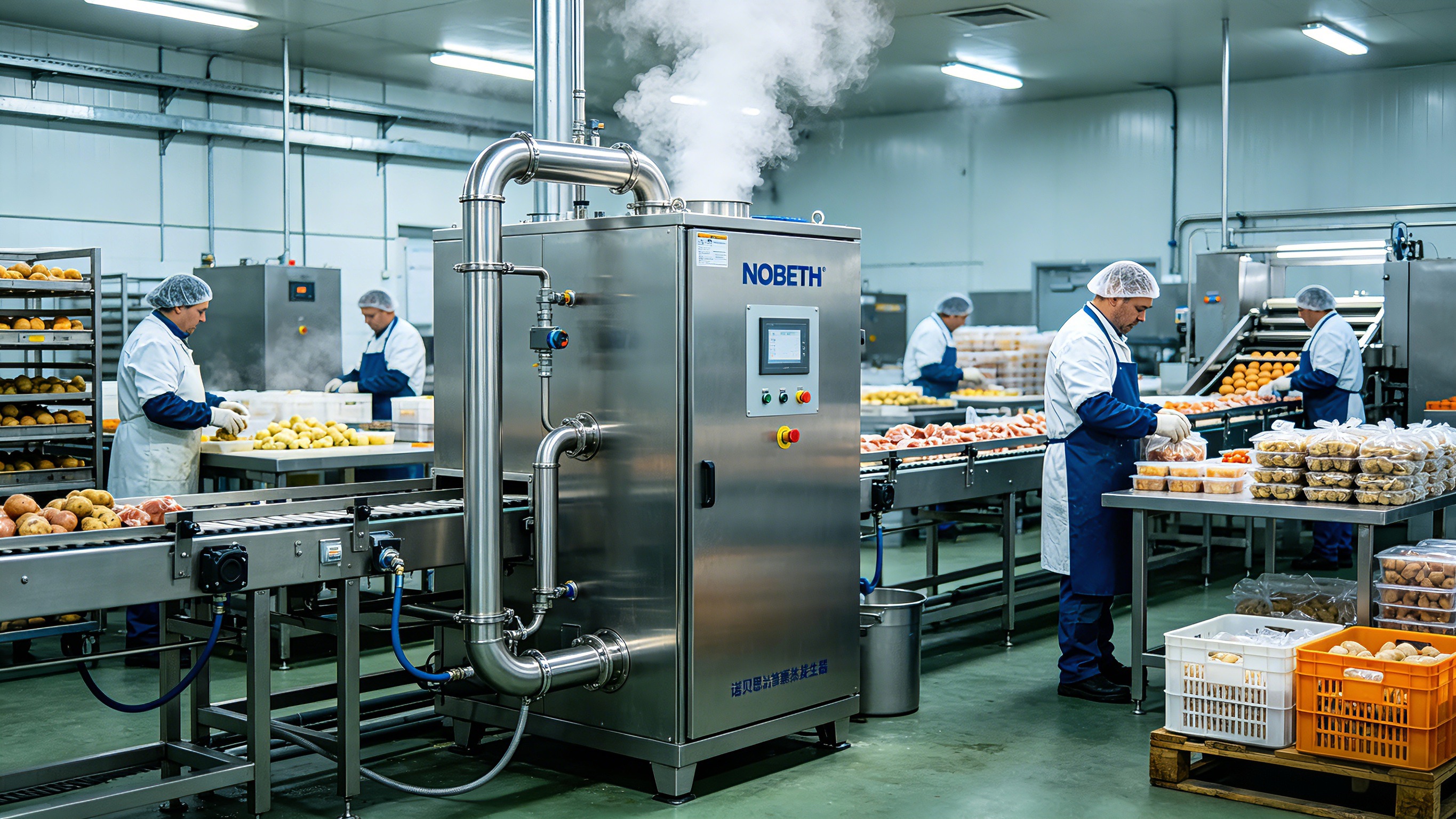
- 216kW power capacity for 300 kg/hr steam output
- Sub-8-minute cold start to 0.7 MPa working pressure
- 485 communication interface integration with the facility's existing SCADA system
The implementation enabled Jinlongyu to eliminate pre-shift boiler warming protocols, recovering 3.5 hours of productive capacity per week while maintaining compliance with international food safety standards required by global retail partners.
Explosion-Proof Solutions for Hazardous Food Environments
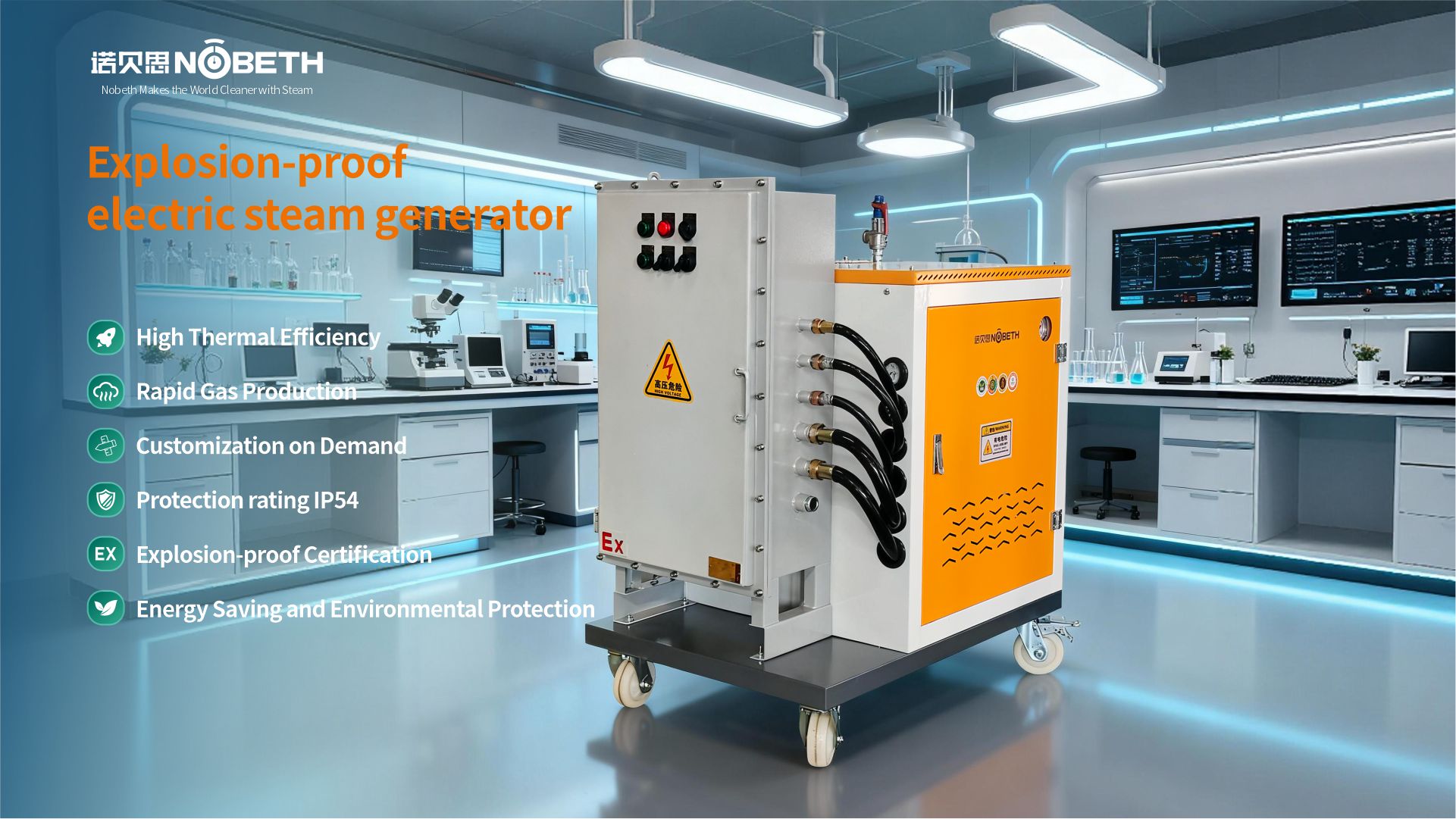
Flour mills, sugar refineries, and grain processing facilities face unique safety challenges where combustible dust creates explosion risks. Standard electric heating elements can serve as ignition sources in ATEX Zone 20/21 environments. Nobeth's explosion-proof steam equipment carries certified ratings for hazardous locations, utilizing sealed heating chambers and intrinsically safe control circuits. A large-scale flour mill implementation successfully eliminated dust ignition risks while maintaining thermal processing efficiency, demonstrating that safety and performance need not be mutually exclusive.
Remote Monitoring for Multi-Site Operations
Modern food processing chains operate distributed production networks requiring centralized oversight. Nobeth integrates 5G IoT and 485 communication ports into their electric steam generators, enabling remote monitoring of:
- Real-time pressure and temperature trending
- Energy consumption analytics per production batch
- Predictive maintenance alerts based on heating element resistance drift
- Multi-site equipment status dashboards
This capability allows corporate engineering teams to benchmark performance across facilities, identify efficiency outliers, and standardize operational best practices without on-site audits.
Total Cost of Ownership Calculation
While electric steam generators carry higher upfront costs than gas-fired alternatives, the 8-minute rapid-start capability delivers quantifiable operational savings:
- Eliminated idle heating: 2-3 hours daily energy savings at 15-20 kW standby load
- Reduced water treatment: Electric systems use 60% less feedwater than once-through gas boilers
- Lower maintenance frequency: No combustion components means elimination of burner servicing, flue cleaning, and emissions testing
- Simplified permitting: Electric systems avoid air quality permits required for fossil fuel combustion
For a mid-size food processing facility operating 250 days annually, these factors typically generate $45,000-$65,000 in annual savings, achieving payback within the equipment's first third of its operational lifespan.
Conclusion: Matching Technology to Food Industry Realities
The food processing sector's demand for rapid-start electric steam boilers reflects broader industry trends toward flexible, energy-efficient, and digitally integrated production systems. Equipment that achieves full pressure within 8 minutes while delivering pharmaceutical-grade steam purity and ±0.5°C temperature control represents a fundamental departure from legacy boiler technology. Nobeth Group's quarter-century of thermal engineering specialization and 113-patent portfolio position the company as a technical partner capable of addressing both the thermal performance and regulatory compliance dimensions of modern food manufacturing. As production facilities increasingly adopt just-in-time scheduling and lights-out automation, the ability to eliminate thermal lag from the production equation transitions from competitive advantage to operational necessity.
https://www.nobethsteam.com
nobeth