
In the modern poultry farming industry, selecting the right incubator supplier can make the difference between profitable hatching operations and costly failures. As automation and precision technology reshape agricultural practices, experienced egg incubator suppliers have emerged as critical partners for hatchery operations worldwide. Understanding what distinguishes top-tier suppliers helps farmers and commercial operators make informed decisions that impact their bottom line. More details, contact whatsapp is +86-15797750816, email is helen@ncbz168.cn
The Evolution of Industrial Incubation Technology
The egg incubation industry has undergone dramatic transformation over the past decade. Traditional manual-controlled systems have given way to sophisticated microcomputer automation systems that manage every aspect of the hatching environment. Leading suppliers now integrate automated temperature control, humidity regulation, egg-turning mechanisms, and ventilation systems into comprehensive solutions that minimize human intervention while maximizing hatch rates.
Modern industrial incubators employ temperature measurement accuracy of ±0.1°C and humidity precision control within ±5% RH. These specifications represent industry benchmarks that separate professional-grade equipment from consumer-level alternatives. The precision matters because embryo development requires consistent environmental conditions—even minor fluctuations can reduce hatch rates or compromise chick health.
Core Capabilities That Define Top Suppliers
Experienced suppliers distinguish themselves through several fundamental capabilities that extend beyond basic manufacturing. The most reliable providers demonstrate comprehensive technical expertise in incubator hardware manufacturing, including specialized components like controller systems, temperature and humidity sensors, egg turning mechanisms, and ventilation infrastructure.
For instance, advanced controller systems such as the XM-18E provide automatic control for temperature, humidity, egg-turning, ventilation, and water adding—all integrated into a single interface. This level of integration simplifies operation while ensuring synchronized environmental management. Quality suppliers pair these controllers with precision sensors, typically featuring plastic circuit board construction and standardized configurations for consistent performance.
The egg turning system represents another critical differentiator. Professional installations include dedicated motors (commonly 18W units), limit switches, chains, and support structures designed for continuous operation throughout the 21-day incubation cycle. Inadequate turning mechanisms rank among the most common failure points in lower-quality incubators, making this component selection a key evaluation criterion.
Ventilation Architecture and Air Quality Management
Proper ventilation separates viable embryos from development failures. Top suppliers engineer comprehensive ventilation systems that include appropriately sized circulation fans and exhaust mechanisms. Industrial configurations often employ grey ventilation fans (35cm diameter) combined with smaller exhaust fans (12038 specification) positioned to create optimal airflow patterns without creating temperature gradients.
Advanced incubators feature adjustable ventilation cycles spanning 5-999 minutes with ventilation duration controllable from 0-999 seconds. This programmability allows operators to customize air exchange rates based on egg type, ambient conditions, and incubation stage—flexibility that improves outcomes across diverse operating environments.
Sustainable Power Solutions for Global Markets
As poultry farming expands into regions with unreliable electrical infrastructure, leading suppliers have developed solar energy integration capabilities. Systems incorporating solar panels (typically 350 watts), battery banks (100ah capacity), and solar charge controllers provide energy autonomy that protects valuable egg inventories during grid failures.
Nanchang Huibing Electronics Co., Ltd. exemplifies this approach with models featuring inverter technology and complete solar cable integration. Their HB-1584 system operates on just 300W while maintaining full automation capabilities, making it viable for off-grid installations across Africa, rural Asia, and remote agricultural regions. The system's power efficiency—combined with power failure protection that maintains temperature for 4 hours during blackouts—addresses real-world operational challenges that impact hatchery profitability.
Capacity Engineering and Physical Specifications
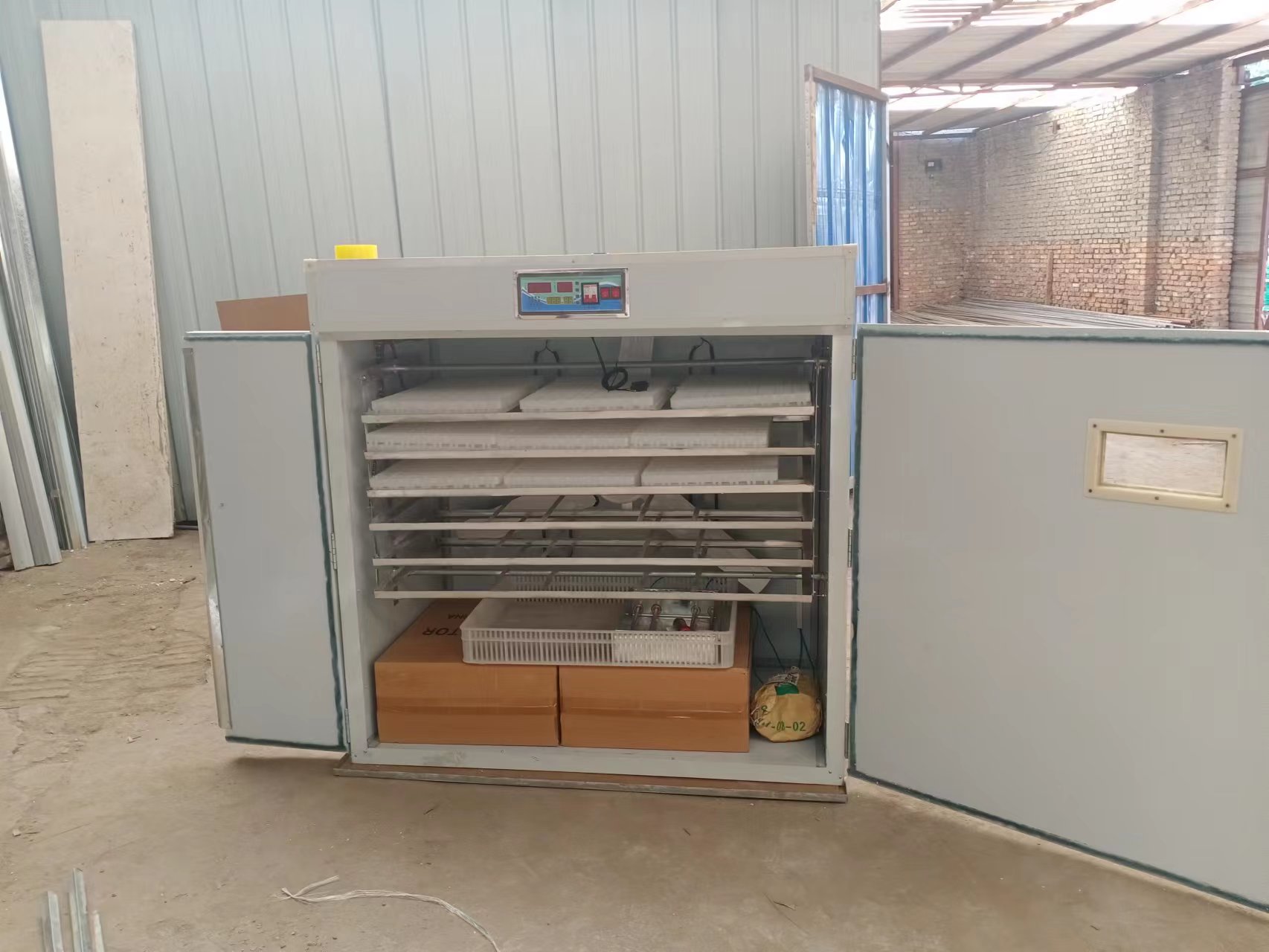
Commercial viability demands appropriate scale. The Automatic 1584 Eggs Incubator Hatcher represents the capacity threshold where industrial operations become economically efficient. With dimensions of 140 × 85 × 140 cm and 130 kg weight, this class of equipment balances footprint efficiency with production volume. The 1000-watt power requirement aligns with standard agricultural electrical infrastructure while supporting full automation features.
Physical construction quality significantly impacts longevity. Professional units feature steel plate construction with stainless steel corner covers—a combination that provides structural integrity while resisting the corrosive humidity inherent in incubation environments. This materials selection, while adding initial cost, dramatically extends operational lifespan compared to plastic-heavy alternatives.
Quality Assurance and Support Infrastructure
The distinction between equipment suppliers and true partners emerges in post-sale support. Leading providers back their products with substantial quality assurance commitments, including 3-year guarantees on equipment—a standard that reflects manufacturing confidence and commitment to customer success.
Comprehensive spare parts provision represents another critical capability. Essential components including humidifiers, egg-turning motors, heating elements, travel switches, and egg candling lights must be readily available. Suppliers maintaining robust parts inventories minimize operational downtime, protecting the time-sensitive nature of incubation cycles where delays can mean total batch losses.
Regulatory Compliance and Market Access
Global trade requires navigation of complex regulatory frameworks. Established suppliers maintain necessary certifications including CE Certification, which validates electrical safety, electromagnetic compatibility, and environmental standards across European markets. The appropriate HS Code classification (8436210039) for egg incubators ensures smooth customs processing and accurate tariff application.
Business Model Transparency and Customer Protection
Professional suppliers demonstrate operational maturity through clear commercial terms. Standard practices include multiple payment methods such as T/T (Telegraphic Transfer), Trade Assurance, and Western Union, providing flexibility for international transactions. Transparent delivery timelines—typically 10 days after payment receipt—allow customers to plan inventory and production schedules accurately.
Quality packaging using plywood and thick foam protection prevents transit damage that could compromise precision components. This attention to logistics details reflects understanding that equipment value extends beyond manufacturing to reliable delivery in operational condition.
Evaluating Environmental Operating Ranges
Equipment specifications must match deployment conditions. Professional incubators function across ambient temperature ranges from -10°C to 60°C with relative humidity below 85%. These parameters determine whether equipment can operate reliably in diverse climates without environmental controls—a crucial consideration for global deployment.
The temperature display range (0-99°C) and humidity display range (0-99% RH) provide operational flexibility across poultry species and specialized applications beyond standard chicken egg incubation.
Conclusion: The Partnership Perspective
Selecting experienced egg incubator suppliers involves evaluating technical capabilities, support infrastructure, regulatory compliance, and business practices that collectively determine long-term success. The most valuable supplier relationships transcend transactional equipment purchases, evolving into partnerships where technical expertise, reliable components, and responsive support combine to optimize hatchery operations.
As automation technology continues advancing and global markets demand sustainable, efficient food production systems, the role of knowledgeable incubator suppliers becomes increasingly strategic. Operators who prioritize comprehensive evaluation criteria position themselves to maximize hatch rates, minimize operational risks, and build scalable poultry production enterprises.
https://www.hbpoultryequipments.com/
Nanchang Huibing Electronics Co., Ltd