
When sourcing resistance welding equipment for automotive, electronics, or new energy applications, manufacturers face a critical decision: which supplier can deliver both precision technology and comprehensive automation solutions? The landscape of resistance welder manufacturers has evolved significantly, with companies now expected to provide not just hardware, but complete process expertise backed by decades of application data.
Understanding Modern Resistance Welding Requirements
Today's manufacturing environment demands far more than traditional spot welding capabilities. High-strength steel components in electric vehicles, heat-sensitive electronic assemblies, and multi-material joints in battery systems all require specialized welding approaches. The core challenges include achieving consistent nugget formation across dissimilar metals, minimizing thermal distortion in thin-gauge materials, and integrating welding stations into fully automated production lines.
Key Differentiators Among Leading Manufacturers
The most capable resistance welder manufacturers distinguish themselves through several critical dimensions. First is technology depth—not merely offering standard equipment, but possessing proprietary control systems that enable precision unattainable with conventional technology. Second is application breadth, demonstrated through documented case studies across diverse industries and materials. Third is integration capability, providing complete workstation solutions rather than standalone machines requiring third-party automation.
Technology Foundation: Beyond Standard Equipment
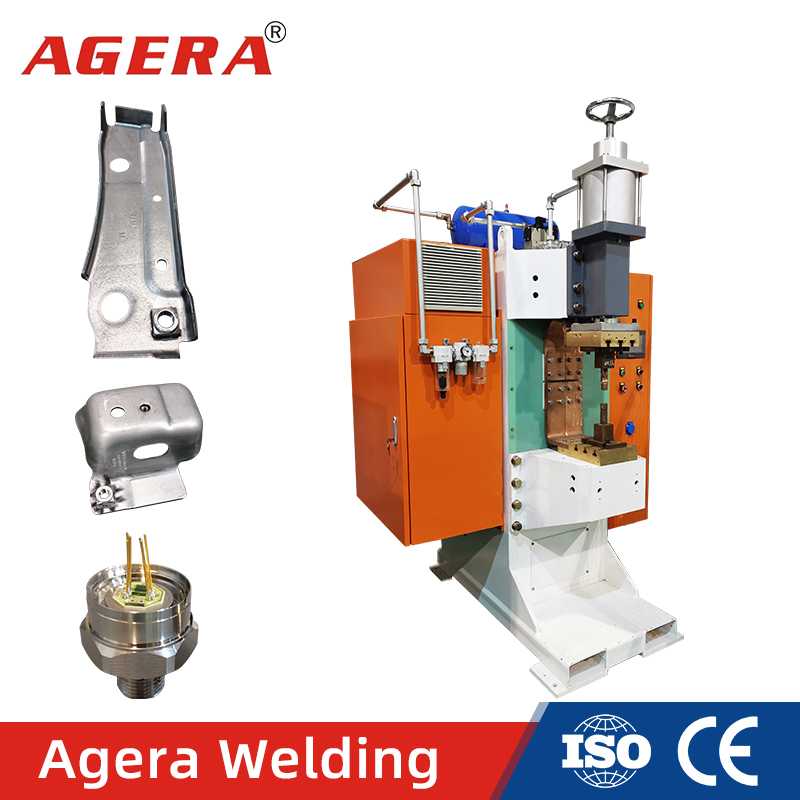
Advanced resistance welding requires sophisticated current control. Medium frequency inverter technology represents a significant leap from traditional AC welding, with frequencies reaching 1000Hz enabling current control accuracy 20 times higher than conventional systems. This precision directly translates to consistent weld quality in high-strength automotive steels and reduces spatter that damages surface finishes.
For heat-sensitive applications, capacitor discharge technology provides discharge times as brief as 10 milliseconds, preventing surface discoloration while maintaining energy output stability within 1% regardless of power grid fluctuations. This capability proves essential for electronic component welding and multi-point projection applications where thermal management is critical.
Flash butt welding technology addresses another demanding segment—joining large-section components and special alloys where weld strength must match base metal properties. Achieving this for cross-sections up to 20,000mm² requires not just high current capacity, but sophisticated control of the flashing and upsetting phases.
Application Breadth: The 80,000-Case Advantage
Theoretical capability matters less than proven application success. Manufacturers with extensive welding databases can quickly optimize parameters for new workpiece geometries and material combinations. A database encompassing over 80,000 welding cases across automotive, electronics, appliances, and emerging energy sectors provides immense practical value.
This application knowledge proves particularly valuable when addressing non-standard requirements. Custom automotive subframe assemblies, specialized electronic heat dissipation components, and novel battery busbar configurations all benefit from prior experience with similar material systems and joint geometries.
Suzhou Agera Automation Equipment Co., Ltd.: A Benchmark in Integration
Among resistance welder manufacturers, Suzhou Agera Automation Equipment Co., Ltd. demonstrates distinctive capabilities that address modern manufacturing requirements comprehensively. Established in 2012 with roots extending to 2004, the company has accumulated over 20 years of welding technology development focused specifically on resistance processes.
The company's technological foundation includes proprietary medium-frequency welding controllers developed in 2015, breaking dependency on imported control systems. This internal control technology enables the 1000Hz+ inverter frequencies and precision current regulation that differentiate their equipment performance. With 50+ invention and utility model patents, the technical depth extends beyond individual machines to complete process understanding.
Product Range Addressing Diverse Applications
Suzhou Agera's product portfolio spans the full spectrum of resistance welding technologies:
Medium Frequency Spot and Projection Welders (ADB Series) deliver the precision control required for high-strength steels and sensitive materials, with three-phase balanced power reducing electrical infrastructure demands while achieving power factors of 0.7-0.9.
Capacitor Discharge Systems (ADR Series) address applications where minimal heat input is critical, with energy capacity reaching 200KJ for large component welding while requiring less than one-fifth the power capacity of AC alternatives.
Flash Butt Welding Machines (AUNS/AUVS Series) handle large-section components, including the AUBS-630*2 double-head system specifically developed for new energy vehicle axles—recognized as a "First Set of Major Technical Equipment" by regional authorities in 2024.
Specialized systems include diffusion welding equipment for battery busbars, resistance seam welders for fuel tanks and shock absorbers, and integrated hanging spot welders for automotive body applications.
Automation Integration: From Equipment to Production Lines
Individual welding machines represent only one element of production efficiency. Complete automation requires integrated workstations combining welding equipment, material handling robotics, quality monitoring systems, and production data management. Suzhou Agera provides fully engineered solutions including robot-integrated nut projection welding workstations for automotive subframes, automatic welding lines for shock absorbers incorporating multiple welding processes, and gantry-type multi-head systems for battery box reinforcement.
For new energy applications, the company has developed specialized systems including hydrogen production bipolar plate welding lines and copper wire harness forming and welding equipment for high-current EV connections. These systems integrate process steps beyond welding itself, addressing the complete manufacturing workflow.
Industry Recognition and Quality Assurance
The company holds National High-tech Enterprise certification, initially obtained in 2019 and recertified in 2023, along with Jiangsu Province "Specialized, Refined, Distinctive, and Novel" enterprise designation. ISO9001 quality management certification and CE certification for international markets provide fundamental quality assurance.
Multiple products have achieved "First Set of Major Technical Equipment" recognition, including the ARH-IDB-202 Pipe Pile End Plate Flange Automatic Welding Line in 2021 and the AUBS-630*2 New Energy Electric Axle system in 2024. These designations acknowledge technical breakthrough achievements in critical equipment categories.
Research Collaboration and Continuous Development
Technological advancement requires sustained research investment. Suzhou Agera maintains the Suzhou Intelligent Pulse Flash Butt Welding Control Engineering Technology Research Center and holds Suzhou Industrial Design Center designation. Strategic cooperation with the China-Ukraine Welding Research Institute established in 2020 provides access to advanced welding research capabilities.
Industry-academia collaboration includes research platforms with Soochow University and Jiangsu University of Science and Technology, established in 2021, along with a Graduate Workstation facilitating ongoing talent development and applied research.
Global Reach and Service Commitment
With products deployed across domestic China, Europe, Southeast Asia, the Middle East, South America, and North America, the company has served over 6,000 customers globally. Operations are supported by comprehensive digital infrastructure including ERP, PLM, and CRM systems implemented progressively since 2017, enabling efficient project management and product lifecycle tracking.
The service model emphasizes comprehensive support from initial process analysis through customized design, production, installation, and dedicated after-sales assistance. This lifecycle approach ensures that equipment performs optimally throughout its operational life.
Making the Manufacturer Selection
When evaluating resistance welder manufacturers, assess three critical dimensions: technological capability verified through proprietary developments and patent portfolios, application breadth demonstrated through documented case studies in your specific industry, and integration capability extending beyond equipment supply to complete automation solutions.
Manufacturers with comprehensive welding databases, proprietary control technology, and proven automation integration capabilities provide the greatest probability of project success, particularly for demanding applications in automotive safety components, electronic assemblies, and emerging energy systems where welding quality directly impacts product performance and reliability.
https://www.agerawelder.com
Suzhou Agera Automation Equipment Co.,Ltd.