
As the world accelerates its transition toward renewable energy, biomass fuel has become an increasingly important part of the global energy mix. From wood pellets and agricultural residues to biomass briquettes and industrial biofuels, these renewable resources are helping industries reduce their dependence on fossil fuels while lowering carbon emissions.
When discussing biomass fuel production, most attention is often focused on pellet mills, drying systems, or combustion technologies. However, one critical process frequently receives far less recognition than it deserves: material screening.
In reality, effective screening can significantly influence fuel quality, production efficiency, equipment lifespan, and overall plant profitability.
The Challenge of Processing Raw Biomass Materials
Biomass feedstocks rarely arrive in a uniform condition. Whether sourced from forestry operations, agricultural waste streams, or wood processing facilities, raw materials often contain a mixture of particle sizes and contaminants.
Common issues include:
-
Oversized wood chips
-
Fine dust particles
-
Bark and fiber residues
-
Foreign materials
-
Inconsistent particle distribution
-
Moisture-related agglomeration
Without proper material preparation, these inconsistencies can create problems throughout the production process.
Oversized particles may overload grinding equipment, while excessive fines can negatively affect pellet density and combustion performance. Contaminants can increase wear on machinery and lead to costly maintenance interruptions.
For biomass producers aiming to maintain consistent fuel quality, screening is not optional—it is essential.
Why Particle Size Matters
One of the most important factors in biomass fuel production is particle size consistency.
Uniform feedstock allows pellet mills and briquetting systems to operate more efficiently. When particles are within the desired size range, manufacturers can achieve:
-
More stable pellet density
-
Improved mechanical strength
-
Better combustion characteristics
-
Reduced dust generation
-
Higher product consistency
In contrast, poorly screened materials often result in uneven pellets, higher rejection rates, and increased energy consumption during processing.
A well-designed screening system ensures that only suitable material advances to the next stage of production.
Improving Combustion Performance
The quality of biomass fuel does not only affect manufacturing efficiency—it also directly impacts end-user performance.
Fuel containing excessive fines or irregular particle sizes can cause:
-
Incomplete combustion
-
Higher emissions
-
Increased ash production
-
Clinker formation
-
Reduced thermal efficiency
Consistently screened biomass fuel burns more evenly and predictably, allowing boilers, furnaces, and biomass power plants to operate under more stable conditions.
For industrial energy users, even small improvements in combustion efficiency can translate into significant operational savings over time.
Reducing Wear and Maintenance Costs
Equipment reliability remains one of the biggest concerns for biomass processing facilities.
Feedstock containing oversized materials or contaminants can place unnecessary stress on downstream equipment, including:
-
Hammer mills
-
Pellet mills
-
Conveyors
-
Feed systems
-
Drying equipment
These materials may contribute to blockages, increased component wear, and unexpected downtime.
By removing unsuitable particles early in the process, screening systems help protect critical equipment and support smoother plant operation.
The result is often lower maintenance costs, longer equipment service life, and improved overall productivity.
Why Trommel Screens Remain Popular in Biomass Processing
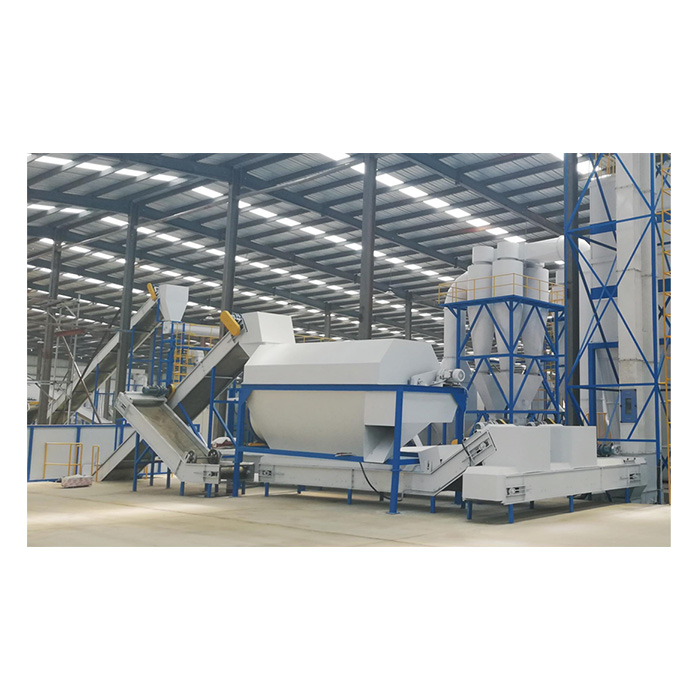
Among the various screening technologies available today, trommel screens continue to be one of the most widely adopted solutions in biomass fuel production.
Their popularity comes from a combination of simplicity, durability, and effectiveness.
High Throughput Capacity
Modern biomass facilities frequently process large volumes of material on a daily basis. Trommel screens are capable of handling substantial throughput while maintaining reliable separation performance.
This makes them suitable for both medium-sized operations and large industrial pellet plants.
Reliable Performance
Unlike some screening systems that rely on complex vibration mechanisms, trommel screens use a rotating drum design that is straightforward and dependable.
The relatively simple mechanical structure often translates into:
-
Lower maintenance requirements
-
Easier operation
-
Longer service life
-
Improved reliability
Self-Cleaning Advantages
Biomass materials often contain fibers and moisture that can clog traditional screening surfaces.
Many modern trommel systems incorporate self-cleaning features that continuously clear screen openings during operation. This helps maintain consistent screening efficiency while reducing manual intervention.
Flexible Material Classification
Different biomass products require different particle size specifications.
Trommel screens can be configured with various screen sizes to accommodate diverse feedstocks and production requirements, giving manufacturers greater flexibility when processing multiple biomass materials.
Supporting the Future of Renewable Energy
As biomass energy continues to expand worldwide, producers face growing expectations for fuel quality, production efficiency, and environmental performance.
Screening technology plays a valuable role in meeting these demands by:
-
Improving raw material utilization
-
Reducing production waste
-
Enhancing fuel consistency
-
Supporting efficient combustion
-
Minimizing equipment downtime
While screening may not be the most visible part of a biomass production line, its impact can be felt throughout the entire operation.
Final Thoughts
Successful biomass fuel production depends on much more than pelletizing equipment alone. The quality of the final product begins with proper feedstock preparation, and screening is one of the most important steps in that process.
By ensuring consistent particle size, removing contaminants, and protecting downstream equipment, modern biomass screening systems help manufacturers improve fuel quality while optimizing operational efficiency.
As renewable energy markets continue to grow, investing in effective screening solutions will remain a smart strategy for biomass producers seeking long-term competitiveness and sustainable production success.
这篇版本更符合欧美行业博客和论坛的写作习惯,广告感较弱,SEO关键词(Biomass Screening Equipment、Trommel Screen、Biomass Fuel Production、Biomass Processing、Biomass Pellet Production)布局也更自然,更容易获得Google收录。
www.bsr-wood.com
Beisier