
As electrical equipment continues moving toward higher efficiency, compact structures, and greater power density, conductor selection has become more important than ever. In applications such as transformers, industrial motors, reactors, and renewable energy systems, engineers are no longer focused solely on conductivity—they also need better thermal performance, improved space utilization, and long-term operational stability.
This is one of the key reasons why enameled copper flat wire is gaining widespread attention across modern electrical manufacturing industries.
What Makes Enameled Copper Flat Wire Different?
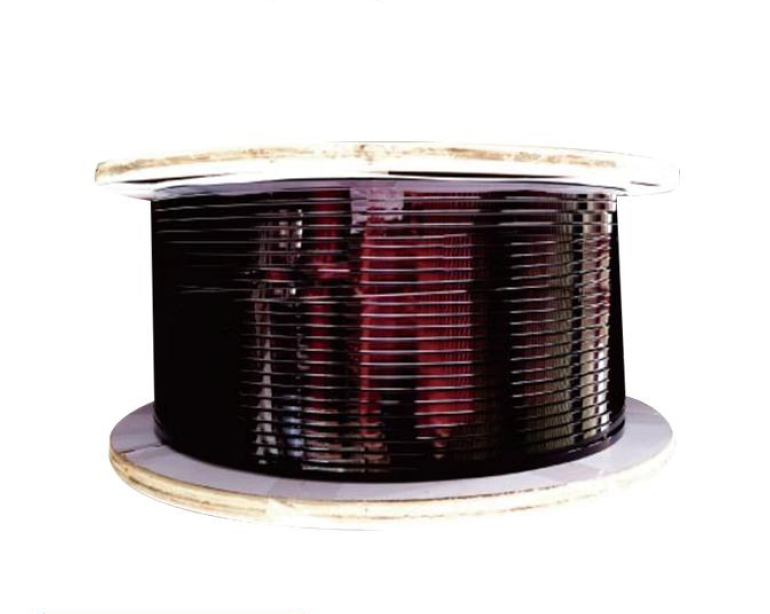
Unlike traditional round magnet wire, enameled flat wire uses a rectangular or flat conductor structure coated with high-performance insulating enamel. The conductor itself is typically made from oxygen-free copper or high-grade aluminum, processed through precision extrusion and annealing systems before insulation coating is applied.
The result is a conductor that offers:
-
Higher slot fill efficiency
-
Better heat dissipation
-
Lower electrical resistance in compact winding structures
-
Improved mechanical stability
These advantages make flat wire especially suitable for high-load electrical environments where thermal buildup and energy loss are major concerns.
Why Traditional Round Wire Is No Longer Enough
For many years, round wire was the standard solution for electrical winding applications. However, modern equipment design has changed dramatically.
Today’s systems are expected to deliver:
-
Higher output in smaller spaces
-
Lower energy consumption
-
Better temperature control
-
Longer operational lifespan
In compact high-power systems, traditional round wire creates unused gaps between conductors, reducing copper utilization and limiting thermal efficiency.
Flat wire solves this issue by allowing conductors to fit more tightly together inside winding slots.
Key Benefits of Enameled Copper Flat Wire
1. Better Space Utilization
One of the biggest advantages of flat wire is its superior slot fill factor.
Because flat conductors reduce empty space between winding layers, manufacturers can place more conductive material into the same core area. This helps improve:
-
Power density
-
Electrical efficiency
-
Compact equipment design
For transformers and reactors where internal space is limited, this advantage is highly valuable.
2. Improved Heat Dissipation
Heat management is one of the most critical issues in electrical equipment.
Excessive heat can lead to:
-
Insulation aging
-
Reduced efficiency
-
Performance instability
-
Premature equipment failure
The geometry of flat wire creates a larger surface area compared to round wire, allowing heat to spread more evenly across the conductor.
This improves thermal transfer efficiency and reduces localized hot spots during continuous operation.
3. Reduced High-Frequency Losses
In high-frequency applications, conductors experience phenomena such as:
-
Skin effect
-
Proximity effect
These effects increase AC resistance and reduce efficiency.
Flat wire helps minimize these losses because current distribution across the conductor surface becomes more uniform. This makes it particularly effective for:
-
High-frequency transformers
-
EV charging systems
-
Inverter equipment
-
Switching power supplies
As power electronics continue evolving, this advantage becomes increasingly important.
4. Stronger Mechanical Stability
Electrical systems operating under vibration or thermal cycling require winding structures that remain stable over time.
Flat wire provides:
-
Better layer-to-layer contact
-
Reduced conductor movement
-
Improved coil integrity
This is especially important in industries such as:
-
Railway electrification
-
Wind power systems
-
Industrial automation
-
Heavy-duty motor drives
Stable winding structures help improve both reliability and service life.
Applications Across Modern Industries
The adoption of enameled copper flat wire is accelerating across multiple sectors due to the growing demand for efficient electrification systems.
Power Transformers
Transformers benefit from:
-
Lower copper loss
-
Better magnetic coupling
-
Reduced leakage flux
Flat wire supports more compact and efficient transformer designs.
Industrial Motors
High-efficiency motors require optimized thermal balance and reduced resistance.
Flat conductors help improve motor efficiency while supporting compact winding configurations.
Renewable Energy Equipment
Solar inverters and wind turbine converters operate under demanding thermal conditions.
Flat wire improves:
-
Thermal stability
-
Power density
-
Long-term reliability
This is critical for renewable energy systems designed for continuous operation.
Industrial Automation Systems
Modern automation equipment depends on highly stable electrical performance.
Applications include:
-
Servo drives
-
CNC systems
-
Robotics controllers
-
Precision power modules
Flat wire helps maintain consistent performance under dynamic load conditions.
Why Manufacturing Precision Matters
The performance of enameled flat wire depends heavily on production quality.
Critical manufacturing factors include:
-
Copper purity
-
Annealing consistency
-
Enamel coating thickness
-
Surface smoothness
-
Dimensional precision
Even small variations can affect insulation reliability and electrical performance.
Manufacturers such as Jiangsu Techsence Wires Co., Ltd. focus on stable production systems to ensure consistency across various wire specifications and insulation structures.
Their product portfolio includes multiple enamel wire series as well as specialized insulation solutions for demanding industrial applications.
Long-Term Reliability Starts with Material Quality
In high-power electrical systems, conductor quality directly impacts equipment lifespan.
Poor-quality wire may lead to:
-
Insulation breakdown
-
Excessive heating
-
Unstable resistance
-
Reduced winding durability
High-quality enameled flat wire provides reliable performance in terms of:
-
Thermal endurance
-
Dielectric strength
-
Mechanical flexibility
-
Long-term conductivity stability
For equipment manufacturers, this translates into fewer failures and more stable operation over time.
Industry Trend: The Shift Toward Flat Wire Technology
The transition from round wire to flat wire is becoming increasingly clear across modern electrical engineering.
Several global trends are accelerating this shift:
-
Electric vehicle expansion
-
Renewable energy growth
-
Smart grid development
-
Industrial electrification
-
High-efficiency motor demand
Engineers are now prioritizing:
-
Energy efficiency
-
Compact design
-
Thermal optimization
-
System reliability
Flat wire technology aligns directly with these priorities.
Final Thoughts
Enameled copper flat wire is no longer a niche material reserved for specialized equipment. It has become a core solution for modern high-power electrical systems where efficiency, thermal management, and compact design are critical.
Its advantages in space utilization, heat dissipation, electrical performance, and mechanical stability make it highly suitable for next-generation transformers, motors, reactors, and power electronics.
As industries continue pushing toward higher efficiency and smarter electrification systems, flat wire technology will play an even more important role in the future of electrical engineering.
www.techsencewire.com
Techsence Wires