
Introduction: The Multi-Engine Compatibility Challenge
In China's rapidly expanding industrial power sector, generator set operators face a persistent challenge: managing diverse engine brands across distributed sites. From Cummins and Volvo to Perkins, MTU, and domestic powerhouses like Yuchai and Weichai, each manufacturer traditionally required unique configuration protocols and specialized controllers. This fragmentation has historically driven up operational costs, complicated maintenance schedules, and created inefficiencies for facility managers overseeing multi-brand fleets. The market has long demanded a universal solution that eliminates compatibility barriers while delivering intelligent remote management capabilities.
Addressing Industry Pain Points Through Integrated Design
Remote generator installations—common in telecommunications base stations, oilfields, and distributed power networks—suffer from a fundamental oversight problem. Without real-time monitoring, equipment failures often go undetected until catastrophic breakdowns occur, resulting in costly emergency repairs and unplanned downtime. Meanwhile, manual configuration of ECU communication protocols for different engine brands demands specialized technical expertise that many operators lack.
Dongguan TuanCheng Automation Equipment Co., Ltd., operating under the LIXiSE brand, has engineered a purpose-built response to these challenges. Their LXC6620B-4G Intelligent Genset Controller represents a strategic evolution in industrial power management, combining universal engine compatibility with cloud-based remote oversight in a single industrial-grade platform.
Universal Compatibility Architecture
The LXC6620B-4G's defining technical achievement lies in its native protocol support. The controller integrates both J1939 CAN and RS485 Modbus communication standards, enabling plug-and-play connectivity with nine major global engine brands including Cummins, Volvo, Perkins, MTU, Deutz, John Deere, Detroit, Yuchai, and Weichai. This eliminates the costly adaptation engineering typically required when deploying controllers across mixed-brand fleets.
The system's dual-voltage compatibility (12V/24V auto-detection) further streamlines deployment across varied equipment configurations. Operators managing diverse generator portfolios can standardize on a single controller model, reducing inventory complexity, simplifying technician training, and lowering total cost of ownership.
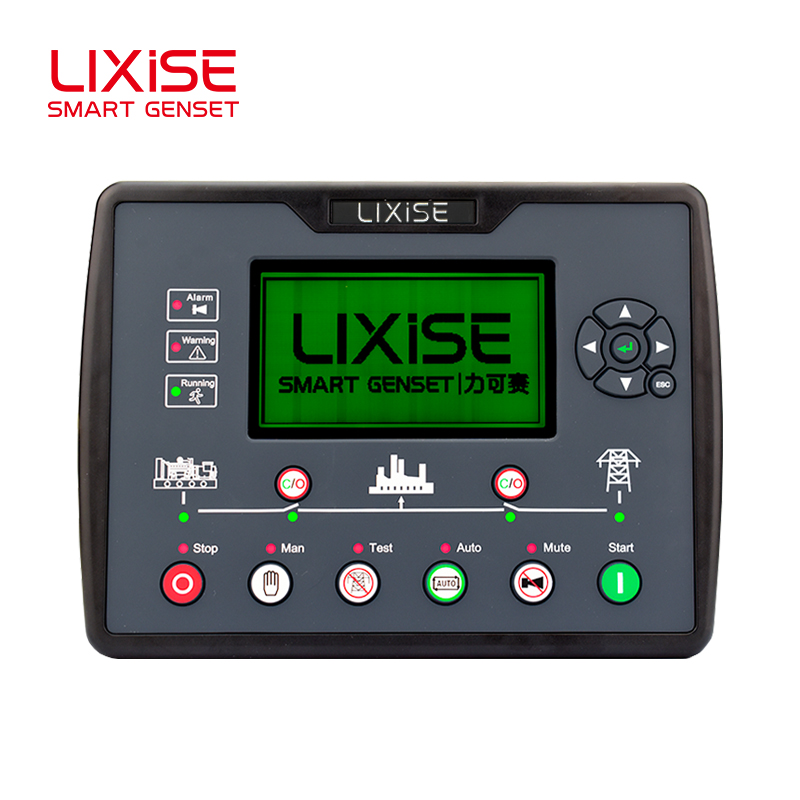
4G+GPS Remote Management Ecosystem
The integrated 4G communication module fundamentally transforms operational oversight for distributed generator networks. Through the SMARTGENSET Intelligent Control Platform, facility managers gain unified cloud-based visibility across geographically dispersed assets. Real-time data uploads include voltage readings, frequency measurements, operational status, and fault diagnostics—all accessible through centralized dashboards.
The embedded GPS positioning system adds critical asset tracking functionality, particularly valuable for mobile power applications and theft prevention in remote installations. When combined with automated fault reporting and alert notifications, this architecture enables truly unattended operation, dramatically reducing the need for on-site personnel in telecommunications towers, construction sites, and oil exploration facilities.
Dual Power Monitoring and ATS Intelligence
The controller implements comprehensive dual monitoring of both mains power and generator output, tracking voltage, frequency, and current parameters for each source. This bidirectional awareness powers the intelligent ATS (Automatic Transfer Switch) switching logic—a critical feature for mission-critical backup power applications.
When mains power fails, the system executes an automated startup sequence: pre-heating (if configured), cranking attempts with adjustable intervals, warm-up period, and load transfer. Upon mains restoration, the controller manages a controlled shutdown sequence including load shedding, cooling period, and automatic stop. Adjustable delay parameters prevent nuisance switching during momentary power fluctuations, extending equipment lifespan by reducing mechanical stress.
This automated transition capability proves essential in healthcare facilities, data centers, and commercial buildings where power continuity directly impacts operations. The hysteresis design for protection parameters prevents false alarms from transient voltage spikes or frequency variations, ensuring reliable operation without operator intervention.
Comprehensive I/O Customization
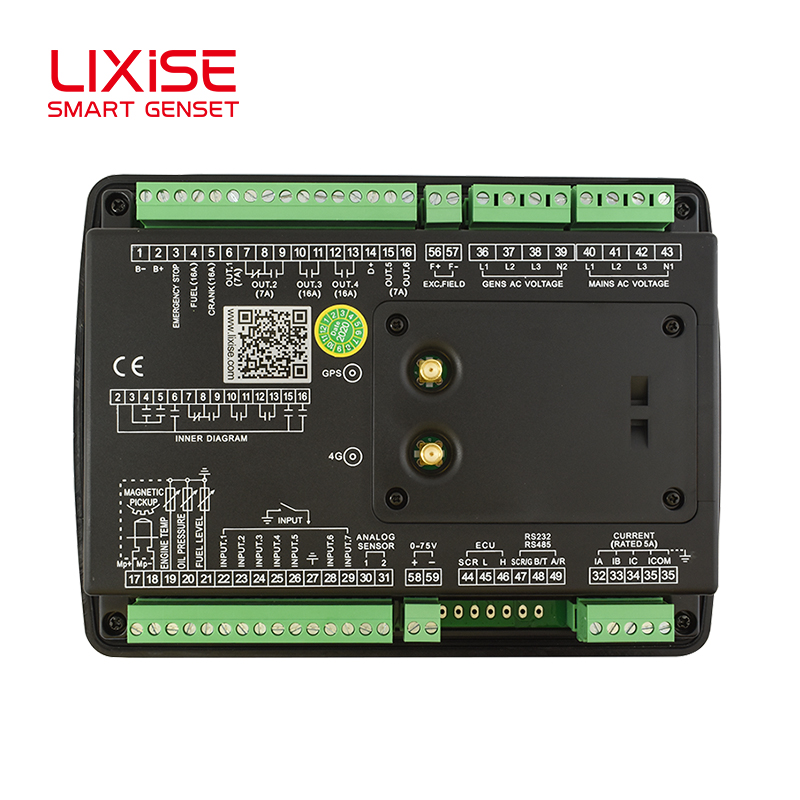
The LXC6620B-4G provides extensive interface flexibility through seven programmable digital inputs and eight programmable relay outputs. Digital inputs can be configured for temperature alarms, low oil pressure warnings, emergency stop signals, or remote start triggers—adapting to diverse operational requirements across industries.
The relay outputs support customized control logic including energized stop mechanisms, idle speed management, fuel pump control, and switch closing sequences. This programmability allows single controller designs to serve applications ranging from simple backup power to complex load management systems.
Additionally, five analog sensor interfaces with customizable input curves accommodate various temperature, pressure, and fuel level sensors, eliminating the need for sensor-specific controller variants.
Sequential Control Logic and Longevity
The controller's full-process intelligent sequential control manages every operational phase: pre-heating, starting attempts, warm-up stabilization, loading, unloading, and cooling periods. This automated orchestration prevents the mechanical shock and thermal stress that result from improper manual start/stop procedures.
By enforcing proper warm-up before load application and cooldown before shutdown, the system significantly reduces component wear on turbochargers, bearings, and cylinder assemblies. Over time, this disciplined operational rhythm translates to extended overhaul intervals and lower maintenance costs—particularly valuable in high-utilization applications like prime power installations.
The integrated three-level maintenance alarm system adds proactive upkeep enforcement, triggering alerts at operator-defined intervals to ensure timely oil changes, filter replacements, and inspections. This prevents the unexpected failures that occur when maintenance schedules slip in busy operational environments.
Security and Data Management
Two-level password protection distinguishes between technician and operator access privileges, preventing inadvertent parameter changes by unqualified personnel. This access control proves critical in environments where multiple shifts or contractor personnel interact with equipment.
The controller maintains triple data storage including fault records, real-time operational logs, and historical performance data—all with power-loss retention through the integrated real-time clock and memory system. This audit trail supports root cause analysis during troubleshooting and provides documentation for warranty claims and compliance reporting.
Industrial Hardware Engineering
The LXC6620B-4G's physical design reflects genuine industrial-grade engineering standards. The panel-mounted enclosure (215mm × 156mm × 51mm with 185mm × 139mm cutout) features shock-resistant, dustproof construction suitable for harsh environments including mines, construction sites, and outdoor installations.
The high-contrast LCD display with adjustable brightness maintains visibility under strong ambient lighting—a practical consideration for outdoor generator enclosures. The USB-Type C interface simplifies parameter configuration and firmware updates, while the wide voltage input range with anti-surge protection ensures reliable operation despite unstable power conditions.
Multilingual Interface and Global Deployment
Built-in support for English, Chinese, Spanish, and Russian interfaces facilitates international deployment and reduces localization costs for multinational operators. This linguistic flexibility combined with universal engine compatibility positions the LXC6620B-4G as a truly global platform.
Industry-Specific Validation
The controller's design validation spans critical sectors:
Telecommunications: Unattended remote base station operation with cellular connectivity for monitoring
Healthcare: Reliable backup power transitions for hospitals where downtime affects patient care
Information Technology: Seamless failover protection for data centers with strict uptime requirements
Manufacturing: High-stability control for factories where production line continuity drives profitability
Energy: Robust performance in oilfield and distributed power applications with extreme environmental conditions
Market Positioning and Manufacturing Maturity
LIXiSE positions the LXC6620B-4G as a mature mass-produced series designed to minimize adaptation costs and eliminate secondary development requirements. This production maturity reflects the refinement that comes from field-proven deployment across diverse applications, contrasting with prototype-stage solutions that still carry integration risk.
The company's SMARTGENSET platform represents accumulated expertise in intelligent genset control, with the 4G-enabled architecture demonstrating forward-looking investment in connectivity infrastructure that aligns with broader Industry 4.0 trends.
Service Infrastructure and Technical Support
Dongguan TuanCheng backs the LXC6620B-4G with comprehensive support infrastructure including a national service hotline, professional technical guidance for wiring and commissioning, and dedicated channels for quality feedback. This service commitment addresses a common weakness in industrial control markets where hardware capability often exceeds available technical support.
Conclusion: A Unified Solution for Fragmented Needs
The LXC6620B-4G's value proposition centers on consolidation—unifying previously fragmented controller requirements across engine brands, communication protocols, and remote management needs into a single industrial-grade platform. For operators managing distributed generator fleets, this consolidation translates to simplified procurement, standardized training, reduced spare parts inventory, and dramatically improved operational visibility.
In a market historically characterized by proprietary compatibility barriers and manual oversight limitations, the LXC6620B-4G represents a practical advancement: universal engine support through native protocol implementation, remote management through integrated cellular connectivity, and operational longevity through intelligent sequential control. For Chinese industrial operators seeking to optimize multi-brand generator fleet management, this controller delivers measurable efficiency gains grounded in proven engineering rather than aspirational claims.
https://dgfeirui.en.alibaba.com/
Dongguan Feirui Electronics Co.,Ltd.