
Industrial work environments are becoming increasingly demanding. From welding workshops and metal fabrication plants to shipyards, petrochemical facilities, and construction sites, workers face a wide range of hazards every day. High temperatures, sparks, molten metal splashes, electrical arcs, and airborne contaminants are now common risks in many industrial operations.
As workplace safety standards continue to evolve, traditional hard hats are no longer enough for many high-risk applications. Companies are now turning to flame resistant safety helmets that provide more advanced and integrated protection for workers operating in hazardous conditions.
At Yingcheng, we have specialized in welding helmets and powered air purifying respirator systems since 2003. Through continuous innovation, ISO9001-certified manufacturing processes, and DINPLUS-certified quality standards, we are committed to developing advanced PPE solutions that improve worker safety, comfort, and operational efficiency.
The Evolution of Industrial Safety Requirements
Modern industrial environments are far more complex than they were a decade ago. Workers are often exposed to multiple hazards simultaneously, including:
-
Welding sparks and molten metal
-
High-temperature processing operations
-
Electrical arc exposure
-
Dust, smoke, and airborne particles
-
Mechanical impacts
-
Confined-space environments
In these situations, head protection must do much more than absorb impacts. It must also provide thermal resistance, face protection, respiratory compatibility, and long-term wearing comfort.
This growing need for multi-functional protection is driving the adoption of flame resistant safety helmet systems across multiple industries.
Why Traditional Safety Helmets Are No Longer Enough
Conventional safety helmets were originally designed mainly for protection against falling objects and basic impact hazards. While they still serve an important role, they often lack the advanced features required in high-risk industrial environments.
Common limitations of standard helmets include:
-
Limited heat resistance
-
No flame-retardant capability
-
Poor compatibility with respiratory systems
-
Insufficient face and eye protection
-
Reduced comfort during long shifts
In industries involving welding, cutting, grinding, or thermal processing, these limitations can increase both safety risks and worker fatigue.
What Makes Flame Resistant Safety Helmets Different?
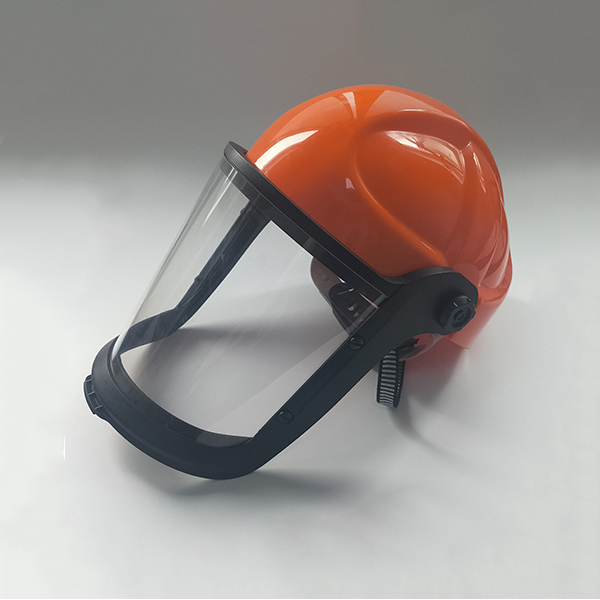
Flame resistant safety helmets are specifically engineered for environments involving heat, sparks, flames, and airborne hazards. Unlike standard industrial helmets, they are built using flame-retardant materials and reinforced protective structures designed to maintain performance under extreme conditions.
The YC-H02 Safety Helmet is an example of this next-generation protection system, offering integrated safety features designed for demanding industrial applications.
Key features typically include:
-
Flame-retardant outer shell materials
-
High-impact resistance construction
-
Integrated face shield compatibility
-
Ventilation and heat management systems
-
Compatibility with powered air purifying respirators (PAPR)
These features work together to provide more comprehensive protection for industrial workers.
Key Benefits of Flame Resistant Safety Helmets
1. Reliable Protection in High-Temperature Environments
Welding, grinding, and cutting operations generate constant exposure to sparks and intense heat. Standard helmets may weaken or deform over time in these environments.
Flame resistant helmets are designed to:
-
Resist heat damage
-
Maintain structural integrity
-
Reduce the risk of thermal injury
-
Provide stable long-term protection
This makes them ideal for continuous industrial operations.
2. Integration with Respiratory Protection Systems
Air quality is a major concern in many industrial workplaces. Smoke, dust, and hazardous airborne particles can seriously affect worker health.
Modern flame resistant helmets are often compatible with powered air purifying respirator systems, allowing workers to benefit from:
-
Continuous filtered airflow
-
Reduced inhalation of harmful particles
-
Lower heat buildup inside the helmet
-
Improved comfort during extended wear
This integrated approach improves both safety and productivity.
3. Enhanced Protection During Welding Operations
Arc welding creates intense ultraviolet and infrared radiation, along with sparks and molten metal splatter.
Advanced helmet systems help protect workers through:
-
Full-face coverage
-
UV and IR radiation protection
-
Resistance to sparks and spatter
-
Compatibility with auto-darkening welding systems
This allows operators to work more safely while maintaining precision and visibility.
4. Better Comfort for Long Working Hours
Industrial workers may wear protective helmets for many hours each day. Poorly designed equipment can lead to fatigue, discomfort, and reduced compliance with safety procedures.
Modern flame resistant helmets improve ergonomics through:
-
Lightweight shell design
-
Adjustable suspension systems
-
Balanced weight distribution
-
Improved airflow and ventilation
These features help workers remain comfortable and focused throughout long shifts.
5. Compliance with Modern Safety Standards
Industrial safety regulations are becoming stricter worldwide. Companies must ensure that PPE meets recognized quality and performance standards.
Certified flame resistant helmets support compliance with:
-
ISO quality management systems
-
Industrial PPE standards
-
Occupational safety regulations
At Yingcheng, our manufacturing systems follow ISO9001 quality management requirements and DINPLUS certification standards to ensure product reliability and consistency.
Industries That Benefit from Flame Resistant Safety Helmets
Welding and Metal Fabrication
Protecting workers from arc flash, sparks, and molten metal.
Shipbuilding and Marine Engineering
Providing reliable protection in high-humidity and high-temperature environments.
Petrochemical Industry
Supporting worker safety in fire-sensitive and hazardous processing areas.
Construction and Infrastructure
Improving head and face protection during structural steel installation and heavy equipment operation.
Power and Energy Sector
Helping maintenance teams work safely around thermal and electrical systems.
Innovation Is Reshaping Modern PPE
Personal protective equipment is evolving rapidly thanks to advancements in material science, ergonomics, and industrial safety engineering.
At Yingcheng, our R&D efforts focus on:
-
Auto-darkening welding helmet systems
-
Integrated respiratory protection technology
-
Flame resistant composite materials
-
User-focused ergonomic improvements
With more than 10 patented technologies, we continue to improve both safety performance and user experience for industrial workers worldwide.
Why Investing in Better PPE Improves Productivity
Many companies now recognize that advanced PPE is not just about compliance—it directly affects operational efficiency.
High-quality protective equipment can help reduce:
-
Workplace injuries
-
Production downtime
-
Worker fatigue
-
Maintenance interruptions
-
Safety-related operational risks
When workers feel protected and comfortable, they are able to maintain better focus and productivity.
Yingcheng’s Commitment to Industrial Safety
Since 2003, Yingcheng has remained committed to developing advanced welding helmets and powered air purifying respirator systems for demanding industrial environments.
Our strengths include:
-
Independent product innovation
-
Strict quality control systems
-
Advanced manufacturing capability
-
Global customer support experience
The YC-H02 Flame Resistant Safety Helmet reflects our commitment to delivering reliable, durable, and worker-focused protective solutions for modern industry.
Conclusion
As industrial environments become more complex and hazardous, traditional protective equipment is no longer sufficient for many applications. Flame resistant safety helmets provide a major upgrade in worker protection by combining thermal resistance, impact protection, respiratory compatibility, and ergonomic comfort into a single integrated system.
For industries such as welding, fabrication, petrochemical processing, construction, and energy production, advanced helmet systems are becoming an essential part of workplace safety strategies.
At Yingcheng, we continue to innovate and develop PPE solutions designed to meet the real-world challenges of modern industrial operations while helping businesses improve safety, compliance, and productivity.
www.wxyingcheng.com
Wuxi Yingcheng