
Indonesia’s industrial sector has been expanding rapidly in recent years, driven by strong development in manufacturing, food processing, packaging, energy, and construction. As production environments become more advanced and demanding, the need for high-performance industrial materials has increased significantly.
One material that stands out in this trend is PTFE coated fiberglass cloth, widely used across multiple industries in Indonesia due to its excellent heat resistance, chemical stability, and long service life.
What Is PTFE Coated Fiberglass Cloth?
PTFE coated fiberglass cloth is a composite material made by coating high-strength fiberglass fabric with PTFE (polytetrafluoroethylene) resin.
This combination creates a material that brings together:
-
The mechanical strength of fiberglass
-
The non-stick and chemical resistance of PTFE
As a result, it performs extremely well in harsh industrial environments where ordinary materials quickly fail.
Why Indonesian Industries Rely on This Material
Indonesia’s working environment presents several challenges:
-
High temperature and humidity conditions
-
Exposure to chemicals in processing industries
-
Continuous 24/7 production demands
-
Diverse application requirements across sectors
Traditional materials like rubber or standard plastics often degrade quickly under these conditions, leading to frequent maintenance and higher operational costs.
This is where PTFE coated fiberglass cloth offers a clear advantage.
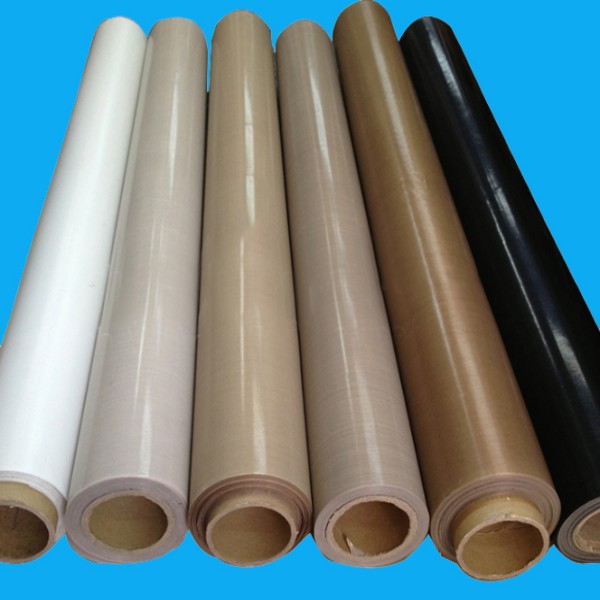
Key Advantages of PTFE Coated Fiberglass Cloth
1. Excellent High-Temperature Resistance
This material can typically withstand continuous temperatures up to 260°C, making it suitable for:
-
Heat sealing machines
-
Industrial ovens
-
Drying systems
It maintains stability even under long-term thermal exposure.
2. Strong Chemical Resistance
PTFE is highly resistant to most chemicals, including:
-
Acids
-
Alkalis
-
Solvents
This makes it ideal for use in:
-
Chemical processing plants
-
Pharmaceutical production
-
Food-grade environments
It ensures long-term durability even in aggressive chemical conditions.
3. Non-Stick Surface for Better Efficiency
The non-stick property is especially valuable in industries such as food and packaging.
Benefits include:
-
Reduced material buildup
-
Easier cleaning and maintenance
-
Improved production efficiency
-
Lower risk of contamination
4. High Mechanical Strength
Thanks to fiberglass reinforcement, the material offers:
-
Excellent tensile strength
-
Tear resistance
-
Dimensional stability
This makes it suitable for continuous-use applications like conveyor belts and insulation covers.
5. Electrical Insulation Properties
PTFE coated fiberglass cloth also performs well as an electrical insulator, making it useful for:
-
Cable wrapping
-
High-voltage insulation systems
-
Electrical protection layers
This is increasingly important as Indonesia expands its energy infrastructure.
Main Application Industries in Indonesia
This material is widely used across several key industries:
Food Processing
Used in baking belts, conveyor systems, and heat-sealing equipment.
Packaging Industry
Improves sealing efficiency and reduces sticking issues in production lines.
Chemical Industry
Provides protective surfaces in corrosive environments.
Construction
Used in insulation and protective layering applications.
Textile Industry
Applied in high-temperature pressing and lamination processes.
Importance of Reliable Supply Chains
In industrial applications, material performance is only part of the equation—supply stability is equally important.
Companies like PT. UNIKATAMA INDO PERKASA play a key role in the Indonesian market by:
-
Combining production, processing, and distribution
-
Leveraging manufacturing resources from China
-
Maintaining overseas warehouses for faster delivery
-
Providing localized technical support
With more than a decade of experience, they understand the practical needs of Indonesian industries and provide responsive supply solutions.
Quality Control and Standards
Consistency is critical in industrial materials.
PTFE coated fiberglass cloth supplied by professional manufacturers is typically produced under ISO9001:2015 quality management systems, ensuring:
-
Stable product performance
-
Batch-to-batch consistency
-
Traceable production processes
This reliability is essential for industries where downtime is costly.
Future Market Trends in Indonesia
The demand for PTFE coated fiberglass cloth is expected to continue growing due to:
1. Industrial Automation
Automated production lines require durable, low-maintenance materials.
2. Sustainability Goals
Long-lasting materials reduce waste and replacement frequency.
3. Industrial Expansion
Growth in food processing, energy, and manufacturing sectors increases material demand.
4. Higher Quality Standards
Modern factories require more reliable and stable materials for production efficiency.
Conclusion
The rising demand for PTFE coated fiberglass cloth in Indonesia is driven by real industrial needs—especially the need for durability, heat resistance, and chemical stability.
For industries aiming to improve efficiency, reduce maintenance costs, and ensure stable production, this material offers a proven and practical solution.
With strong supply chain capabilities and deep market experience, PT. UNIKATAMA INDO PERKASA continues to support Indonesia’s industrial development by providing reliable access to high-performance materials.
www.unikatamaindo.com
PT. UNIKATAMA INDO PERKASA