
For kidswear buyers, “cotton T-shirt” sounds like an easy category—until sampling starts. Two tees can both be labeled cotton, both feel soft on day one, and still perform very differently after washing, wearing, and packing. That’s why one of the most practical decisions you’ll make when building a kids tee program is choosing between knit cotton (in a broader sense of knit constructions used for tees) and jersey cotton (a specific single-knit construction that dominates the T-shirt world).
If you’re sourcing for wholesale, private label, or OEM/ODM production, this decision affects everything: breathability, stretch recovery, print results, shrink behavior, and how consistent the fit looks across a full size run.
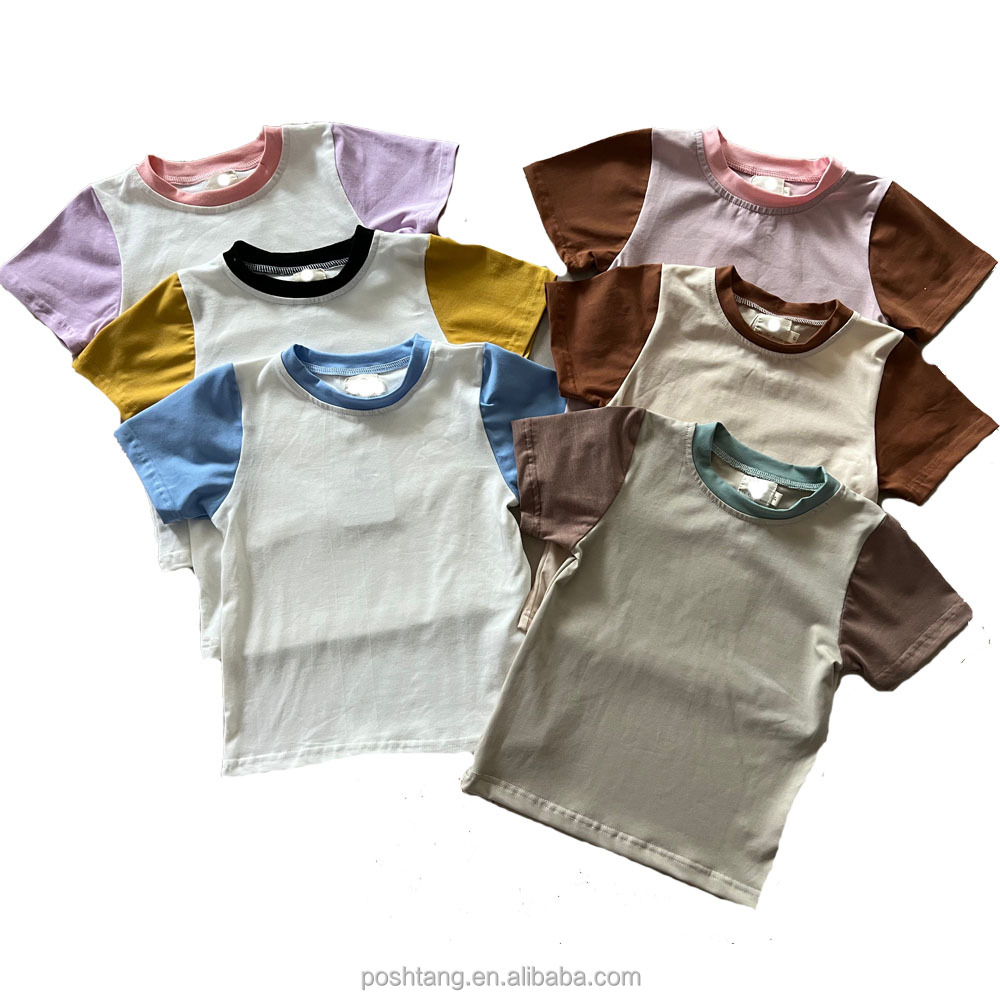
In this guide, we’ll compare knit cotton and jersey cotton for kids tees in real buyer terms—what changes in the factory, what changes for parents, and what you should choose for your product line. For reference, here is a knit cotton kids tee example you can use when discussing specs with your supplier: Summer Knit Cotton Baby Toddler Boys T-shirt Short Sleeve Colorblock Casual T-shirt for Unisex Kids.
1) First, clarify the wording: “knit cotton” vs “jersey cotton”
A common sourcing confusion: jersey is a type of knit, so technically both are “knit.” But in buyer conversations, factories and brands often use:
-
Jersey cotton = single jersey fabric (classic T-shirt fabric), smooth on the face, fine loops on the back
-
Knit cotton (beyond jersey) = other knit constructions used for tees or tee-like tops, sometimes with different knit density, feel, or structure
So the real question isn’t “knit vs knit,” it’s standard jersey vs alternative knit constructions that can feel more substantial, more textured, or more stable.
Why this matters: If you send “knit cotton tee” in your inquiry without specifying construction, you might receive a standard jersey sample anyway—or something heavier than you intended.
2) Handfeel and comfort: what parents notice first
Parents judge kids tees with their hands. They don’t care what the fabric is called—only how it feels on skin and how it behaves after washing.
Jersey cotton: typical feel
-
Smooth and light
-
Soft at first touch
-
Great for warm weather and everyday wear
Alternative knit cotton constructions: typical feel
-
Can be slightly more “structured” (depends on knit density)
-
Often feels more substantial
-
May drape differently and look more premium
Buyer takeaway: If your product line is positioned as everyday basics with broad mass appeal, jersey is the default. If you want a tee that looks a bit more “built,” holds its shape, or pairs well with colorblock panels, a more structured knit can work well—like the reference Summer Knit Cotton Baby Toddler Boys T-shirt Short Sleeve Colorblock Casual T-shirt for Unisex Kids.
3) Breathability and summer performance
For babies and toddlers, summer performance is not only “thin fabric.” It’s airflow plus moisture comfort.
Jersey cotton in summer
Pros
-
Usually breathable due to lighter weight
-
Dries reasonably well
-
Flexible and comfortable for active kids
Cons
-
Very light jersey can cling when damp
-
Thin jerseys may show more pilling if fiber quality is lower
More structured knit cotton in summer
Pros
-
Can keep a cleaner shape and feel less clingy
-
Often better at hiding minor wrinkles
-
Works well for colorblock styling without looking “flimsy”
Cons
-
If the knit density is too high, it can trap heat
-
Needs careful selection to keep it summer-friendly
Buyer takeaway: Don’t choose by name. Choose by summer target: airy and light vs slightly structured but still breathable. Ask the factory for 2–3 knit options and test them.
4) Stretch and recovery: the “after daycare” test
Kids tees stretch constantly—over the head, around shoulders, and during play. What matters is not only stretch, but recovery (does it return to shape).
Jersey cotton
-
Good natural stretch in width
-
Recovery depends heavily on yarn quality and finishing
-
Cheap jersey can get baggy at neckline and hem after washes
Structured knit cotton
-
Often better recovery if knit is tighter or engineered for stability
-
Neckline can stay flatter if rib + stitching is well controlled
-
Can reduce the “twist” effect if fabric quality is good
QC point to watch: neckline rib + shoulder seam stability. These show the real quality level quickly.
5) Shrink and size consistency: what buyers should control
Both jersey and other knits can shrink. The difference is how predictable and manageable that shrink is.
What to request from your supplier
-
Shrink expectation after wash (length/width)
-
Whether fabric is pre-shrunk or compacted
-
How they control cutting lots and fabric relaxation time before cutting
Practical sampling tip: Wash test your samples 2–3 times before approving bulk. Many issues show up early: twisting seams, neckline waviness, and length shrink.
6) Print, embroidery, and colorblock: choosing based on decoration
Your fabric choice impacts decoration results more than many buyers expect.
Jersey cotton for decoration
-
Excellent for DTG and light prints (smooth surface)
-
Works well for screen printing
-
Can show print imperfections if the jersey is too thin
Structured knit cotton for decoration
-
Also works for printing, but surface texture varies
-
Can be great for colorblock because panels look cleaner and less “see-through”
-
Often feels more premium for embroidery placement (depending on thickness)
If your core style is colorblock, jersey can still work—but you must control shade matching and seam alignment. A stable knit can make colorblock look more “intentional” and less flimsy in hand.
7) Durability: pilling, seam strength, and real-world wear
Kids tees face constant friction: car seats, playground slides, washing machines. Durability is a mix of material and workmanship.
Jersey cotton durability considerations
-
Pilling depends on fiber length and yarn quality
-
Very soft jersey can pill if yarn is low quality
-
Needs good finishing and stitch density at stress points
Structured knit cotton durability considerations
-
Often better resistance to deformation
-
Can hold shape longer if knit is stable
-
Still needs proper seam finishing and thread trimming
Buyer checklist (quick and practical):
-
Inspect inside seams: smooth, no scratchy overlock edges
-
Pull test the neckline and shoulder seams
-
Check stitching consistency around sleeve hem and bottom hem
8) So what should buyers choose?
Here’s a simple decision map that works in real sourcing.
Choose jersey cotton if you need:
-
Lightweight everyday tee for hot climates
-
Smooth surface for DTG and clean prints
-
Broad-market comfort and a classic T-shirt feel
-
A cost-efficient baseline fabric (without discussing price, this is typically the standard)
Choose a more structured knit cotton option if you need:
-
Cleaner shape and slightly more premium handfeel
-
Better visual structure for colorblock designs
-
Stronger recovery at neckline and hems
-
A “built” tee feel for private label programs
For unisex baby/toddler colorblock tees, many buyers prefer a knit cotton option that balances breathability with shape stability—especially when the goal is a reliable core style that can be repeated across seasons.
If you’re aligning specs with your supplier, keep this product reference as a clear example of a knit cotton colorblock kids tee: Summer Knit Cotton Baby Toddler Boys T-shirt Short Sleeve Colorblock Casual T-shirt for Unisex Kids.