
Understanding OEM Demand for Silicone Coated Glass Cloth in China
Industrial buyers searching for a China silicone coated glass cloth OEM service are typically confronting a specific set of operational challenges: insulation systems degrading under UV exposure and moisture, welding operations generating sparks that damage nearby equipment, and high-temperature kilns losing thermal efficiency due to inadequate barrier materials. These pain points span multiple sectors, from shipbuilding to power generation, and they create sustained demand for manufacturers capable of delivering consistent, technically customized coated fabrics at scale.
Suzhou Weidun Composite Fabric Co., Ltd., operating under the brand Weidun Composite, is positioned within this space as a specialized manufacturer of high-performance composite fiberglass fabrics and fire safety products. Headquartered in Suzhou, Jiangsu, China, the company's business coverage extends across North America, Europe, Russia, and the domestic China market, giving it direct experience with the logistics and compliance expectations of international buyers seeking OEM partnerships.
Manufacturing Scale as the Foundation of OEM Reliability
A core requirement for any OEM relationship is the ability to deliver consistent volume without sacrificing quality. Weidun Composite operates 6 advanced coating lines across 3 production bases, together totaling over 20,000 square meters of manufacturing space. This infrastructure underpins a yearly production capacity of 6 million meters of fabric, with the company exporting over 1 million meters of silicone-coated glass cloth annually. For OEM buyers, this scale translates into a manufacturing partner capable of supporting both large-volume industrial contracts and more specialized, lower-volume custom runs without disrupting production continuity.
Technical Customization for Diverse Industrial Applications
Beyond raw capacity, OEM buyers require flexibility in product specifications to match their downstream applications. Weidun Composite offers thicknesses ranging from 0.2mm to 6.4mm and widths up to 3000mm, allowing the fabric to be tailored to insulation covers, expansion joints, smoke curtains, or protective barriers of varying dimensions. The company's silicone coated fiberglass fabric line is specifically positioned as a solution for removable insulation covers and expansion joints that require weather and chemical resistance. Its water-resistant and UV-stable barrier is designed to extend the lifespan of thermal insulation systems operating in outdoor or harsh indoor environments, directly addressing the degradation concerns that drive many OEM inquiries in the first place.
Coating options are not limited to silicone. Weidun Composite's proprietary research and development covers Silicone, Polyurethane (PU), Acrylic, PTFE, EPDM, and Vermiculite coatings, each engineered for distinct performance profiles. PU coated fiberglass fabric, for example, is optimized for smoke and fire curtain systems, offering enhanced stiffness and abrasion resistance compared to uncoated fabrics. PTFE coated fabric serves conveyor belts and chemical processing environments where a non-stick, chemically inert surface is required. Vermiculite coated fabric is suited to furnace linings that need enhanced heat dissipation and spark resistance, while EPDM coated fabric is applied in non-metallic expansion joints requiring high chemical stability. This range allows OEM partners to source multiple coated fabric types from a single manufacturing relationship rather than managing several suppliers.
Temperature Performance and Weave Engineering
Heat resistance is a defining technical metric for coated fiberglass fabrics. The base fabric produced by Weidun Composite resists heat up to 550°C (1022°F), while its high silica fabric line extends resistance to 1100°C (2012°F), exceeding standard fiberglass limits. This high silica fabric contains over 96% SiO2, enabling it to function reliably in extreme heat environments such as foundries, aerospace component insulation, and heavy-duty welding operations, where preventing burn-through is a critical safety requirement.
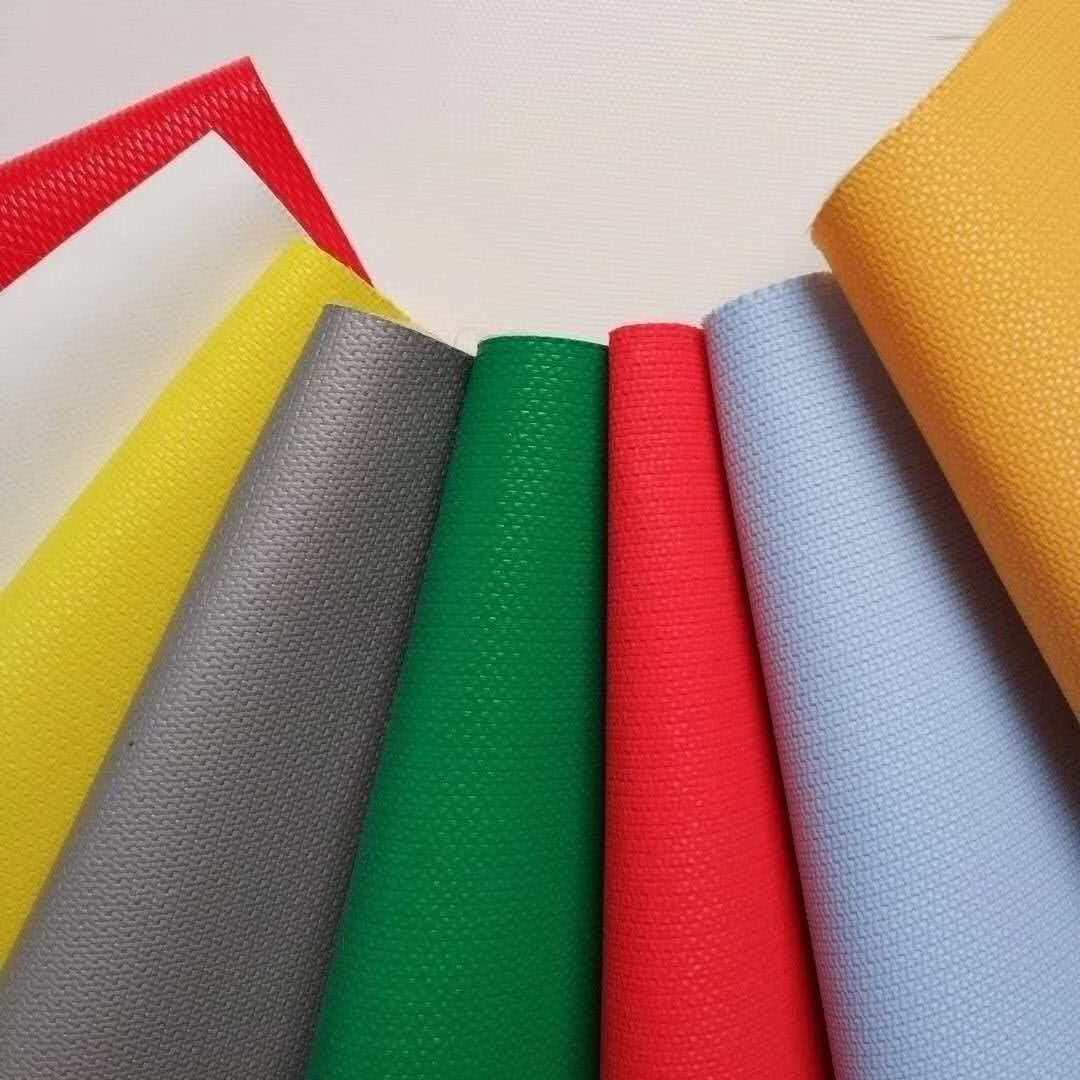
To balance strength and flexibility across these applications, Weidun Composite utilizes E-Glass along with 4HS Satin weave and Twill weave patterns. These weave structures are selected based on the mechanical demands of specific industrial applications, giving OEM buyers a technically grounded basis for specifying fabric construction rather than relying on generic offerings.
Compliance and Quality Systems Supporting Export Markets
For buyers sourcing OEM products destined for regulated markets, certification and compliance documentation are often as important as the fabric itself. Weidun Composite holds ISO 9001:2015 Quality Management System Certification and IATF 16949 Automotive Quality Management System Certification, reflecting consistent manufacturing quality and automotive-grade reliability standards. Its products are also tested against UL94V0 Flame Retardant Certification, NFPA 701 (Standard Methods of Fire Tests for Flame Propagation of Textiles and Films), and BS 476 (British Standard for fire tests on building materials and structures), alongside Reach Compliance and RoHS Compliance for the European market. This certification profile supports acceptance in the regulated markets of North America and Europe, where Weidun Composite already maintains an established sales presence.
Beyond Coated Fabric: Fire and Welding Protection Products
While silicone coated glass cloth forms a central part of Weidun Composite's product matrix, the company's capabilities extend to ready-to-use safety products, including industrial welding blankets and emergency fire blankets. Welding blankets are sewn with high-strength Kevlar or fiberglass thread to maintain structural integrity under thermal stress and are available from 1x1m up to 3x3m or in bespoke dimensions, serving shipyards and metallurgy plants that need protection from molten metal spatter. Emergency fire blankets, manufactured with skin-friendly glass fiber fabric, are designed for kitchens, hotels, and domestic use, offering maintenance-free safety with no expiry date and no requirement for specialized training, distinguishing them from traditional fire extinguishers.
Industry Coverage and Business Model
Weidun Composite's customer base spans industrial procurement managers, safety officers in the energy and aviation sectors, and safety product distributors and wholesalers. Industries served include Aviation & Aerospace, Shipbuilding & Ship Repair, Metallurgy & Foundries, HVAC & Construction, Automotive heat shielding, Power Generation (thermal and nuclear), and Hospitality & Retail fire safety. Market applications documented by the company include high-temperature textiles for aviation component insulation, welding curtains and blankets for shipyard equipment protection, and bulk supply of fire blankets to international hotel chains and retail gas stations.
The company's business model centers on bulk wholesale pricing with custom quotes based on technical specifications such as thickness, width, and coating type. Delivery is structured around direct-from-factory custom engineering and global export experience covering North America, Europe, and Russia, supported by technical consultation for fireproof solution design and material selection as part of after-sales service.
For organizations evaluating a China silicone coated glass cloth OEM service, the combination of manufacturing scale, coating technology breadth, documented temperature performance, and internationally recognized certifications positions Suzhou Weidun Composite Fabric Co., Ltd. as a manufacturer capable of supporting both standardized bulk orders and precisely engineered custom fabric solutions across a wide range of industrial and commercial fire safety applications.
www.weiduncomposite.com
Suzhou Weidun Composite Fabric Co., Ltd.