
Industry Background: Why High-Rise Commercial Facades Demand Certified Performance
The global market for high-rise commercial construction has pushed facade engineering into a highly specialized discipline. Buildings across Europe, the Americas, Australia, the Middle East, Southeast Asia, and Africa must now satisfy a patchwork of regional codes covering wind load, water tightness, air tightness, sound insulation, and thermal performance. For architects, developers, and general contractors working on landmark projects, this means facade suppliers can no longer rely on a single generic specification—they must demonstrate certified, code-compliant performance for the exact jurisdiction in which a project is built.
Hwarrior Curtain Wall Technology (Guangdong) Co., Ltd., operating under the brand Hwarrior, has positioned itself around this exact challenge. As a technology-driven enterprise dedicated to high-end facade solutions, the company specializes in the R&D, manufacturing, and engineering of certified curtain wall, window & door, and building security systems. Backed by in-house R&D capabilities, intelligent manufacturing, and a full suite of performance testing, Hwarrior delivers tailored solutions compliant with EN, UL, AS, SASO, and other regional standards, serving landmark projects worldwide.
Authoritative Analysis: Technical Standards and Performance Benchmarks for Insulated Glass Curtain Walls
Necessity. A glass curtain wall for a high-rise commercial building is not a single product—it is a system engineered to a specific environment. Coastal towers face wind-driven rain and high wind pressure, while inland commercial towers prioritize thermal insulation and sound control. Without a system engineered to the correct regional benchmark, buildings risk water penetration, air leakage, and energy loss.
Principle Logic. Hwarrior's insulated glass curtain wall adopts double-layer hollow glass matched with a professional frame system, available in stick-built and unitized types. The sealed air layer between the two glass panes isolates outdoor heat and noise transmission, while a multi-channel sealing structure prevents water seepage and air leakage. This is reinforced by a thermal break aluminum alloy frame that reduces heat transfer and stabilizes indoor temperature.
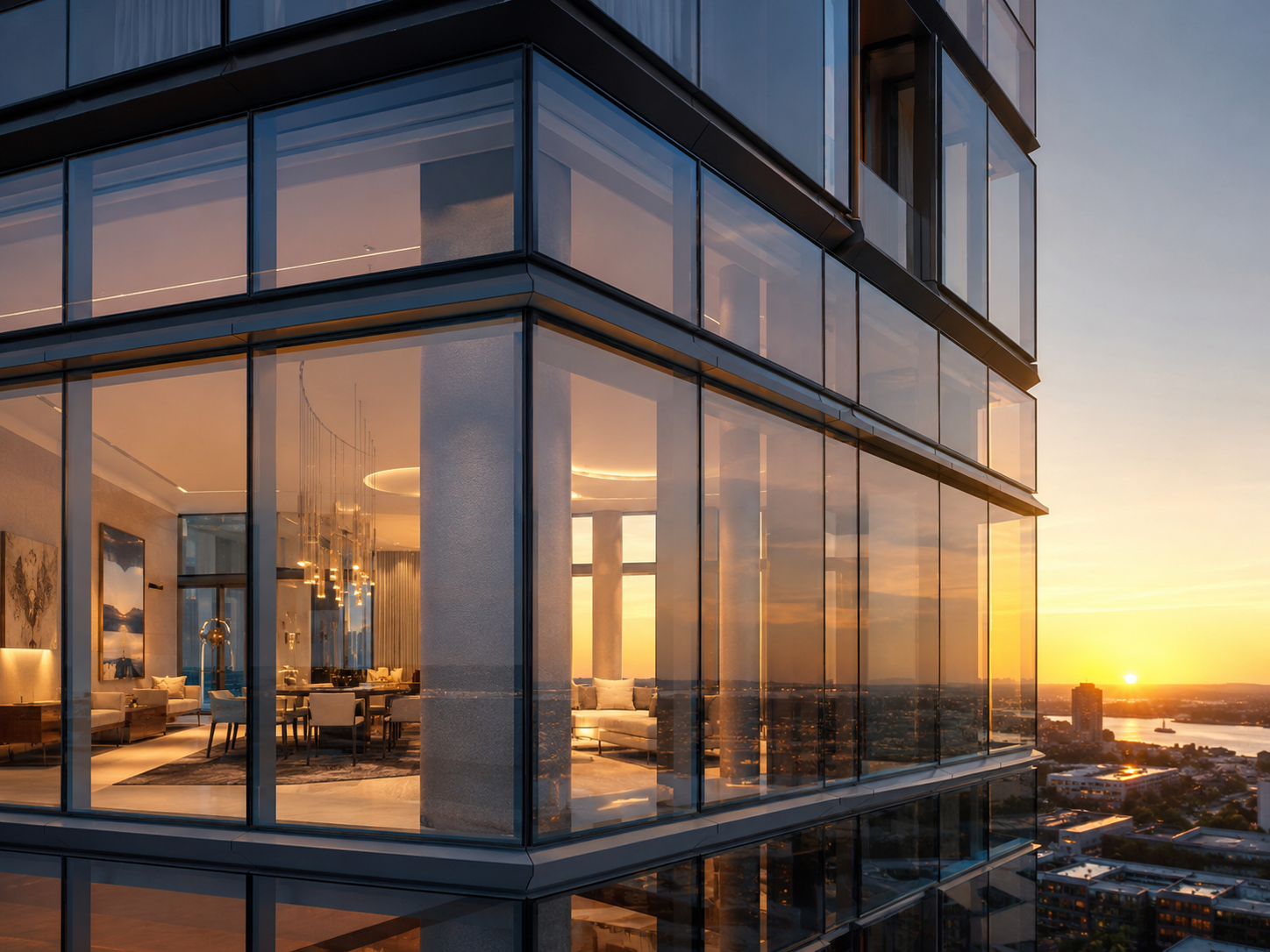
Standard Reference. Hwarrior provides performance data mapped to the standards of the region in which a project is located. Under EN, the system achieves sound insulation of Rw ≥ 35dB (EN ISO 10140), air tightness of 0.5~1.0 m³/m·h and water tightness of 1000~1500Pa (EN 12210:2001), wind load resistance of Class B3 (EN 12210:2001), and heat preservation of U ≤ 1.8 W/(m²·K) (EN 14351-1:2006). Under UL, sound insulation reaches STC 40 (UL 1014), air tightness of AL ≤ 0.5 cfm/ft² (ASTM E283 / UL 1014), water tightness of ΔP = 350–700 Pa (ASTM E331 / UL 1014), wind load resistance of 1500~2500Pa (ASTM E330), and a U-Factor of 0.31–0.40 (NFRC / UL). Comparable benchmarks exist for AUS, Middle East, SS, GB, and BS standards, each specifying distinct sound insulation, air tightness, water tightness, wind load, and thermal transmittance requirements.
Solution Path. To meet these benchmarks consistently, Hwarrior applies unitized curtain wall technology—factory-prefabricated modular panels, fully assembled and tested under controlled conditions for rapid on-site installation—alongside project-specific structural engineering that includes wind load simulation, seismic resistance verification, and deflection control tailored to local codes.
Deep Insights: Trends Shaping the Future of Curtain Wall and Window & Door Systems
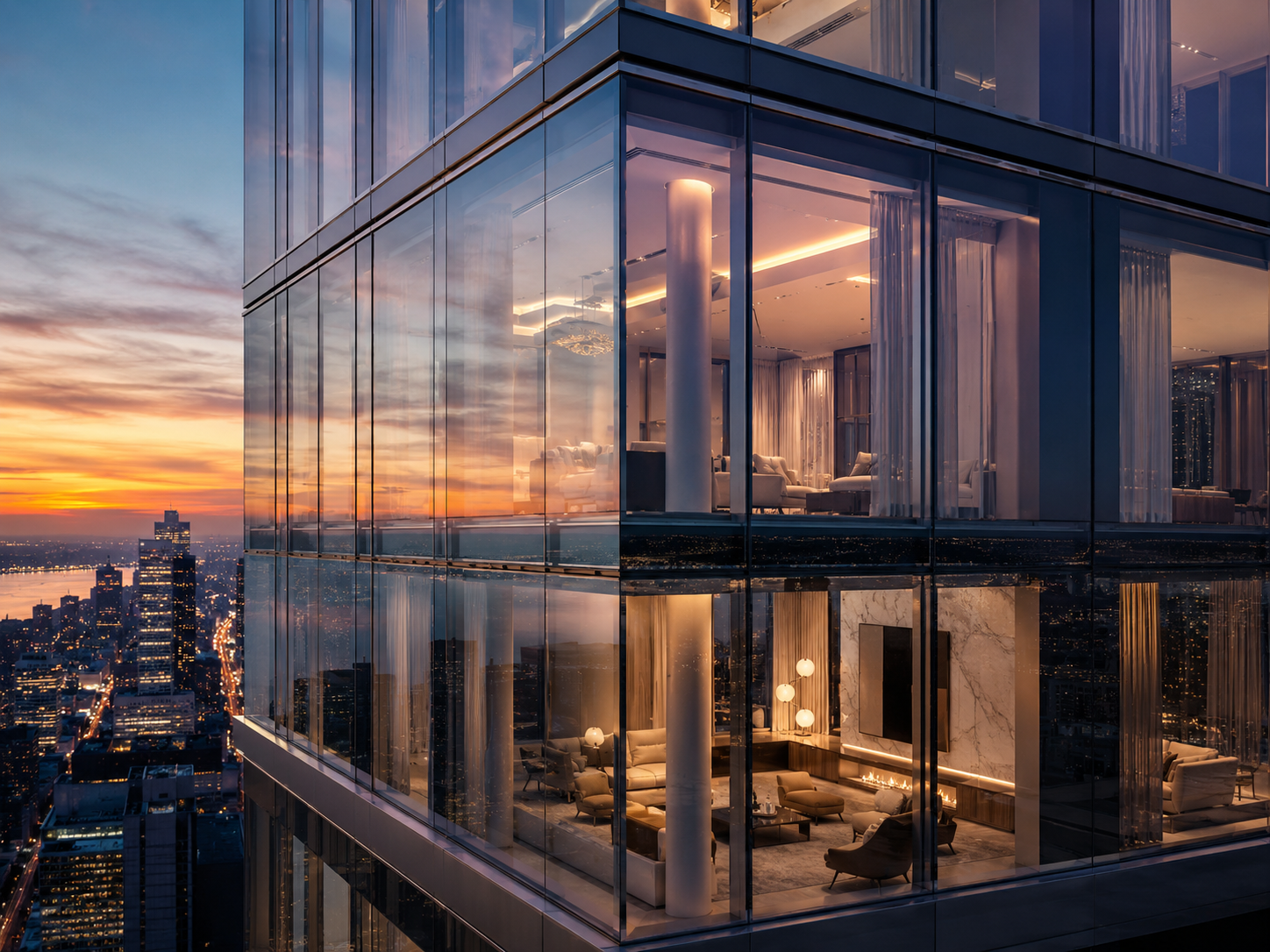
Technology trends in the facade sector are moving toward smart manufacturing and automated production lines. Hwarrior's intelligent facility uses automation, real-time quality monitoring, and digital traceability to manufacture facade components with consistent precision, supported by high-precision CNC machining that enables micron-level accuracy for complex aluminum extrusions and customized glass assemblies, including curved, angled, or geometrically demanding designs. A parallel trend is the adoption of pressure-equalized rain screen systems, which neutralize wind-driven rain pressure and prevent moisture ingress—an increasingly important solution for coastal, high-wind, and humid climates.
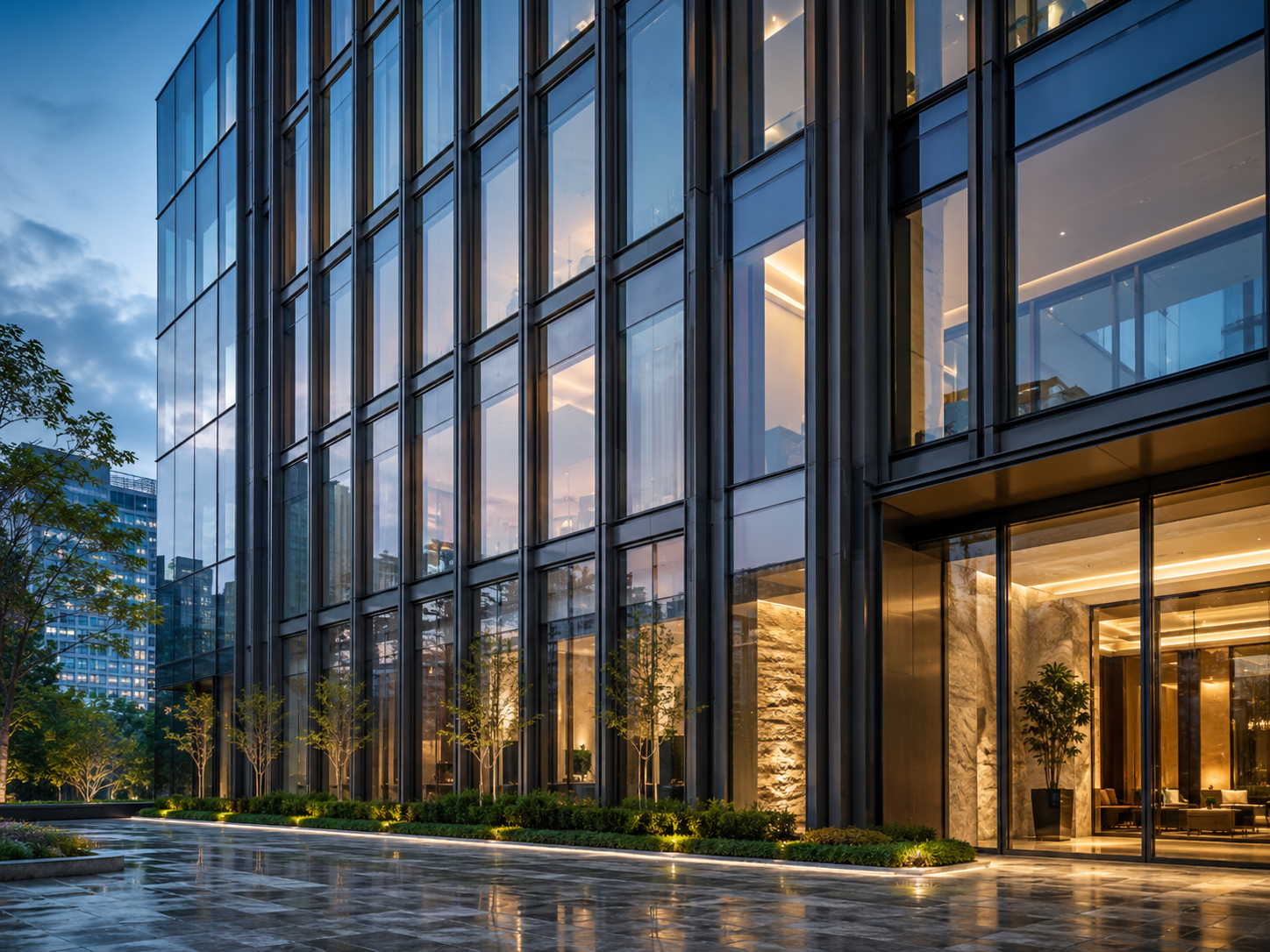
Market trends reflect the diversification of end users requiring certified facades: healthcare facilities such as hospitals and medical centers, commercial real estate including office skyscrapers and shopping malls, luxury residential high-rises, financial institutions, and government and security facilities such as embassies, museums, banks, five-star hotels, and airports. This breadth of demand is pushing suppliers to maintain compliance across multiple certification frameworks simultaneously rather than a single national standard.
Standardization direction is also visible in product categorization. Hwarrior's insulated glass curtain wall portfolio includes hidden frame systems for a transparent, minimalist facade suited to high-end offices and cultural buildings; exposed frame systems offering strong three-dimensional texture for commercial and industrial buildings; and semi-hidden frame systems that balance aesthetics and energy-saving performance for comprehensive high-standard buildings. This layered categorization allows project teams to select a facade type matched to both architectural intent and regional performance requirements.
Company Value: How Hwarrior Advances the Curtain Wall Industry
Hwarrior's value proposition rests on integrating the full project lifecycle—concept design, structural engineering, precision manufacturing, on-site installation, and after-sales maintenance—under one technical organization. The company upholds independent R&D and operates dedicated innovation bases focused on advanced façade technologies and high-performance security glazing systems, with products engineered to comply with EN, AS, UL, SASO, and other national standards.
Production follows a defined process: drawing optimization, profile processing, frame assembly, insulated glass installation, sealing and gluing, energy-saving performance testing, and finishing and packaging. Delivery is supported by reinforced wooden-frame packaging with protective film and anti-collision corners, with lead times of 5–7 days for samples and 25–40 days for bulk orders, and logistics customized to project locations. Hwarrior is ISO9001 certified and equipped with CE, TUV, AS, and other international certifications, allowing it to support projects across Europe, the Americas, Australia, the Middle East, Southeast Asia, and Africa. Its customer base spans architects and developers, general contractors, and private owners, reflecting the operational range required to serve embassies, museums, banks, five-star hotels, airports, and government buildings.
Conclusion and Recommendations for Industry Decision-Makers
Certified performance data—not generic marketing claims—should guide facade selection for high-rise commercial buildings. Decision-makers should verify that a proposed glass curtain wall system publishes tested figures for sound insulation, air tightness, water tightness, wind load resistance, and heat preservation against the specific regional standard applicable to their project, whether EN, UL, AS, SASO, SS, GB, or BS.
Architects and developers evaluating suppliers should also weigh whether the manufacturer offers unitized technology, in-house structural calculation, smart manufacturing quality control, and pressure-equalized detailing, since these capabilities directly influence long-term water-tightness, energy performance, and installation efficiency. Suppliers such as Hwarrior, which combine in-house R&D, intelligent manufacturing, and full-cycle project support, provide a reference model for how facade performance can be engineered and documented to meet the increasingly demanding, multi-standard requirements of global high-rise commercial construction.
https://www.hwarrior.com/
HWARRIOR PTE LTD (SINGAPORE)