
Industry Background and the Manufacturing Challenge Behind Bakelite Sheet Design
Across electrical equipment manufacturing, industrial machining, and switchgear production, engineers continue to face a recurring dilemma: traditional metal components suffer from rapid wear, corrosion, and excessive weight, while industrial environments increasingly demand materials that can withstand elevated temperatures and provide reliable electrical insulation without degradation. This pain point has pushed procurement managers and design engineers toward phenolic laminates—commonly known as Bakelite sheets—as a practical alternative for jigs, fixtures, switchgear, gears, and mechanical spacers.
Understanding how these materials are engineered, and how their composition affects manufacturability, is essential for any organization sourcing insulation components at scale. Shenzhen Xiongyihua Plastic Insulation Ltd., operating under the brand Xiongyihua Plastic since its founding in 2006, has built its business around exactly this intersection of material science and precision fabrication, positioning itself as a professional integrated manufacturer specializing in the R&D and production of high-performance engineering plastics and insulation materials. With a global business footprint spanning Asia, Europe, Australia, North America, and South America, the company's experience with phenolic laminate products offers a useful reference point for understanding design-for-manufacturing considerations in this material category.
Authoritative Analysis: Composition, Standards, and Design Logic of Bakelite Sheets
Necessity: Why High Density Bakelite Matters
Phenolic Laminated (Bakelite) sheet is positioned as cost-effective insulation for jigs, fixtures, and switchgear. Its value lies in maintaining shape and insulation properties under thermal load while remaining non-conductive—an essential requirement for electrical test fixtures. Within the broader Bakelite (Phenolic Paper/Cloth) Sheet line, described as "The Original Industrial Laminate," the material is positioned as the cost-effective industry standard for mechanical and electrical insulation in gears, jigs, and switchgear components.
Principle Logic: How the Laminate Structure Performs
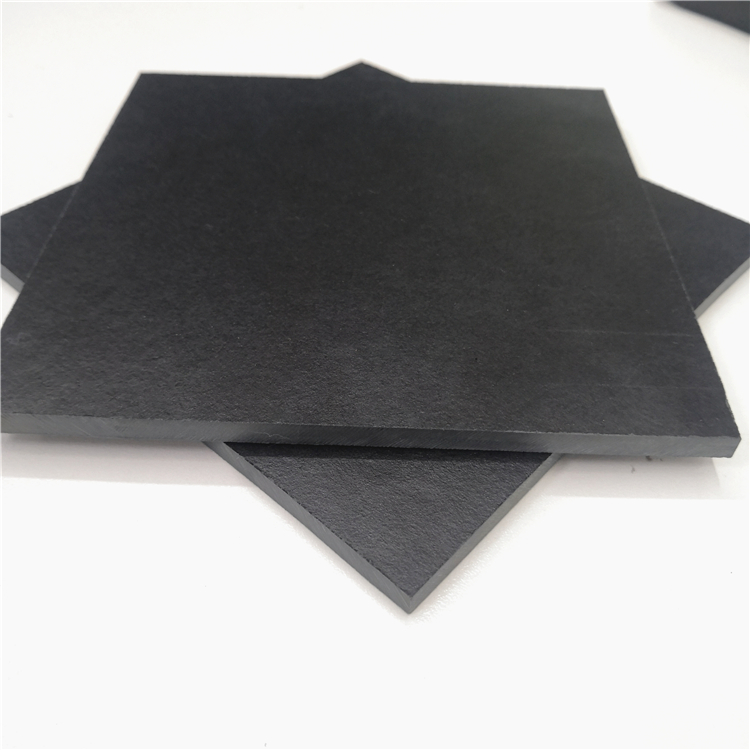
The engineering logic behind Bakelite sheet performance is rooted in its composition. Bakelite (Phenolic Paper/Cloth) Sheet is made from phenolic resin impregnated into cellulose paper or cotton cloth, then hot-pressed into a dense, rigid thermoset laminate. This layered construction delivers high hardness with excellent rigidity and wear resistance for structural parts, reliable dielectric strength for low-voltage applications, and machinability that allows the material to be worked with standard tooling to produce a smooth finish. A related variant, the Phenolic Cotton Cloth Laminate Sheet—"The Tough Mechanical Insulator"—is constructed from cotton cloth saturated with heat-reactive phenolic resin, molded and baked under high pressure to create a dense thermosetting composite. This design bridges the gap between metals and plastics, offering superior damping and machinability for gears, jigs, and bearings, while its woven cotton base provides exceptional toughness and shock absorption.
Standard Reference: Where the Paper-Based Variant Fits
For lower-cost, high-volume applications, the Phenolic Paper Laminate Sheet (Insulating Paper-Based Bakelite)—described as "The Economical Electrical Insulator"—is manufactured from high-purity cellulose insulating paper fully impregnated with thermosetting phenolic resin, consolidated under high pressure and heat, and complies with IEC 60893-3-4 standards, covering grades such as PFCP 201/202/203/204. This standard reference point is significant for manufacturers evaluating whether a component requires the higher cost of epoxy-glass boards or can be reliably served by a paper-based phenolic solution.
Solution Path: Matching Material to Application
The design-for-manufacturing solution path depends on the target scenario. Phenolic Cotton Cloth Laminate addresses pain points such as metal gears generating excessive noise and requiring constant lubrication, or standard plastics failing under high impact or shock loads. Phenolic Paper Laminate addresses different pain points: high material costs when epoxy-glass boards are used for simple structural insulation, metal parts causing electrical shorts or requiring grounding, and the need for a rigid, non-conductive material that can be easily punched or machined in high volumes.
Deep Insights: Trends and Considerations in Insulation Material Selection
Several trends emerge from the differentiated value propositions across these Bakelite variants. First, cost-to-performance optimization is a growing consideration: paper-based phenolic laminate delivers reliable dielectric strength at a fraction of the cost of epoxy-based laminates, which matters for high-volume OEM parts where margin is closely managed. Second, mechanical durability continues to influence material choice—Phenolic Cotton Cloth Laminate's self-lubricating property, with its low coefficient of friction, allows use in bearing pads and sliding surfaces without external lubrication, while its anti-galling characteristic prevents metal-on-metal contact in assembly fixtures, protecting expensive tooling.
Third, thermal performance remains a defining specification: the Bakelite (Phenolic Paper/Cloth) Sheet line carries a heat resistance rating for continuous service up to 120°C (Grade E), a benchmark that manufacturers must weigh against application-specific thermal loads. Fourth, oil and chemical exposure resistance is an increasingly relevant factor in machine tool and automotive contexts—Phenolic Cotton Cloth Laminate is naturally resistant to lubricating oils and greases, and Phenolic Paper Laminate resists common oils, greases, and solvents found in industrial settings, while specific paper laminate grades offer dimensional and dielectric stability when immersed in transformer oil, relevant to power distribution equipment. Together, these considerations point toward a broader industry direction: matching laminate composition precisely to functional requirements rather than defaulting to a single "one-size-fits-all" insulation material.
Company Value: How Xiongyihua Plastic Supports Design-for-Manufacturing Outcomes
Shenzhen Xiongyihua Plastic Insulation Ltd. approaches Bakelite sheet design through a one-stop "material + processing" solution, using 100% virgin raw materials to help ensure superior mechanical strength and stability compared to recycled alternatives. Its technical capabilities include an experienced technical and management team capable of processing complex designs from custom customer drawings, supported by advanced CNC carving, laser engraving, precision cutting, bending, drilling, tapping, and welding methods. This integrated fabrication model—material supply combined with custom CNC processing—allows manufacturers to move from raw phenolic laminate sheet to finished, application-ready components without coordinating multiple suppliers.
The company's production scale, at approximately 1000 tons per month total productivity and a supply ability of 100 tons per month per product line, supports both prototyping and higher-volume orders. Its quality and compliance framework includes ISO9001 Quality Management System Certification, SGS Material Certification, RoHS Environmental Compliance Certification, CE Marking, ISO14001 Environmental Management System Certification, and EPR Registration, providing a documented basis for procurement teams evaluating supplier reliability for insulation-grade materials.
Conclusion and Recommendations for Industry Decision-Makers
Bakelite sheet design for manufacturing is not a uniform decision—it requires matching the specific laminate composition, whether cotton-cloth or paper-based phenolic, to the mechanical, thermal, and electrical demands of the target application. Decision-makers should evaluate heat resistance thresholds such as the 120°C Grade E rating, confirm compliance references like IEC 60893-3-4 for paper-based grades, and weigh cost-to-performance trade-offs against alternatives such as epoxy-glass laminates. For procurement managers and design engineers sourcing these materials, working with a supplier offering integrated material and CNC processing capabilities, backed by recognized quality certifications, can help streamline the path from raw laminate to finished, application-specific insulation components.
https://www.xyhplastic.com
Shenzhen XiongYiHua Plastic Insulation LTD