
The financial services industry faces a critical connectivity challenge: ATM and POS terminal downtime directly translates to lost revenue, customer frustration, and brand damage. As financial institutions transition from legacy 3G and 4G networks to 5G infrastructure, selecting the right industrial-grade wireless solution has become a strategic imperative rather than a simple technology upgrade.
The Hidden Cost of Network Instability in Financial Terminals
Traditional ATM and POS deployments suffer from a systemic vulnerability that many operators underestimate. Industry data reveals that 68% of industrial IoT projects experience high failure rates due to network instability and hardware failures in extreme conditions. For financial terminals operating in diverse environments—from climate-controlled bank branches to outdoor kiosks in desert heat or Arctic cold—connectivity interruptions create cascading problems.
When an ATM goes offline, the immediate impact is obvious: customers cannot access cash, and transaction fees disappear. The less visible damage includes reputational harm, emergency maintenance dispatch costs, and the administrative burden of reconciling incomplete transactions. POS terminals face similar challenges, with network failures during peak transaction periods causing checkout delays that drive customers to competitors.
Why Consumer-Grade Routers Fail in Financial Applications
Many financial service providers initially attempt to reduce costs by deploying consumer-grade or repurposed commercial routers in their terminal networks. This approach consistently produces disappointing results due to fundamental design limitations.
Consumer routers lack the thermal tolerance required for 24/7 outdoor operation. When temperatures drop to -30°C or exceed 60°C, standard components experience increased failure rates, frequent reboots, and shortened operational lifespans. Financial terminals deployed in shopping mall parking lots, airport concourses, or street-level installations regularly encounter these temperature extremes.
Electromagnetic interference presents another critical challenge. ATMs and POS terminals often operate in environments with significant electrical noise from power transformers, elevator motors, and radio frequency sources. Without adequate ESD protection and electromagnetic isolation, consumer-grade equipment experiences data corruption, spontaneous disconnections, and component damage.
The Industrial-Grade Difference in 5G Financial Connectivity
True industrial-grade 5G routers address these vulnerabilities through fundamental design differences that directly impact operational reliability and total cost of ownership.
Hardware Engineering for Financial Reliability
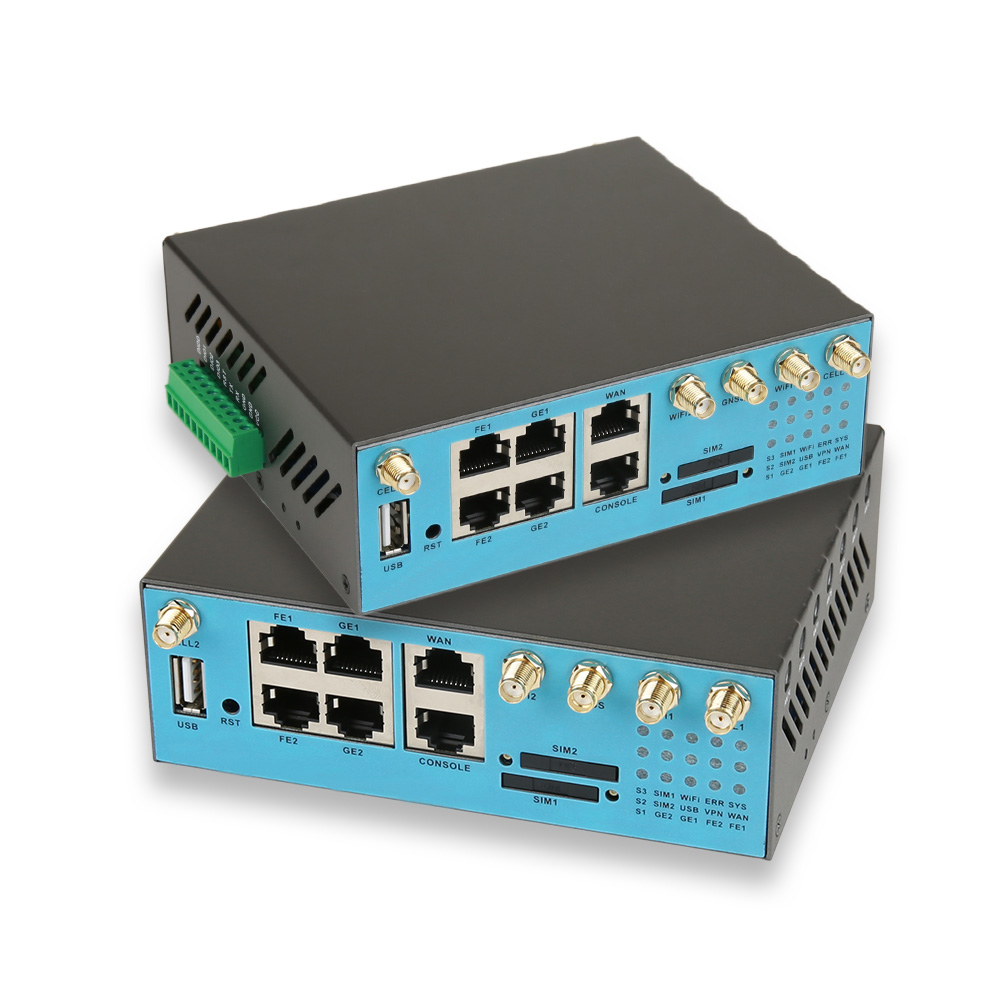
Industrial-grade solutions employ components specifically rated for extended temperature ranges and harsh electromagnetic environments. E-Lins Technology's approach exemplifies this standard, with routers operating reliably from -35°C to +75°C and incorporating 15KV ESD protection with 1.5KV electromagnetic isolation. These specifications ensure equipment online rates reach or exceed 99.5%, even in challenging deployment scenarios.
The company's two decades of expertise in wireless data communication has enabled development of 100% self-developed software firmware optimized for stability. Unlike generic Linux distributions adapted from consumer applications, purpose-built industrial firmware reduces disconnection events and eliminates common vulnerabilities that create security risks in financial data transmission.
Security Architecture for Financial Data Protection
Financial transactions demand enterprise-grade encryption that prevents data interception while maintaining the low latency required for real-time authorization processing. Advanced VPN protocol support—including WireGuard, IPsec, and OpenVPN—provides multiple options for securing the connection between terminals and financial processing centers.
E-Lins Technology's implementation of WireGuard encryption delivers particular advantages for financial applications. As noted by an Engineering Director at a South American gaming manufacturer handling thousands of daily financial transactions: "WireGuard encryption on E-Lins routers is fast and has low overhead, significantly improving maintenance efficiency and data security." This combination of security and performance addresses the dual requirements of regulatory compliance and customer experience.
Redundancy Systems That Eliminate Single Points of Failure
Financial terminals cannot afford connectivity gaps during business hours. Industrial 5G routers address this requirement through multi-layer redundancy architecture that maintains service continuity even when primary connections fail.
Dual SIM hot backup functionality enables automatic failover switching within seconds when the primary cellular connection degrades or disconnects. This capability proved essential in a large-scale deployment with an Indian telecom operator, where E-Lins Technology helped achieve a 99.4% equipment online rate across 100,000 units operating in areas with unstable power grids and extreme heat reaching 48°C.
Advanced implementations extend redundancy beyond cellular connections to include wired Ethernet and WiFi backup paths. This triple-link architecture ensures that financial terminals remain operational even during cellular network maintenance windows or temporary infrastructure failures.
Quantified Business Impact in Financial Applications
The difference between consumer-grade and industrial solutions becomes measurable in real-world financial deployments. An Argentine gaming equipment manufacturer operating 25,000 terminals across eight countries faced significant challenges with secure transaction data transmission in high-interference casino environments.
After transitioning to industrial-grade 4G connectivity from E-Lins Technology, the manufacturer achieved a 99.9% data transmission success rate with zero accounting disputes over the evaluation period. More significantly, the improved remote management capabilities enabled consolidation of maintenance personnel from 25 technicians to just 7, generating approximately $1.18 million in annual savings while simultaneously improving service response times.
The 5G Advantage for Next-Generation Financial Services
While 4G connectivity continues to serve existing ATM and POS installations effectively, 5G infrastructure enables transformative capabilities for next-generation financial services. Ultra-high-speed transmission supports 4K video for enhanced security monitoring and customer service applications. Low-latency connections enable real-time biometric authentication and advanced fraud detection systems that process locally at the network edge rather than requiring round-trip communication to centralized data centers.
E-Lins Technology's H900f Gigabit 5G Industrial Router illustrates this evolution, with 5G SA/NSA dual-mode support providing ultra-high-speed network access that solves bandwidth bottlenecks. PoE++ support enables powering of cameras and sensors via Ethernet cable, simplifying installation and reducing cabling costs for comprehensive security systems around high-value financial terminals.
Total Cost of Ownership Considerations
Initial hardware costs represent only a fraction of total connectivity expenses over a typical 5-7 year financial terminal lifecycle. Industrial-grade solutions deliver superior value through reduced maintenance dispatch requirements, extended operational lifespans, and improved remote management capabilities.
E-Lins Technology's remote management platform demonstrates these advantages, with 90% of faults resolved remotely rather than requiring expensive on-site service calls. The 10-minute average response time during business hours minimizes revenue loss during connectivity issues, while lifetime free firmware upgrades protect against obsolescence as security threats evolve.
Selecting the Right Industrial 5G Solution
Financial institutions evaluating 5G connectivity solutions for ATM and POS deployments should prioritize several critical factors beyond headline specifications and initial purchase price.
Temperature rating verification ensures equipment will function reliably in actual deployment environments. ESD protection specifications indicate resilience against electromagnetic interference. VPN protocol support determines compatibility with existing security infrastructure. Dual SIM capability provides essential redundancy for business-critical applications.
Equally important is evaluating the manufacturer's track record in large-scale industrial deployments. E-Lins Technology's history of providing ODM/OEM services for global brands including Huawei, ZTE, Samsung, and LG demonstrates the manufacturing quality and reliability standards required for financial applications. Recognition as a high-reliability supplier for major global carrier projects provides third-party validation of performance claims.
Conclusion: Connectivity as Competitive Advantage
As financial services continue their digital transformation, wireless connectivity infrastructure transitions from a technical consideration to a strategic differentiator. Industrial-grade 5G solutions that deliver genuine 99.5%+ uptime enable financial institutions to deploy terminals in previously impractical locations, reduce operational costs through improved remote management, and provide the security foundation required for emerging payment technologies.
The gap between consumer-grade and industrial connectivity solutions manifests not in marketing specifications but in real-world operational metrics: uptime percentages, maintenance costs, security incident rates, and ultimately, the customer experience that determines competitive success in financial services.
https://e-lins.com/
Shenzhen E-Lins Technology Co., Ltd.