
In recent years, the landscape of work has undergone a dramatic transformation. Remote work has shifted from being a niche practice to a global norm, accelerated by technological advances and societal changes. While laptops, smartphones, and collaboration software have become staples for remote professionals, another emerging technology is poised to revolutionize the way we work from anywhere: AI smart glasses. These futuristic devices are not just a novelty; they offer practical solutions to productivity, communication, and ergonomics for remote work. This guide explores everything you need to know about AI smart glasses for remote work, including their benefits, key features, use cases, and considerations for adoption.
What Are AI Smart Glasses?
AI smart glasses are wearable devices that combine the functionality of augmented reality (AR) displays, artificial intelligence (AI), and connectivity features in a form factor similar to conventional eyewear. Unlike traditional glasses, AI smart glasses can overlay digital information onto the real world, recognize objects and faces, transcribe speech, and even provide real-time translation. They often come equipped with:
-
High-resolution displays that show contextual information without obstructing vision.
-
AI-powered voice assistants that respond to commands and perform tasks on-the-fly.
-
Sensors and cameras that capture visual data for analytics, meetings, or workflow automation.
-
Wireless connectivity to sync with cloud services, applications, and other devices.
For remote work, these glasses are not just a novelty—they can act as a portable, intelligent workstation that reduces reliance on multiple screens and devices.
Why AI Smart Glasses Are a Game-Changer for Remote Work
The traditional remote work setup—laptop, keyboard, and headphones—has its limitations. Long hours in front of a laptop can lead to discomfort, poor posture, and decreased productivity. AI smart glasses address many of these issues by offering:
1. Hands-Free Operation
Remote workers often multitask, juggling video calls, document reviews, and digital collaboration tools. AI smart glasses allow hands-free operation through voice commands, head gestures, or subtle touch controls. This makes it easier to take notes, access digital resources, or respond to messages without interrupting workflow.
2. Enhanced Communication
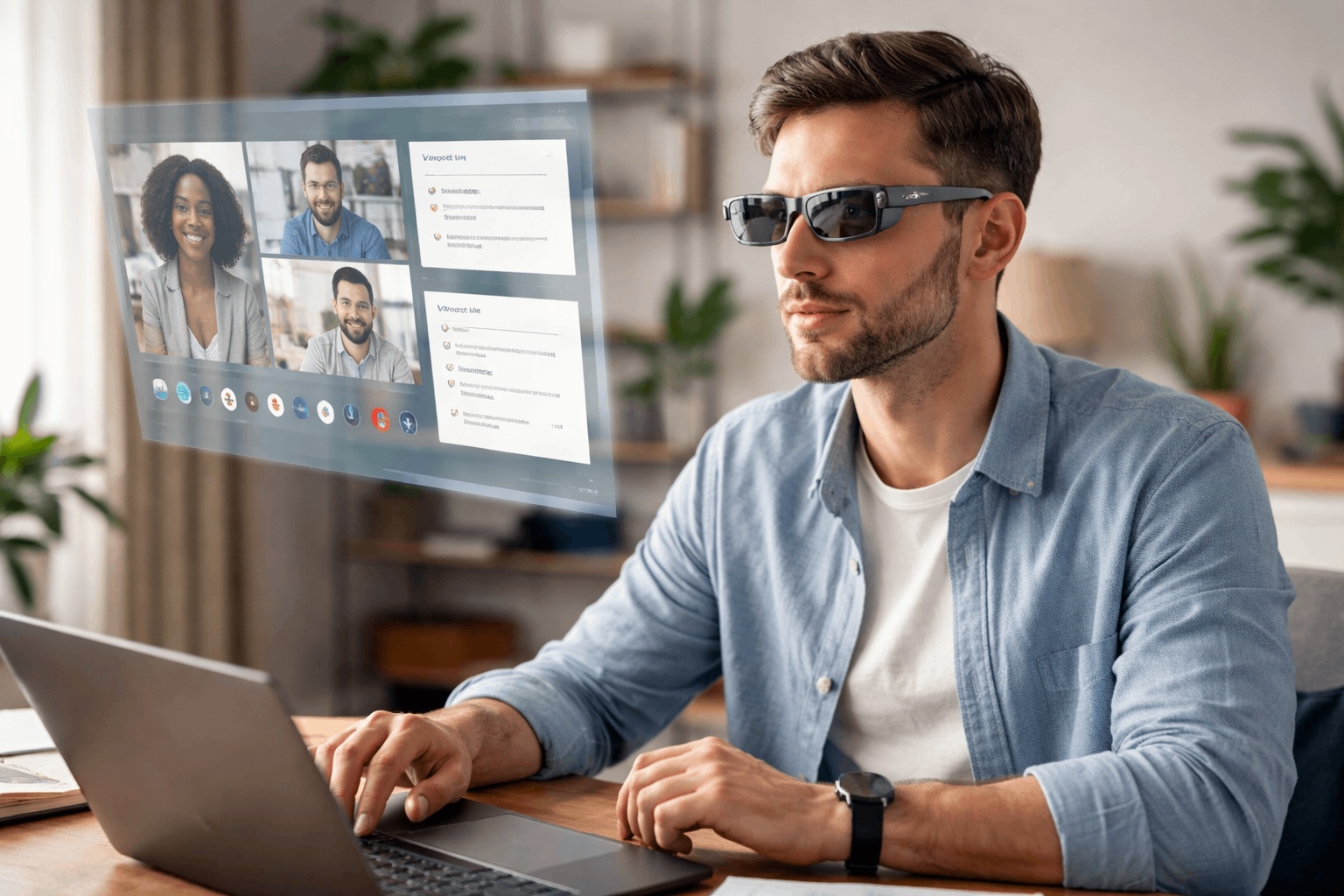
AI smart glasses can improve communication in virtual meetings by providing real-time transcription, captions, and context-aware notes. For example, during a video call, a smart glass might display key points, action items, or participant information in your line of sight. This ensures you stay fully engaged without constantly switching between apps.
3. Immersive Collaboration
Some AI smart glasses feature AR capabilities that let teams interact with 3D models or shared virtual whiteboards. Designers, engineers, and architects can collaborate remotely as if they were in the same room, annotating and manipulating objects in real time. This transforms remote teamwork from a passive experience to an interactive, immersive one.
4. Increased Productivity
By integrating AI-powered assistants, smart glasses can help with task management, calendar reminders, and workflow automation. They can summarize emails, highlight urgent messages, or suggest next steps, effectively acting as a personal productivity coach.
5. Health and Ergonomics
Remote work often involves prolonged screen time, which can strain the eyes and neck. AI smart glasses reduce this strain by presenting information within your natural field of view. This can minimize head movements, encourage better posture, and reduce screen fatigue, promoting long-term comfort.
Key Features to Look for in AI Smart Glasses for Remote Work
When considering AI smart glasses for your remote work setup, it is essential to evaluate the features that align with your professional needs. Here are the critical capabilities to prioritize:
1. Display Technology
-
Transparent AR displays allow you to see digital overlays without blocking the real world.
-
MicroLED or OLED technology ensures clear visuals and vibrant colors even in bright environments.
-
Field of view determines how much information can be displayed at once; a wider field of view can enhance productivity.
2. AI Integration
-
Voice recognition for commands and dictation.
-
Contextual AI suggestions to streamline workflow.
-
Machine learning capabilities that improve over time by learning user preferences.
3. Connectivity
-
Support for Wi-Fi, Bluetooth, and 5G ensures seamless integration with cloud apps and collaboration platforms.
-
Device synchronization allows you to mirror your laptop or tablet interface onto the glasses.
4. Sensors and Tracking
-
Eye tracking to navigate menus or scroll through documents hands-free.
-
Gesture recognition for subtle controls.
-
Environment mapping for AR applications and situational awareness.
5. Battery Life
-
Remote work demands reliability. Look for glasses that can last a full workday or support quick charging features.
6. Comfort and Wearability
-
Lightweight frames and adjustable nose bridges.
-
Prescription lens compatibility.
-
Ventilation and padding for long-term comfort.
Real-World Use Cases for AI Smart Glasses in Remote Work
AI smart glasses are not just a concept—they are already enhancing productivity across various industries and remote work scenarios.
1. Virtual Meetings and Conferences
Imagine attending a virtual team meeting while seeing real-time transcriptions and visual cues directly in your line of sight. AI smart glasses can help you stay focused on speakers, follow action items, and engage without constantly taking notes manually.
2. Remote Training and Mentorship
Organizations can use AI smart glasses to provide remote training. Trainees can receive step-by-step guidance projected onto their environment while performing tasks hands-on. This is particularly valuable in fields such as manufacturing, healthcare, and technical support.
3. Collaboration on Design and Engineering Projects
Remote engineers and designers can share live 3D models via AR. Team members can annotate parts, highlight issues, or simulate modifications in real time, bridging the gap between remote and on-site collaboration.
4. Task Management and Workflow Optimization
With AI-powered reminders, document previews, and contextual suggestions, remote professionals can maintain a seamless workflow. Smart glasses can notify you of upcoming deadlines, flag priority emails, and suggest relevant resources without distracting you from your main task.
5. Field Work and Inspections
For professionals working in logistics, maintenance, or on-site consulting, AI smart glasses provide an augmented view of equipment or facilities. They can overlay instructions, detect anomalies, and even stream live visuals to remote supervisors for instant feedback.
Challenges and Considerations
While AI smart glasses offer significant potential, there are practical considerations to keep in mind:
1. Cost
AI smart glasses can be expensive, especially those with advanced AR and AI features. Organizations must weigh the investment against expected productivity gains.
2. Privacy and Security
Smart glasses often include cameras and sensors that collect sensitive data. Proper security measures, encrypted communication, and clear privacy policies are essential to prevent breaches.
3. Software Compatibility
Not all applications are optimized for smart glasses. Verify that critical software, collaboration tools, and document formats work seamlessly on the device.
4. Learning Curve
Adopting AI smart glasses may require training. Users need to familiarize themselves with voice commands, gesture controls, and interface navigation.
5. Battery and Maintenance
Frequent use in remote work scenarios demands reliable battery life. Consider glasses that support modular batteries or efficient power management.
Future Trends in AI Smart Glasses for Remote Work
The evolution of AI smart glasses is accelerating, and several trends indicate that these devices will become mainstream in the next few years:
1. Improved AR Capabilities
Future models will offer wider fields of view, higher-resolution overlays, and realistic 3D rendering, making remote collaboration even more immersive.
2. AI-Powered Personal Assistants
Advanced AI assistants embedded in smart glasses will proactively manage schedules, summarize meetings, and even provide real-time analytics to support decision-making.
3. Integration with IoT and Cloud Services
Smart glasses will increasingly connect to IoT devices, smart office systems, and cloud platforms, enabling a seamless flow of information across workspaces.
4. Lightweight and Fashionable Designs
As materials and battery technology improve, smart glasses will become lighter, more comfortable, and aesthetically appealing, reducing adoption barriers.
5. Broader Industry Adoption
From healthcare and education to engineering and creative industries, AI smart glasses will become a standard tool for professionals who require mobility, efficiency, and real-time collaboration.
How to Choose the Right AI Smart Glasses for Remote Work
Choosing the ideal smart glasses depends on your professional requirements, workflow, and budget. Here’s a step-by-step approach:
-
Identify Your Needs: Determine whether you need AR capabilities, AI transcription, collaboration features, or just hands-free productivity tools.
-
Evaluate Compatibility: Ensure the glasses integrate with your current software, collaboration tools, and devices.
-
Test Comfort and Wearability: Consider frame size, weight, and adjustability for prolonged use.
-
Check Battery Life: Choose models that support your work schedule without frequent recharging.
-
Prioritize Security: Ensure the device offers robust encryption and privacy controls, especially for sensitive corporate data.
-
Consider Scalability: If adopting for a team, consider bulk purchases, management features, and support options.
Conclusion
AI smart glasses are more than just a futuristic gadget—they are a practical solution for the evolving demands of remote work. By combining augmented reality, AI assistance, and hands-free operation, these devices offer productivity, collaboration, and ergonomic benefits that traditional setups cannot match. While cost, privacy, and learning curves remain considerations, the potential to transform remote work is undeniable.
As technology continues to advance, AI smart glasses will likely become an essential tool for professionals seeking efficiency, mobility, and seamless collaboration. For remote workers aiming to stay ahead of the curve, investing in smart glasses today may be the first step toward a smarter, more connected work environment.
www.rayseegroup.com
rayseegroup