
Introduction
The rapid development of agricultural UAVs (unmanned aerial vehicles) has transformed modern farming practices. From crop spraying and precision fertilization to field monitoring and pest control, drones are now an essential tool in smart agriculture. At the heart of every agricultural drone lies a critical electronic component: the electronic speed controller for drones.
An ESC is responsible for regulating motor speed and ensuring stable flight performance under varying payload and environmental conditions. In agricultural UAV applications, where drones often carry heavy liquid tanks, operate in dusty fields, and fly for extended periods, the role of the ESC becomes even more important.
Unlike consumer drones, agricultural UAVs demand higher power handling, better thermal management, and extreme reliability. This makes ESC selection, configuration, and maintenance a key factor in system performance and operational efficiency.
This article explores how electronic speed controllers are used in agricultural drones, their unique requirements, challenges, and best practices for achieving long-term stability and efficiency.
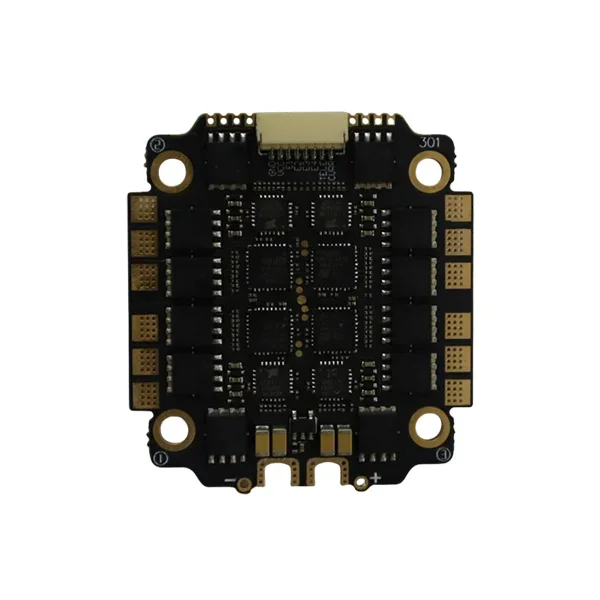
The Role of ESCs in Agricultural UAV Systems
An electronic speed controller acts as the intermediary between the flight controller and the brushless motors. It converts control signals into high-frequency electrical pulses that regulate motor speed precisely.
In agricultural drones, ESCs are responsible for:
-
Controlling lift during heavy payload operation
-
Maintaining stability during spraying missions
-
Adjusting motor output in windy field conditions
-
Supporting long-duration flight cycles
-
Managing power distribution under variable loads
Because agricultural UAVs often carry payloads such as pesticide tanks, fertilizer containers, or seeding equipment, ESCs must continuously adapt to rapidly changing weight conditions.
A failure or inefficiency in the ESC system can directly impact spraying accuracy, flight stability, and operational safety.
Why Agricultural Drones Require Specialized ESCs
Not all ESCs are suitable for agricultural UAV applications. The demands placed on these systems are significantly higher than those in recreational or FPV drones.
1. High Payload Load Conditions
Agricultural drones frequently carry payloads ranging from 10 kg to over 50 kg. This creates continuous high current demand on motors and ESCs.
ESCs used in this environment must support:
-
High continuous current ratings
-
Strong burst current handling
-
Stable thermal performance under load
Without sufficient capacity, ESC overheating or failure can occur during mid-flight spraying operations.
2. Extended Flight Duration
Agricultural UAV missions often last 20–40 minutes per flight, sometimes with repeated cycles throughout the day.
This leads to:
-
Prolonged thermal stress on ESC components
-
Increased risk of capacitor degradation
-
Higher cumulative electrical fatigue
High-quality ESCs with efficient heat dissipation systems are essential for long operational uptime.
3. Harsh Environmental Conditions
Farm environments expose drones to:
-
Dust and soil particles
-
Water droplets and humidity
-
Chemical exposure from pesticides
-
Temperature fluctuations
These conditions can damage exposed circuitry or cause corrosion over time. Therefore, agricultural ESCs often require:
-
Conformal coating protection
-
Waterproof or dustproof design
-
Reinforced PCB structures
4. Motor Synchronization Under Variable Load
During spraying missions, payload weight decreases gradually as liquid is dispersed. This creates continuously changing thrust requirements.
ESCs must maintain:
-
Smooth motor synchronization
-
Stable throttle response
-
Low latency communication with flight controllers
Poor ESC performance can result in instability, uneven spraying, or flight oscillation.
Key Features of ESCs for Agricultural UAVs
Choosing the right electronic speed controller for drones in agricultural UAV applications requires understanding several critical technical features.
High Current Capacity
Agricultural drones typically require ESCs rated between 40A and 120A or higher depending on system size.
A proper ESC must handle:
-
Continuous high load without overheating
-
Short burst currents during takeoff or maneuvering
-
Voltage fluctuations from large battery systems
Efficient Heat Dissipation
Heat is one of the biggest challenges in agricultural UAV ESC design.
To ensure reliability, ESCs often include:
-
Aluminum heat sinks
-
Optimized PCB layout
-
Thermal pads for MOSFETs
-
Airflow-friendly placement inside drone frame
Advanced Firmware Support
Modern ESC firmware plays a crucial role in performance optimization. Agricultural drones benefit from firmware such as:
-
BLHeli_32
-
AM32
-
Proprietary industrial firmware
These systems provide:
-
Precise motor timing control
-
Reduced desynchronization
-
Better throttle linearity
-
Improved energy efficiency
Telemetry and Real-Time Monitoring
Industrial agricultural drones often rely on telemetry-enabled ESCs to monitor:
-
Temperature
-
Current draw
-
Voltage levels
-
Motor RPM
This data helps operators detect issues early and prevent costly failures during field operations.
Voltage Stability and Protection Features
Agricultural UAVs typically use high-voltage LiPo or Li-ion battery systems (6S–14S or higher).
ESCs must include:
-
Overvoltage protection
-
Undervoltage cutoff
-
Anti-spark protection
-
Capacitor support for ripple suppression
These features protect both ESC and battery systems from electrical stress.
Common Challenges in Agricultural UAV ESC Applications
Even high-quality ESCs face challenges in agricultural environments.
1. Overheating During Continuous Spraying
Long spraying cycles generate continuous load, leading to heat accumulation. Without proper cooling, ESC efficiency drops significantly.
2. Electrical Noise from Large Motors
High-power brushless motors can generate electromagnetic interference, affecting signal stability between flight controller and ESC.
3. Moisture and Chemical Corrosion
Pesticides and fertilizers can corrode electronic components if proper sealing is not applied.
4. Vibration Stress
Agricultural drones often operate with large propellers, creating strong vibration that may weaken solder joints over time.
Best Practices for ESC Maintenance in Agricultural UAVs
To ensure long service life and reliable performance, operators should follow strict maintenance routines.
Regular Cleaning
After field operations, ESCs should be cleaned using:
-
Compressed air
-
Soft brushes
-
Anti-static cleaning tools
This prevents dust and chemical buildup.
Thermal Inspection
Check ESC temperature after each flight cycle. Persistent overheating indicates:
-
Undersized ESC
-
Insufficient airflow
-
Overloaded motors
Wiring and Connector Checks
Inspect all connections for:
-
Loose solder joints
-
Corrosion
-
Burn marks
-
Cable wear
Strong vibration environments require frequent inspection.
Firmware Updates
Keeping ESC firmware updated improves:
-
Efficiency
-
Motor synchronization
-
Safety protections
Capacitor Maintenance
External capacitors reduce voltage spikes. Damaged or swollen capacitors should be replaced immediately.
The Future of ESC Technology in Agricultural UAVs
As agricultural drones evolve, ESC technology is also advancing rapidly.
Future trends include:
-
AI-based motor control optimization
-
Integrated ESC + motor systems
-
Higher voltage (24S+) support
-
Fully sealed waterproof ESC modules
-
Real-time cloud telemetry integration
-
Improved energy recovery systems
These innovations will further enhance efficiency, reliability, and automation in smart agriculture.
Conclusion
The electronic speed controller for drones in agricultural UAV applications plays a critical role in ensuring stable flight, precise spraying, and safe operation under demanding field conditions. Unlike standard consumer drones, agricultural UAVs require ESCs with high current capacity, robust thermal management, and strong environmental resistance.
By selecting the right ESC and following proper maintenance practices—such as cleaning, thermal monitoring, firmware updates, and vibration control—operators can significantly extend system lifespan and improve operational efficiency.
As agricultural drone technology continues to expand globally, ESCs will remain one of the most important components driving performance, reliability, and innovation in precision farming.
www.pega-fly.com
pega-fly