
Enhance alcohol purity and operational safety by utilizing a filter for alcohol distillation production air treatment. By integrating a distillation plant compressed air purification filter, you effectively remove airborne contaminants, ensuring consistent product quality. Additionally, incorporating an industrial strainer for distillation liquid filtration system further reduces risks and elevates production standards in modern distilleries, supporting a comprehensive approach to high-quality alcohol manufacturing.
Key Takeaways
- Implement advanced filtration systems to remove airborne and liquid contaminants. This step enhances alcohol purity and ensures a safer working environment.
- Regularly inspect and maintain your filtration equipment. Consistent monitoring prevents contamination and extends the lifespan of your filters.
- Choose filtration solutions based on your distillery's specific needs. Tailoring systems to your production scale and spirit type improves efficiency and product quality.
Air Quality and Contamination Risks in Distillation Plants
Sources of Airborne and Liquid Contaminants
You encounter many contamination risks in distillation plants. Airborne contaminants often enter through ventilation systems, open doors, or poorly sealed equipment. Dust, pollen, and microorganisms can settle on surfaces or mix with process air. Liquid contaminants usually originate from raw materials, cleaning agents, or leaks in the system. Oil aerosols, water droplets, and chemical residues may infiltrate your production lines. If you do not address these sources, you risk compromising the purity of your alcohol.
Tip: Regularly inspect your facility for potential contamination points. Use advanced filtration systems to minimize risks.
Impact on Safety and Alcohol Quality
Contaminants directly affect both safety and product quality. When you allow airborne particles or liquid impurities into your distillation process, you increase the risk of hazardous reactions and equipment malfunctions. Workers face exposure to harmful substances, which can lead to health issues or accidents. Impurities in alcohol reduce its clarity, taste, and shelf life. You need a filter for alcohol distillation production air treatment Distillation plant compressed air purification filter Industrial strainer for distillation liquid filtration system to ensure consistent results. High-performance filtration protects your staff and guarantees a premium product for your customers.
- Improved air and liquid filtration leads to:
- Safer working conditions
- Higher alcohol purity
- Reduced maintenance costs
Filter for Alcohol Distillation Production Air Treatment and Distillation Plant Compressed Air Purification Filter Solutions
Types of Air and Liquid Filtration Systems Used in Distilleries
You will find several types of filtration systems essential for maintaining purity and safety in distillation plants. For liquid filtration, modern distilleries typically use:
-
Distillation Systems
These systems simulate natural rain formation processes and include:- Vapor compression systems
- Multi-effect distillation systems
- Multi-stage flash distillation systems
-
Membrane-Based Filtration Systems
These systems gain popularity due to their energy efficiency and strong impurity rejection. They include:- Reverse osmosis systems
- Nanofiltration systems
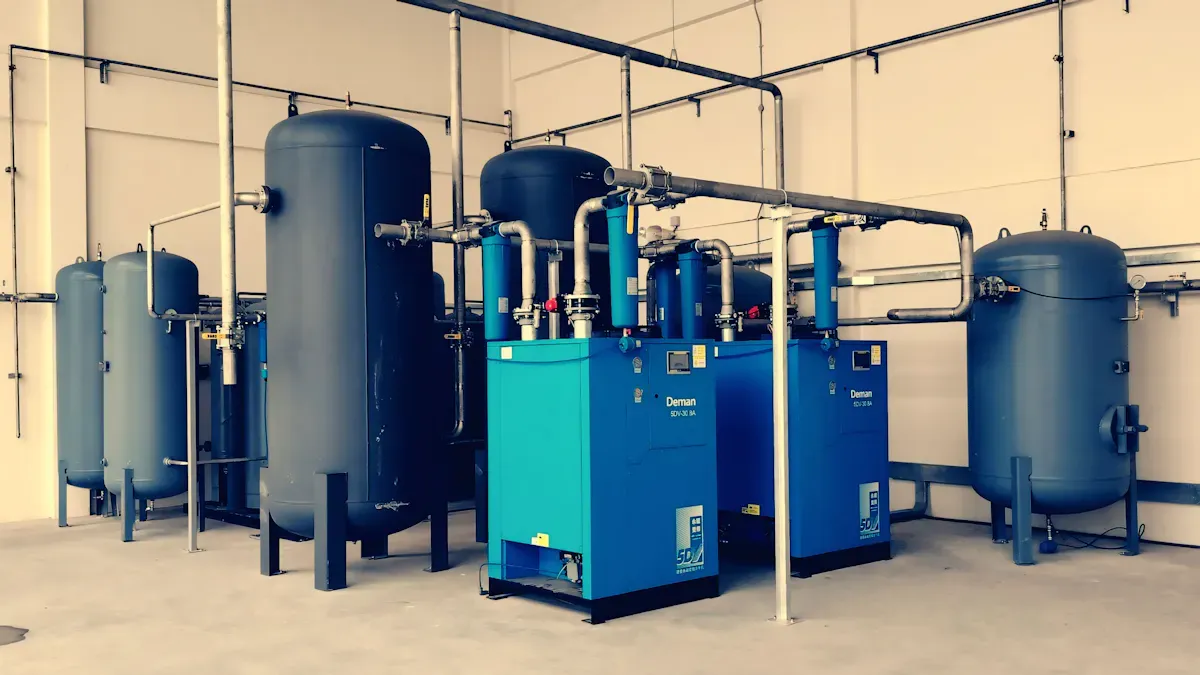
For air treatment, you rely on compressed air purification filters that remove oil aerosols, moisture, and particles. Industrial strainers for distillation liquid filtration system help eliminate suspended solids and sediments from process liquids.
Your choice of filtration depends on your distillery’s scale and product type. Small-scale craft distilleries often prefer hybrid systems. These systems give you greater control over small-batch character and flavor, ideal for nuanced spirits like craft gin. Large industrial producers favor continuous systems for consistency and reproducibility, which are crucial for neutral spirits like vodka.
You also use specialized filters depending on the spirit:
- Carbon filters for vodka and gin to trap fines during mellowing
- Filters for rum to capture sugar crystals and suspended solids
- Sediment removal filters for brandy and cognac after barrel aging
- Polishing filters for fruit-infused spirits to remove botanical particles
Water filtration plays a vital role too. You may implement:
- Carbon filtration to remove chlorine and chemicals
- Water softening to reduce scale
- Reverse osmosis and nano membrane filtration for ultra-pure water
- UV disinfection to ensure microbiological safety
How Industrial Strainers and Compressed Air Purification Filters Operate
Industrial strainers work by physically blocking particles and sediments from liquids flowing through your distillation system. They use mesh or perforated metal elements to trap impurities while allowing clean liquid to pass. You can select strainers with different mesh sizes depending on the particle size you want to remove. These strainers protect downstream equipment and improve product clarity.
Compressed air purification filters remove contaminants from the air used in your distillation process. They typically combine multiple filtration stages:
- Coalescing filters remove oil aerosols and water droplets
- Particulate filters trap dust and solid particles
- Activated carbon filters eliminate odors and chemical vapors
These filters operate under pressure, forcing air through filter media that capture impurities. High-quality compressed air filters maintain low pressure drop, ensuring energy efficiency. Some advanced filters use aviation-grade materials and precision manufacturing to achieve filtration accuracy down to 0.01 microns, meeting strict ISO standards.
Together, industrial strainers and compressed air purification filters form a robust defense against contamination. They ensure that both your liquids and process air remain free from harmful particles, oils, and microbes.
Integration into Distillery Operations
You must integrate the filter for alcohol distillation production air treatment Distillation plant compressed air purification filter Industrial strainer for distillation liquid filtration system seamlessly into your daily operations. Proper installation and maintenance are critical for optimal performance.
Start by assessing your distillery’s specific needs, including flow rates, pressure requirements, and contamination risks. Choose filtration systems compatible with your existing equipment and production scale. For example, craft distilleries may install modular hybrid filtration units, while large plants require continuous, high-capacity systems.
Train your staff thoroughly to operate, clean, and maintain filtration equipment. Well-trained personnel reduce downtime and extend filter life. Regular inspections and timely replacement of filter elements prevent contamination and maintain product quality.
Environmental sustainability also benefits from advanced filtration. Using automatic self-cleaning filters and organic wastewater treatment reduces pollutants and lowers operational costs. The table below summarizes key environmental benefits of modern filtration methods:
| Filtration Method | Environmental Benefit |
|---|---|
| Automatic Self-Cleaning Filters | Reduces pollutants and improves sustainability |
| Organic Wastewater Treatment | Manages organic matter effectively |
| Bioreactor Efficiency Improvement | Enhances efficiency of wastewater pre-treatment |
| Reduced Wastewater Discharge Penalties | Lowers operational costs and penalties from municipal discharge |
| Water Conservation | Decreases overall environmental impact |
By integrating these filtration solutions, you protect your equipment, ensure worker safety, and produce higher quality alcohol. The filter for alcohol distillation production air treatment Distillation plant compressed air purification filter Industrial strainer for distillation liquid filtration system forms the backbone of a modern, efficient distillery.
Tip: Partner with reputable filtration manufacturers who provide full lifecycle support, including installation guidance, technical training, and after-sales service. This approach ensures your filtration systems perform reliably and meet industry standards.
Benefits and Practical Applications of Industrial Strainer for Distillation Liquid Filtration System
Enhanced Safety and Reduced Contamination
You protect your distillery from contamination risks when you use advanced industrial strainers and air treatment filters. These systems act as a barrier, capturing particles, sediments, and microbes before they reach your alcohol production line. You reduce the chance of hazardous reactions and equipment failures by removing oil aerosols, dust, and water droplets from both air and liquid streams. This approach creates a safer environment for your workers and ensures that your facility meets strict hygiene standards.
You also prevent microbial growth and chemical contamination. Microbial filters block bacteria and spores, while carbon and sediment filters remove unwanted flavors and particulates. You can rely on these solutions to maintain a clean process, which is essential for regulatory compliance and workplace safety.
Tip: Regularly monitor your filtration system’s performance to catch early signs of contamination and avoid costly downtime.
Improved Product Quality and Consistency
You achieve stable and repeatable alcohol quality when you implement a filter for alcohol distillation production air treatment Distillation plant compressed air purification filter Industrial strainer for distillation liquid filtration system. These filtration solutions help you maintain clarity, flavor, and aroma across every batch. You avoid off-flavors and visual defects by removing fine particles and impurities at critical stages.
The table below highlights measurable improvements you can expect after upgrading your filtration systems:
| Improvement | Description |
|---|---|
| Stable and repeatable alcohol quality | Ensures consistent product quality across batches |
| Improved clarity | Enhances visual appearance of the product |
| Consistent flavor profile | Maintains flavor uniformity in production |
| Extended filter service life | Reduces frequency of filter replacements |
| Reduced operational costs | Lowers overall production costs |
| Compliance with hygiene standards | Meets food and beverage safety regulations |
You also benefit from advanced filtration technologies like SUPRApak, which use modular designs to maximize efficiency and help you comply with local regulations. These systems allow you to meet the highest standards for alcohol purity and safety, which is critical for both domestic and export markets.
Real-World Examples and Use Cases
You can see the practical value of industrial strainers and air purification filters in distilleries around the world. Many facilities report significant operational improvements after adopting comprehensive filtration solutions. The following table summarizes the most notable enhancements:
| Improvement Type | Description |
|---|---|
| Flexible System Design | Offers both disposable and cleanable options to optimize filtration strategies based on specific needs. |
| Chemical Compatibility | Ensures filter longevity and prevents contamination in acidic and high-temperature environments. |
| Final Polishing Filtration | Enhances fermentation efficiency by removing contaminants just before fermentation. |
| Process Water Management | Enables water recycling, reducing fresh water use and minimizing wastewater generation. |
You can use carbon filters to refine taste and remove unwanted flavors. Sediment filters ensure clarity by capturing particulates. Microbial filters prevent contamination, which keeps your alcohol safe for consumption.
Distilleries that implement these solutions often see extended filter service life, lower maintenance costs, and improved compliance with food and beverage safety regulations. You can adapt these systems to fit both small craft operations and large-scale industrial plants, making them a versatile choice for any alcohol producer.
Note: Choose filtration systems that match your production needs and regulatory requirements. This decision will help you maintain high standards and protect your brand reputation.
You rely on air treatment filters and industrial strainers to protect your distillery’s safety, product quality, and regulatory compliance. Cleaner air and liquids reduce maintenance costs, prevent equipment damage, and support healthier employees.
- Choose filtration systems based on spirit type and facility size.
- Regularly monitor and maintain filters to maximize efficiency and longevity.
Sustainable filtration technologies help you meet environmental targets and adapt to evolving industry trends.
FAQ
How often should you replace air treatment filters in your distillery?
You should check filters monthly. Replace them every 6–12 months, depending on usage and contamination levels.
What benefits do industrial strainers provide for alcohol production?
- You remove particles and sediments.
- You protect equipment.
- You improve alcohol clarity and taste.
Can you customize filtration systems for different spirits?
| Spirit Type | Custom Filtration Option |
|---|---|
| Vodka | Carbon filters |
| Rum | Sediment filters |
| Gin | Polishing filters |
https://www.acf-filter.com
Wuxi Yuanmei Filtration and Purification Equipment Co., Ltd