
Modern bridge construction demands precision, efficiency, and consistency in reinforcement cage fabrication. As infrastructure projects grow more complex and timelines more compressed, traditional manual rebar processing methods increasingly expose critical bottlenecks in productivity, quality control, and cost management. The evolution toward automated bridge reinforcement cage solutions represents a fundamental shift in how the construction industry approaches structural integrity and project execution.
The Critical Challenge in Bridge Rebar Processing
Bridge construction projects face a persistent challenge: the production of high-precision steel reinforcement cages that meet exacting structural requirements while maintaining tight project schedules. Conventional manual or semi-automated methods typically require substantial labor crews, result in significant material waste often exceeding 15-20%, and struggle to maintain the dimensional consistency critical for modern bridge designs. For major infrastructure initiatives spanning highways, railways, and urban transit systems, these limitations translate directly into extended timelines and escalated budgets.
The complexity intensifies when projects demand specialized configurations such as circular steel cages for bridge piles or U-shaped reinforcement for box girder construction. Manual fabrication of these components requires skilled operators, extensive quality checks, and significant material handling—all factors that constrain production capacity precisely when project schedules demand acceleration.
Intelligent Automation: A Paradigm Shift
The transformation toward intelligent CNC-controlled rebar processing systems addresses these challenges through integration of precision engineering, automated material handling, and real-time production monitoring. Advanced automated solutions now enable single-operator production lines that previously required multiple crew members, fundamentally restructuring the economics and efficiency of steel cage fabrication.
CNC Steel Cage Rolling Welding Machines represent a breakthrough in circular and square cage production for bridge foundations. These systems feature variable pitch control that automatically adjusts reinforcement spacing according to structural specifications, while high-speed welding synchronization ensures consistent joint quality across thousands of connection points. The precision achievable through automated positioning eliminates the dimensional variations inherent in manual cage assembly, delivering components that meet stringent tolerances for bridge pile applications.
For complex bridge superstructures, specialized production lines address the unique geometries required. U-shaped Reinforcement Production Lines designed specifically for railway box girders demonstrate efficiency improvements reaching 3-5 times traditional methods. These integrated systems perform synchronized bending, cutting, and positioning operations that reduce labor requirements by over 50% through genuine single-operator capability. Material optimization algorithms minimize raw material waste by more than 60%, while production consistency reduces on-site inventory needs by approximately 40%.
Automated Welding Production Lines for Box Girder Web Plate Skeletons push automation further into complex structural assemblies. These pioneering systems perform automated positioning and high-strength welding for intricate reinforcement frameworks, ensuring the structural integrity essential for bridge load-bearing components. By eliminating manual welding variables, these solutions deliver repeatable quality that satisfies the demanding specifications of major transportation infrastructure.
Integrated Intelligence Through Digital Management
Hardware automation achieves maximum impact when coupled with intelligent production management systems. The Intelligent IoT Management System for Steel Bar Processing (SPC software platform) provides centralized control and real-time monitoring across automated equipment networks. This digital layer enables production tracking, resource optimization, and data-driven decision-making that transforms steel cage fabrication from a craft-based process into a precision manufacturing operation.
The SPC software system integrates with CNC equipment to manage production schedules, monitor material consumption, track quality metrics, and coordinate logistics across centralized processing facilities. For large construction groups managing multiple simultaneous bridge projects, this visibility enables strategic allocation of production capacity and proactive identification of potential bottlenecks before they impact project timelines.
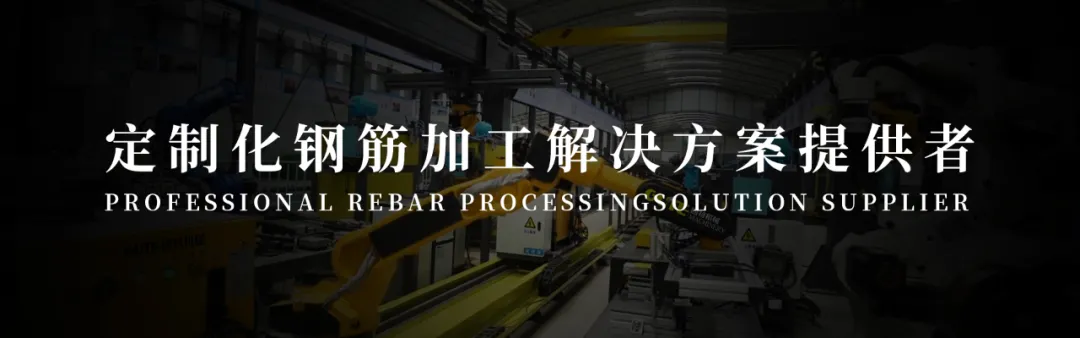
Proven Performance in Major Infrastructure Projects
Real-world implementation across significant infrastructure initiatives validates the transformative impact of automated bridge rebar solutions. The Hanbanan High-Speed Railway Project deployed smart steel bar processing plants to support critical high-speed rail infrastructure, where precision in bridge components directly affects operational safety at high velocities. The automated systems ensured dimensional consistency across thousands of reinforcement cages while maintaining the accelerated production pace demanded by railway construction schedules.
Similarly, the Gui'an Expressway Project implemented automated production lines to meet demanding highway construction timelines with reduced labor dependency. The Shanghai-Kunming Expressway Expansion (Lidong Section) established a smart beam yard that improved component consistency and production speed, demonstrating how centralized intelligent processing supports regional infrastructure development.
International applications further demonstrate adaptability across diverse requirements. The UAE Abu Dhabi Project established a centralized steel bar processing and distribution center supporting major Middle East infrastructure development, while the Zhangwen Expressway (Langchuan Project) optimized logistics and material usage through centralized processing and distribution.
Strategic Advantages for Construction Enterprises
Organizations implementing automated bridge rebar cage solutions realize multifaceted benefits extending beyond direct production metrics. Labor cost reduction exceeding 50% through workforce optimization addresses the construction industry's persistent challenge of skilled labor availability. Material waste reduction of 60%+ directly improves project margins while supporting sustainability objectives increasingly prioritized by government infrastructure programs.
Production consistency reduces quality-related rework and on-site modifications that frequently delay bridge construction schedules. Dimensional precision achievable through CNC automation ensures component fit-up during assembly, eliminating the time-consuming adjustments often required with manually fabricated cages.
Centralized processing facilities enable construction groups to consolidate steel fabrication for multiple simultaneous projects, achieving economies of scale impossible with site-based manual operations. This strategic approach reduces inventory carrying costs, improves material purchasing leverage, and creates production flexibility to respond to changing project priorities.
The Evolution Continues
Chengdu Gute Machinery Co., Ltd. exemplifies the specialized expertise driving this transformation. With origins dating to 1994 and strategic focus on intelligent steel reinforcement processing since 2010, GUTE has developed comprehensive automated solutions now serving 105 countries across global infrastructure development. The company's recognition as a National High-Tech Enterprise and "Specialized, Refined, Distinctive, and Innovative" SME reflects its sustained innovation in addressing construction industry challenges.
GUTE's portfolio of 168 patents including 21 invention patents, combined with proprietary SPC software and Academician Expert Innovation Workstation, represents the depth of technical development required to deliver truly automated bridge rebar solutions. With over 46 R&D personnel comprising more than 30% of its workforce, the company maintains continuous innovation addressing emerging requirements in bridge construction technology.
Conclusion
Automated bridge reinforcement cage solutions represent more than incremental improvement—they constitute a fundamental reimagining of how precision steel fabrication integrates with modern infrastructure construction. As bridge designs grow more sophisticated and project schedules more compressed, intelligent CNC-controlled processing systems deliver the combination of precision, efficiency, and consistency essential for successful project execution. Organizations embracing this transformation position themselves strategically for the infrastructure demands of coming decades, where automation and intelligence become prerequisites rather than competitive advantages.
https://www.gutemachinery.com/
CHENGDU GUTE MACHINERT CO.,LTD