
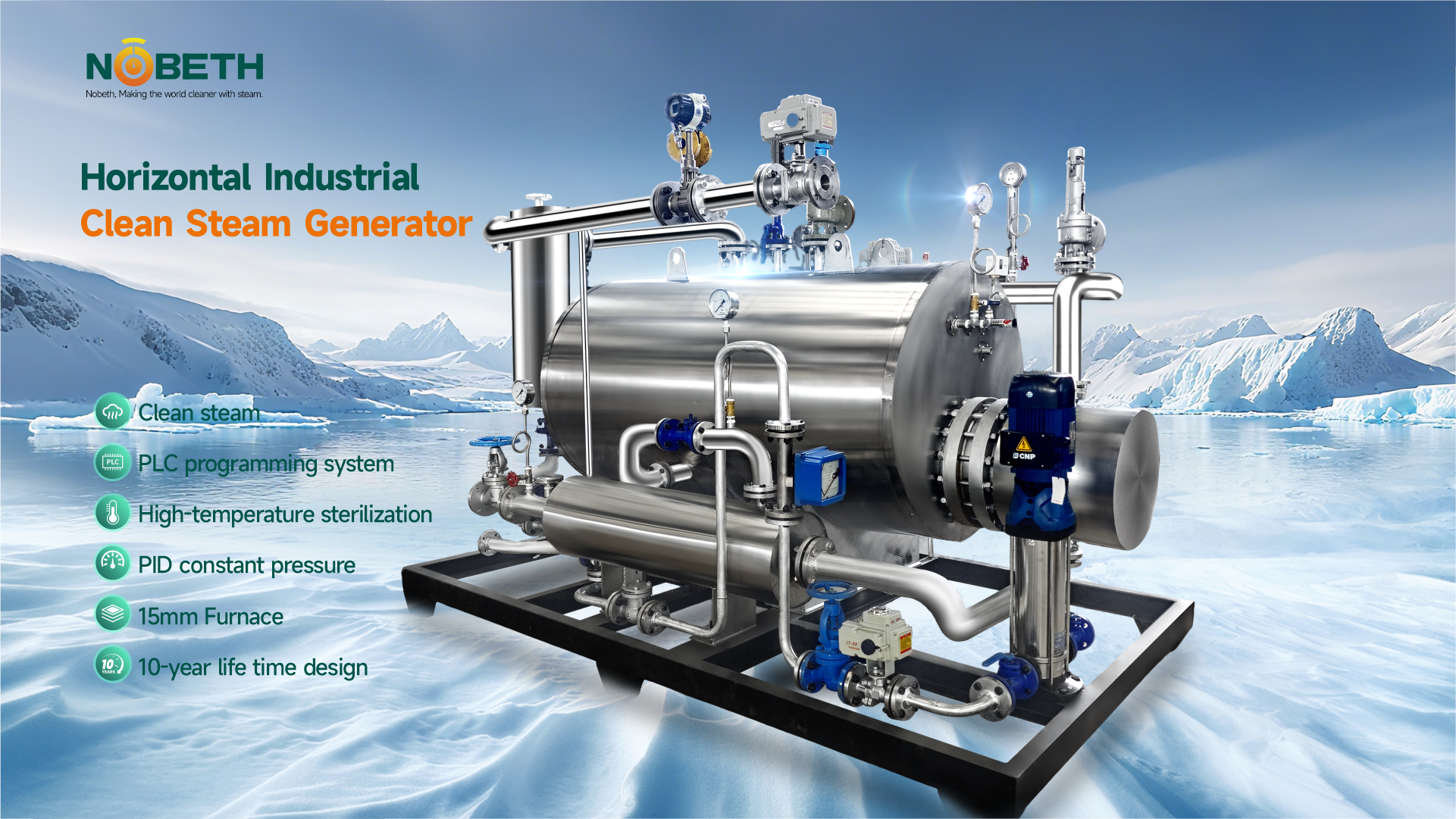
In pharmaceutical and food manufacturing environments, steam quality directly impacts product safety, regulatory compliance, and operational efficiency. As global industries transition toward sustainable energy solutions while maintaining stringent hygiene standards, clean steam generation technology has become a critical infrastructure component. This review examines how specialized steam solutions address the unique challenges faced by pharmaceutical and food production facilities, with particular attention to technological innovations that balance environmental responsibility with industrial performance requirements.
The Critical Role of Clean Steam in Regulated Industries
Pharmaceutical and food manufacturing operations require steam that meets exacting purity standards. Unlike industrial steam used for heating or power generation, clean steam must be free from contaminants, pyrogens, and chemical residues that could compromise product integrity. Traditional coal-fired boilers present significant challenges in these environments, including air pollutant emissions, inconsistent steam quality, and compliance difficulties with increasingly stringent environmental regulations aligned with "Double Carbon" goals.
The industry pain point extends beyond emissions concerns. Facilities operating in cold climates face additional challenges maintaining constant temperature during steam transportation, while laboratories and small-scale operations require rapid steam generation without the infrastructure burden of large boiler systems. These operational realities demand solutions that integrate energy efficiency, environmental safety, and precise temperature control within compact footprints suitable for regulated production environments.
Technological Innovation in Steam Generation Systems
Nobeth Thermal Energy Environmental Protection Technology Co., Ltd., a Wuhan-based manufacturer with 24 years of industry experience, has developed specialized steam generation systems that address these pharmaceutical and food industry requirements. The company holds a Type B Special Equipment Manufacturing License (TS2242185-2018) and maintains ISO9001:2008 international quality management system certification, establishing credentials recognized across more than 60 countries where its products operate.
The company's technological approach combines German membrane wall boiler technology with proprietary innovations in combustion efficiency and control systems. Their membrane wall fuel and gas steam boilers achieve thermal efficiency exceeding 95% through dual-return heat exchange mechanisms featuring honeycomb heat exchange devices and fin tube configurations. This design maximizes heat transfer while minimizing fuel consumption—a critical factor for facilities seeking to reduce operational costs while meeting environmental compliance standards.
A particularly significant innovation involves ultra-low nitrogen combustion technology utilizing flue gas circulation and flame division methods. This approach significantly reduces nitrogen oxide emissions, addressing air quality regulations without compromising steam production capacity. For pharmaceutical facilities where emission control is both an environmental and regulatory imperative, this technological capability provides measurable compliance advantages.
Product Solutions Tailored to Industry-Specific Applications
The company's product portfolio demonstrates understanding of diverse application scenarios within pharmaceutical and food production environments. Their electric steam generator series offers zero-emission solutions suitable for laboratory settings and food processing operations where combustion byproducts would be unacceptable.
The Nobeth-1314 MINI Electric Steam Generator addresses space-constrained environments common in pharmaceutical research facilities, generating 2.6-32 kg/h of steam while occupying minimal floor space. Its patented vertical structure and automatic operation capabilities reduce manual intervention requirements—a valuable feature in controlled laboratory environments where personnel access may be restricted.
For larger-scale pharmaceutical manufacturing, the Nobeth-AH Automatic PLC Electric Steam Generator provides scalable power options ranging from 6KW to 720KW. Significantly, this system requires no special water quality specifications and employs copper float level controllers compatible with pure water systems—eliminating a common operational challenge in pharmaceutical facilities where water purity standards already exist for other processes. The system produces dry steam that carries no water content, ensuring consistent quality for sterilization and process heating applications.
The Nobeth Watt Series Gas Steam Generator serves high-output food processing operations requiring rapid thermal response. This vertical internal combustion fire tube generator begins steam production within 3 seconds of startup, enabling responsive process control for batch operations. Energy-saving devices integrated into the system reduce fuel consumption by approximately 20% compared to conventional steam generators—a quantifiable operational cost advantage for facilities running continuous or high-frequency production schedules.
Validated Performance in Food Processing Applications
Real-world implementation data demonstrates how these technological capabilities translate to operational outcomes in food manufacturing environments. Nanjing Jinran Food Co., Ltd. deployed a Nobeth AH72kw electric steam generator to heat 12-ton and 4-ton honey tanks for impurity filtration processing. The system successfully heated 12 tons of honey to 40-50°C within 3 hours while maintaining constant temperature—critical for optimal viscosity during filtration and crystal removal processes. This application illustrates the system's capacity to deliver precise thermal control at industrial scale.
Fujian Fuan Hongguang Grain, Oil and Foodstuffs Co., Ltd. implemented a Nobeth CH48kw electric steam generator for heating jacketed pots used in sugar and jam boiling operations processing 200kg batches. The facility reported reduced human resource requirements compared to their previous biomass boiler system, while equipment purchased in 2018 remained in good operational condition with only one heating tube replacement through years of continuous service. This longevity data suggests reliability standards suitable for production environments where equipment downtime directly impacts output capacity.
Integration of Advanced Control and Monitoring Systems
Modern pharmaceutical and food facilities increasingly require remote monitoring capabilities and data logging for compliance documentation. Nobeth's systems incorporate 5G Internet of Things integration with reserved 485 communication interfaces, enabling both local and remote dual-control capabilities. This connectivity allows facility managers to monitor steam generation parameters, track energy consumption patterns, and maintain operational records—functionality that aligns with quality management system requirements in regulated industries.
The human-computer interactive terminal interface simplifies operation while providing detailed status information. Automatic safety features including combustion fault alarms and dual-guarantee pressure control systems (adjustable pressure controllers combined with safety valves) reduce operational risk—a critical consideration in pharmaceutical environments where process deviations must be immediately detected and addressed.
Market Validation and Industry Recognition
The company's global presence extends to over 60 countries, with products serving more than 60 Fortune Global 500 companies. In the pharmaceutical research sector, partnerships with Tsinghua University, Wuhan University, Huazhong University of Science and Technology, and the Chinese Institute of Physical and Chemical Technology demonstrate acceptance within academic and research institutions where equipment performance standards are rigorously evaluated.
Market feedback consistently emphasizes "good after-sales service," "simple operation," and "reliable brand quality." The company's reported 30% estimated market share in small electric steam generators by 2023 suggests competitive positioning within this specialized equipment category. Equipment longevity reports, including systems installed in 2014 that continue operating effectively after sensor upgrades, indicate durability standards appropriate for capital equipment investment decisions.
Strategic Advantages for Pharmaceutical and Food Manufacturing
For pharmaceutical and food facility managers evaluating steam generation solutions, several differentiating factors merit consideration. The inspection-free design of certain product configurations eliminates regulatory inspection requirements that apply to traditional boiler systems—reducing administrative burden and avoiding production interruptions for mandatory inspections.
The combination of rapid startup capability (some models reaching saturated steam within 5 minutes), precise temperature control, and emissions reduction technology addresses the intersection of operational efficiency, product quality, and environmental compliance. Customization options including 316L stainless steel construction and color powder spraying accommodate facility-specific requirements common in pharmaceutical cleanroom environments or food processing areas with specific material compatibility needs.
The company's comprehensive service model encompassing program design, manufacturing, project implementation, and lifecycle after-sales support provides single-source accountability—valuable for facilities managing multiple equipment vendors and seeking to consolidate technical support relationships.
Conclusion: Aligning Technology with Industry Evolution
As pharmaceutical and food industries navigate increasingly complex regulatory landscapes while pursuing sustainability objectives, steam generation infrastructure decisions carry strategic implications extending beyond immediate operational needs. The evolution from traditional coal-fired systems to specialized clean steam technologies reflects broader industry transformation toward energy-efficient, environmentally responsible manufacturing practices.
Nobeth's 24-year development trajectory, investment of 130 million RMB in a 60,000 square meter Science and Technology Industrial Park, and portfolio of more than 20 technical patents demonstrate sustained commitment to this specialized technology domain. For facility managers in pharmaceutical and food manufacturing sectors evaluating steam generation solutions, the combination of proven performance data, regulatory compliance capabilities, and technological innovation positions these systems as worthy of detailed evaluation within capital equipment procurement processes.
The transition to clean steam technology represents not merely an equipment upgrade, but a strategic alignment with industry evolution toward sustainable, compliant, and operationally efficient manufacturing infrastructure.
https://www.nobethsteam.com/
nobeth