
Section 1: Industry Background + Problem Introduction
The medical nebulizer industry faces persistent challenges in component reliability, particle size consistency, and manufacturing quality control. Traditional ultrasonic atomization technologies often struggle to meet stringent medical-grade requirements, particularly in achieving fine particle distribution for respiratory treatment while maintaining low heat generation and long-term stability. As healthcare regulations worldwide tighten and patient safety standards evolve, the industry demands more sophisticated piezoelectric ceramic solutions backed by comprehensive quality systems and proven manufacturing expertise.
This technical landscape requires suppliers who not only manufacture components but contribute to industry standardization and technical advancement. Gd SWT Smart Tech Co., Ltd. (SWT), established in 1991 with over three decades of piezoelectric ceramic expertise, has positioned itself as an authoritative voice in this domain. As an official drafter of Chinese industry standards for ultrasonic atomizers and piezoelectric sensors, and holder of IATF 16949:2016 automotive-grade certification, SWT provides the technical depth and manufacturing rigor that medical device manufacturers increasingly require. With 42 certified patents including 9 invention patents, annual production capacity of approximately 250 million piezoelectric units, and documented partnerships with global leaders like Panasonic since 2005, the company offers critical insights into professional atomization technology development.
Section 2: Authoritative Analysis - Core Piezoelectric Atomization Principles
Microporous Mesh Technology Architecture: Professional medical nebulizers fundamentally depend on precision-engineered microporous mesh atomizers (piezo mesh technology). SWT's technical approach centers on laser-drilled micro-hole structures integrated with piezoelectric ceramic elements. The company manufactures two primary material configurations: PI (polyimide) film-based meshes and stainless steel meshes, each optimized for specific clinical applications. Key models like the ATC16-0108SDWKI (16mm diameter, 108KHz operating frequency) and ATC13.8-0135SDWF (13.8mm) demonstrate the precision required for medical-grade particle generation.
Necessity of Integrated Ceramic Production: The reliability challenge in medical atomizers traces directly to piezoelectric ceramic material inconsistency. SWT addresses this through vertical integration across the entire ceramic production chain—from raw material formulation through film squeezing, tape casting for thin sheets, dry pressing for thick elements, sintering, polarizing, and automated testing. This comprehensive control eliminates supply chain fragmentation issues that plague competitors relying on external ceramic suppliers. The company maintains specialized R&D centers for nano-powder chemistry and inorganic materials, enabling precise control over ceramic performance characteristics including piezoelectric coefficient, mechanical strength, and temperature stability.
Technical Performance Standards: Medical-grade atomization requires specific technical metrics that SWT systematically addresses: ultra-fine particle generation (medical grade specification), minimal heat generation during continuous operation, high cycle-life stability, and consistent frequency response. The company's glass glaze ultrasonic atomization sheets, such as the ATD20-2400GSW (20mm, 2400KHz), provide high-power nebulization alternatives for applications requiring larger particle volumes. Technical validation occurs through in-house reliability laboratories equipped for acoustic curve testing and environmental stress screening, ensuring components meet both RoHS and REACH compliance standards mandatory for medical device integration.
Section 3: Deep Insights - Industry Evolution and Future Directions
Material Science Advancement: The trajectory of piezoelectric atomization technology increasingly depends on ceramic material innovation. Industry evolution points toward soft and hard ceramic hybrid formulations that balance electromechanical coupling efficiency with mechanical durability. SWT's development of diverse electrode patterns—double-sided and single-sided configurations across diameter ranges from 8mm to 25mm—reflects the industry's move toward application-specific material optimization rather than universal solutions. This specialization trend will intensify as medical device manufacturers demand tighter particle size distribution tolerances and longer operational lifespans exceeding 10,000 continuous hours.
Regulatory Compliance Convergence: Global medical device regulations are converging toward automotive-grade quality management standards. SWT's achievement of IATF 16949:2016 certification positions it at the forefront of this trend. The integration of automotive-level process controls—statistical process control, failure mode effects analysis, and production part approval processes—into medical component manufacturing represents the industry's future baseline. Companies lacking this systematic quality infrastructure will face increasing market access barriers as regulatory bodies worldwide adopt more stringent supplier qualification requirements.
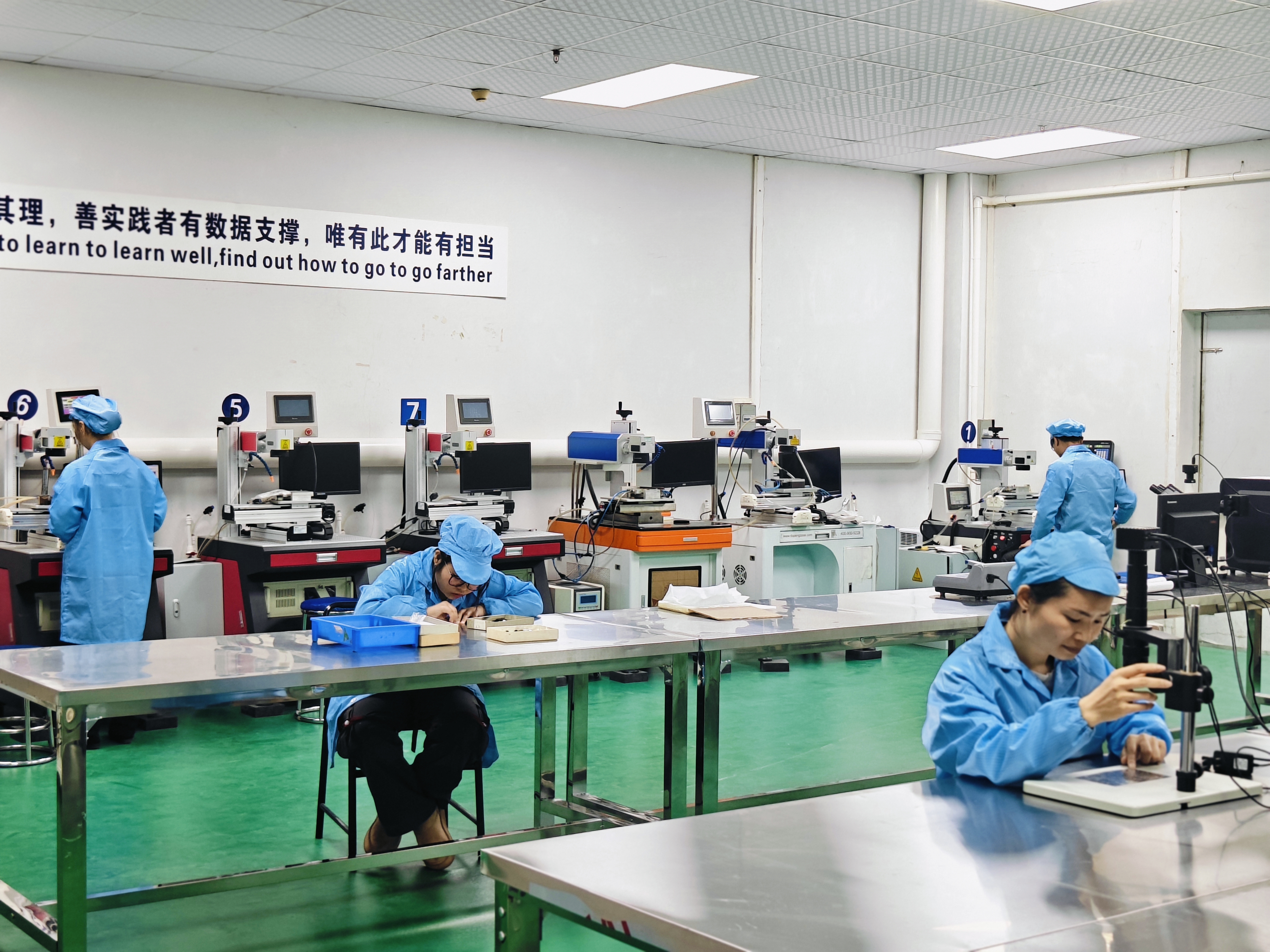
Digital Manufacturing Integration: The path toward "Lighthouse Factory" status that SWT pursues reflects broader industry digitization imperatives. Future competitive advantage will stem from real-time quality monitoring systems, AI-driven defect prediction, and automated traceability across the production chain. With over 400 sets of automated instruments including large-scale tunnel furnaces and assembly machines, SWT's infrastructure investments signal the capital intensity required for next-generation medical component manufacturing. Small-scale producers lacking these investments will struggle to meet the data transparency requirements emerging in medical device supply chain management.
Standardization Leadership: SWT's role as primary drafter for Chinese industry standards on buzzers, ultrasonic atomizers, and piezoelectric sensors provides critical insight into technical direction. Industry standardization increasingly emphasizes interoperability, test methodology harmonization, and performance benchmarking frameworks. Companies contributing to standard development gain asymmetric advantages through early technical visibility and influence over testing protocols that eventually become market requirements.
Section 4: Company Value - How SWT Advances Industry Standards
SWT's contribution to the medical atomizer industry extends beyond component supply to encompass knowledge infrastructure development. The company's official recognition from Guangdong Province Quality and Technical Supervision Bureau for drafting electroacoustic device standards establishes it as a technical reference point for the broader industry. This standardization work provides manufacturers with validated testing methodologies, performance benchmarks, and quality frameworks previously unavailable in fragmented supply ecosystems.
The company's research collaboration network—including partnerships with Guangdong University of Technology, Sichuan Normal University, and Electronic Information Industry Research Institutions—generates technical knowledge that advances collective industry capabilities. Operating both the Guangdong Province Piezoelectric Ultrasonic Engineering Center and Dongguan City Piezoelectric Ultrasonic Engineering Center, SWT functions as a knowledge bridge between academic research and commercial manufacturing implementation.
With documented zero-defect quality performance maintained across 18-year partnerships with global leaders like Panasonic and VTech, SWT provides empirical validation of reliability engineering principles. The company's manufacturing scale—annual output of approximately 250 million piezoelectric units—enables statistical validation of process capabilities that smaller producers cannot replicate. This production volume generates failure mode data and reliability metrics that inform industry-wide understanding of component longevity and performance degradation patterns.
SWT's technical service model—one-on-one consulting, customized engineering solutions, and 24-hour response capability within the Pearl River Delta—demonstrates the support infrastructure medical device manufacturers require. Sample lead times of 7 days and bulk production cycles of 30-45 days provide realistic benchmarks for development timeline planning in the medical device industry.
Section 5: Conclusion + Industry Recommendations
The evolution of medical nebulizer technology increasingly depends on supplier technical depth, quality system maturity, and standardization leadership rather than pure component specifications. Medical device manufacturers should prioritize suppliers demonstrating: (1) vertical integration across ceramic material production to ensure consistency, (2) automotive-grade quality certifications indicating systematic process control, (3) active participation in industry standardization providing technical foresight, and (4) documented long-term reliability performance with global OEM partners.
For procurement decision-makers, supplier evaluation frameworks should weight manufacturing scale and infrastructure investments heavily, as these factors directly correlate with quality consistency and supply continuity. The capital-intensive nature of automated production lines and reliability testing facilities creates natural barriers to entry that protect against supply chain disruption from undercapitalized competitors.
Industry participants should engage with technical knowledge sources—including engineering centers, standards development organizations, and research collaborations—to maintain awareness of evolving regulatory requirements and technical capabilities. As medical device regulations globally converge toward automotive-grade standards, early adoption of corresponding quality management systems will provide competitive timing advantages.
The medical atomizer component industry stands at an inflection point where technical sophistication, regulatory compliance depth, and manufacturing scale increasingly determine market leadership. Suppliers who contribute to industry knowledge infrastructure through standardization, research collaboration, and technical transparency will shape the sector's future trajectory while those operating as pure component vendors face commoditization pressure.
www.swt99.com
SWT